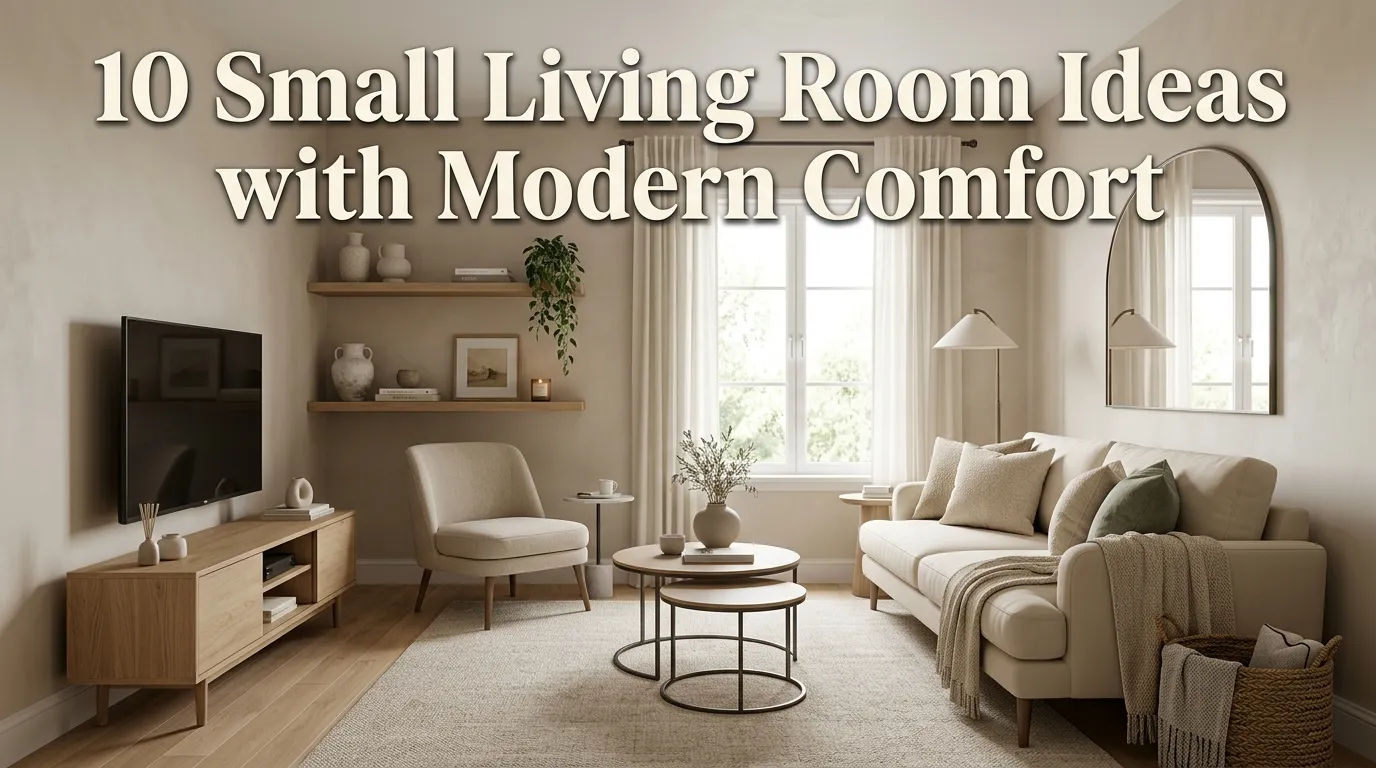
10 Small Living Room Ideas with Modern Comfort
A small living room can be one of the coziest and most inviting spaces in a home, but getting the balance right takes a little thought. When every square foot matters, oversized furniture, too many accessories, or a crowded layout can quickly make the room feel smaller than it really is. The goal isn’t to fill the space—it is to make every piece earn its place while still creating a room that feels comfortable, stylish, and personal.
Modern comfort is especially useful in a compact living room because it combines clean lines with the warmth people actually want in an everyday space. Think soft upholstery, layered lighting, natural textures, practical storage, warm neutrals, and furniture arranged to encourage conversation rather than simply pushed against every wall.
In my experience, one of the biggest mistakes homeowners make with small rooms is assuming that everything needs to be miniature. A better approach is to choose a few well-proportioned pieces and give them enough breathing room. A streamlined sofa, a compact coffee table, and one beautiful focal point can often make a stronger impression than a room filled with small furnishings.
Whether you’re decorating an apartment, updating a starter home, or simply trying to make a compact family room work harder, these ideas can help you create a space that feels open without sacrificing comfort. You’ll find practical ways to improve furniture placement, introduce warmth, use vertical space, and add personality without creating visual clutter.
The best part is that many of these changes don’t require a major renovation. Sometimes moving a sofa, replacing a bulky table, adding a floor lamp, or choosing lighter window treatments can completely change how the room feels.
Table of Contents
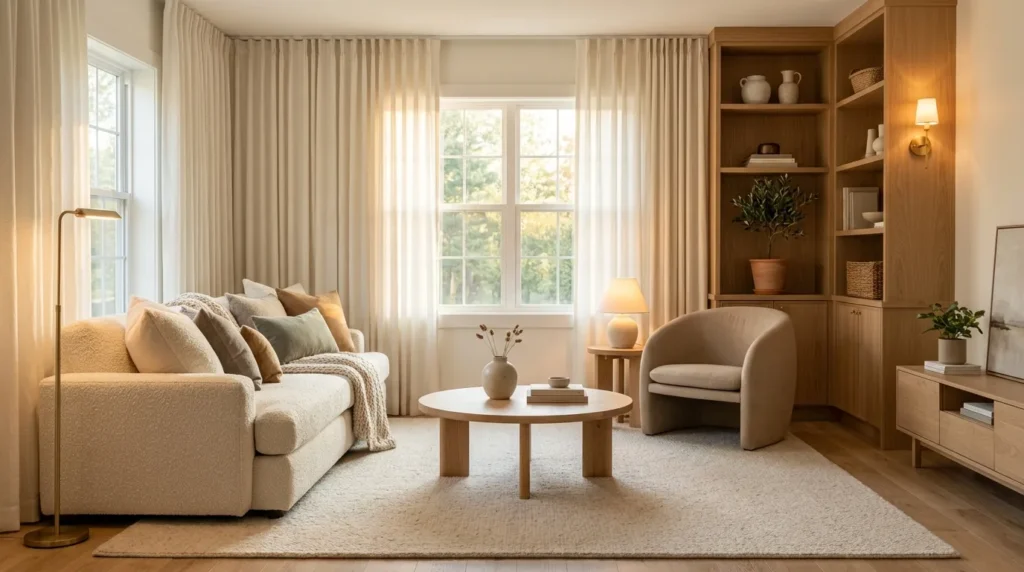
1. Soft Neutral Layers
Create a calm foundation with warm neutrals, comfortable fabrics, and subtle layers.
2. Slim Profile Furniture
Use streamlined furniture to preserve walking space while keeping the room comfortable.
3. Natural Wood Warmth
Bring warmth and character into a compact room with carefully chosen wood accents.
4. Vertical Storage
Take advantage of wall height to organize belongings without consuming valuable floor space.
5. Cozy Corner Seating
Turn an unused corner into a functional and inviting spot for reading or relaxing.
6. Layered Lighting
Combine several light sources to make the room feel warmer, brighter, and more dimensional.
7. Textured Soft Furnishings
Use rugs, cushions, curtains, and throws to create comfort without adding bulky furniture.
8. Round Coffee Tables
Replace sharp rectangular shapes with rounded tables that improve movement through the room.
9. Minimal Gallery Walls
Add personality with a carefully edited collection of artwork that gives the eye a focal point.
10. Open Conversation Layout
Arrange furniture around connection and movement so the room feels intentional rather than crowded.
1. Soft Neutral Layers
Quick Benefits
- Makes a compact room feel calm and cohesive
- Helps reflect available natural light
- Creates visual continuity
- Makes furniture easier to coordinate
- Adds comfort without excessive decoration
Why It Works
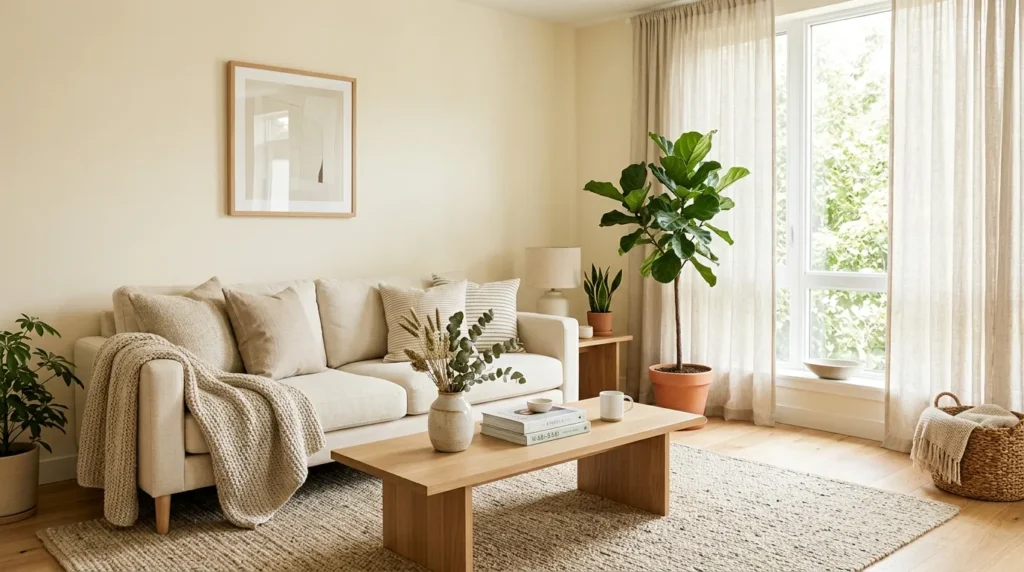
A soft neutral palette is one of the easiest ways to make a small living room feel more spacious while still maintaining warmth. Colors such as warm white, ivory, beige, taupe, greige, soft gray, and muted tan create a gentle visual flow that allows furniture and architectural details to blend together rather than compete for attention.
The key is avoiding a completely flat color scheme. A room decorated entirely in one shade can feel sterile, especially when modern furniture already has clean lines. Instead, layer several related neutrals through upholstery, curtains, rugs, cushions, and wall finishes.
I’ve noticed that warm neutrals tend to work particularly well in living rooms because they make contemporary spaces feel less showroom-like. A cream sofa can feel much more inviting when paired with a textured beige rug, woven basket, light wood table, and oatmeal-colored throw.
How To Style It
Start with one dominant neutral for the walls and larger furniture pieces. Then introduce two or three supporting shades that are slightly lighter or darker. For example, pair warm white walls with a beige sofa, light taupe rug, and caramel or natural wood accents.
Texture is especially important here. Look for linen-look curtains, boucle or woven cushions, knitted throws, and softly textured rugs. These details create depth without requiring additional furniture.
If the room receives limited daylight, avoid using too many cool grays. Warm whites and creamy neutrals usually create a friendlier atmosphere. For renters, this approach can also be achieved without repainting by using removable textiles and carefully selected furniture.
2. Slim Profile Furniture
Quick Benefits
- Preserves valuable floor space
- Makes pathways easier to navigate
- Creates a lighter visual appearance
- Keeps seating comfortable
- Works well in apartments and compact homes
Why It Works
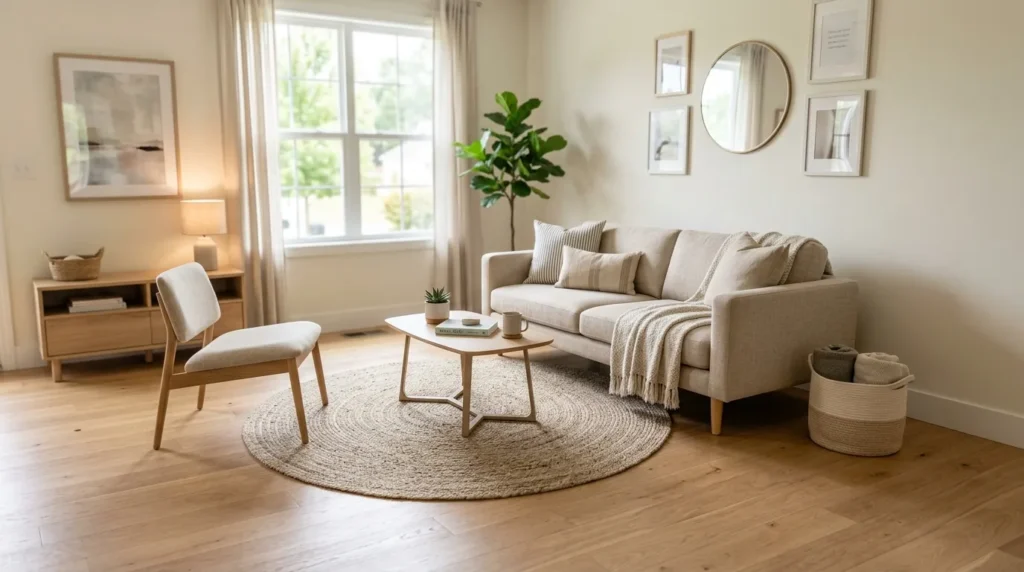
Furniture scale matters enormously in a small living room. A sofa can technically fit into a room and still make the entire space feel crowded if its arms are oversized, its depth is excessive, or its base visually dominates the floor.
Slim-profile furniture solves this problem by giving you the comfort you need without unnecessary visual weight. Look for sofas with narrow arms, raised legs, moderate depth, and clean silhouettes. These details allow more of the floor to remain visible, which can make the room appear larger.
This doesn’t mean choosing uncomfortable furniture. Modern compact sofas are available with supportive cushions and generous seating while maintaining a streamlined shape. The goal is to distinguish between furniture that is genuinely useful and furniture that simply occupies space.
How To Style It
Measure the room before buying anything, including doorways and walking paths. Leave enough clearance for people to comfortably move between the sofa, entrance, and other frequently used areas.
A compact sofa can be paired with one accent chair rather than a bulky loveseat or second sofa. If you need additional seating, consider a small upholstered ottoman that can double as a footrest or extra table surface.
Raised furniture legs can also help. Seeing a little floor underneath a sofa or chair creates a sense of openness. Choose upholstery in a color that relates to the room’s walls or rug so the furniture feels integrated rather than visually disconnected.
3. Natural Wood Warmth
Quick Benefits
- Adds warmth to modern interiors
- Introduces natural character
- Works with neutral color palettes
- Creates visual contrast
- Makes simple furniture feel more inviting
Why It Works
Modern design can sometimes become overly sleek when every surface is smooth, glossy, or monochromatic. Natural wood provides the warmth needed to soften that look without overwhelming a compact room.
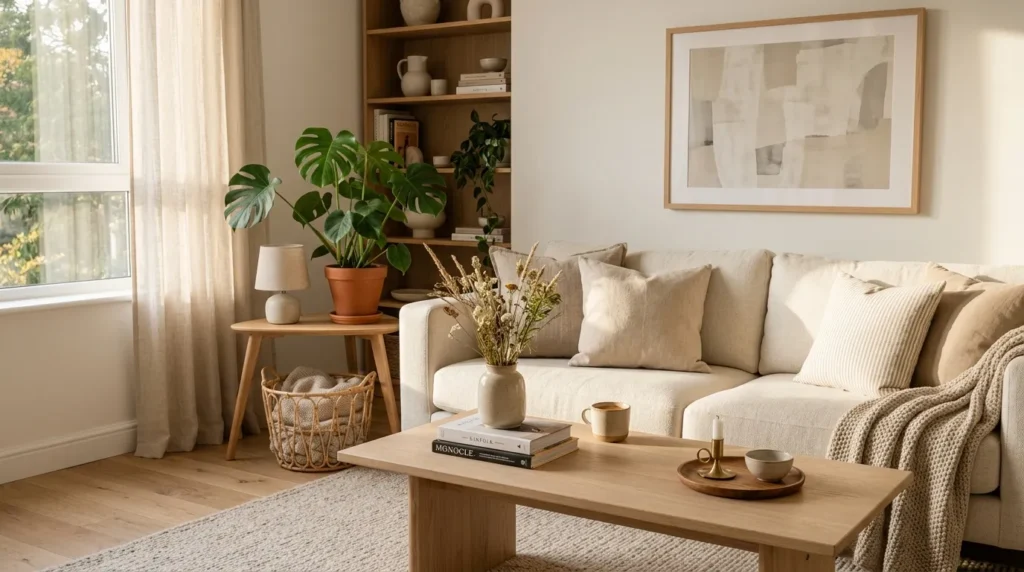
A small living room doesn’t need several wooden furniture pieces. One or two intentional accents can be enough. A light oak coffee table, floating shelf, wooden side table, or slim media console can introduce organic texture while maintaining a clean aesthetic.
Natural materials also give neutral interiors a more collected appearance. Instead of looking like every item came from the same furniture collection, the room gains subtle variation.
A mistake many homeowners make is assuming that adding more decorative objects will make a modern room feel warmer. Often, changing the material mix is more effective. Wood, woven fibers, cotton, linen, and ceramic can create richness without adding clutter.
How To Style It
For a bright modern living room, consider pale oak, ash, maple, or other light-toned woods. These finishes tend to keep the room feeling airy. Medium wood tones can work beautifully when you want a little more contrast.
Try a round or oval wood coffee table, a narrow console, or a single floating shelf. Pair wood with cream upholstery and woven textiles for a relaxed look.
If you already have dark furniture, don’t feel that you need to replace everything. Add a lighter wood accent nearby to create balance. A wooden bowl, framed print, or small stool can provide the same warmth on a smaller scale.
4. Vertical Storage
Quick Benefits
- Frees up valuable floor space
- Keeps everyday items organized
- Draws attention upward
- Provides room for decor
- Helps reduce visual clutter
Why It Works
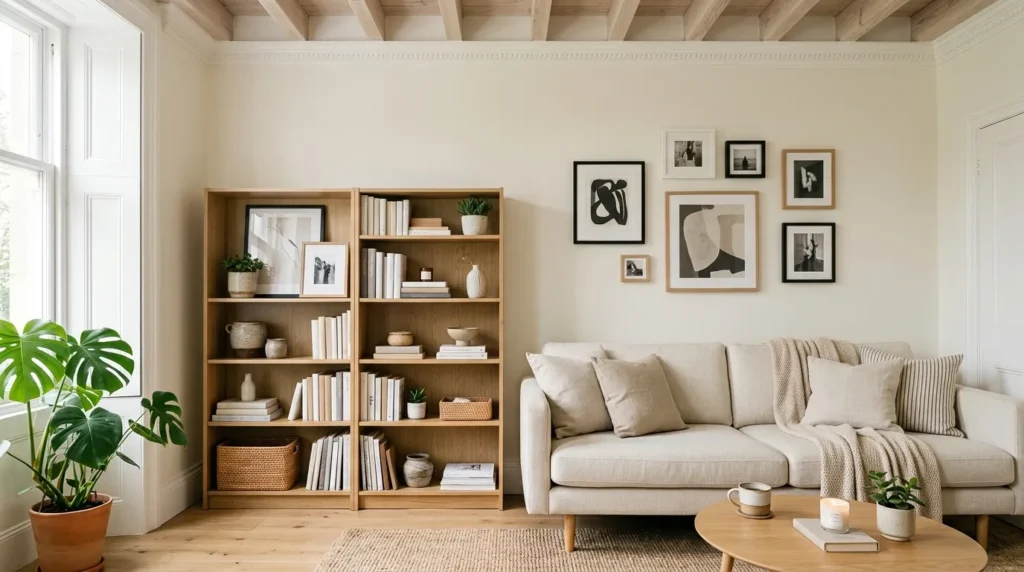
When floor space is limited, look upward. Vertical storage allows a small living room to gain useful organization without sacrificing the open areas needed for comfortable movement.
Tall bookcases, floating shelves, wall-mounted cabinets, and narrow storage towers can make use of walls that would otherwise remain empty. They also create a sense of height, especially when shelves are styled with a thoughtful mixture of books, artwork, baskets, and decorative objects.
The important thing is restraint. A wall covered from floor to ceiling with tightly packed belongings can make a small room feel visually heavy. Open space between objects is just as important as the storage itself.
Modern comfort isn’t only about how a room looks. It is also about being able to put away blankets, remotes, books, toys, and other everyday items quickly.
How To Style It
Choose storage that matches the room’s overall architecture. A slim vertical bookcase can fit beside a sofa, while floating shelves work well above a desk, console, or media area.
Use baskets or closed boxes for less attractive necessities. Reserve open shelves for objects you genuinely enjoy seeing.
For a cohesive appearance, repeat two or three materials or colors throughout the shelves. For example, combine natural baskets, neutral ceramics, and framed artwork. Keep some shelf sections empty so the arrangement feels curated rather than packed.
If you’re renting, floating-look shelving or freestanding ladder shelves can offer similar benefits without permanent installation.
5. Cozy Corner Seating
Quick Benefits
- Uses an overlooked area
- Creates a dedicated relaxation spot
- Adds extra seating
- Works well for reading
- Makes the room feel more functional
Why It Works
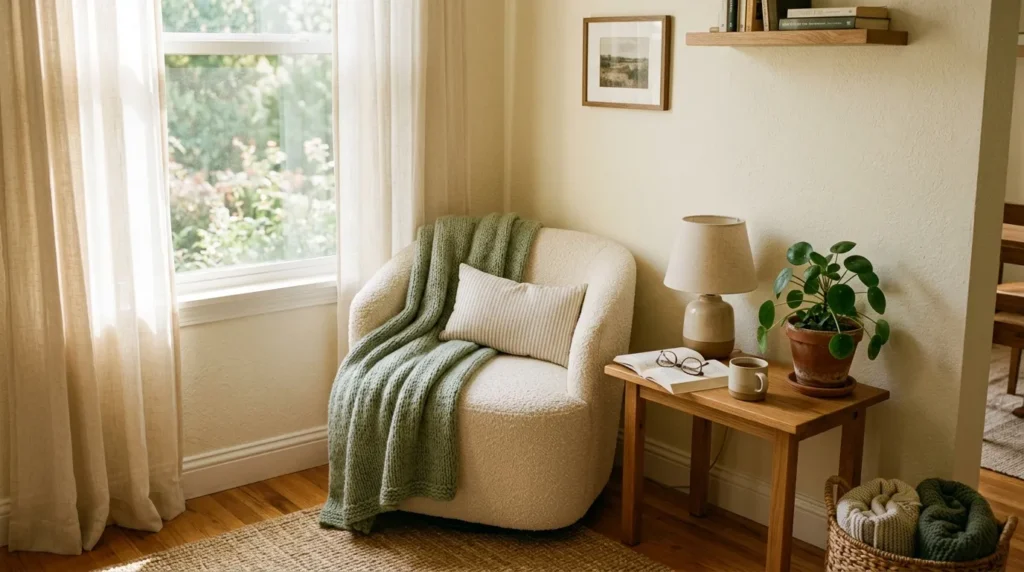
Small living rooms often have corners that aren’t large enough for major furniture but are still valuable enough to use. Turning one of these areas into a cozy seating nook can give the room an additional purpose without making it feel crowded.
A compact accent chair positioned near a window can become a natural reading area. A small upholstered chair beside a floor lamp can create a quiet spot for coffee or evening relaxation.
This works particularly well because it gives the eye a destination. Instead of seeing an empty corner, visitors see a deliberate little vignette that contributes to the overall design.
The trick is choosing furniture with a compact footprint. A large lounge chair with an oversized ottoman may defeat the purpose.
How To Style It
Choose a chair that is comfortable but visually light. Rounded upholstery, exposed legs, or a slim wooden frame can help maintain openness.
Place a narrow side table beside the chair for a cup, book, or small lamp. Add a soft throw over the back and one cushion that coordinates with the sofa.
If natural light enters the corner, take advantage of it. Position the chair so the area feels bright during the day, then add a floor or table lamp for evening use.
For an especially small room, a compact pouf can replace the chair when you need flexible seating that can be moved easily.
6. Layered Lighting
Quick Benefits
- Creates a warmer atmosphere
- Makes the room feel more dimensional
- Reduces dependence on one overhead fixture
- Highlights artwork and decor
- Supports different activities
Why It Works
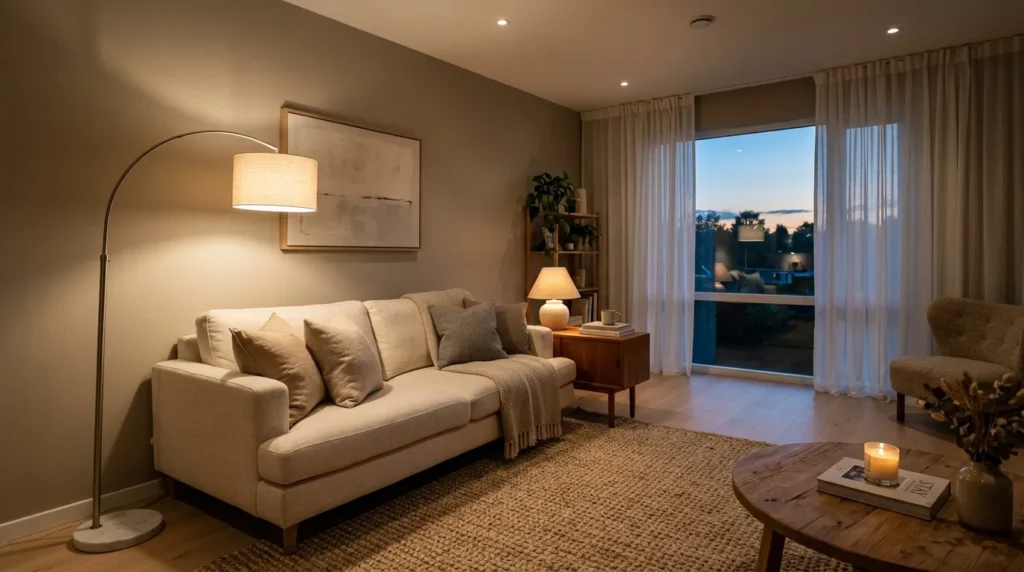
Lighting can completely change the perceived size and comfort of a small living room. A single ceiling fixture often creates harsh shadows and makes the room feel flat. Layered lighting gives you more control over how the space looks throughout the day.
A good combination might include natural daylight, overhead lighting, a floor lamp, and a small table lamp. You don’t necessarily need all four, but having more than one light source creates depth.
Warm, comfortable lighting also encourages people to use the room differently. Bright task lighting can work during the day, while softer lamps create a relaxing environment in the evening.
One simple trick I always suggest is placing a lamp in a darker corner. It can visually pull that area forward and make the entire room feel more balanced.
How To Style It
Start by maximizing natural light. Use lightweight curtains that allow daylight to filter through while still providing privacy.
Then add one practical floor lamp beside the sofa or reading chair. A small table lamp can sit on a console or side table. If wall outlets are limited, choose lamps with convenient cord management.
Consider fixtures with simple silhouettes that complement the furniture rather than becoming the only focal point. Warm-white bulbs generally create a cozy residential atmosphere, while brighter lighting can be reserved for tasks such as reading or working.
7. Textured Soft Furnishings
Quick Benefits
- Adds comfort without bulky furniture
- Creates visual depth
- Makes modern rooms feel warmer
- Easy to change seasonally
- Adds personality through small details
Why It Works
When space is limited, soft furnishings become one of your best decorating tools. They can dramatically change the personality of a room without taking up much additional floor space.
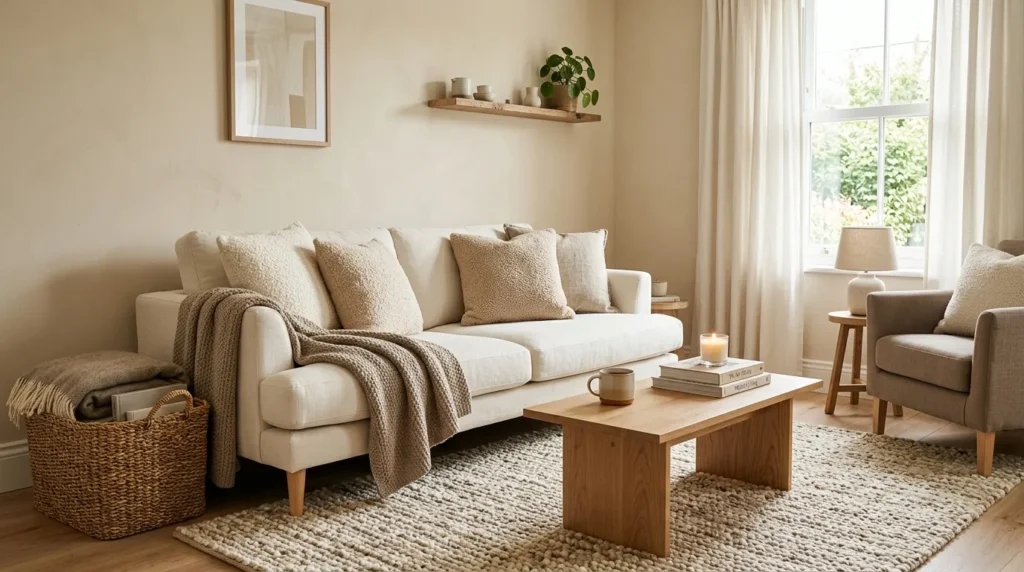
A rug defines the seating zone, cushions make a sofa more inviting, and a throw adds warmth while remaining easy to remove. Curtains can soften hard architectural lines and create a finished appearance.
Texture is particularly useful in modern interiors because clean furniture silhouettes benefit from softer, more tactile elements. A smooth sofa paired with a woven rug and chunky knit throw creates contrast that feels comfortable rather than overly decorated.
The best part is that textiles are easy to update. You can change cushions or throws seasonally without redesigning the entire room.
How To Style It
Choose a rug large enough to visually connect the main seating pieces. In many small rooms, a rug that is too tiny can make the furniture arrangement feel fragmented.
Layer cushions in different shapes and textures, but keep the color palette controlled. Two or three complementary shades are usually enough.
Add a throw casually rather than folding it perfectly. A slightly relaxed arrangement often makes the room feel more lived-in.
For curtains, hang panels high and allow them to reach close to the floor. This can emphasize ceiling height and create a more finished look.
8. Round Coffee Tables
Quick Benefits
- Improves movement around furniture
- Softens a boxy room
- Reduces sharp visual lines
- Works well with compact sofas
- Creates a natural gathering point
Why It Works
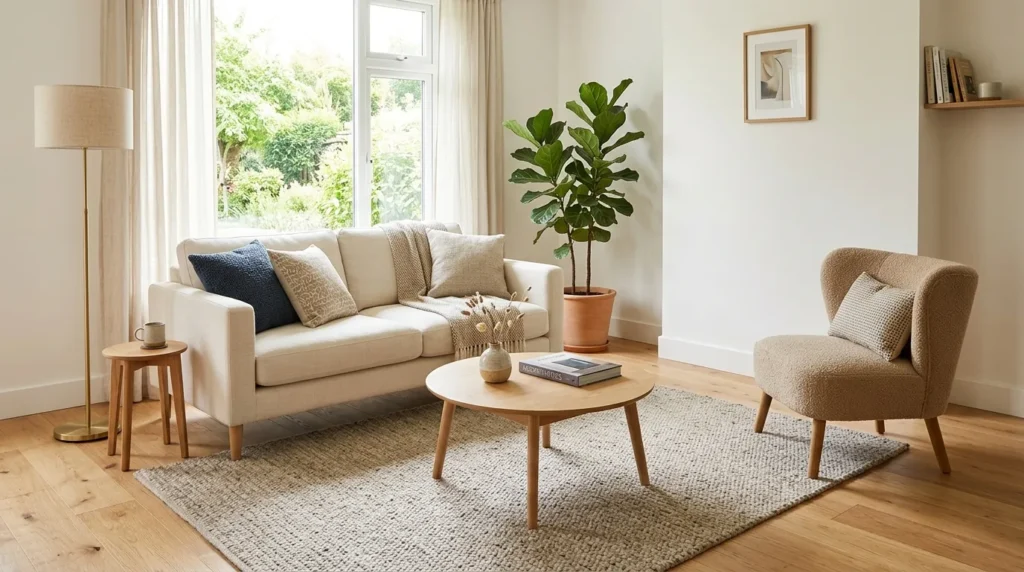
A small living room has one major challenge: movement. Rectangular furniture can create a series of corners that make navigating the room feel awkward. A round coffee table can solve part of that problem by creating smoother circulation around the seating area.
Rounded shapes also contrast beautifully with modern sofas, rectangular rugs, media consoles, and square rooms. This creates visual variety without requiring additional decoration.
Safety and practicality are another advantage. A round table has no sharp corners jutting into walking paths, which can be especially useful in homes with children or in rooms where furniture sits close to circulation areas.
The table still needs to be correctly proportioned. Going too large simply because the shape is space-friendly can make the room feel cramped.
How To Style It
Choose a coffee table diameter that leaves comfortable walking space around the seating arrangement. Measure before purchasing and consider how people actually enter and exit the room.
Light wood, glass, or a slim metal frame can help maintain a visually open appearance. A pedestal-style table can also be useful because it eliminates multiple legs that may visually clutter the floor.
Keep tabletop styling simple. A low tray, small stack of books, ceramic vessel, or modest plant is usually enough. Leave plenty of usable surface for drinks, books, and everyday activities.
9. Minimal Gallery Walls
Quick Benefits
- Adds personality without using floor space
- Creates a strong focal point
- Makes blank walls useful
- Can reflect personal interests
- Works with modern and transitional decor
Why It Works
Artwork is one of the easiest ways to personalize a small living room without adding physical clutter. Instead of filling shelves and tabletops with accessories, use the walls to create visual interest.
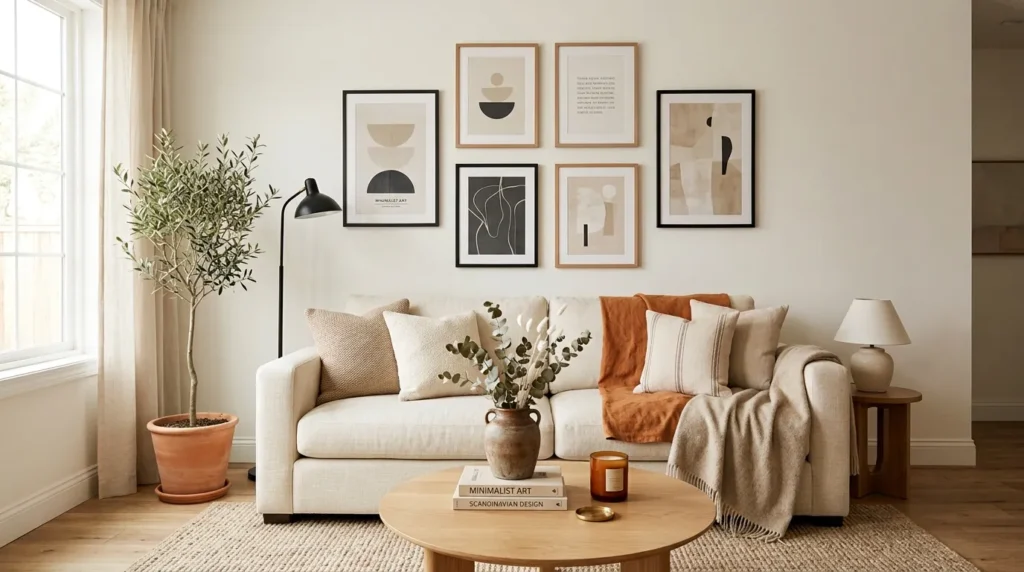
A minimal gallery wall works particularly well because it gives the eye something to explore while keeping the overall room edited. The arrangement doesn’t need to be large. Three to five coordinated pieces can create a meaningful focal point above a sofa or console.
For a modern room, consistency helps. Matching frames can create a polished appearance, while varied frames can give the arrangement a more collected feel.
The goal isn’t to cover every available wall. In a compact room, one carefully planned artwork zone can be more effective than several small decorative clusters.
How To Style It
Choose artwork that complements the room’s existing palette. Neutral abstract prints, botanical artwork, photography, line drawings, or subtle landscapes can work beautifully with modern furnishings.
Before putting holes in the wall, lay the pieces on the floor and experiment with spacing. You can also use paper templates to test the arrangement at eye level.
Leave some negative space around the collection. This helps the artwork feel intentional rather than squeezed into the room.
If you prefer a simpler look, one oversized print can replace a gallery wall entirely and create an equally strong focal point.
10. Open Conversation Layout
Quick Benefits
- Makes better use of limited floor space
- Encourages conversation
- Improves circulation
- Creates a clear focal area
- Helps the room feel intentional
Why It Works
The arrangement of furniture often matters more than the amount of furniture in a small living room. A room can contain only a sofa, chair, and coffee table yet still feel cramped if everything blocks the natural pathways.
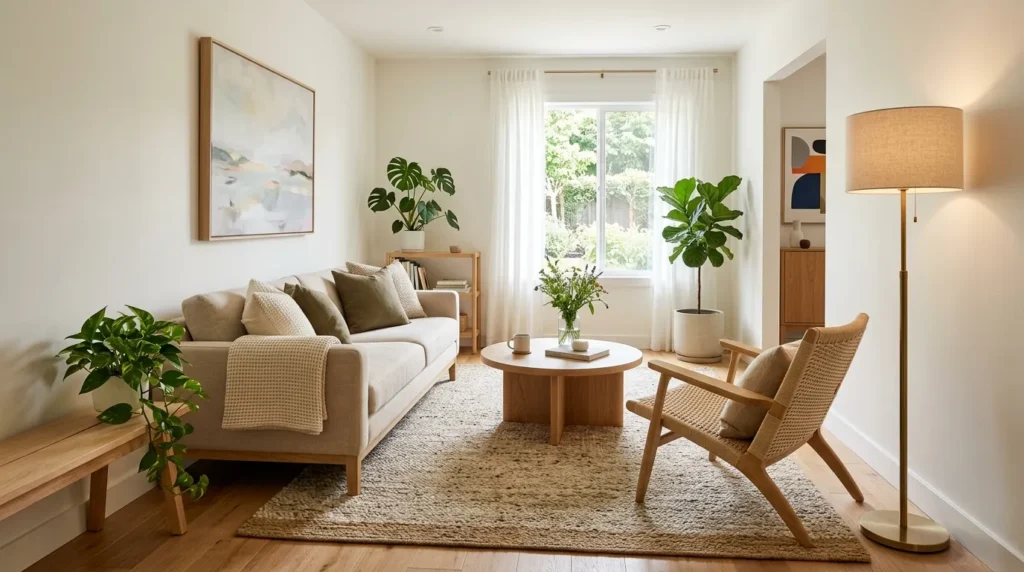
An open conversation layout organizes the main furniture around a shared center rather than pushing every piece against a wall. This can make the room feel more purposeful and comfortable.
Contrary to popular belief, placing a sofa directly against every wall isn’t always the best way to maximize space. Sometimes pulling it a few inches away creates better balance and makes the seating area feel defined.
The most successful small rooms usually have an obvious path through them. When people can move naturally from the doorway to the seating area and other parts of the home, the entire space feels easier to live in.
How To Style It
Begin with the largest piece, usually the sofa. Position it according to the room’s main focal point, such as a window, fireplace, artwork, or television.
Add one chair opposite or at an angle rather than automatically adding another large seating piece. Place the coffee table centrally but leave enough room for people to walk around it.
Use a rug to visually connect the seating pieces. If the room is extremely narrow, consider an arrangement that keeps the longest clear pathway along one side.
Finally, test the layout in everyday conditions. Sit in every seat, walk through the room, open nearby doors, and imagine carrying laundry or groceries through the space. A beautiful layout is only successful if it works in real life.
Making a Small Living Room Feel Bigger Without Losing Comfort
The easiest way to create the impression of more space isn’t necessarily to buy smaller furniture. Instead, focus on visual continuity, circulation, and the amount of empty space surrounding each item.
Start by identifying the room’s most important function. If your living room is mainly for relaxing and watching television, prioritize a comfortable sofa and practical surface for drinks. If you regularly entertain guests, flexible seating may be more valuable than a large entertainment unit.
Mirrors can also help reflect light and create visual depth, particularly when positioned across from a window or another bright area. Choose one appropriately sized mirror instead of filling multiple walls with reflective surfaces.
Another useful strategy is to keep the floor as visually clear as possible. Furniture with legs, wall-mounted storage, and compact tables can expose more flooring and make the room feel lighter.
Don’t underestimate the importance of editing. Walk around the room and remove anything that doesn’t serve a purpose or contribute to the design. Small spaces often improve dramatically when decorative objects are reduced rather than added.
Common Small Living Room Decorating Mistakes
Even attractive furniture can make a compact room feel uncomfortable when it is used without considering scale and circulation.
One common mistake is purchasing a sofa before measuring the entire room. Always measure the available wall, the depth of the furniture, door openings, and the space needed to walk around it.
Another issue is using a collection of tiny furniture pieces because they seem like they will save space. Too many small tables, chairs, baskets, and decorative pieces can actually create more visual clutter than one or two appropriately sized items.
Rugs are another frequent problem. A tiny rug floating in the center of the room can make the seating arrangement appear disconnected. Whenever possible, use a rug that reaches under at least part of the main seating furniture.
Finally, don’t forget lighting. A small room with poor lighting can feel much more confined than the same room with layered illumination.
The goal isn’t perfection. Your living room should still look like a home where people actually live. Leave room for books, blankets, cups of coffee, and the occasional bit of everyday mess.
How To Choose a Color Palette
A successful small living room palette usually begins with one dominant color, one supporting neutral, and a small number of accent shades.
For a warm modern look, try creamy white walls, beige upholstery, light oak, and muted terracotta accents. For something cooler, soft gray, ivory, pale wood, and dusty blue can create a sophisticated combination.
If you prefer stronger color, use it selectively. A deep green accent chair, navy cushions, or muted rust artwork can add personality without making every surface visually demanding.
Remember that natural light changes color throughout the day. A shade that looks warm in a store may appear cooler or darker at home. If you’re painting, test samples at different times before committing.
The best palette is one that makes the room feel cohesive from one side to the other. Repeating a color in small ways—such as in artwork, cushions, and a vase—helps connect different areas.
How To Make a Small Room Comfortable for Guests
Comfort should remain a priority even when square footage is limited. The trick is to create flexible seating and surfaces that can serve more than one purpose.
An upholstered ottoman can act as a footrest, extra seat, or temporary coffee table when paired with a tray. A compact accent chair can move closer to the sofa when guests arrive. Nesting tables can provide additional surfaces without permanently occupying a large footprint.
Keep at least one place where guests can put a drink or personal item. This small detail makes a room feel much more functional.
Soft lighting also makes a difference when entertaining. Rather than relying entirely on an overhead fixture, turn on table and floor lamps to create a more relaxed environment.
If your living room connects directly to a dining area or entryway, keep the transition clear. Guests should be able to enter, sit down, and move through the space without navigating around furniture.
FAQ
What furniture works best in a small living room?
Furniture with streamlined proportions, narrow arms, raised legs, and moderate depth usually works well in compact living rooms. A comfortable sofa paired with one compact chair or ottoman can provide plenty of seating without overwhelming the room. Choose pieces based on actual measurements rather than simply selecting the smallest furniture available.
What colors make a small living room look bigger?
Warm whites, cream, beige, soft taupe, pale gray, and other light neutrals can help a small living room feel brighter and more open. The effect becomes stronger when wall colors, curtains, and larger furniture pieces have related tones. You can still introduce darker colors through artwork, cushions, wood, or a single accent piece.
Should a small living room have a coffee table?
A small living room can absolutely have a coffee table, but proportion is important. Round or oval tables can make movement easier, while slim rectangular designs can work well in narrow rooms. If a traditional coffee table takes up too much space, consider a nesting table, compact ottoman, or small side tables instead.
How do you arrange furniture in a very small living room?
Start with the largest piece and establish a clear walking path. Place the sofa according to the room’s focal point, then add only the seating and tables you genuinely need. Avoid blocking doorways or frequently used paths. Whenever possible, use furniture that serves multiple purposes and keep the floor visually open.
How can I add storage without making my living room look crowded?
Use vertical and wall-based storage whenever practical. Tall bookcases, floating shelves, narrow cabinets, and furniture with built-in storage can keep belongings organized without taking over the floor. Use baskets and closed compartments for everyday clutter, and leave some open space on shelves so the room doesn’t look overfilled.
How do I make a modern living room feel cozy?
Combine clean-lined furniture with soft textures and warm materials. A textured rug, comfortable cushions, knitted throw, natural wood, warm lighting, and curtains can soften a modern space. You don’t need lots of accessories; a few tactile materials repeated throughout the room can create a cozy atmosphere without sacrificing the clean modern appearance.
Is a sectional sofa a good idea for a small living room?
A sectional can work in a small living room when its dimensions match the space and it improves the layout. Compact apartment-style sectionals can provide substantial seating while using corners efficiently. However, measure carefully and consider how the sectional affects doorways, walking paths, and other furniture before purchasing.
Conclusion
Creating a comfortable small living room is less about squeezing as much furniture as possible into the available space and more about making thoughtful choices. A streamlined sofa, warm neutral palette, natural wood accents, layered lighting, and carefully selected textiles can transform even a compact room into a place that feels inviting and polished.
The most successful designs also leave room for everyday life. You want enough space to walk comfortably, put down a coffee mug, stretch out after a long day, and welcome friends without constantly moving furniture around.
If you’re starting from scratch, begin with the layout before buying accessories. Measure the room, identify the main pathway, choose your largest furniture piece, and build around it. Then add texture, lighting, artwork, and personal details gradually.
You don’t have to change everything at once. Sometimes one smart swap—such as replacing a bulky coffee table with a round design or adding a floor lamp to a dark corner—can make a surprisingly noticeable difference.
Start with one or two ideas that fit your space and lifestyle, then build from there. With the right proportions, materials, and arrangement, a small living room can feel open, stylish, and genuinely comfortable without losing the personality that makes it feel like home.
Related Articles
- 10 Small Living Room Layout Ideas for Better Space
- How to Decorate a Living Room Like a Professional
- 10 Neutral Living Room Ideas for a Warm Modern Home
- 10 Cozy Home Decor Ideas for a More Inviting Space
- How to Make a Small Room Feel Bigger Without Remodeling