
10 Modern Living Room Ideas You’ll Love Coming Home To
A living room has to do more than look beautiful in photos. It is where you settle in after a long day, gather with friends, watch a movie, read a book, and sometimes leave a coffee cup on the table a little longer than planned. That is why the best modern living rooms balance clean design with the kind of comfort that makes you want to stay awhile.
Modern style can sometimes get a reputation for feeling cold or overly minimal, but it doesn’t have to. With the right combination of warm woods, comfortable upholstery, layered lighting, natural textures, and thoughtful accessories, a contemporary space can feel polished without becoming formal.
The good news is that you don’t need to completely renovate your home to create this look. A new rug, a better furniture arrangement, warmer lighting, or a carefully chosen accent chair can make a noticeable difference. Even small living rooms can benefit from modern design principles because the style naturally emphasizes clean lines and purposeful pieces.
In my experience, the rooms that feel the most inviting aren’t necessarily the ones filled with expensive furniture. They’re the spaces where every major element has a reason for being there. A sofa faces the right direction, lighting works at different times of day, storage keeps clutter under control, and decorative pieces add personality without overwhelming the room.
Whether you’re refreshing an existing space or starting from scratch, these ideas can help you create a living room that feels current, comfortable, and personal. You’ll find practical ways to use color, texture, furniture, lighting, artwork, and natural materials so your room looks pulled together while still feeling like home.
Table of Contents
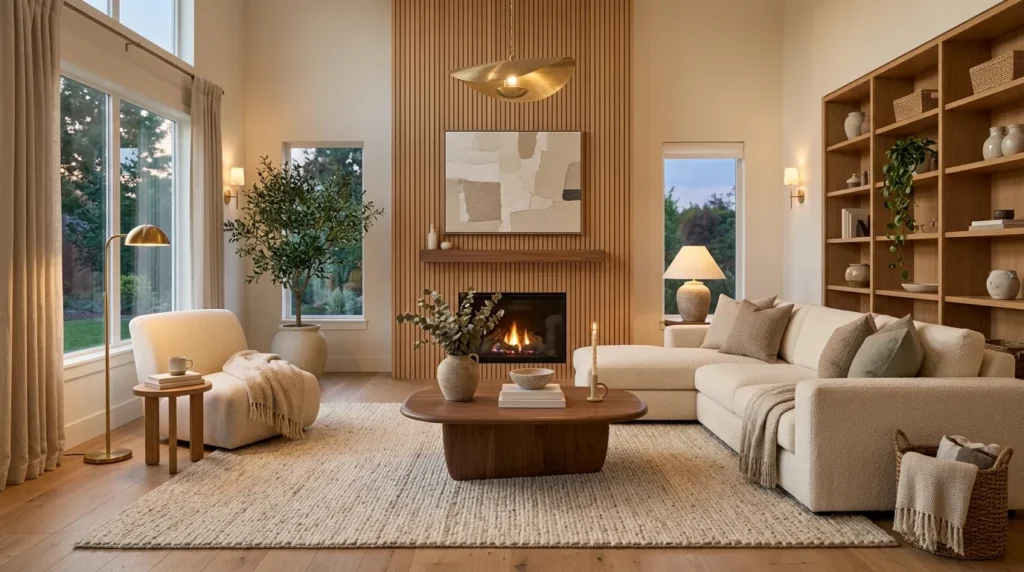
1. Warm Neutral Layers
Create a calm foundation with creamy neutrals, natural textures, and subtle tonal variation.
2. Sculptural Furniture
Use furniture with distinctive shapes to give a simple room more personality and visual interest.
3. Natural Wood Accents
Bring warmth into a contemporary space with wood furniture, paneling, shelving, and decorative details.
4. Statement Lighting
Use layered and sculptural lighting to make the room feel inviting from morning through evening.
5. Soft Earth Tones
Introduce muted greens, terracotta, beige, brown, and clay shades for a grounded modern palette.
6. Minimalist Gallery Wall
Turn a blank wall into a sophisticated focal point with thoughtfully selected artwork.
7. Textured Neutral Sofa
Make the sofa the comfortable centerpiece by combining tactile upholstery with layered cushions and throws.
8. Modern Organic Mix
Combine contemporary silhouettes with stone, linen, woven materials, ceramics, and greenery.
9. Streamlined Built-Ins
Use purposeful storage and shelving to create a clean backdrop while keeping everyday clutter contained.
10. Cozy Modern Corners
Give overlooked areas of the room a specific purpose with seating, lighting, plants, and personal details.
1. Warm Neutral Layers
Quick Benefits
- Creates a calm and welcoming atmosphere
- Makes modern furniture feel softer
- Works well with changing seasonal accents
- Helps small rooms feel visually open
- Provides a flexible foundation for artwork and accessories
Why It Works
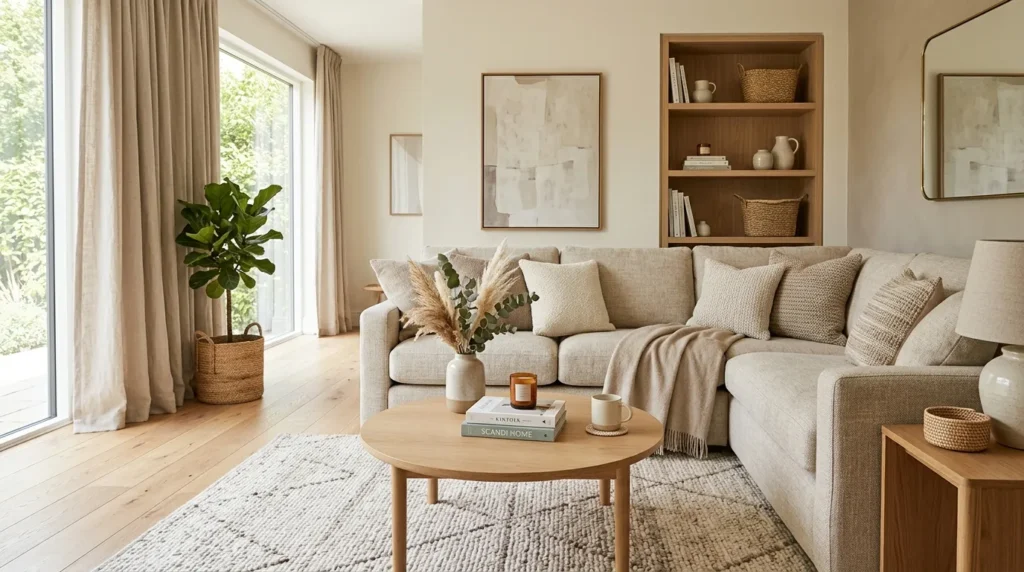
Warm neutrals are one of the easiest ways to make a modern living room feel sophisticated without making it stark. Instead of relying on one shade of white or beige, layer several closely related tones such as ivory, oatmeal, warm taupe, sand, mushroom, and soft brown. The subtle differences give the room dimension while maintaining a cohesive appearance.
The secret is texture. A room filled with smooth beige surfaces can feel flat, but linen curtains, a wool-blend rug, boucle upholstery, woven baskets, and lightly grained wood create visual depth without requiring bold colors.
This approach is particularly useful if you like changing your decor throughout the year. A neutral foundation can accommodate rust-colored pillows in autumn, soft greens in spring, or navy accents when you want a slightly richer look.
How To Style It
Start with one warm neutral as the dominant color and build around it. For example, a creamy sofa can sit on a slightly darker beige rug with ivory curtains and a light oak coffee table.
Add contrast gradually rather than introducing several unrelated colors. Black metal legs, dark brown accents, or a charcoal lamp can provide definition while keeping the palette restrained.
For a particularly comfortable arrangement, mix at least three textures. Try a soft area rug, woven accent baskets, linen pillows, and a chunky throw. Keep larger furniture relatively simple, then use accessories to introduce personality.
If your living room receives plenty of sunlight, warm neutrals can create a beautiful glow throughout the day. In darker rooms, choose lighter creams and warm whites rather than deep taupes so the space doesn’t feel visually heavy.
2. Sculptural Furniture
Quick Benefits
- Adds personality without excessive decoration
- Creates an elevated contemporary appearance
- Gives simple rooms an artistic quality
- Works especially well with neutral colors
- Makes furniture itself part of the decor
Why It Works
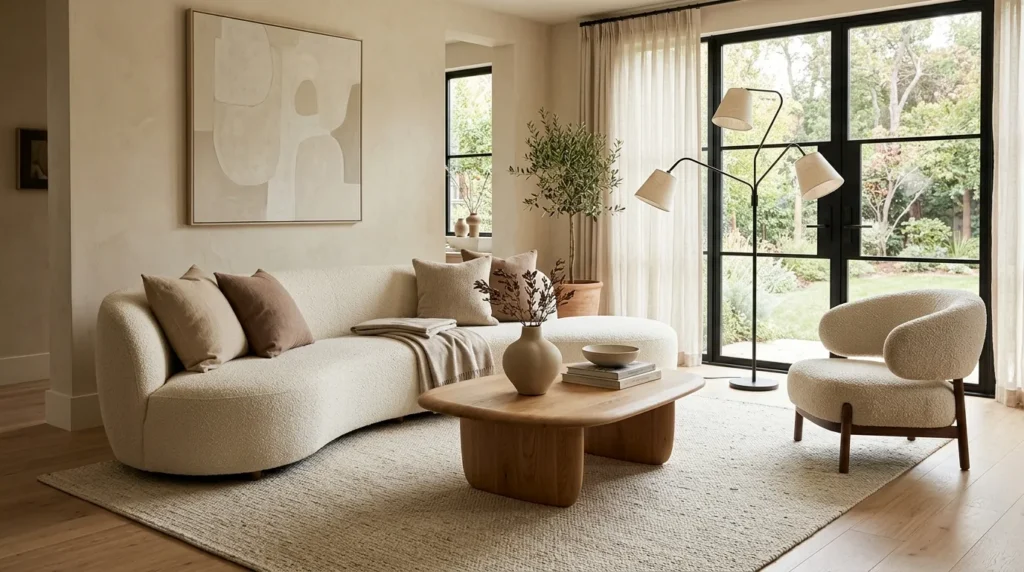
Modern rooms often rely on relatively simple color palettes, which means furniture shape becomes more important. A sculptural sofa, rounded coffee table, curved accent chair, or organically shaped side table can become the visual feature that keeps a restrained room from feeling ordinary.
Curved furniture is particularly effective because it introduces softness against architectural elements such as straight walls, rectangular windows, and linear shelving. It can also make a seating arrangement feel more conversational.
You don’t need several unusual pieces. In fact, one distinctive piece often works better than filling the room with competing shapes. Think of sculptural furniture as the statement jewelry of the room: one well-chosen piece can change the entire impression.
How To Style It
Choose one major silhouette to emphasize. A curved cream sofa might pair beautifully with a round wood coffee table and a simple rectangular rug. Alternatively, a chunky oval coffee table can become the focal point while the sofa remains streamlined.
Leave enough breathing room around distinctive furniture. A sculptural chair shouldn’t be squeezed between the sofa and a wall where its shape becomes difficult to appreciate.
Keep surrounding accessories relatively quiet. If your coffee table has an unusual organic shape, use a simple ceramic vase, a stack of books, and one small decorative object rather than a crowded arrangement.
For open-concept homes, curved furniture can also help soften the transition between living, dining, and kitchen areas. Position a rounded chair or oval table so the room feels connected rather than divided into rigid zones.
3. Natural Wood Accents
Quick Benefits
- Adds warmth to contemporary interiors
- Creates contrast against white and neutral finishes
- Works with many modern color palettes
- Brings an organic quality indoors
- Makes minimalist rooms feel more lived-in
Why It Works
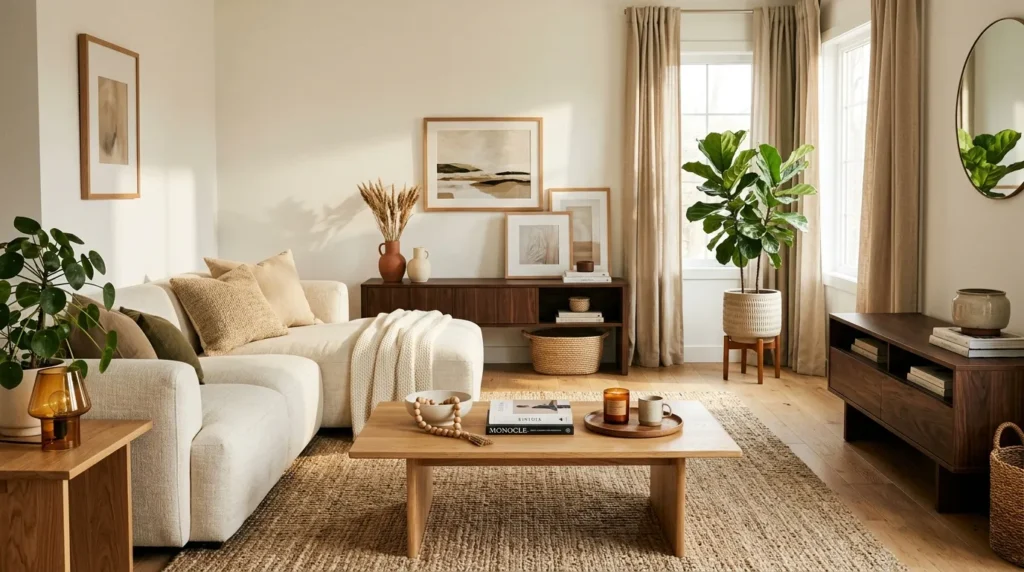
Natural wood is an excellent counterbalance to the clean lines associated with modern design. It introduces warmth, grain, and subtle variation that manufactured finishes often can’t reproduce.
Light oak, walnut, ash, and medium-toned woods can all work beautifully, depending on the mood you want. Lighter woods tend to keep a room airy and casual, while walnut and deeper finishes can make a larger living room feel richer and more sophisticated.
Wood also doesn’t have to be limited to the coffee table. It can appear through floating shelves, an accent cabinet, picture frames, exposed beams, a media console, or even a small stool beside the sofa.
How To Style It
Choose one dominant wood tone and repeat it in two or three places. For instance, a walnut media console can coordinate with a small side table and a few walnut picture frames.
Don’t worry about matching every wooden item perfectly. A room can look more natural when there is some variation, as long as the undertones work together.
Pair wood with soft textiles to keep the space comfortable. A light oak coffee table looks especially inviting with a textured rug and upholstered sofa.
If your room already has wood flooring, consider whether you want your furniture to blend with it or contrast against it. A similar tone creates a seamless appearance, while a contrasting tone makes individual furniture pieces stand out.
One simple trick I always suggest is to use wood to visually connect different areas in an open floor plan. Repeating the same wood tone in the living room and nearby dining area can make the entire space feel intentionally designed.
4. Statement Lighting
Quick Benefits
- Improves the room’s atmosphere after dark
- Adds architectural interest
- Creates visual focal points
- Makes simple furniture arrangements feel more finished
- Allows the room to work for multiple activities
Why It Works
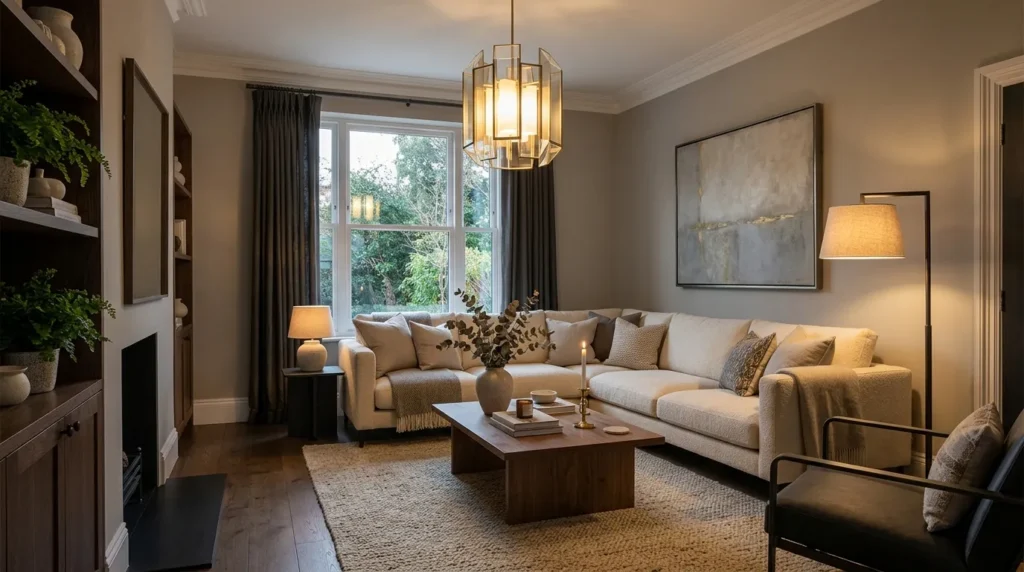
Lighting can completely change how a living room feels, yet it is often treated as an afterthought. A beautiful room can feel flat in the evening if it relies only on one overhead fixture.
Modern interiors benefit from layered lighting. Ambient lighting provides general illumination, task lighting supports activities such as reading, and accent lighting highlights artwork, shelving, or architectural features.
A statement fixture can also function as decor. An oversized pendant, sculptural floor lamp, or sleek chandelier can draw the eye upward and give the room a more finished appearance.
How To Style It
Begin with the room’s existing ceiling fixture, then add at least two additional light sources. A floor lamp beside the sofa and a table lamp on a console can create a much more comfortable evening atmosphere.
For a reading corner, choose a floor lamp with a shade or adjustable head that directs light toward the chair. Near artwork, consider a dedicated picture light or appropriately positioned accent lighting.
Warm-toned bulbs generally make living rooms feel more relaxed in the evening. Use dimmable fixtures where possible so you can adjust the atmosphere for different activities.
Scale matters, too. A large living room can usually handle a more substantial light fixture, while a smaller room may benefit from a slim floor lamp or compact pendant.
Think beyond functionality when selecting lighting. A sculptural lamp with a beautiful silhouette can serve as a decorative element even when it is turned off.
5. Soft Earth Tones
Quick Benefits
- Adds color without overwhelming the room
- Creates a grounded atmosphere
- Complements natural materials
- Works across different decorating styles
- Makes neutral furniture feel more layered
Why It Works
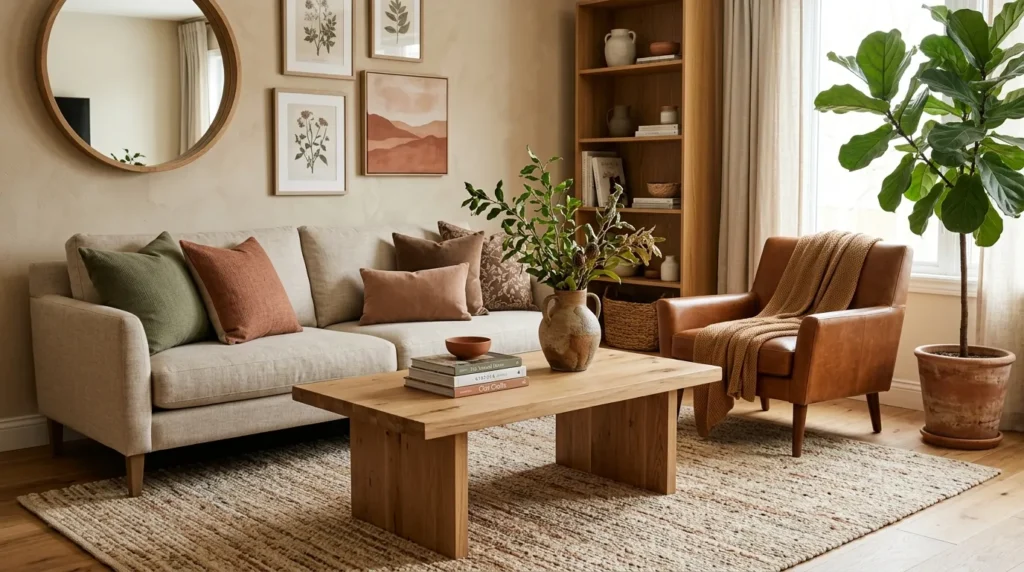
If an all-neutral living room feels too plain, earth tones provide an easy middle ground between colorless minimalism and a highly saturated palette. Shades such as olive green, clay, terracotta, muted rust, caramel, warm brown, and dusty beige bring warmth while remaining relatively easy to live with.
These colors naturally complement materials often found in modern interiors, including wood, stone, linen, leather, and ceramic.
Earth tones are also forgiving when used as accents. You don’t need to repaint the entire room. A pair of olive cushions, a terracotta vase, or a rust-colored throw can introduce enough color to change the mood.
How To Style It
Choose one primary earth tone and use it in several small ways instead of assigning a different color to every accessory.
For example, olive green might appear in two pillows, a small artwork detail, and a potted plant. Terracotta could appear through a ceramic vase and one throw.
If you prefer a more sophisticated look, combine earthy colors with warm neutrals rather than bright white. A camel chair, cream sofa, walnut table, and muted olive accents can feel especially cohesive.
Leather is another useful material for this palette. A cognac leather chair or ottoman introduces a rich warm tone while adding texture.
The key is restraint. Earth tones are beautiful because they feel natural. Too many competing shades can make the room look busy, so repeat colors strategically.
6. Minimalist Gallery Wall
Quick Benefits
- Gives an empty wall a strong purpose
- Adds personality to neutral rooms
- Creates a visual focal point
- Lets you display meaningful artwork
- Can be updated over time
Why It Works
A modern living room doesn’t have to be completely free of decoration. In fact, thoughtfully chosen artwork can make a minimalist space feel much more personal.
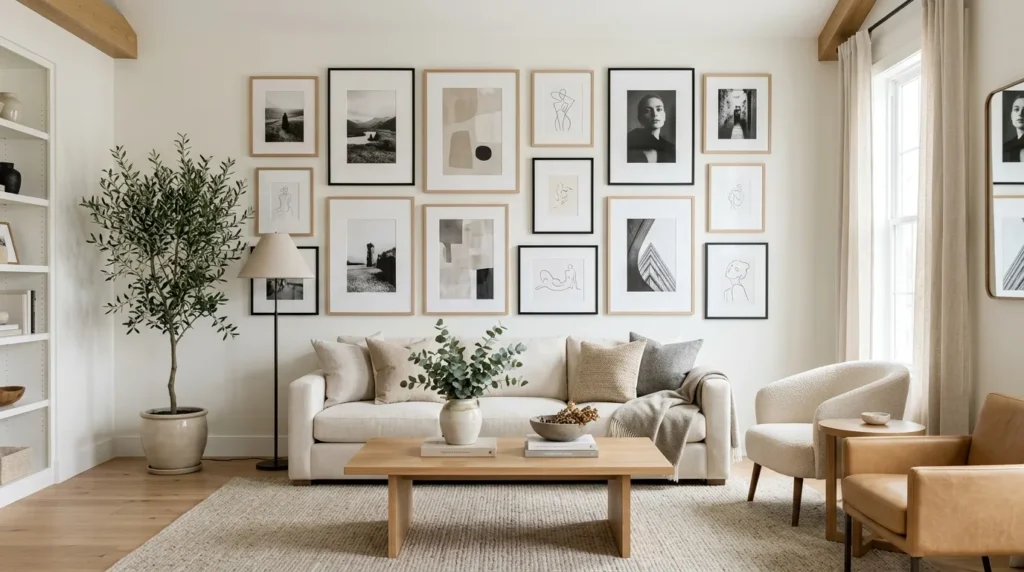
A gallery wall works particularly well above a sofa or on a large empty wall because it creates visual weight without requiring bulky furniture. The modern approach is less about filling every inch and more about creating a deliberate composition.
You can combine photography, abstract prints, line drawings, typography, and personal pieces as long as they share a visual connection.
How To Style It
Start by deciding whether you want symmetry or a more relaxed arrangement. Matching frames and consistent spacing create a structured appearance, while different frame styles and sizes can feel more collected.
For a sophisticated modern look, try a limited palette. Black-and-white photography, neutral abstract artwork, and natural wood frames can work beautifully against a warm cream wall.
Before putting holes in the wall, arrange your pieces on the floor. Leave enough space between frames for each piece to remain visually distinct.
The artwork doesn’t have to match the sofa exactly. Instead, look for shared undertones or repeated colors.
If your living room is small, a compact arrangement of three or four pieces may be more effective than a large gallery wall. A single oversized artwork can also achieve a similar effect without adding multiple visual elements.
7. Textured Neutral Sofa
Quick Benefits
- Creates a comfortable centerpiece
- Adds depth to a neutral color scheme
- Works with seasonal accessories
- Supports relaxed everyday living
- Provides a timeless decorating foundation
Why It Works
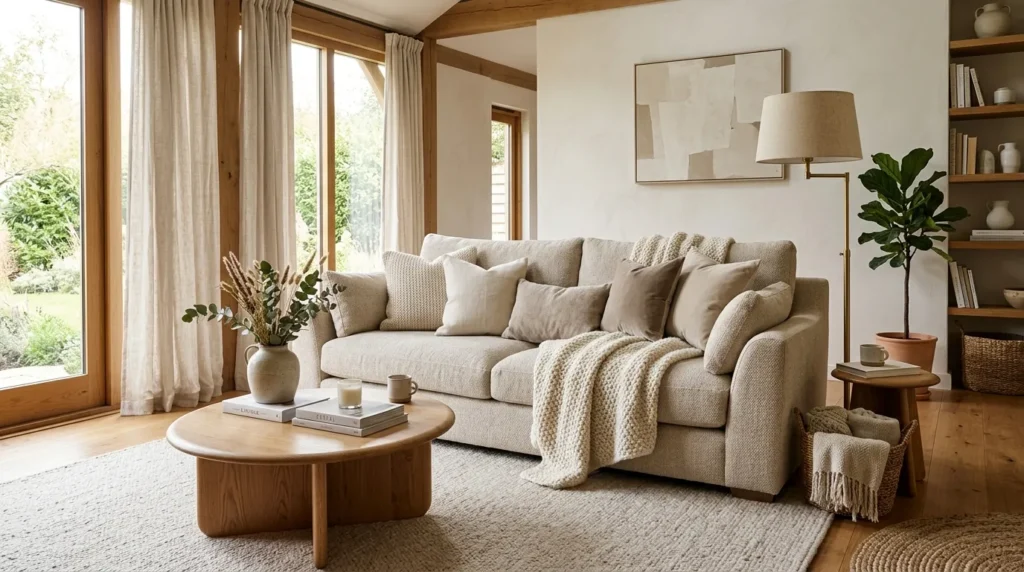
The sofa is usually the largest upholstered piece in a living room, so its texture and shape have an enormous influence on the overall design. A neutral sofa doesn’t have to be boring. In fact, a textured cream, oatmeal, taupe, or soft gray sofa can become one of the most versatile pieces in the entire home.
Boucle, linen-look upholstery, performance fabrics, brushed cotton, and textured weaves all bring subtle visual interest.
Comfort matters just as much as appearance. A living room should invite people to sit down rather than feel like a showroom where everything must remain untouched.
How To Style It
Look for a sofa with a silhouette that suits the room. A low-profile sofa can emphasize a spacious contemporary layout, while a deeper sofa can make a family room feel more relaxed.
Layer pillows in different sizes and textures rather than buying an identical matching set. Two larger neutral pillows can provide the foundation, followed by smaller accent cushions in an earth tone or subtle pattern.
Add a throw casually over one arm or the back of the sofa. This small detail can make the room feel immediately more approachable.
If you’re concerned about everyday messes, particularly in a busy household, consider durable upholstery or washable covers where available.
Place the sofa on an appropriately sized rug whenever possible. Ideally, the front legs should sit comfortably on the rug so the seating arrangement feels connected rather than scattered.
8. Modern Organic Mix
Quick Benefits
- Softens contemporary architecture
- Combines clean design with natural character
- Adds tactile interest
- Works beautifully with neutral colors
- Creates a relaxed yet polished atmosphere
Why It Works
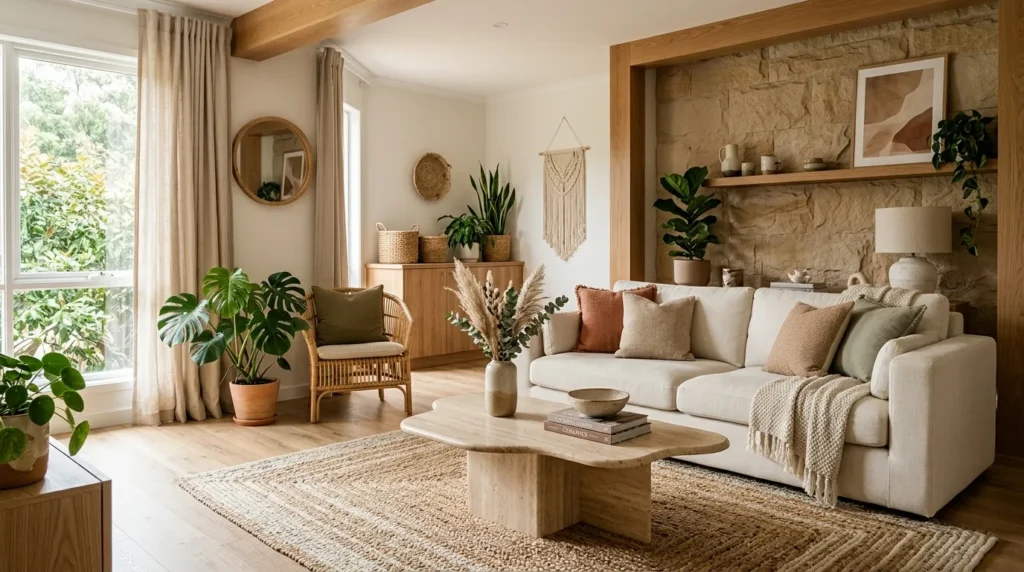
The modern organic approach is appealing because it solves a common decorating problem: how to create a contemporary room that doesn’t feel sterile.
The concept combines simple modern furniture with natural materials and imperfect textures. Think streamlined sofas paired with a stone coffee table, woven baskets, linen curtains, handmade ceramics, wood accents, and leafy plants.
The contrast is what makes the style work. A clean-lined sofa looks more interesting beside a rough ceramic vase. A smooth stone surface feels warmer when paired with woven materials.
This approach also works well for people who like modern design but want their homes to feel relaxed and personal rather than overly formal.
How To Style It
Start with a neutral foundation and introduce natural materials one at a time. A jute-style rug, oak table, linen curtains, woven basket, or ceramic lamp can each add texture without creating clutter.
Plants are particularly useful because they introduce organic shapes and a living element. Choose varieties that suit your room’s natural light rather than selecting plants based only on appearance.
For the coffee table, combine materials instead of using a collection of identical objects. A ceramic bowl, wood tray, small stack of books, and stone object can create a simple layered arrangement.
Avoid making everything perfectly symmetrical. Modern organic rooms usually look better when accessories have slight variations in height, shape, and texture.
The result should feel collected rather than decorated all at once.
9. Streamlined Built-Ins
Quick Benefits
- Provides practical storage
- Reduces visible clutter
- Creates a strong architectural feature
- Makes media areas feel more intentional
- Maximizes wall space
Why It Works
Storage is one of the biggest challenges in a living room. Books, electronics, toys, blankets, games, remotes, and everyday items can quickly make even a beautifully decorated room feel chaotic.
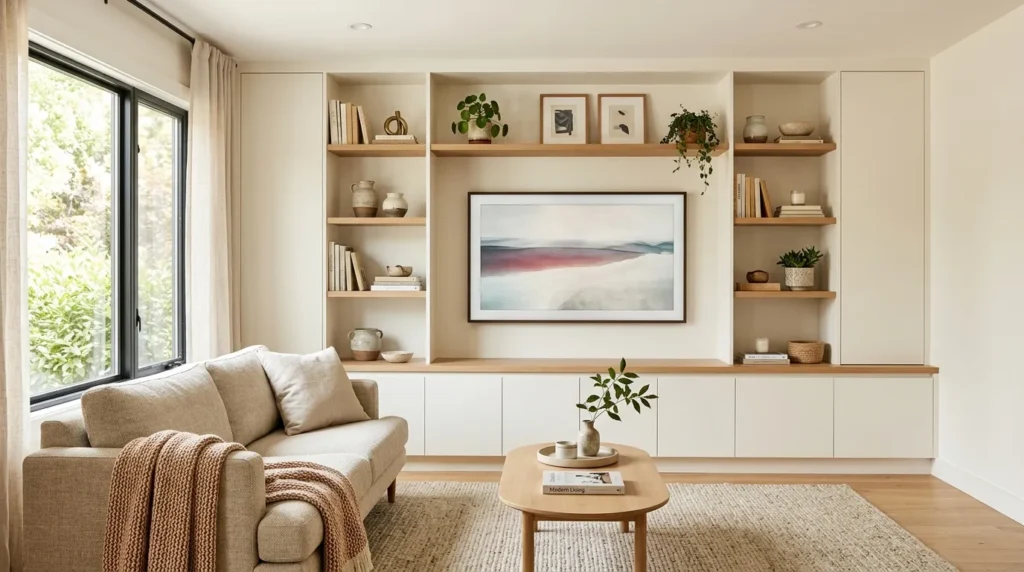
Built-ins solve this problem by giving everything a designated place while making storage part of the architecture.
A streamlined built-in doesn’t have to be elaborate. Simple cabinetry around a television, floating shelves, low storage along one wall, or a combination of closed cabinets and open shelving can create a clean backdrop.
The balance between open and closed storage is important. Closed cabinets hide everyday clutter, while open shelves provide space for books, artwork, plants, and decorative objects.
How To Style It
If you’re designing custom cabinetry, think carefully about what you actually need to store before deciding how many shelves and cabinets to include.
Use closed storage for items you don’t want on display. Reserve open shelves for pieces that contribute to the room’s appearance.
Avoid filling every shelf. Empty space is part of modern styling and helps individual objects stand out.
Try grouping objects by visual weight. A larger vase might anchor one shelf while several smaller books and ceramics balance another.
If a full built-in renovation isn’t practical, create a similar look with a freestanding media console, floating shelves, and matching storage cabinets.
Keep hardware simple if you want a contemporary appearance. Slim pulls, push-latch doors, or minimal hardware can help cabinetry blend into the room rather than dominate it.
10. Cozy Modern Corners
Quick Benefits
- Makes unused space functional
- Adds another comfortable seating option
- Creates a natural reading or relaxation area
- Gives the room more personality
- Helps larger rooms feel complete
Why It Works
Large living rooms can sometimes be surprisingly difficult to decorate because simply placing furniture around the perimeter leaves too much empty space. Smaller rooms have the opposite problem: every square foot needs to work.
A dedicated corner can solve either challenge.
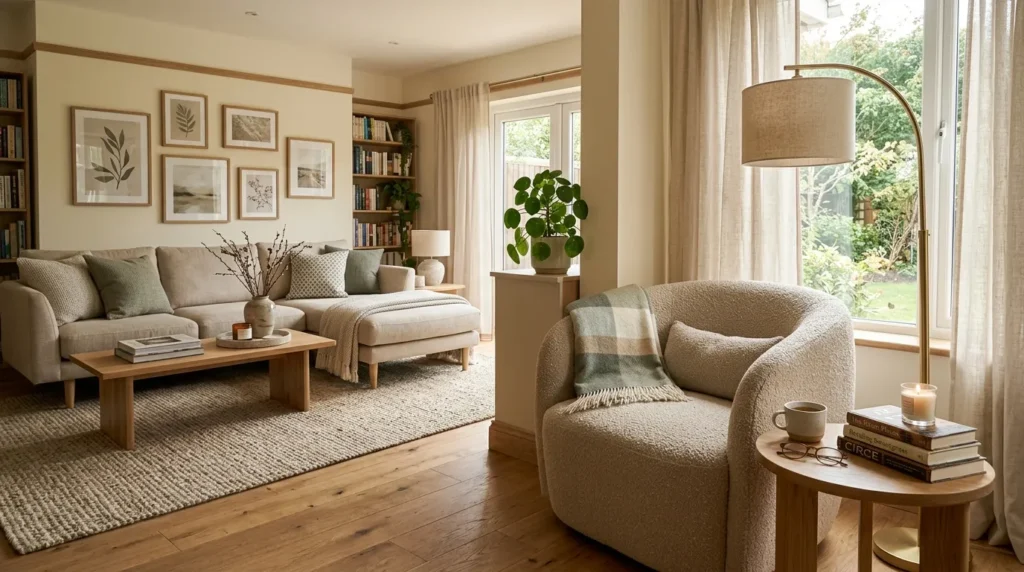
Instead of treating an empty corner as wasted space, give it a purpose. A comfortable accent chair with a floor lamp can become a reading nook. A small round table and chair can create a place for morning coffee. A plant stand can turn a bright corner into a small indoor garden.
These small moments make a living room feel more personal because they reflect how people actually use their homes.
How To Style It
Start with the activity you want the corner to support. For reading, use a comfortable chair, side table, and focused floor lamp. For conversation, choose two smaller chairs facing toward the main seating area.
In a larger room, place the corner arrangement close enough to the main seating zone that it feels connected. An area rug can help visually define the space.
Add one or two personal details such as a favorite book, framed photograph, small ceramic object, or plant.
Don’t overdecorate. The strongest cozy corners usually contain just a few carefully selected pieces.
If space is limited, choose furniture that can serve multiple purposes. A small stool can work as seating, a side table, or a footrest, while a narrow console can provide storage without taking up much floor space.
Frequently Asked Questions
What makes a living room look modern?
A modern living room typically combines clean lines, purposeful furniture, a restrained color palette, and a balance of open space and practical storage. Natural materials, layered lighting, simple artwork, and comfortable upholstery can make the design feel warmer and more livable. Modern style doesn’t require an empty room; the goal is to make each piece feel intentional.
What colors work best in a modern living room?
Warm neutrals, soft whites, beige, taupe, greige, charcoal, muted green, terracotta, brown, and other earthy shades work well in modern living rooms. The best palette depends on your home’s natural light and existing finishes. Rather than using many unrelated colors, choose a few complementary shades and repeat them throughout the space.
How can I make a modern living room feel cozy?
Layering is the easiest way to make a contemporary room feel comfortable. Add a textured rug, soft pillows, throws, warm lighting, curtains, natural wood, and a few personal accessories. Comfortable furniture also matters. A room can look polished while still having a deep sofa, inviting accent chair, and practical surfaces for everyday use.
How do I decorate a small modern living room?
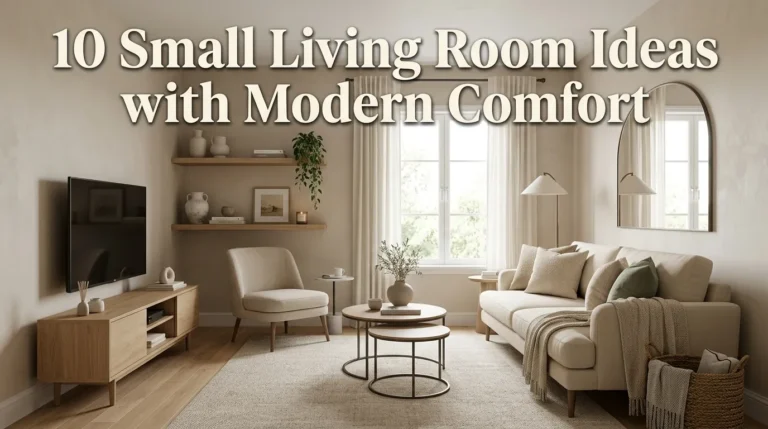
Choose furniture that fits the room without blocking pathways, and prioritize pieces that serve more than one purpose. A compact sofa, nesting tables, wall-mounted shelves, a storage ottoman, and appropriately scaled artwork can make a small room feel organized. Keeping the color palette relatively light and using mirrors strategically can also help maintain an open visual effect.
Should modern living room furniture match?
Furniture doesn’t need to be an identical set. In many cases, mixing complementary pieces creates a more interesting and personalized room. Keep the overall design connected through repeated materials, colors, shapes, or finishes. For example, different chairs can still work together if they share a similar neutral upholstery or coordinate with the room’s wood tones.
How do I style a modern living room without making it look cluttered?
Start by choosing a few larger foundational pieces and leave breathing room around them. Use closed storage for everyday items and reserve open surfaces for meaningful or attractive objects. Instead of filling every table and shelf, select a small number of accessories with different heights and textures. Editing your decor periodically can also keep the room feeling fresh.
What is the best lighting for a modern living room?
A combination of ambient, task, and accent lighting usually works better than relying on one ceiling fixture. Consider a ceiling light for general illumination, a floor lamp beside seating, table lamps on consoles or side tables, and accent lighting for artwork or shelving. Dimmable lighting is especially useful because the room may need different brightness levels throughout the day.
Conclusion
A modern living room can be polished without feeling precious and stylish without sacrificing comfort. The most successful spaces usually start with a simple foundation and build personality through texture, lighting, natural materials, artwork, and carefully selected furniture.
You don’t have to change everything at once. If your room feels flat, begin with texture. If it feels cold, introduce warm wood and softer lighting. If it feels cluttered, improve storage before buying more decoration. And if the layout doesn’t feel comfortable, move the furniture before assuming you need new pieces.
The beauty of modern design is that it gives you plenty of room to make the space your own. Warm neutrals can create a peaceful retreat, earth tones can add personality, sculptural furniture can provide a focal point, and a cozy corner can make an overlooked part of the room useful.
Most importantly, let the room support the way you actually live. A beautiful living room should still have somewhere to put your coffee, stretch out with a book, entertain friends, and relax at the end of the day.
Start with one or two ideas that fit your current space, then build from there. The result can be a living room that feels contemporary, welcoming, and genuinely worth coming home to.
Related Articles
- 10 Cozy Living Room Ideas for a Warm and Inviting Home
- 10 Small Living Room Layout Ideas That Maximize Space
- 10 Neutral Home Decor Ideas for a Calm and Timeless Look
- 10 Modern Farmhouse Living Room Ideas
- 10 DIY Accent Wall Ideas to Transform Your Living Room