How to Decorate a Bedroom with Elegant Decor
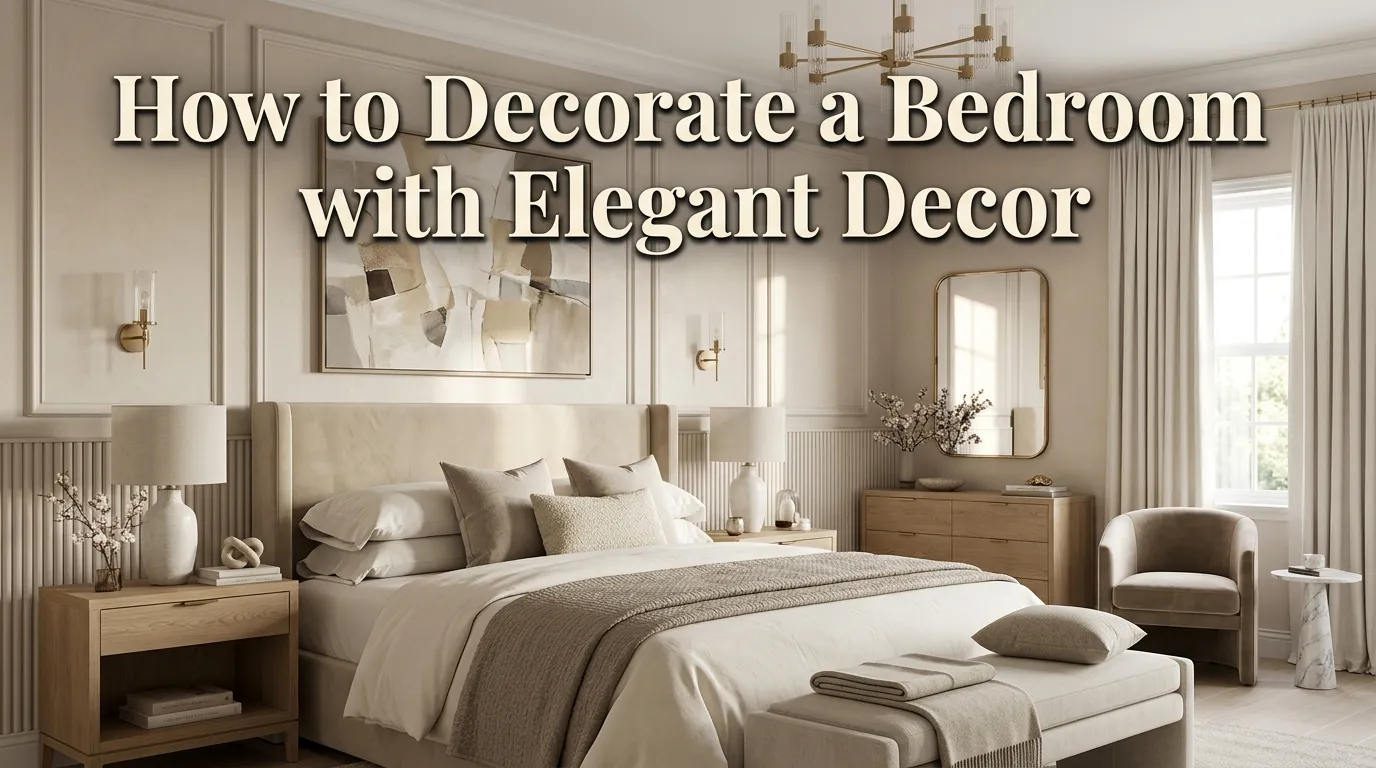
An elegant bedroom doesn’t have to feel formal, expensive, or overly decorated. The most beautiful bedrooms often combine a simple color palette, comfortable furnishings, thoughtful lighting, and a few refined details that make the space feel personal. The goal is to create a room that looks polished while still feeling like somewhere you genuinely want to relax at the end of the day.
Elegant decor is especially effective in a bedroom because the space benefits from visual calm. Soft fabrics, balanced furniture, warm lighting, and restrained accessories can create an atmosphere that feels sophisticated without becoming cold. You don’t need matching furniture sets or luxury materials everywhere. In many cases, choosing a few beautiful elements and allowing them room to stand out creates a much more elevated result.
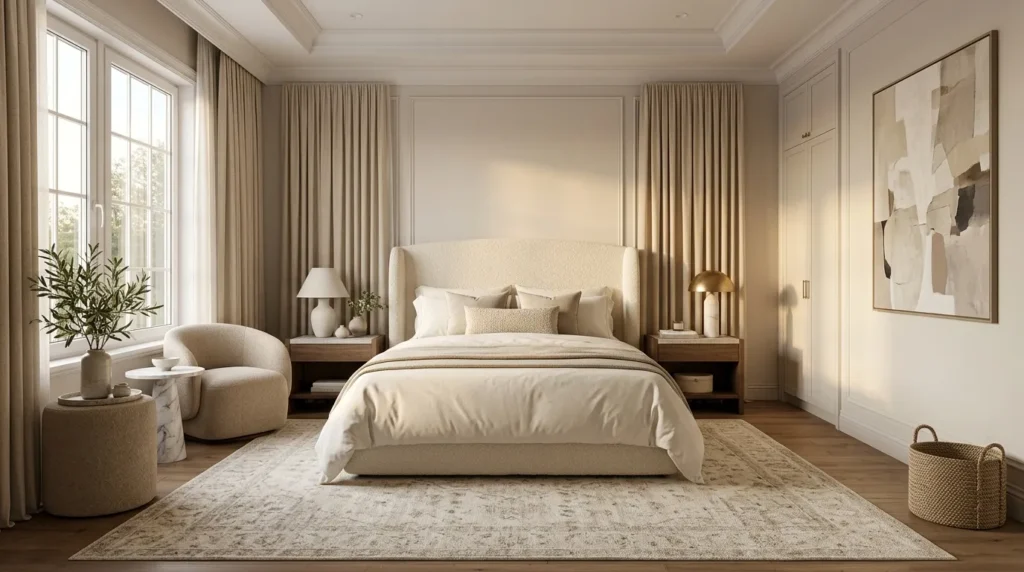
I’ve noticed that the biggest difference between an ordinary bedroom and an elegant one often comes down to presentation. A neatly layered bed, properly hung curtains, coordinated bedside tables, and carefully chosen artwork can make affordable furnishings look considerably more intentional.
Whether you’re refreshing a primary bedroom, decorating a guest room, or giving a rental a more sophisticated appearance, the same principles can help. Start with the foundation, work with what you already have, and add details gradually instead of trying to complete the entire room in one shopping trip.
These ideas will help you create a bedroom that feels graceful, comfortable, and timeless while still being practical for everyday life. From choosing a refined color palette to layering bedding and improving lighting, each change can contribute to a room that feels more finished and inviting.
Table of Contents
1. Refined Color Palette
Build an elegant foundation with coordinated neutral tones and subtle contrast.
2. Layered Bedding
Create a polished focal point with comfortable layers of bedding and textiles.
3. Upholstered Headboard
Add softness and visual height with a sophisticated upholstered bed feature.
4. Statement Lighting
Use elegant lighting to create warmth, balance, and atmosphere.
5. Matching Bedside Tables
Create symmetry with coordinated nightstands and thoughtfully styled surfaces.
6. Floor-Length Curtains
Use flowing window treatments to add softness and emphasize ceiling height.
7. Classic Artwork
Bring personality into the room with carefully selected artwork and refined framing.
8. Textured Accessories
Introduce depth through fabrics, ceramics, wood, glass, and subtle decorative details.
9. Elegant Accent Seating
Give the bedroom another useful function with a comfortable, stylish chair or bench.
10. Minimal Styling
Edit the room carefully so every decorative element feels intentional.
1. Refined Color Palette
Quick Benefits
- Creates a calm foundation
- Makes the room feel cohesive
- Allows elegant details to stand out
- Works with many decorating styles
- Makes future updates easier
Why It Works
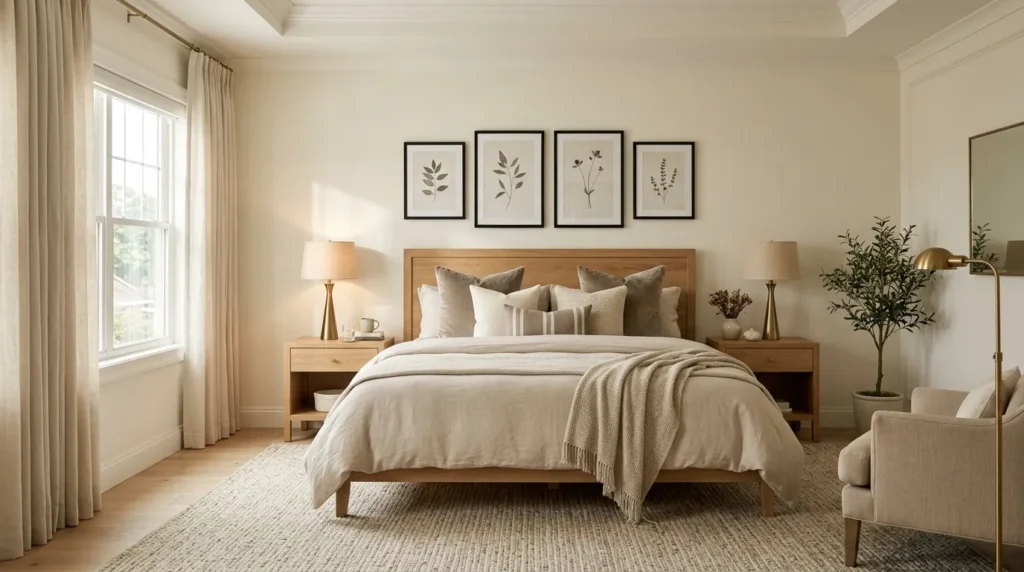
Color is one of the first things you notice when entering a bedroom, so a refined palette can immediately make the space feel more sophisticated. Soft ivory, warm white, beige, taupe, greige, muted blue, dusty rose, and soft charcoal can all create an elegant foundation when used thoughtfully.
The key is coordination rather than using only one color. A room with several related tones often feels richer than a room decorated entirely in one shade.
Warm neutrals are especially versatile because they work with natural wood, brass, black accents, cream textiles, and many different artwork styles. They also provide a quiet backdrop that allows architectural details and beautiful furnishings to receive attention.
A common mistake is adding too many accent colors because the bedroom starts to feel unfinished. In an elegant room, restraint usually creates a stronger impression.
How To Style It
Choose one dominant color for the walls and larger surfaces, then add one or two supporting shades through bedding, curtains, rugs, and upholstery.
For a classic look, combine warm white walls with beige bedding, natural wood, and brushed brass accents. For a more dramatic bedroom, use soft taupe or deep muted blue behind the bed while keeping the textiles lighter.
Repeat colors throughout the room so the design feels connected. For example, a dusty blue cushion can echo a shade found in artwork or a small decorative vase.
If you’re unsure about a paint color, test samples in both daylight and evening light. Bedroom colors can look considerably different depending on the amount and temperature of lighting in the space.
2. Layered Bedding
Quick Benefits
- Creates an elegant focal point
- Adds softness and comfort
- Makes the bed look more finished
- Allows seasonal updates
- Introduces color and texture
Why It Works
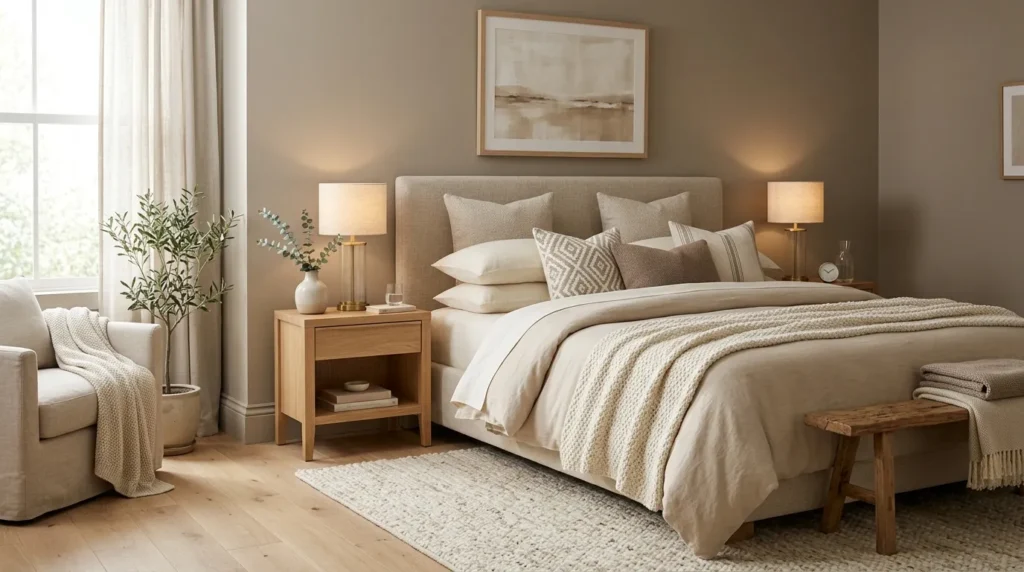
The bed usually occupies the largest visual area in a bedroom, which makes bedding one of the most important elements of the overall design. A beautifully layered bed can make the entire room feel more polished without changing the furniture.
Instead of relying on a single duvet or comforter, combine several layers with slightly different textures. Crisp sheets, a duvet or quilt, a folded blanket, and a few carefully chosen pillows can create depth.
The goal is not to make the bed look excessively staged. An elegant bedroom should still feel comfortable and inviting. Natural-looking folds and soft textiles can actually make the room feel more luxurious than perfectly rigid styling.
I’ve found that a restrained color palette works particularly well here. When the colors are coordinated, the different textures become the visual interest.
How To Style It
Begin with quality-feeling sheets in white, cream, or another neutral. Add a duvet or coverlet, then fold a textured blanket across the lower third of the bed.
Use pillows in different sizes rather than filling the entire headboard with decorative cushions. Two or three layers are often enough for a polished appearance.
Introduce one subtle accent color through a lumbar pillow, throw, or patterned cushion. Keep patterns understated if the rest of the room already has several decorative elements.
For seasonal changes, swap heavier blankets and richer textures during colder months and use lighter quilts or linen-look bedding during warmer weather.
3. Upholstered Headboard
Quick Benefits
- Creates a strong focal point
- Adds softness behind the bed
- Makes the bedroom feel finished
- Provides visual height
- Works with classic and modern styles
Why It Works
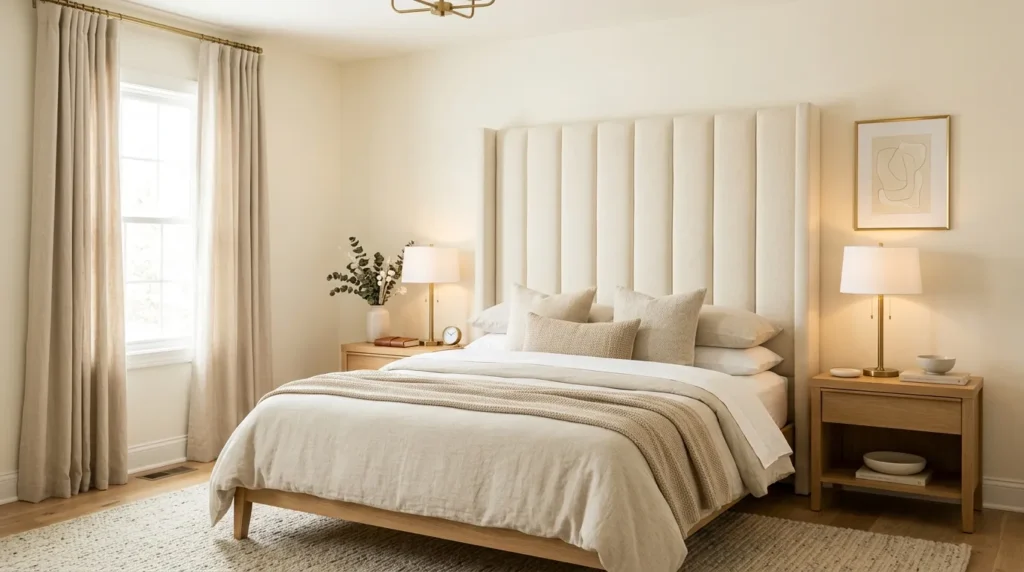
An upholstered headboard instantly gives the bed a more substantial and finished appearance. It also introduces a soft material into a room that may otherwise contain many hard surfaces.
Neutral upholstery is especially versatile. Cream, oatmeal, beige, taupe, and soft gray can complement a wide range of wall colors and bedding.
A tall headboard can also emphasize the vertical dimension of the room, making the bed feel more substantial without requiring additional furniture.
You don’t need an elaborate tufted design to create an elegant look. A simple rectangular headboard with clean lines can feel just as sophisticated, especially when paired with beautiful bedding and balanced bedside lighting.
How To Style It
Choose the headboard based on the size and style of the room. A taller design can work beautifully in a bedroom with higher ceilings, while a lower profile may be better for a compact space.
Boucle, linen-look, velvet, and woven upholstery can each create a different atmosphere. For timeless elegance, neutral fabric with subtle texture is usually a safe choice.
Center the headboard carefully and make sure bedside tables and lighting feel proportionate to it.
If replacing the bed isn’t practical, consider a wall-mounted upholstered headboard or a padded panel system, provided it is suitable for your wall and installation requirements.
4. Statement Lighting
Quick Benefits
- Creates a sophisticated focal point
- Adds warmth
- Improves bedside functionality
- Enhances decorative details
- Changes the mood of the room
Why It Works
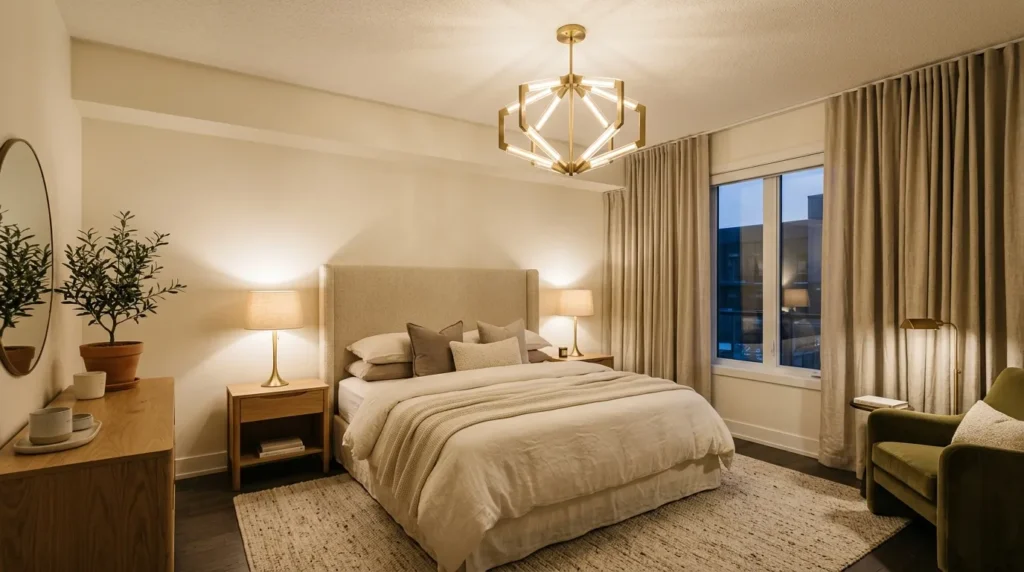
Beautiful lighting can make even simple bedroom furniture feel more elegant. Rather than relying entirely on one ceiling fixture, layer multiple sources to create a warmer and more flexible atmosphere.
A chandelier, pendant, or sculptural ceiling fixture can provide a central statement, while bedside lamps or sconces provide practical reading light.
Lighting also influences how colors and materials appear. Warm illumination can make cream bedding, wood, and brass accents feel richer and more inviting.
One thing that works especially well in elegant bedrooms is symmetry. Matching bedside lamps or wall sconces can create a balanced appearance around the bed, while a central statement fixture provides a focal point above.
Always make sure fixtures are appropriate for their location and installed safely according to applicable electrical requirements.
How To Style It
Choose one main fixture that complements the scale of the room. A large bedroom can handle a more substantial chandelier or pendant, while a smaller space may benefit from a simpler fixture.
Place matching lamps on both bedside tables when possible. If you prefer sconces, position them at a practical height for reading and everyday use.
Use warm, comfortable lighting for the overall atmosphere while maintaining enough illumination for practical tasks.
For an extra layer, add a small lamp to a dresser or accent table. This creates a gentle glow that makes the room feel more inviting in the evening.
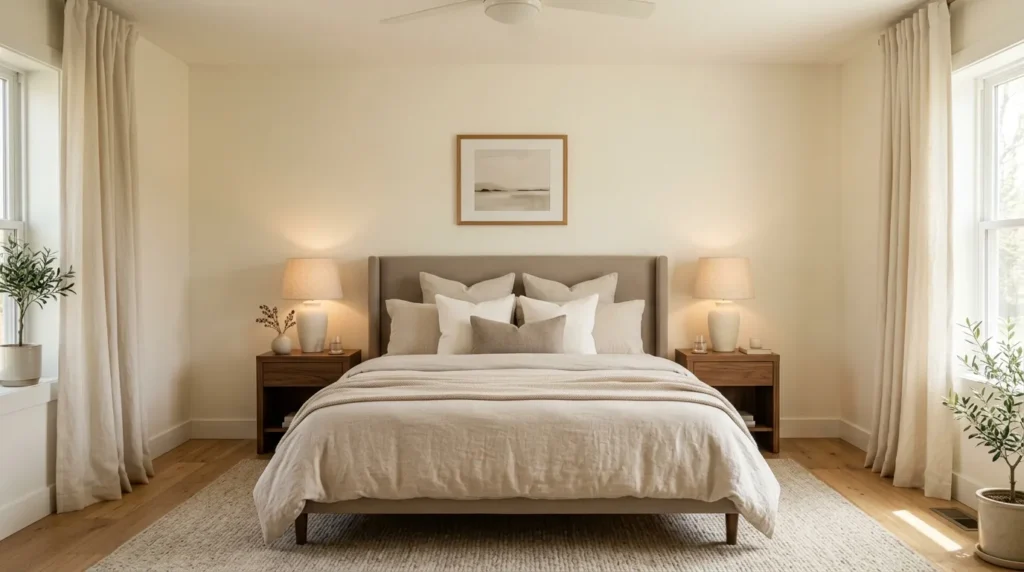
5. Matching Bedside Tables
Quick Benefits
- Creates visual symmetry
- Provides useful storage
- Makes the bed area feel balanced
- Supports coordinated lighting
- Helps reduce clutter
Why It Works
Symmetry is a simple design principle that often makes bedrooms feel more elegant. Matching bedside tables create visual balance on both sides of the bed and provide natural locations for lamps, books, glasses, and other nighttime essentials.
The tables don’t have to be expensive. What matters most is proportion and coordination.
If the bed is large and substantial, tiny nightstands can look lost beside it. Conversely, oversized bedside cabinets can make a compact bedroom feel crowded.
Elegant design usually comes from getting these proportions right.
How To Style It
Choose nightstands that are approximately level with the mattress or slightly below it. This makes lamps and everyday items easy to reach.
Keep each surface relatively simple. A lamp, small vase, book, or decorative tray may be enough.
If you need additional storage, choose nightstands with drawers rather than adding more furniture around the bed.
Matching doesn’t necessarily mean identical. Two nightstands with the same proportions and finish can create symmetry even if their details differ slightly.
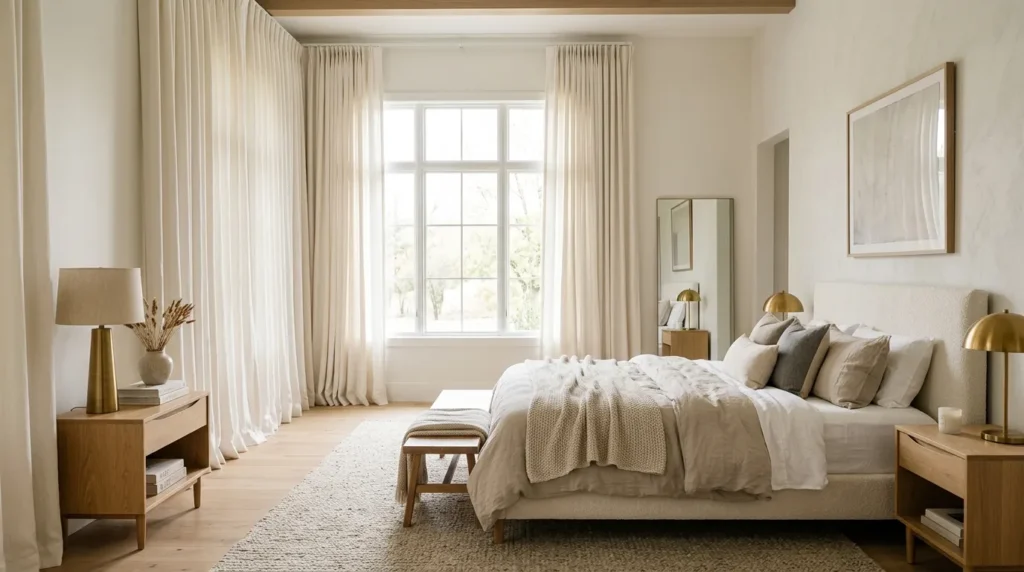
6. Floor-Length Curtains
Quick Benefits
- Adds softness
- Emphasizes ceiling height
- Creates a finished appearance
- Helps frame windows
- Adds privacy and light control
Why It Works
Window treatments can have a surprisingly large effect on bedroom elegance. Curtains that are too short or mounted too low can make the room feel visually unfinished.
Floor-length curtains create long vertical lines that draw attention upward and give the bedroom a more polished appearance.
Neutral fabrics work particularly well because they soften the room without competing with the bed or artwork.
For many bedrooms, mounting curtain hardware higher and wider than the window itself can make the window treatment feel more substantial. However, the exact placement should account for the window, wall structure, and available space.
How To Style It
Choose curtains that reach close to the floor. Linen-look, cotton, velvet, or softly textured fabrics can all create an elegant effect.
For a light and airy room, use ivory or warm white panels. For more contrast, choose taupe, muted gray, or another shade that relates to the bedding.
If the room receives strong sunlight, use an appropriate lining or combine decorative curtains with functional shades.
Avoid excessive patterns unless the rest of the bedroom is very simple. Solid or subtly textured curtains generally create a more timeless look.
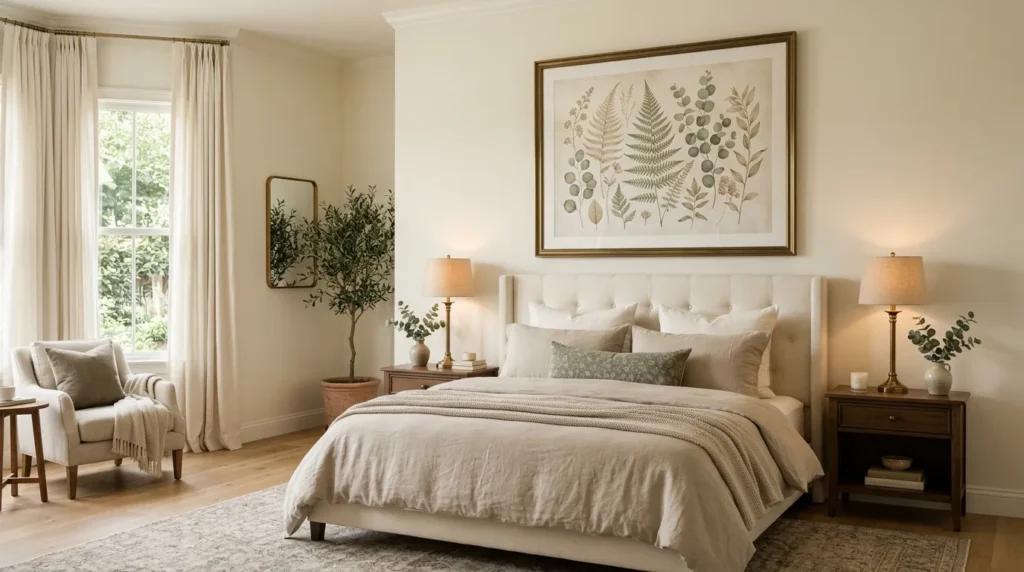
7. Classic Artwork
Quick Benefits
- Adds personality
- Creates a focal point
- Makes walls feel finished
- Introduces color subtly
- Supports the room’s overall style
Why It Works
Artwork makes a bedroom feel personal rather than simply decorated. Elegant rooms often benefit from artwork that has a calm visual quality rather than something overly busy.
Botanical prints, soft landscapes, abstract paintings, black-and-white photography, and simple line art can all work beautifully.
The frame is also important. A simple wood, black, brass, or neutral frame can help connect the artwork with other materials in the room.
One carefully selected large piece above the bed can make a stronger impression than several tiny pieces scattered across different walls.
How To Style It
Use the area above the headboard as the primary focal point if the wall allows it. Choose artwork that is appropriately proportioned to the bed.
For a symmetrical bedroom, centered artwork can reinforce the balanced layout. If you prefer a more collected appearance, create a small arrangement using two or three coordinated pieces.
Keep colors related to the bedroom palette. Artwork doesn’t need to match the bedding exactly, but it should feel connected to the surrounding tones.
If you’re renting, use appropriate removable hanging solutions where suitable and follow their weight and installation instructions.
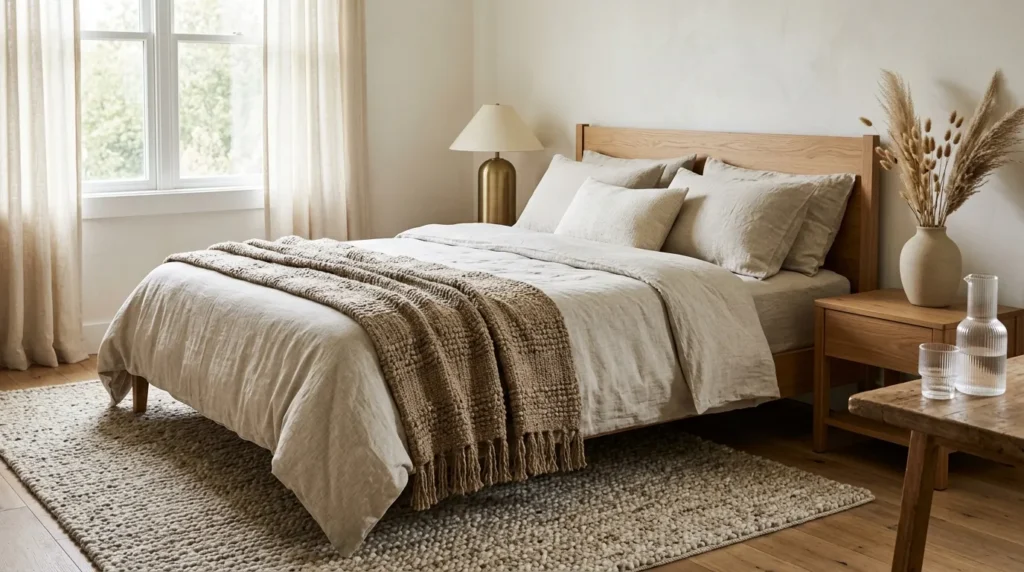
8. Textured Accessories
Quick Benefits
- Adds visual depth
- Softens hard furniture
- Creates a layered appearance
- Makes neutral rooms more interesting
- Allows affordable updates
Why It Works
Elegant bedrooms are rarely about one material. The beauty often comes from combining several textures that complement one another.
Smooth bedding can be paired with a woven throw. A polished nightstand can sit beside a textured fabric headboard. Ceramic accessories can contrast with natural wood.
These subtle differences keep a neutral bedroom from looking flat.
Texture is also a practical way to add personality without relying on bright colors. If you prefer a quiet palette, use materials to create the variation instead.
A mistake many homeowners make is buying decorative objects based only on color. Considering texture and shape often produces a much more sophisticated result.
How To Style It
Choose accessories made from materials such as ceramic, glass, wood, woven fibers, linen, metal, or stone.
Place a small number of objects on the dresser and bedside tables rather than decorating every surface.
A ceramic vase, a stack of books, a small tray, or a textured box can be enough. Add a soft throw across a bench or the foot of the bed for another layer.
Repeat materials subtly throughout the room. For example, if you use brass lighting, a small brass frame or decorative object can create continuity.
9. Elegant Accent Seating
Quick Benefits
- Adds another functional zone
- Makes the room feel complete
- Provides a place to read or relax
- Creates visual balance
- Can fill unused corners
Why It Works
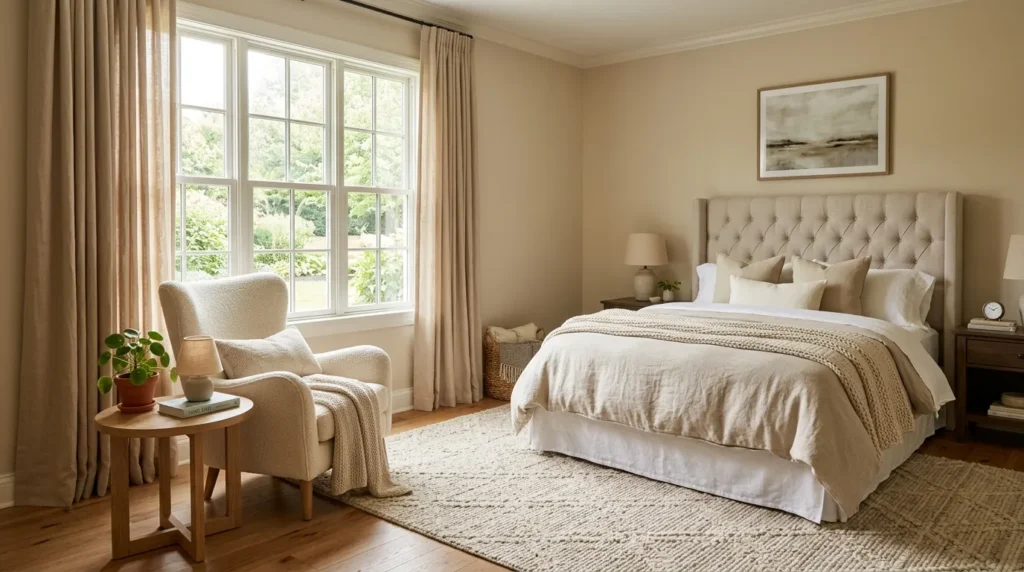
An elegant bedroom doesn’t have to be entirely centered around the bed. If space allows, an accent chair or bench can create a secondary area for reading, dressing, or simply sitting.
A chair positioned beside a window can turn an unused corner into a peaceful reading spot. A bench at the foot of the bed can provide a practical place to sit while also reinforcing the room’s layered appearance.
The important factor is proportion. Large furniture can quickly make a bedroom feel crowded.
How To Style It
Choose seating that relates to the bed and other upholstery. A cream boucle chair, velvet accent chair, or simple upholstered bench can add softness without requiring much decoration.
Place a small side table beside a chair if you have enough space. A lamp can make the area useful in the evening.
At the foot of the bed, select a bench that is slightly narrower than the mattress. This keeps the proportions visually comfortable.
If the room is small, don’t force an accent chair into it. Empty floor space can be more valuable than another decorative piece.
10. Minimal Styling
Quick Benefits
- Keeps the room calm
- Makes elegant details more noticeable
- Simplifies cleaning
- Prevents visual clutter
- Creates a timeless appearance
Why It Works
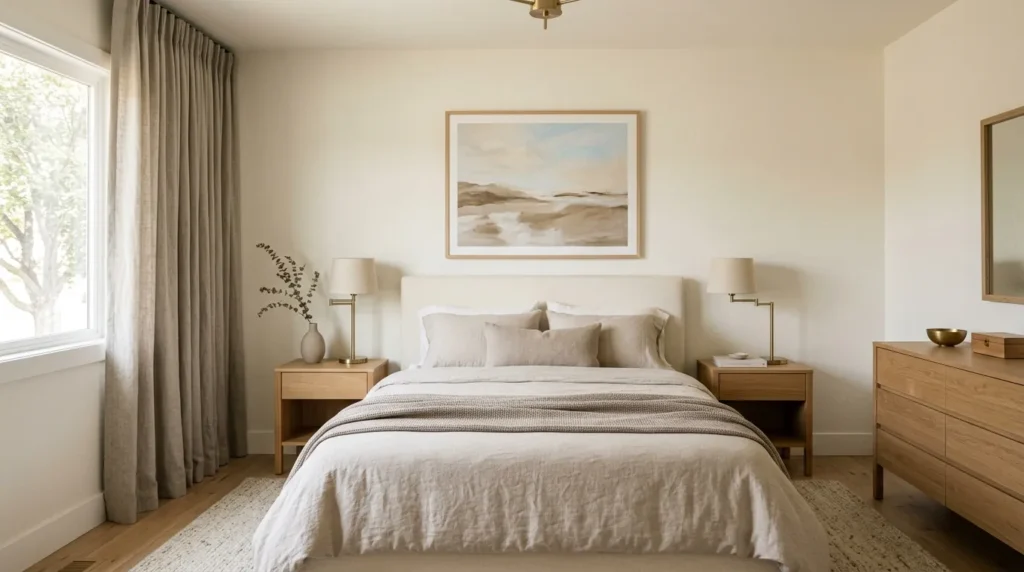
Elegant decor is often more about editing than adding. A room can have beautiful furniture and expensive accessories yet still feel chaotic if every surface is filled.
Minimal styling allows the eye to appreciate individual pieces. It also creates a sense of space, which is particularly valuable in smaller bedrooms.
This doesn’t mean the room should feel empty. The goal is to choose objects that are beautiful, useful, or personally meaningful.
I’ve noticed that bedrooms often become more sophisticated after removing a few unnecessary items rather than purchasing new ones.
How To Style It
Start by clearing the main surfaces: nightstands, dresser tops, shelves, and benches. Then return only the pieces that contribute to the room.
Use trays to group small items. Keep everyday essentials accessible but organized.
Leave some areas completely empty. Negative space gives decorative objects room to stand out.
If you’re unsure about an accessory, remove it temporarily and look at the room again. If the space feels calmer and more balanced without it, you probably don’t need it.
How To Make a Bedroom Look Elegant on a Budget
Elegant bedroom decor does not require a complete furniture replacement. In many cases, the biggest improvements come from changing presentation rather than buying expensive pieces.
Start with the bed because it is usually the largest focal point. Fresh bedding, coordinated pillows, and a neatly folded throw can make the room feel dramatically more polished.
Next, look at the lighting. Replace outdated lamps where practical, add matching shades, or introduce a warm bedside light. Even changing the bulbs to an appropriate warm color temperature can alter the atmosphere.
Curtains are another high-impact update. Floor-length panels can make windows feel larger and give the entire room a more finished appearance.
Then edit your surfaces. Remove unnecessary objects from nightstands and dressers and group remaining items into intentional arrangements.
Finally, introduce one or two refined materials such as wood, ceramic, glass, linen, or brushed metal. These details can provide the visual richness associated with elegant interiors without requiring luxury prices.
Elegant Bedroom Color Combinations
A sophisticated bedroom can be built around many different color combinations.
Cream and warm beige create a soft, timeless atmosphere. Add natural wood and brushed brass for warmth.
Ivory and muted blue create a calm, slightly cooler look. This combination works particularly well with white bedding and light wood.
Taupe and cream provide subtle contrast without becoming dramatic. Add black accents for a more modern appearance.
Soft gray and white can create a clean, elegant room, especially when balanced with warm wood and textured fabrics.
Dusty rose and ivory offer a gentle romantic feeling without becoming overly feminine. Use the pink tone sparingly through pillows, artwork, or a throw.
The important thing is consistency. Repeat your chosen colors in at least several places so the room feels connected.
How To Make a Bedroom Feel Luxurious
Luxury is often associated with large rooms and expensive materials, but many of the qualities that make a bedroom feel luxurious are achievable at almost any budget.
Comfortable bedding is a strong starting point. Layer textiles and choose fabrics that feel pleasant against the skin.
Next, improve the lighting. Multiple warm light sources create a more sophisticated atmosphere than a single bright ceiling fixture.
Keep clutter under control. A clear nightstand and neatly arranged dresser can make the entire bedroom feel more polished.
Use natural materials wherever possible. Wood, linen, cotton, wool-like textures, stone, and ceramics add depth.
Finally, choose fewer decorative objects but make each one count. One beautiful vase or artwork can have more impact than a collection of unrelated pieces.
Common Elegant Bedroom Decorating Mistakes
One of the most common mistakes is using too many matching elements. A perfectly coordinated furniture set can sometimes make a bedroom feel more like a showroom than a personal home. Mix complementary pieces when possible.
Another issue is poor scale. A tiny rug beneath a large bed or very small lamps beside a substantial headboard can make the room feel unbalanced.
Don’t ignore the ceiling and windows. Lighting fixtures and floor-length curtains contribute significantly to the room’s vertical proportions.
Avoid excessive decoration on every available surface. Elegant bedrooms need breathing room.
Finally, don’t sacrifice comfort for appearance. A bedroom is one of the most personal rooms in the home. If a beautiful chair is uncomfortable or the decorative bedding makes the bed difficult to use, the design isn’t serving its purpose.
FAQ
How can I make my bedroom look elegant?
Use a restrained color palette, layered bedding, balanced bedside furniture, warm lighting, floor-length curtains, and a few carefully selected accessories. Elegant bedrooms usually feel cohesive rather than overly decorated. Focus on proportion, texture, and symmetry, then remove unnecessary clutter so the most beautiful elements have room to stand out.
What colors make a bedroom look luxurious?
Cream, ivory, beige, taupe, muted blue, soft gray, and dusty rose can all create an elegant atmosphere. The color itself is less important than how it is combined. Layering related shades through walls, bedding, curtains, and accessories creates depth while keeping the room visually calm.
How do I decorate an elegant bedroom on a budget?
Start with high-impact, affordable changes such as new bedding, coordinated pillows, warm lighting, floor-length curtains, and decluttering. Rearranging furniture can also improve the room without costing anything. Add one or two natural or refined materials, such as wood, ceramic, linen, or metal, instead of buying many small accessories.
Should an elegant bedroom have matching furniture?
Matching furniture can create symmetry, but an entire matching set isn’t necessary. A pair of coordinated bedside tables can provide balance while the dresser, bench, chair, or bed can have slightly different finishes. Mixing complementary pieces often gives the bedroom a more collected and personal appearance.
What type of lighting is best for an elegant bedroom?
Layered lighting generally works best. Combine a central ceiling fixture with bedside lamps or sconces and, when practical, another small light source. Warm, comfortable illumination can make bedding, wood, and neutral colors feel richer. Make sure all fixtures are appropriate for their location and installed safely.
How many pillows should an elegant bed have?
There is no fixed number, but restraint usually looks more polished. Start with sleeping pillows, then add a few decorative layers in complementary textures and sizes. A lumbar cushion or one pair of accent pillows may be enough. The bed should remain comfortable to use rather than becoming overloaded with decorative cushions.
How can I make a small bedroom look elegant?
Prioritize proportion, symmetry, and visual simplicity. Choose furniture that fits the room, keep pathways clear, use a restrained palette, and take advantage of vertical space. Floor-length curtains can emphasize height, while matching bedside tables and layered lighting can create a polished focal point without requiring additional furniture.
Conclusion
An elegant bedroom doesn’t need to look extravagant to feel special. The most successful designs balance beauty with comfort, creating a room that feels polished while still being easy to live in.
Start with the foundation: choose a calm color palette and make the bed the visual centerpiece. Then layer in comfortable bedding, soft textures, warm lighting, and window treatments that give the room a finished appearance. Add artwork, natural materials, and a few personal objects to keep the space from feeling too staged.
Symmetry can help create a refined appearance, but don’t be afraid to mix complementary furniture and materials. A bedroom becomes much more interesting when it feels collected over time rather than purchased as one complete set.
Most importantly, remember that elegance is often created through restraint. Give beautiful pieces room to breathe, keep everyday clutter organized, and don’t add something simply because there is an empty surface.
Start with one area that bothers you most—perhaps the bed, lighting, or bedside tables—and improve it first. Then build gradually until the entire room feels cohesive.
The result should be more than a beautiful bedroom. It should be a comfortable retreat that feels peaceful at night, welcoming in the morning, and unmistakably yours.
Related Articles
- 10 Cozy Bedroom Ideas for a Warm and Relaxing Space
- 10 Neutral Bedroom Ideas with Timeless Style
- How to Make a Small Bedroom Feel Bigger
- 10 Bedroom Decor Ideas for a Calm Retreat
- 10 Modern Bedroom Ideas with Simple Elegant Style