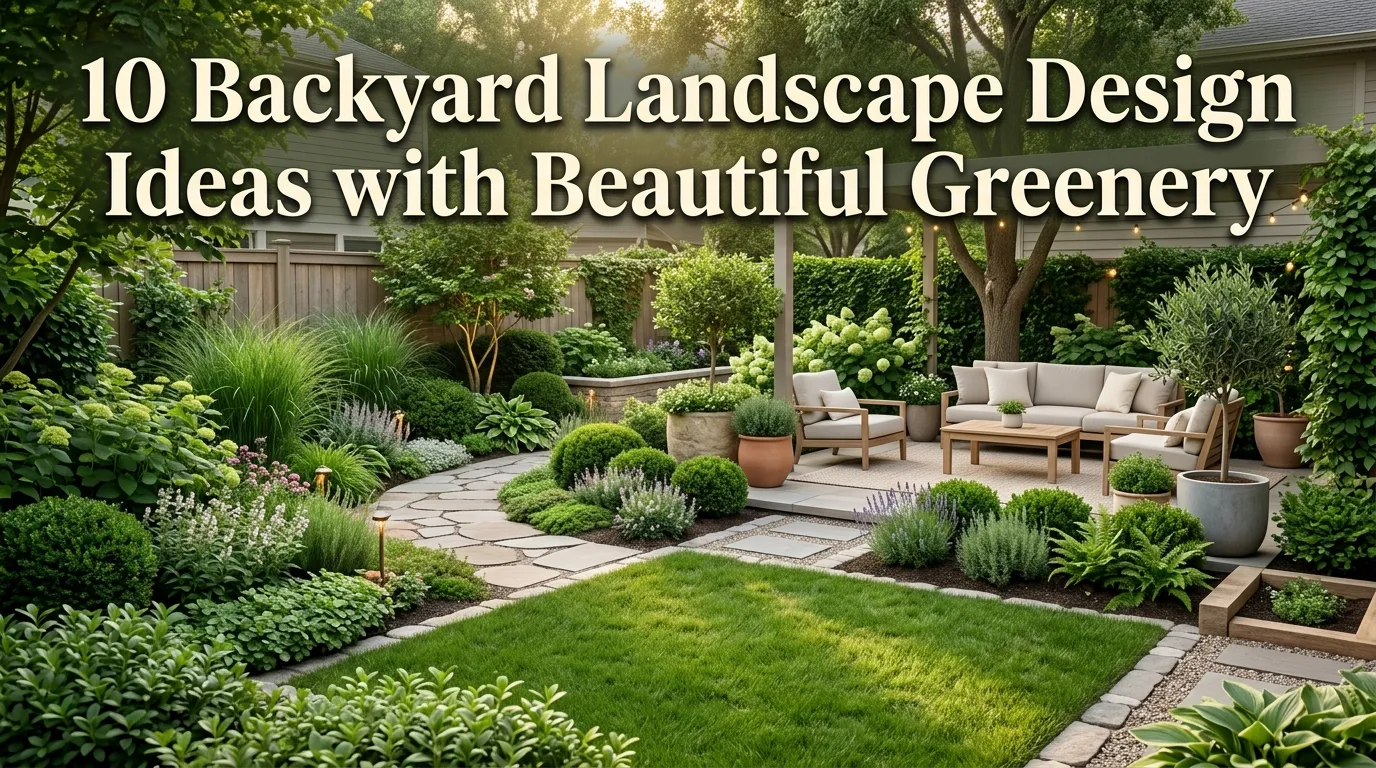
10 Backyard Landscape Design Ideas with Beautiful Greenery
A beautiful backyard can completely change how you experience your home. Even a modest outdoor space can become a peaceful retreat when greenery, seating, pathways, and planting areas are arranged with intention. The trick is not simply adding more plants. A successful landscape balances greenery with open space, practical features, and a layout that feels natural to use.
Greenery is especially effective because it adds softness, color, texture, and seasonal interest without making the yard feel overly formal. Trees can provide height and shade, shrubs can define boundaries, ornamental grasses can add movement, and flowering plants can introduce color exactly where you want the eye to land.
In my experience, one of the biggest landscaping mistakes homeowners make is buying plants before deciding how they want to use the backyard. A beautiful plant can still be the wrong choice if it blocks a pathway, grows too large for the space, or requires more maintenance than you’re willing to provide. Starting with the layout makes everything else easier.
The best backyard designs also consider how the space will feel throughout the year. Evergreen plants can provide structure, while seasonal flowers and foliage create changing interest. Layering different plant heights can make even a small yard feel richer and more established.
Whether you’re working with a large suburban backyard, a narrow side yard, or a compact outdoor space, these ideas can help you create a landscape that feels lush, welcoming, and easy to enjoy. You don’t have to complete everything at once. Start with one area, establish a strong foundation, and let the landscape develop over time.
Table of Contents
1. Layered Garden Beds
Create depth with plants arranged at different heights and textures.
2. Lush Privacy Borders
Use greenery to define property edges and create a more private retreat.
3. Curved Garden Paths
Add movement and visual interest with gently shaped pathways through the yard.
4. Evergreen Foundation Planting
Build year-round structure with dependable evergreen greenery.
5. Natural Seating Nooks
Combine comfortable seating with plants to create peaceful outdoor destinations.
6. Raised Planting Beds
Add structure and practical growing space with attractive raised beds.
7. Ornamental Grass Layers
Bring movement and texture into the landscape with grasses suited to your climate.
8. Green Patio Surrounds
Soften hard patio surfaces with carefully placed trees, shrubs, and containers.
9. Flowering Garden Focal Points
Create colorful destinations that naturally draw attention through the landscape.
10. Simple Native Planting
Build a lower-maintenance landscape with plants suited to local conditions.
1. Layered Garden Beds
Quick Benefits
- Creates visual depth
- Makes the yard feel fuller
- Adds multiple plant textures
- Helps frame outdoor spaces
- Provides seasonal interest
Why It Works
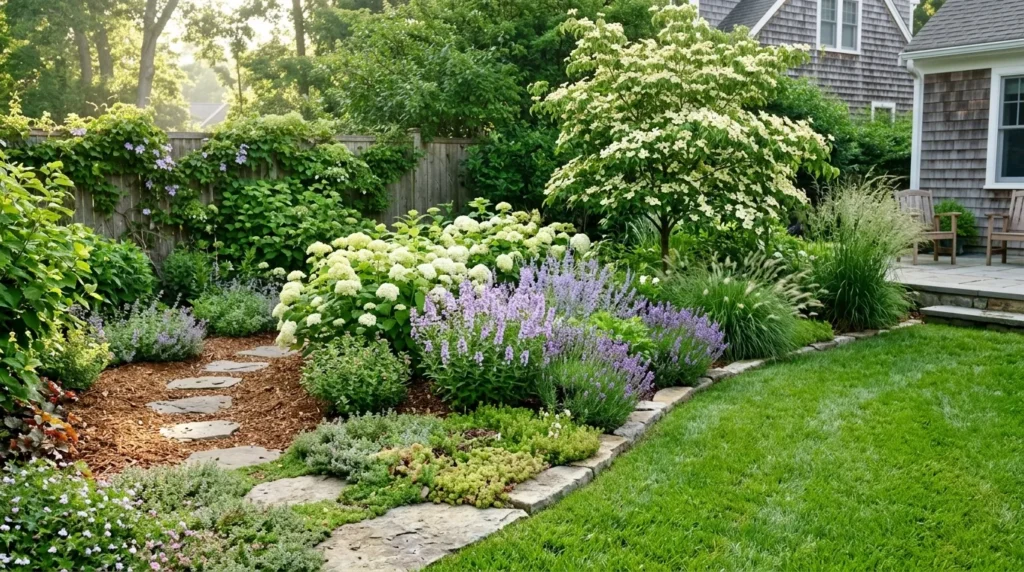
A garden bed becomes much more interesting when plants aren’t all the same height. Layering greenery from low groundcovers to medium shrubs and taller plants creates a natural sense of depth.
Think of the planting area as a series of visual levels. Low-growing plants can form the front edge, medium perennials or shrubs can occupy the middle, and taller ornamental plants or small trees can provide a backdrop.
This approach works in both large and small yards because it gives the eye somewhere to travel. Instead of seeing a flat row of plants, you notice different shapes, textures, and colors.
A common mistake is spacing every plant exactly the same distance apart and keeping them all at roughly the same height. While symmetry can be attractive in formal gardens, a more varied arrangement often feels lush and relaxed.
How To Style It
Begin by identifying the backdrop of the garden bed. A fence, wall, hedge, or larger tree can provide the tallest layer.
Place medium-height shrubs or perennials in front, then use low plants along the edge. Repeat a few plant types rather than selecting one of everything. Repetition helps the landscape feel cohesive.
Combine different leaf shapes for texture. Broad leaves can contrast with fine grasses, while rounded shrubs can balance upright plants.
Before planting, check the mature size, light requirements, soil conditions, and watering needs of each plant. Choose varieties suited to your local climate rather than selecting solely based on appearance.
Leave enough room for plants to mature. A garden that looks slightly sparse when newly planted can become beautifully full after a few growing seasons.
2. Lush Privacy Borders
Quick Benefits
- Creates a more secluded backyard
- Adds natural screening
- Defines property boundaries
- Reduces the appearance of hard fencing
- Provides habitat for beneficial wildlife
Why It Works
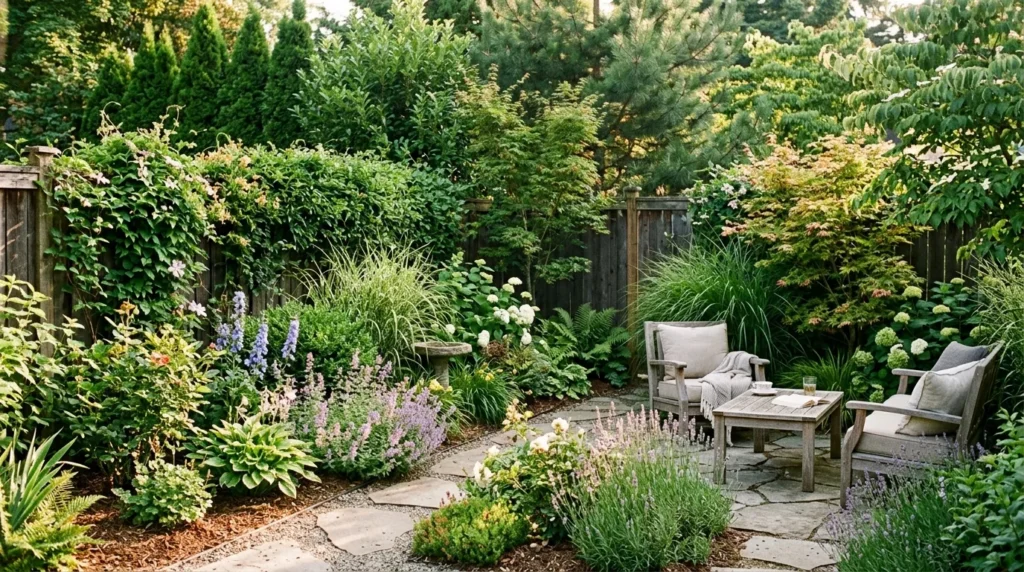
A backyard feels more relaxing when it has some separation from neighboring properties. Instead of relying entirely on a solid fence, greenery can soften boundaries and create a more natural sense of privacy.
Layered privacy planting can be more attractive than a single row of identical plants. Trees, shrubs, grasses, and climbing plants can work together to create different levels of screening.
The best choice depends heavily on the size of the yard and the mature dimensions of the plants. A fast-growing tree may seem appealing when you want privacy quickly, but it can eventually become difficult to manage if it outgrows the space.
The goal is to create screening while maintaining enough room for maintenance, sunlight, and healthy plant growth.
How To Style It
Start by identifying the areas where privacy matters most. You may not need to screen the entire property line.
Use taller plants toward the back of the border and medium shrubs toward the front. Evergreen species can provide year-round structure in climates where they are appropriate, while deciduous trees and shrubs can add seasonal variation.
Mix plant shapes instead of creating a perfectly uniform wall. This gives the border a more natural appearance.
Consider adding a trellis with suitable climbing plants where vertical space is limited. Always check mature growth habits and local conditions before planting near fences, foundations, utilities, or property boundaries.
3. Curved Garden Paths
Quick Benefits
- Creates movement through the landscape
- Makes the yard feel more inviting
- Connects different outdoor areas
- Adds visual depth
- Provides access to planting beds
Why It Works
A pathway can do more than help people get from one place to another. It can guide the eye through the garden and encourage visitors to discover different areas.
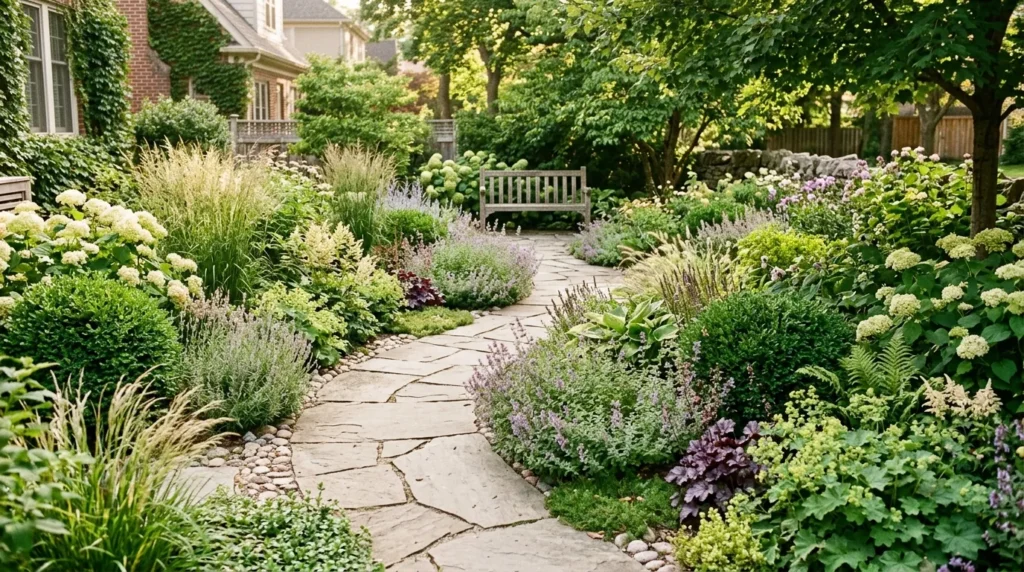
Curved paths often create a softer, more organic feeling than rigid straight lines, especially when surrounded by greenery. They can make a rectangular backyard feel less predictable and provide opportunities for planting pockets along the edges.
The curve doesn’t have to be dramatic. A gentle change in direction can be enough to create a sense of movement.
Pathways are also practical. A well-planned route makes it easier to reach garden beds, seating areas, storage, and other frequently used parts of the yard.
How To Style It
Choose a pathway material that complements the house and existing landscape. Gravel, stepping stones, brick, pavers, and natural stone can all create different effects.
Keep the path wide enough for comfortable everyday use. If it will regularly carry two people side by side, plan accordingly.
Soften the edges with low-growing plants or ornamental grasses. Avoid placing plants so close that they quickly spill into the walking area.
For a romantic garden appearance, allow planting to feel slightly informal around the edges. For a modern backyard, maintain cleaner borders and repeat the same planting forms along the path.
Add a destination at the end of the pathway, such as a bench, small tree, fountain, or garden gate. This gives the path a visual purpose.
4. Evergreen Foundation Planting
Quick Benefits
- Provides year-round structure
- Keeps the landscape attractive during dormant seasons
- Creates a stable backdrop
- Helps frame patios and entrances
- Reduces an empty winter appearance
Why It Works
Seasonal flowers are beautiful, but a landscape needs structure after many flowering plants have finished for the year. Evergreen greenery can provide that dependable foundation.
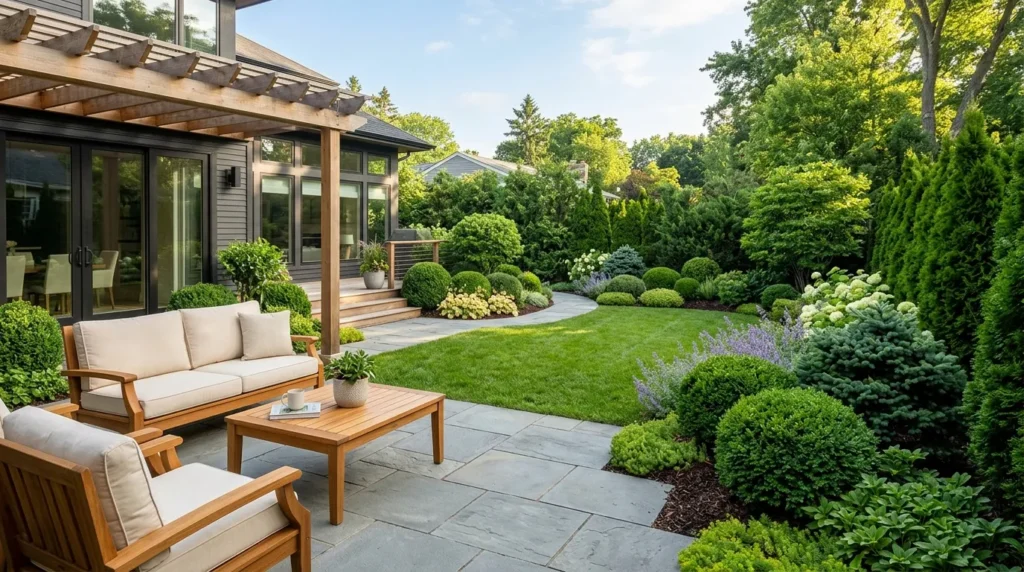
Evergreens vary widely in size, shape, color, and texture, so they can work in many different landscape styles. Some provide dense screening, while others remain compact and work well around patios or pathways.
The important consideration is choosing plants that fit the space at maturity. A plant that looks perfectly sized at the garden center can become much larger over time.
Evergreen structure also makes seasonal plants more noticeable. Flowers and colorful foliage can stand out against a consistent green backdrop.
How To Style It
Use evergreen plants strategically rather than covering every area with them. They can frame a patio, anchor the corners of a garden bed, or create a backdrop for flowering plants.
Vary the forms. Combine upright shapes with rounded shrubs or lower spreading plants where appropriate.
Use mulch around planting areas to help retain soil moisture and create a clean visual transition. Keep mulch away from direct contact with tree trunks and follow appropriate gardening practices for your plants.
When selecting evergreens, consider your local hardiness zone, mature height, mature width, sunlight, soil drainage, and maintenance requirements.
5. Natural Seating Nooks
Quick Benefits
- Creates a destination within the yard
- Encourages outdoor relaxation
- Combines furniture with greenery
- Makes unused corners useful
- Adds personality to the landscape
Why It Works
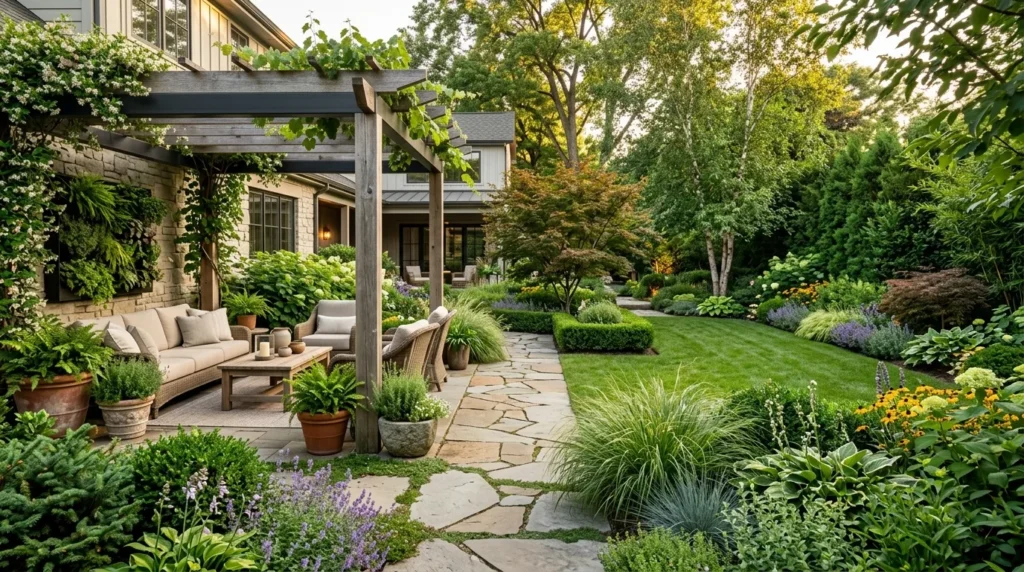
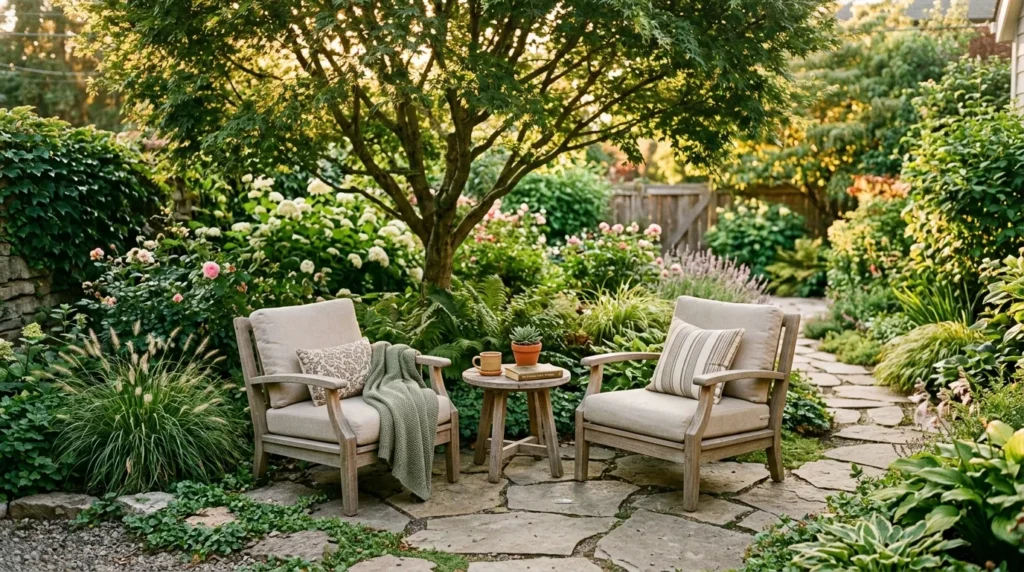
A backyard becomes much more enjoyable when it contains places where you can actually sit and use it. A simple bench beneath a tree, a pair of chairs surrounded by planting, or a small patio tucked into a garden can transform an overlooked area into a favorite destination.
Greenery makes these seating zones feel more secluded and comfortable. Plants can frame the seating without completely enclosing it.
The most successful outdoor seating areas also consider views. Position the chairs toward the garden, a focal tree, water feature, fire area, or another visually appealing part of the landscape.
You don’t need a large structure. Even a small corner can become inviting when the furniture and planting are appropriately scaled.
How To Style It
Choose weather-appropriate furniture and place it on a stable, well-drained surface.
Frame the seating with plants rather than surrounding it completely. A small tree overhead, shrubs behind the chairs, and lower greenery along the edges can create a cozy feeling while preserving visibility.
Add outdoor cushions in colors that relate to the surrounding landscape. Natural beige, muted green, soft blue, and warm terracotta can work beautifully with greenery.
A small side table provides a practical surface for drinks or books. If the area is used in the evening, consider suitable outdoor lighting to make it more welcoming.
6. Raised Planting Beds
Quick Benefits
- Defines planting areas
- Adds architectural structure
- Makes gardening more organized
- Creates opportunities for layered greenery
- Works in many backyard styles
Why It Works
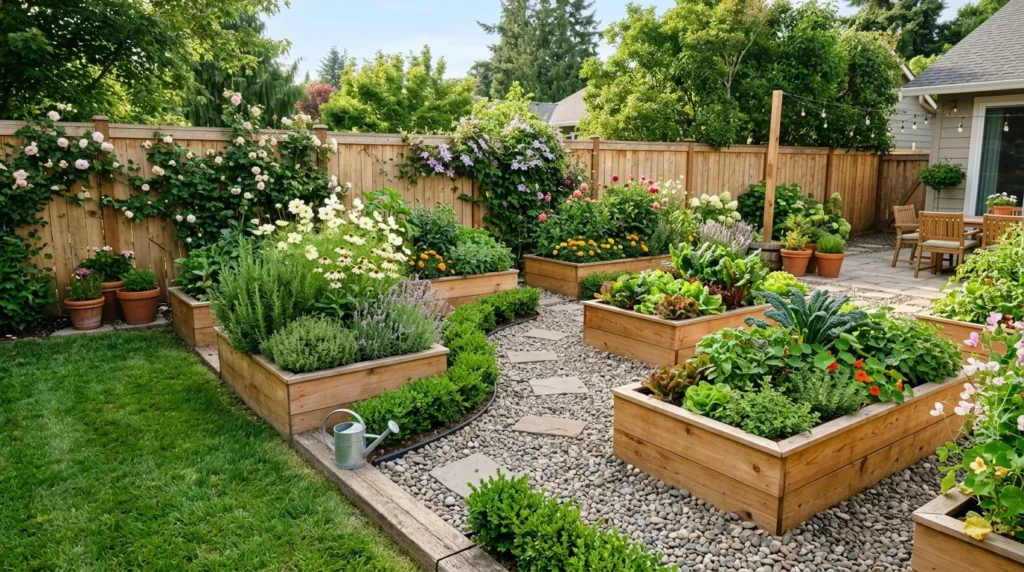
Raised planting beds can give a backyard a more organized appearance while creating dedicated areas for flowers, herbs, vegetables, or ornamental plants.
They are particularly useful when the existing soil is challenging or when you want to separate planting from lawn and patio areas. The raised structure also creates visual boundaries, which can make a large yard feel more intentionally designed.
Materials influence the overall style. Natural wood creates a relaxed garden appearance, while stone, brick, or masonry can feel more established and architectural.
Raised beds don’t need to be enormous. A narrow bed along a fence or patio edge can provide enough space for a meaningful planting display.
How To Style It
Choose a material that complements the home’s exterior and other landscape features. Repeat that material elsewhere when possible to create continuity.
Fill the bed with plants suited to its sunlight and soil conditions. Mix heights and textures to avoid creating a flat planting arrangement.
For a kitchen garden, combine attractive edible plants with flowers and herbs. For a purely ornamental bed, use repeated groups of perennials, shrubs, and grasses.
Make sure the bed is accessible for watering, pruning, harvesting, and maintenance. A beautiful planting area becomes much more useful when you can comfortably reach everything inside it.
7. Ornamental Grass Layers
Quick Benefits
- Adds movement
- Creates fine texture
- Provides seasonal interest
- Softens hard edges
- Complements shrubs and flowering plants
Why It Works
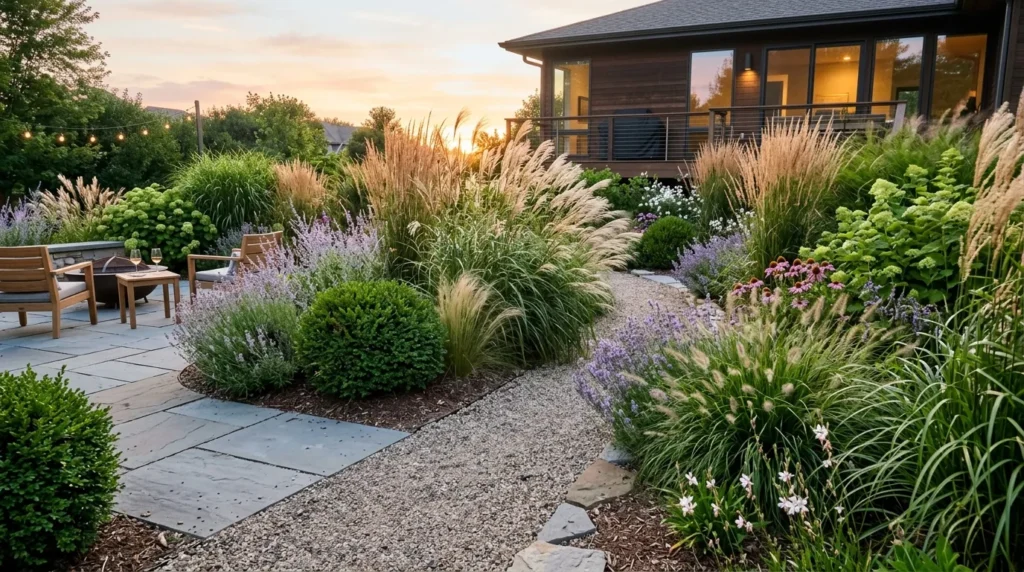
Ornamental grasses can bring a completely different texture to a backyard. Their fine foliage moves with the breeze and creates a softer transition between larger shrubs, hardscape, and open lawn.
They also work well in modern, cottage, naturalistic, and transitional landscapes. Depending on the variety, grasses can provide low borders, medium-height layers, or dramatic vertical accents.
Their movement is particularly beautiful when planted where they can catch afternoon or evening light.
However, not every ornamental grass is suitable for every location. Some species can spread aggressively or become invasive in certain regions, so local suitability matters.
How To Style It
Use grasses in groups rather than scattering single plants throughout the yard. Repetition creates a stronger visual rhythm.
Pair fine-textured grasses with broad-leaf shrubs or larger flowering plants for contrast. Use taller varieties as a backdrop and shorter varieties near pathways or seating areas.
Choose species based on your climate, soil, sunlight, mature size, and maintenance preferences. Local native or well-adapted options can often provide beautiful results with fewer challenges.
Trim and divide plants according to the needs of the specific variety rather than following a single schedule for every grass.
8. Green Patio Surrounds
Quick Benefits
- Softens hard surfaces
- Connects patio and garden
- Adds privacy
- Creates a more natural atmosphere
- Makes outdoor dining areas more inviting
Why It Works
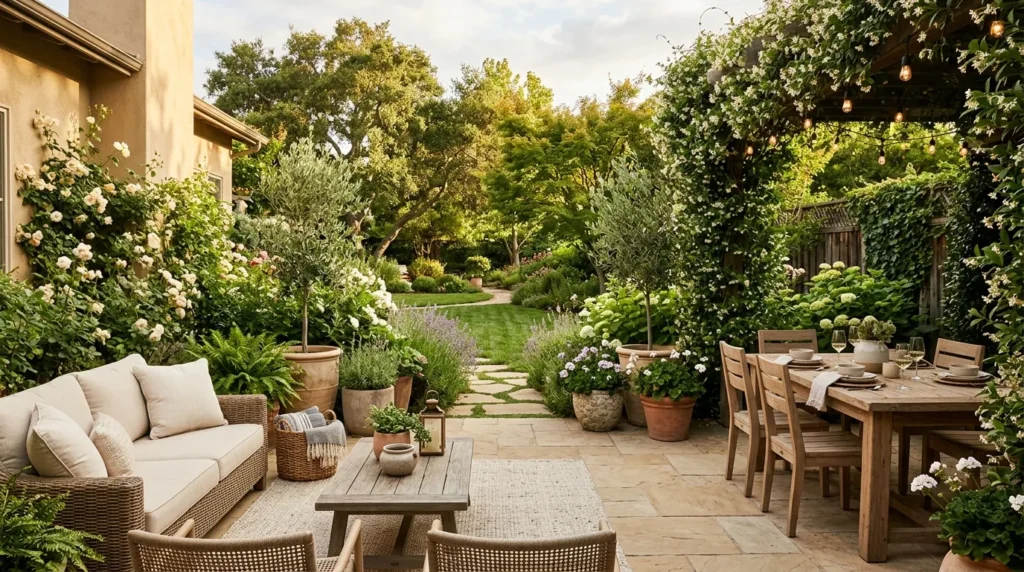
Patios provide valuable space for dining and entertaining, but large areas of concrete, pavers, or stone can sometimes feel visually hard. Surrounding the patio with greenery creates a softer transition between the built and natural parts of the backyard.
Plants can be positioned around the perimeter without interfering with the main seating area. Container plants can provide flexibility, while shrubs and trees can establish a more permanent landscape.
The key is maintaining enough open space for movement, furniture, and maintenance.
How To Style It
Frame the patio with a mixture of planting heights. Low shrubs can define the edge, medium plants can soften corners, and a small tree can provide vertical interest.
Use containers near dining areas where permanent planting isn’t practical. Large planters can make a stronger statement than many tiny pots.
Choose containers that complement the patio materials. Neutral stone, terracotta, wood-look, or simple modern planters can all work depending on the home’s style.
Avoid placing large plants where mature roots, branches, or water requirements could interfere with the patio, drainage, utilities, or foundation.
For evening use, add appropriate outdoor lighting around pathways and planting beds so the greenery remains visible after sunset.
9. Flowering Garden Focal Points
Quick Benefits
- Creates visual interest
- Adds seasonal color
- Gives the eye a destination
- Personalizes the landscape
- Works with existing greenery
Why It Works
Green foliage creates the foundation of a beautiful landscape, but flowering plants can provide the moments of color that make the garden memorable.
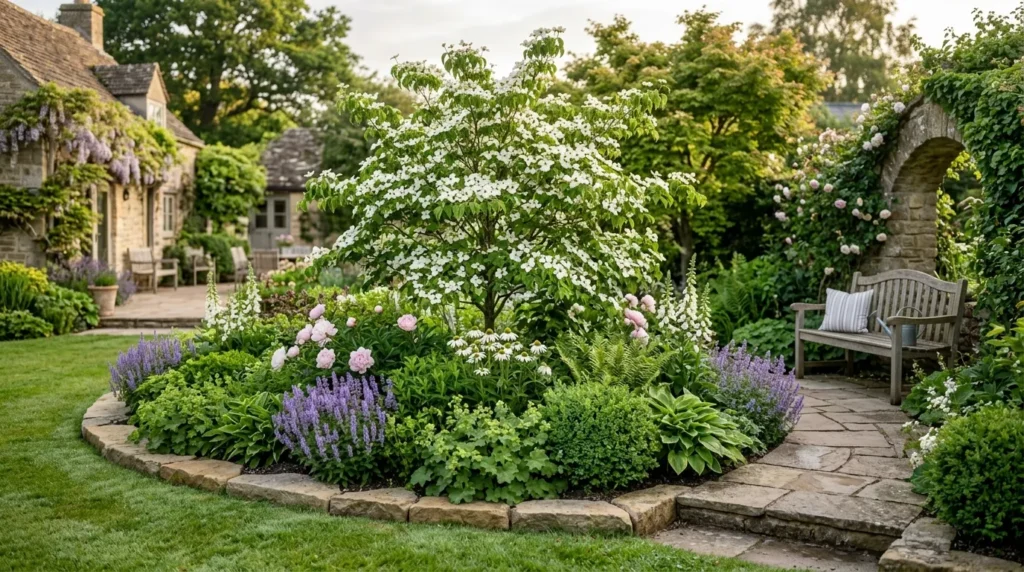
Rather than spreading flowers evenly across the entire yard, create one or two focal planting areas. This gives the landscape hierarchy and prevents it from feeling visually chaotic.
A flowering tree, large perennial bed, colorful border, or climbing plant on a trellis can become a natural focal point.
The best focal plants are positioned where they can actually be appreciated. Place them near a patio, visible from a kitchen window, along a pathway, or at the end of a garden view.
How To Style It
Choose flowers that suit the site’s sunlight, soil, climate, and watering conditions. Consider bloom times so that the garden has interest across multiple seasons.
Repeat a few colors instead of using every available flower shade. For example, white and lavender flowers can create a calm appearance against green foliage, while warm yellows and oranges can create a more energetic garden.
Combine flowering plants with evergreen shrubs and foliage plants so the area doesn’t lose all its structure after blooming ends.
Consider foliage as carefully as flowers. Interesting leaves can remain attractive for much longer than individual blooms.
A simple focal point can be more effective than a large collection of unrelated plants.
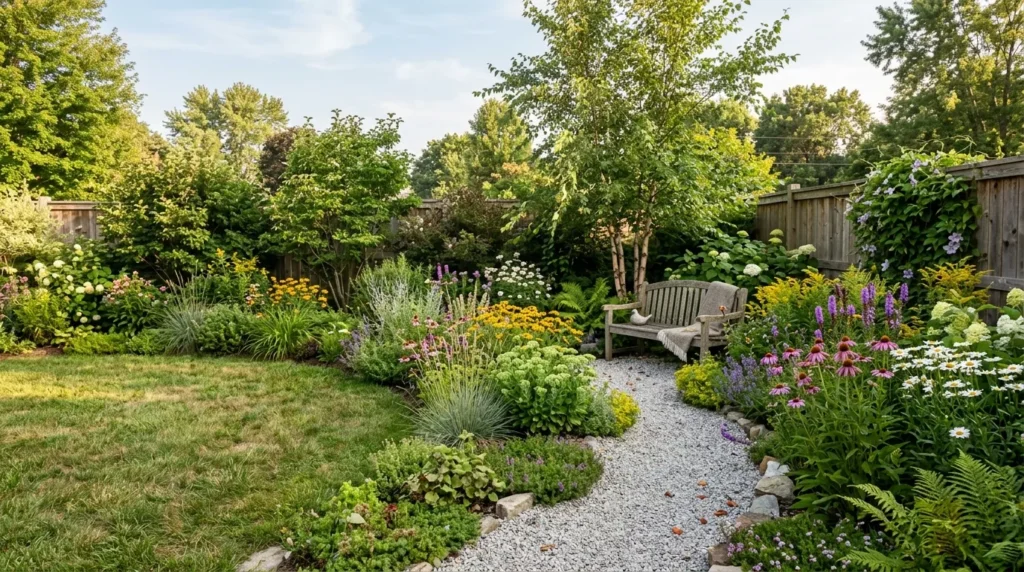
10. Simple Native Planting
Quick Benefits
- Supports local ecosystems
- Can reduce maintenance when properly established
- Creates a natural appearance
- Provides habitat and food for wildlife
- Works with local growing conditions
Why It Works
Using plants that are native or well-adapted to your region can be an excellent way to create a beautiful backyard while working with local environmental conditions.
Native plants have evolved within specific ecosystems and can support local insects, birds, and other wildlife. They can also provide an authentic sense of place.
However, native does not automatically mean maintenance-free. Plants still need appropriate placement, establishment care, pruning when necessary, and attention to soil and water conditions.
The advantage is that the landscape can be designed around plants that naturally fit the climate rather than constantly trying to force unsuitable species to thrive.
How To Style It
Begin by researching native plants suited to your specific region and growing conditions. Local extension services, botanical gardens, and reputable native-plant organizations can be valuable resources.
Use a mixture of trees, shrubs, grasses, flowering perennials, and groundcovers where appropriate.
Instead of creating a completely wild-looking yard, organize native plants into intentional beds around patios, paths, fences, and seating areas.
Repeat several species throughout the landscape for continuity.
Leave some areas slightly informal to create habitat while maintaining clear edges around high-use areas. A native garden can still look polished when the planting has a thoughtful structure.
How To Plan a Backyard Landscape Before Planting
The best landscape designs usually begin with a simple plan rather than an immediate trip to the garden center.
Start by identifying how you want to use the backyard. Do you need space for outdoor dining, children, pets, gardening, entertaining, or quiet relaxation? These needs should influence where hardscape and planting areas go.
Next, observe the yard at different times of day. Note where sunlight falls, which areas remain shaded, where water collects, and which views you want to highlight or screen.
Then identify the permanent elements that won’t change easily: fences, patios, sheds, large trees, utility areas, doors, and pathways.
Once these are mapped out, you can decide where greenery will have the greatest impact.
Don’t forget scale. A small tree may look insignificant when newly planted but can become a major landscape feature as it matures. Always check mature dimensions and planting recommendations before committing.
Finally, think in layers. Trees provide the highest level, shrubs occupy the middle, and flowers, grasses, and groundcovers fill lower areas.
This approach creates depth and prevents the yard from looking like a collection of unrelated plants.
How To Choose Plants for Your Backyard
Plant selection should begin with the conditions in your yard rather than with appearance alone.
Sunlight is one of the most important factors. Some plants require full sun, while others perform better in partial shade or shade. Observe the area before choosing plants.
Soil type and drainage matter as well. A plant that prefers well-drained soil may struggle in an area where water regularly collects.
Consider mature size, too. Look beyond the size of the plant at the garden center and find out how tall and wide it is expected to become.
Maintenance is another major consideration. If you prefer a low-maintenance garden, prioritize plants suited to your climate and avoid creating a landscape that requires constant pruning or watering.
It’s also smart to consider seasonal interest. Evergreen plants can provide structure, while flowers, foliage, berries, and bark can add changing details throughout the year.
Finally, research whether a plant is invasive or problematic in your area before planting it. A beautiful landscape should also be a responsible one.
How To Make a Small Backyard Feel Lush
A small backyard can still feel wonderfully green without being packed with plants.
Use vertical space. Trellises, climbing plants, narrow trees, and tall planters can introduce height without consuming a large amount of ground area.
Repeat plants throughout the yard rather than filling every available section with different varieties. Repetition creates a stronger sense of continuity.
Use layered planting around the edges and keep the center more open. This can make the yard feel deeper and preserve useful space.
Mirrors and reflective surfaces can sometimes add visual depth in appropriate outdoor settings, but they should be used carefully to avoid glare or confusing wildlife.
Containers are also useful because they allow you to add greenery where permanent planting isn’t practical.
Most importantly, don’t underestimate empty space. A small open lawn or patio surrounded by greenery can feel more spacious than a yard where every square foot is planted.
Backyard Landscape Design Mistakes to Avoid
One of the most common mistakes is planting without considering mature size. Always check how large a plant will eventually become.
Another issue is creating too many isolated planting beds. If every bed has different plants and different shapes, the landscape can feel disconnected. Repetition helps tie the design together.
Avoid placing plants too close to pathways, structures, and patios. Give them enough room to grow without immediately requiring constant trimming.
Another common problem is ignoring maintenance. A landscape that looks beautiful in a photograph may not be practical for a homeowner who has limited time for gardening.
Finally, don’t focus entirely on flowers. Green foliage provides the foundation of the landscape and often remains attractive for much longer than individual blooms.
A strong backyard design should look good in multiple seasons, not just during peak flowering.
FAQ
How do I make my backyard look more beautiful with greenery?
Use layers of greenery at different heights and repeat several plant types throughout the yard. Combine trees, shrubs, grasses, groundcovers, and flowering plants to create depth. Frame patios and pathways with planting, then leave some open space so the landscape doesn’t feel overcrowded. Choose plants based on your local climate, sunlight, soil, and mature size.
What plants are best for backyard landscaping?
The best plants depend on your location and growing conditions. Look for species suited to your hardiness zone, sunlight, soil type, drainage, and maintenance preferences. Native and well-adapted plants are often excellent choices. Before buying, check mature height and width so the plants remain appropriate for the space as they grow.
How can I make a backyard feel more private?
Layered planting can create privacy without relying entirely on a solid fence. Taller trees or screening plants can form a backdrop, while medium shrubs and ornamental grasses fill the lower levels. Concentrate privacy planting where you actually need it rather than screening every boundary, and always consider mature plant size and local regulations.
How do I make a small backyard look lush?
Use vertical planting, layered garden beds, compact trees, containers, and repeated greenery. Keep the center of the yard relatively open while using plants around the perimeter to create depth. Trellises and suitable climbing plants can add height without consuming much floor space. Avoid overcrowding, because open areas help a small yard feel larger.
What is the easiest way to start a backyard landscape?
Begin with a simple site plan. Mark the house, patio, fence, existing trees, utility areas, and major pathways. Then decide how you want to use the yard and identify where you need shade, privacy, seating, or planting. Add the largest landscape elements first and gradually build smaller planting layers around them.
Are native plants good for backyard landscaping?
Native plants can be excellent choices because they are adapted to local environmental conditions and can support native wildlife. However, they still need to be placed in appropriate soil, light, and moisture conditions. Research species specific to your region rather than assuming every native plant will work everywhere in the yard.
How do I create a low-maintenance backyard garden?
Choose plants suited to your local conditions, group plants with similar water needs, use appropriate mulch, and avoid varieties that require constant pruning. Good landscape design also reduces maintenance by placing plants where they naturally thrive. Start small rather than creating more garden area than you realistically have time to care for.
Conclusion
A beautiful backyard doesn’t need to be complicated. The strongest landscapes usually combine a few clear ideas: layered greenery, comfortable outdoor spaces, thoughtful pathways, and plants that suit the environment.
Start by deciding how you want to use the yard. Once you know where you want to sit, dine, garden, entertain, or relax, you can build greenery around those activities rather than allowing plants to dictate the entire layout.
Layering is one of the simplest ways to create visual richness. Combine trees, shrubs, grasses, flowers, and lower-growing plants while repeating several varieties throughout the landscape. This gives the garden a cohesive appearance and helps it feel established over time.
Don’t forget the practical side. Choose plants based on sunlight, soil, mature size, climate, and maintenance requirements. A beautiful landscape should make your life better, not create an endless list of chores.
You also don’t have to complete the entire backyard in one season. Start with a patio border, a privacy planting area, a garden path, or one beautiful seating nook. Let the landscape develop gradually and pay attention to how you actually use the space.
With thoughtful planting and a little patience, even an ordinary backyard can become a lush outdoor retreat that feels welcoming, natural, and distinctly your own.
Related Articles
- 10 Backyard Patio Ideas for Outdoor Entertaining
- 10 Small Backyard Ideas for Beautiful Outdoor Spaces
- 10 Low-Maintenance Landscaping Ideas for Busy Homeowners
- 10 Garden Design Ideas with Natural Greenery
- 10 Outdoor Seating Ideas for a Cozy Backyard