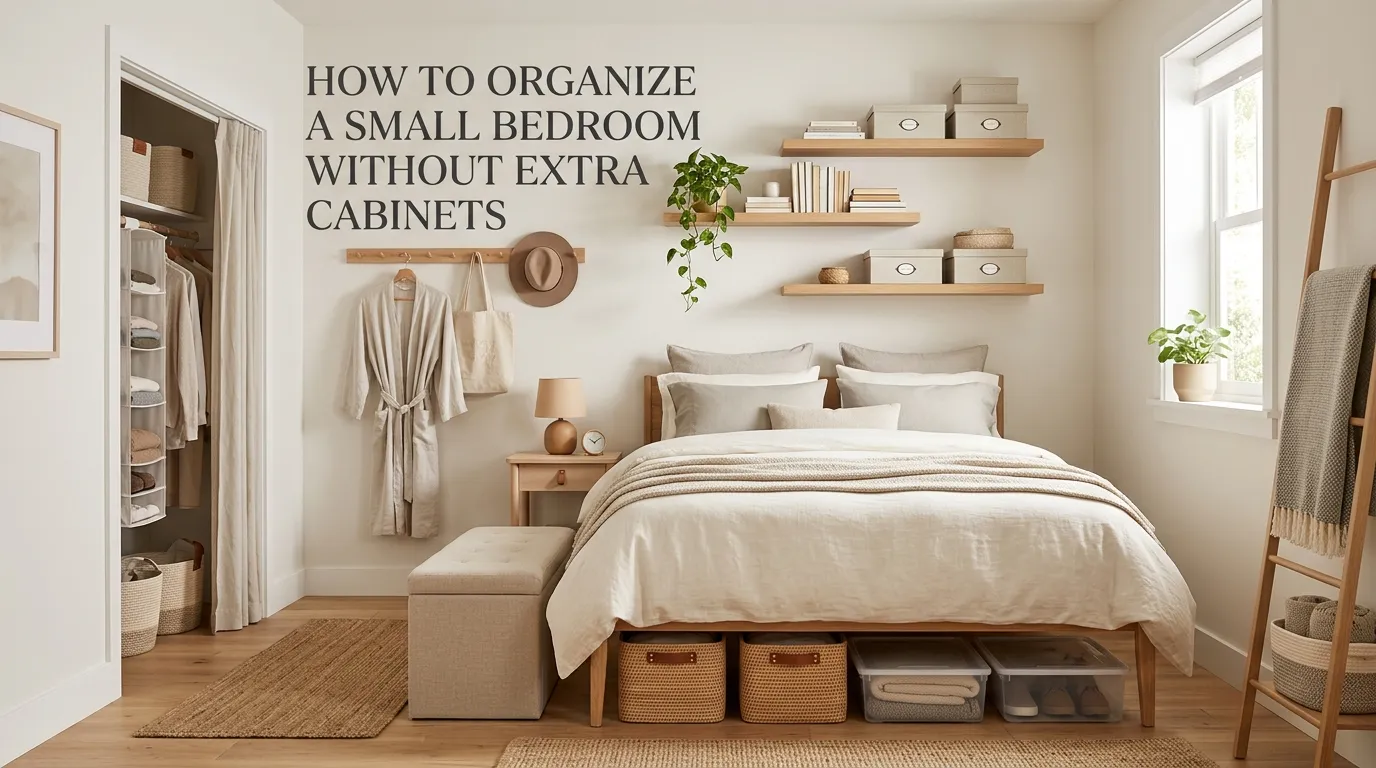
How to Organize a Small Bedroom Without Extra Cabinets
A small bedroom can become difficult to manage surprisingly quickly. Clothes pile up on chairs, shoes collect near the door, nightstands become catch-all surfaces, and suddenly the room feels crowded even when you don’t own that much.
The challenge becomes even more interesting when you don’t want to add another cabinet.
Maybe there isn’t enough floor space. Perhaps you’re renting and can’t install bulky furniture. Or you simply want the bedroom to feel more open and less dominated by storage pieces. Whatever the reason, you can create a surprisingly organized bedroom by making better use of the space you already have.
The key is to think vertically, use overlooked areas, and give everyday belongings a designated home. Under-bed space, the backs of doors, wall space, the side of a bed, and even unused corners can all become useful storage zones without requiring another large cabinet.
I’ve noticed that small bedrooms usually don’t need more storage as much as they need better storage habits. When everything has a logical place, the room becomes easier to maintain. You also don’t have to hide every item behind a closed door. Attractive baskets, hooks, hanging organizers, and neatly folded textiles can become part of the decor.
Another important step is editing what you keep in the bedroom. Storage solutions can only do so much if the room contains clothing, accessories, shoes, and miscellaneous items that aren’t being used.
The ideas below focus on practical organization without adding extra cabinets. Some are nearly free, while others require inexpensive organizers or simple DIY solutions. Start with the areas that create the most clutter, then gradually build a system that fits the way you actually use your bedroom.
Table of Contents
1. Under-Bed Storage
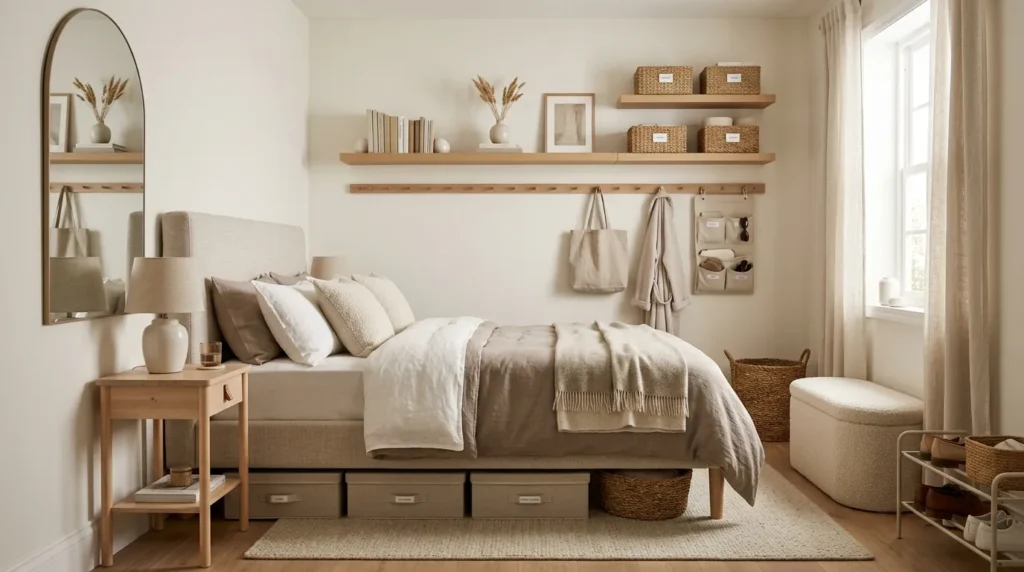
Use the hidden space beneath the bed for clothing, shoes, bedding, and seasonal items.
2. Behind-Door Hooks
Turn unused door space into a convenient organization zone.
3. Vertical Wall Storage
Use walls to organize everyday belongings without taking up floor space.
4. Bedside Wall Pockets
Keep small essentials organized beside the bed without adding bulky furniture.
5. Slim Hanging Rails
Create extra hanging space with a compact clothing rail or wall-mounted solution.
6. Closet Door Organizers
Make the inside of existing doors work harder for accessories and smaller items.
7. Multi-Use Storage Baskets
Combine attractive storage with easy access for everyday belongings.
8. Floating Shelves
Use simple wall-mounted shelves to replace some functions of traditional cabinets.
9. Organized Corner Space
Turn overlooked corners into practical storage zones without crowding the room.
10. Decluttered Surfaces
Keep visible areas clear by creating simple homes for frequently used items.
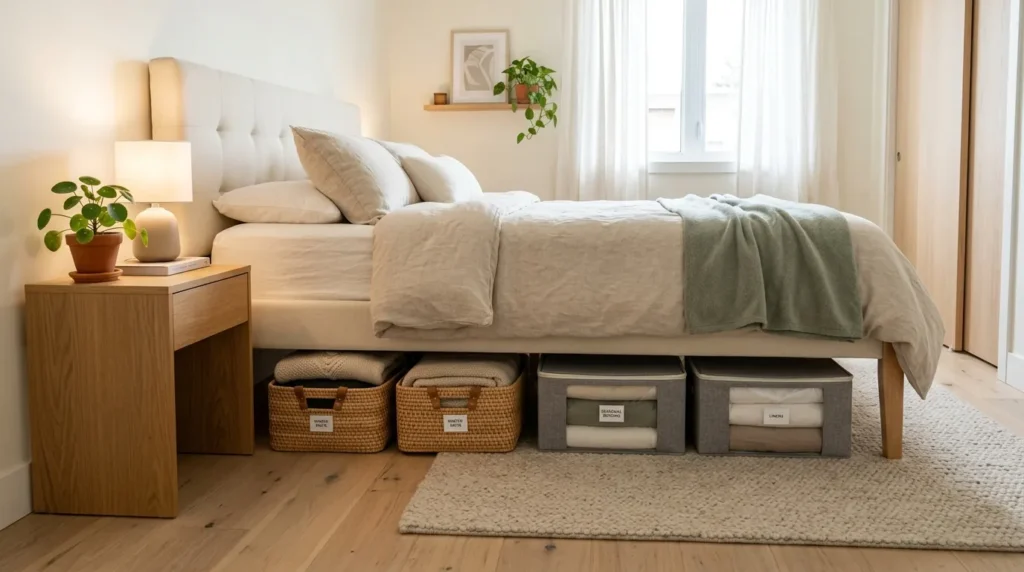
1. Under-Bed Storage
Quick Benefits
- Uses otherwise wasted space
- Keeps seasonal items out of sight
- Doesn’t require additional floor furniture
- Works especially well in small bedrooms
- Keeps bulky belongings contained
Why It Works
The space underneath a bed is often one of the most valuable storage areas in a small bedroom, yet it frequently becomes an unorganized collection of random boxes and loose belongings.
When used intentionally, it can hold items you don’t need every day while keeping the visible part of the room clear.
This is particularly useful for seasonal clothing, spare bedding, shoes, handbags, and luggage. Because these items don’t need to be accessed constantly, storing them beneath the bed makes practical sense.
The biggest improvement comes from containing everything rather than simply sliding loose objects underneath. Consistent containers make the area easier to maintain and prevent the space from becoming a clutter trap.
How To Style It
Measure the available height beneath your bed before purchasing containers.
Use shallow storage bins, fabric boxes, or rolling containers that can slide in and out easily.
Label containers according to their contents, such as “winter clothes,” “extra bedding,” or “shoes.”
Keep everyday items elsewhere so you aren’t constantly pulling everything out.
If your bed has a low profile, consider vacuum storage bags for suitable textiles, but follow the manufacturer’s instructions and avoid compressing items that can be damaged by long-term storage.
Choose containers that are easy to handle. A storage system only works if you can actually reach and use it.
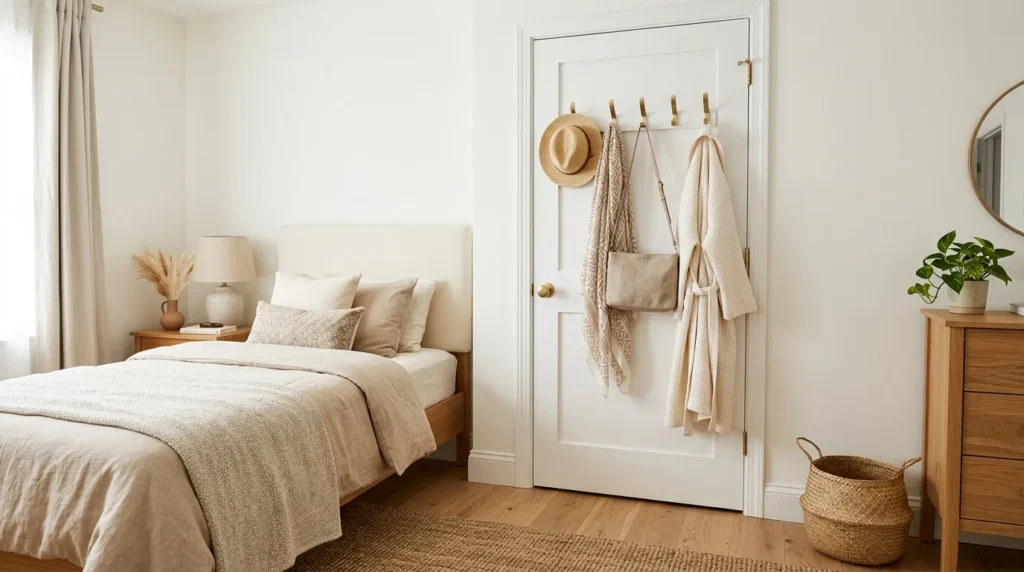
2. Behind-Door Hooks
Quick Benefits
- Uses overlooked space
- Requires almost no floor area
- Keeps frequently used items accessible
- Works for clothing and accessories
- Easy to change seasonally
Why It Works
The back of a bedroom door is essentially an unused wall that happens to move.
Adding hooks or a suitable over-door organizer can turn it into a useful location for robes, hats, scarves, handbags, belts, or frequently worn clothing.
This is particularly helpful when floor space is limited. Instead of adding a freestanding coat rack, use the vertical surface you already have.
Keeping frequently used items behind the door also makes them easy to reach while preventing them from being scattered across the bed or floor.
How To Style It
Choose hooks that fit the weight of the items you intend to hang.
For a clean look, use a row of matching hooks rather than several unrelated pieces.
Hang the items you use most often at comfortable heights.
Don’t overload the door. Too many heavy items can make the area difficult to use and may put unnecessary strain on hardware.
If you’re renting, look for removable options appropriate for your door surface and follow the product’s weight limitations.
Use one section for daily accessories and another for less frequently used pieces if the door has enough room.
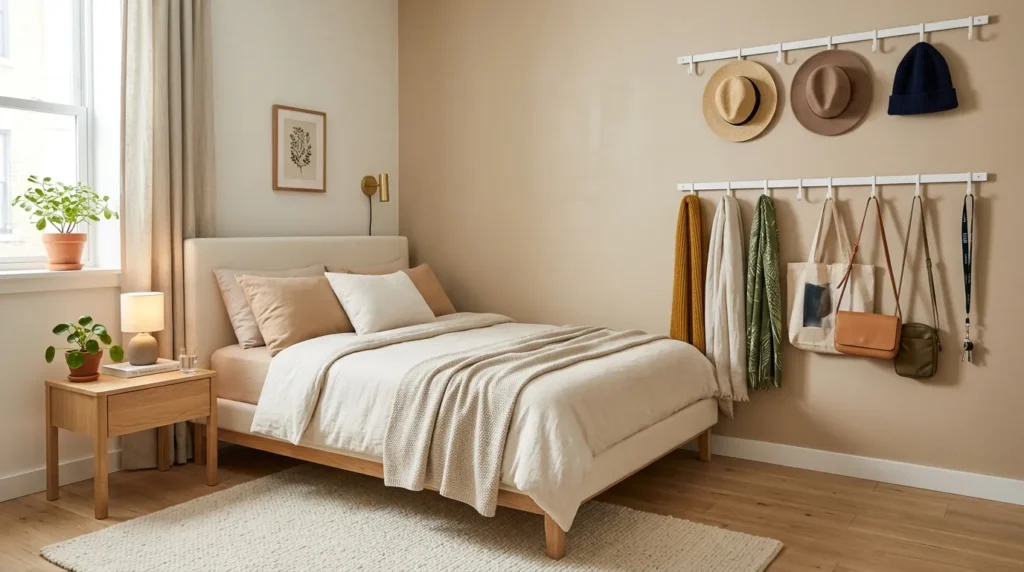
3. Vertical Wall Storage
Quick Benefits
- Saves floor space
- Makes use of unused walls
- Keeps essentials visible
- Adds decorative interest
- Works in very small rooms
Why It Works
When floor space is limited, look upward.
Walls offer valuable storage potential without reducing the walking area of the bedroom. A few well-placed hooks, pegboards, rails, or wall organizers can hold accessories that might otherwise occupy a dresser or chair.
Vertical organization also draws the eye upward, which can make the room feel more intentional.
The key is to avoid covering every available wall. A small, organized zone can be more useful than an entire wall filled with storage.
How To Style It
Choose one wall or section for vertical organization.
Use hooks for bags, hats, scarves, and lightweight accessories.
A simple rail can hold frequently worn clothing.
Pegboards can provide flexible organization for smaller belongings.
Keep the colors consistent with the bedroom. White, natural wood, black, or neutral finishes can blend easily into modern interiors.
Arrange items with enough space between them so the storage area looks organized rather than crowded.
If you use open storage, keep the displayed items relatively coordinated.
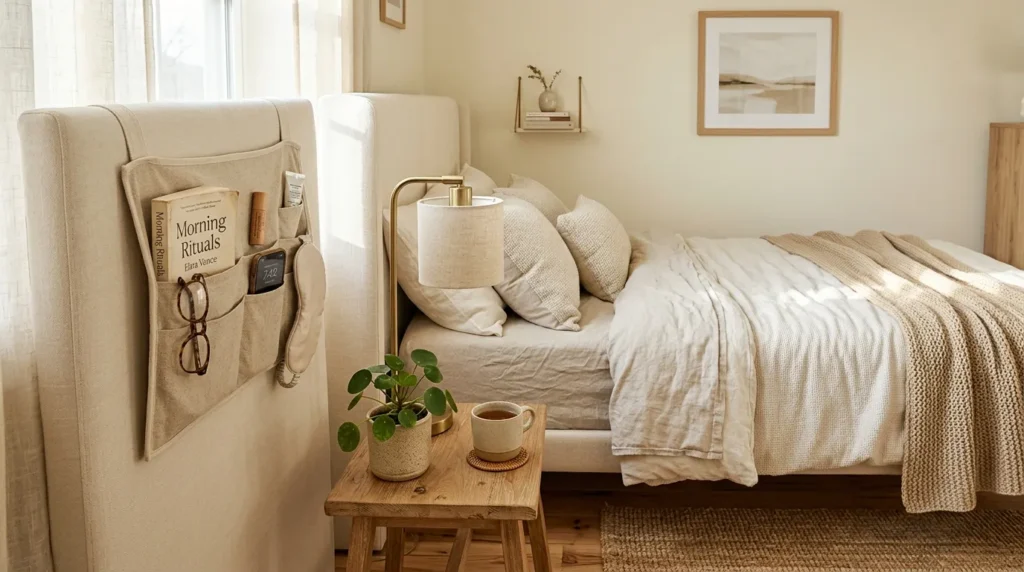
4. Bedside Wall Pockets
Quick Benefits
- Replaces a bulky nightstand
- Keeps essentials within reach
- Uses wall or bed-side space
- Ideal for renters with limited floor space
- Helps reduce surface clutter
Why It Works
A traditional nightstand isn’t always practical in a small bedroom.
If your bed is pushed close to a wall, a hanging bedside pocket can provide a convenient place for glasses, books, a phone, remote controls, or other nighttime essentials.
This keeps the floor and tabletop clear while ensuring the things you use most are still nearby.
Bedside pockets are particularly useful in children’s rooms, guest rooms, studio apartments, and compact bedrooms.
How To Style It
Choose a fabric organizer that complements your bedding.
Hang it securely according to the manufacturer’s instructions, particularly if it will hold heavier objects.
Use separate pockets for different categories rather than letting everything collect in one compartment.
Keep only nighttime essentials inside.
If you already have a small bedside table, use the pocket for items that tend to create visual clutter.
For a polished look, choose neutral linen, canvas, or a simple textured material.
5. Slim Hanging Rails
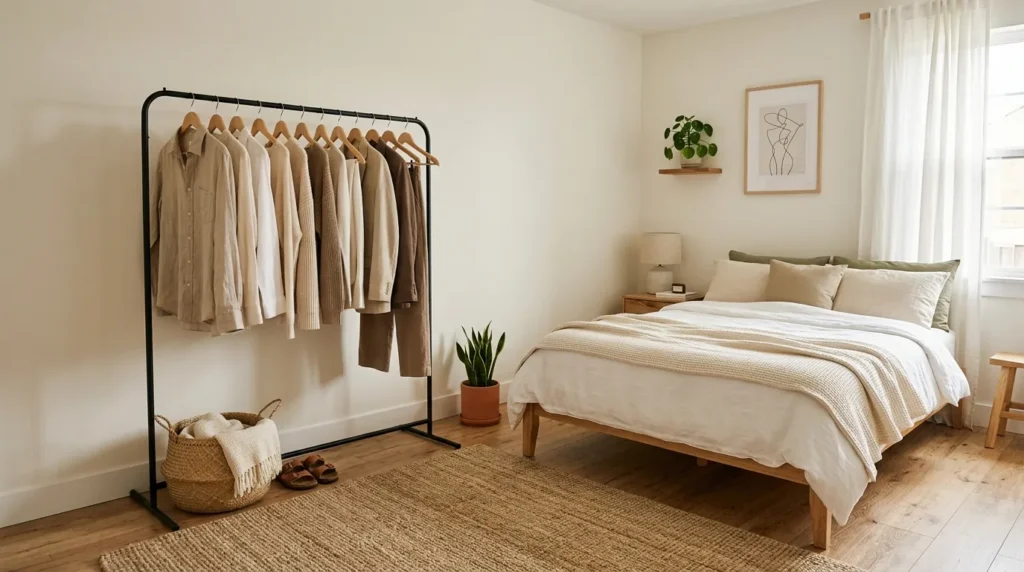
Quick Benefits
- Adds clothing storage
- Uses vertical space
- Works in rooms with limited closets
- Makes frequently worn pieces accessible
- Can double as decor
Why It Works
A slim clothing rail can provide additional hanging space without the bulk of a large wardrobe.
It works particularly well for clothing you wear regularly. Instead of hiding everything away, you can create a small, curated collection of your favorite jackets, shirts, dresses, or scarves.
The key is restraint.
A hanging rail becomes visually overwhelming when overloaded, but a carefully edited collection can actually contribute to the bedroom’s aesthetic.
How To Style It
Choose a rail that fits the available wall or corner space.
Keep similar hangers together for a cleaner appearance.
Organize clothing by type or color.
Leave some empty space between garments.
Place a small basket underneath if you need a home for shoes or folded accessories.
For a modern bedroom, neutral clothing tones, natural wood hangers, and a simple black or white rail can create a clean look.
If the room already feels visually busy, keep the rail as minimal as possible.
6. Closet Door Organizers
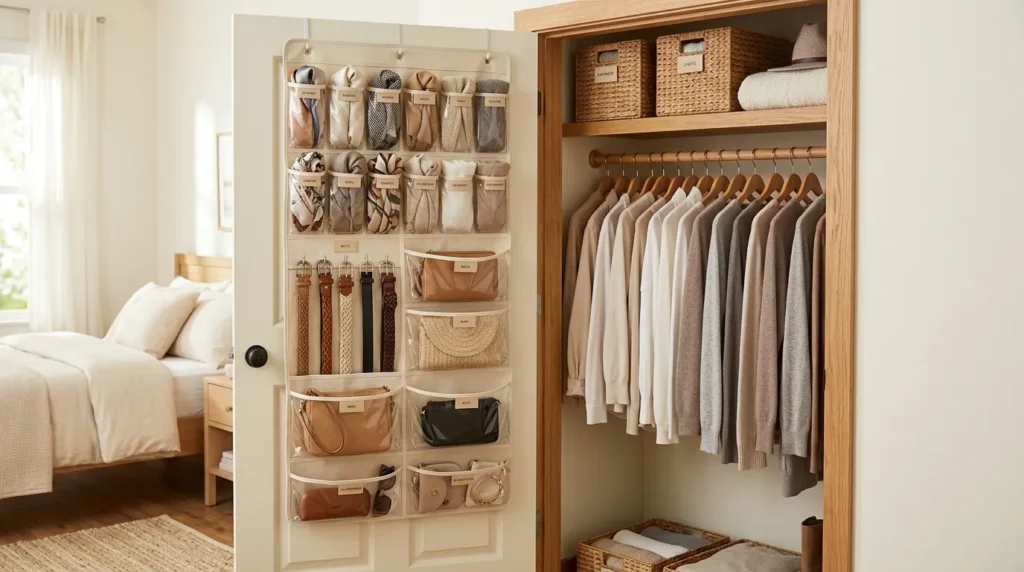
Quick Benefits
- Maximizes existing closet space
- Organizes small accessories
- Keeps items easy to see
- Doesn’t add floor furniture
- Excellent for compact bedrooms
Why It Works
Before adding storage furniture, make sure your existing closet is being used efficiently.
The inside of a closet door can provide valuable space for smaller belongings such as belts, scarves, jewelry, hair accessories, shoes, or handbags.
This approach is especially helpful because these items are often difficult to organize on traditional shelves.
Using the door also keeps small objects grouped together rather than scattered around the bedroom.
How To Style It
Choose an organizer designed for the door and the weight of the items you plan to store.
Group similar items together.
Keep frequently used accessories near eye level.
Use smaller pockets for individual categories.
For example, one section can hold scarves, another belts, and another small bags.
Avoid overfilling the organizer because visibility is part of the benefit.
If everything is packed tightly together, finding individual items becomes just as frustrating as before.
7. Multi-Use Storage Baskets
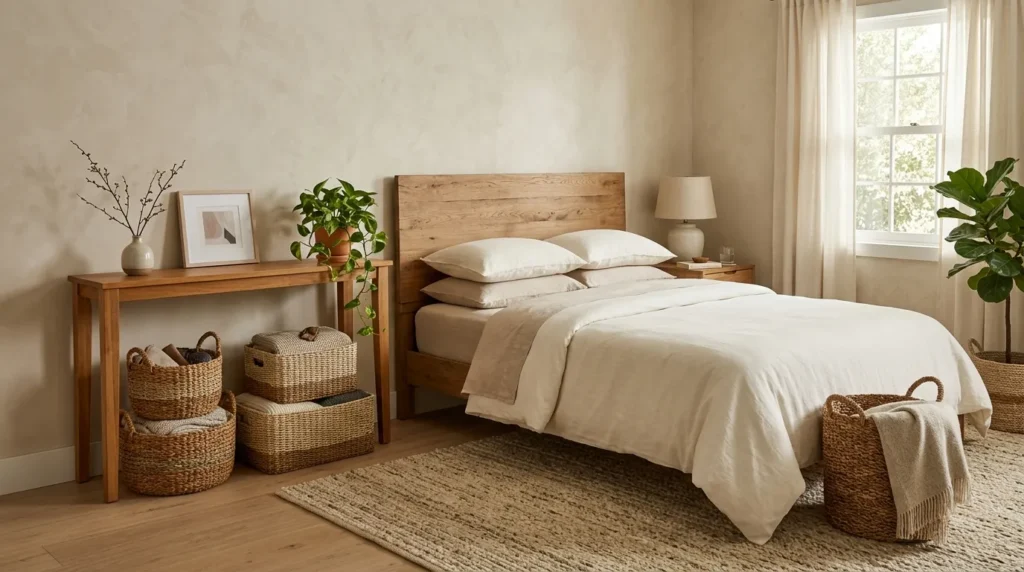
Quick Benefits
- Hides everyday clutter
- Adds texture
- Easy to move
- Works for many categories
- Can complement bedroom decor
Why It Works
Baskets are useful because they combine organization and decoration.
A well-placed basket can hold extra blankets, laundry, handbags, shoes, or accessories while adding natural texture to the room.
They are especially useful when you don’t want to add another cabinet because they provide containment without creating a heavy piece of furniture.
Baskets also make tidying up faster. Instead of carefully arranging every small item, you can group similar belongings in one designated container.
How To Style It
Choose baskets based on what they need to hold.
Use a tall basket for blankets or laundry.
Use smaller baskets for accessories and folded clothing.
Natural woven baskets work well with neutral bedrooms, while structured fabric bins may suit modern spaces.
Don’t scatter baskets randomly around the room.
Give each one a purpose and keep it in a location where the contents are convenient to access.
If you use open baskets, avoid filling them beyond the top. A slightly edited appearance keeps the room feeling calm.
8. Floating Shelves
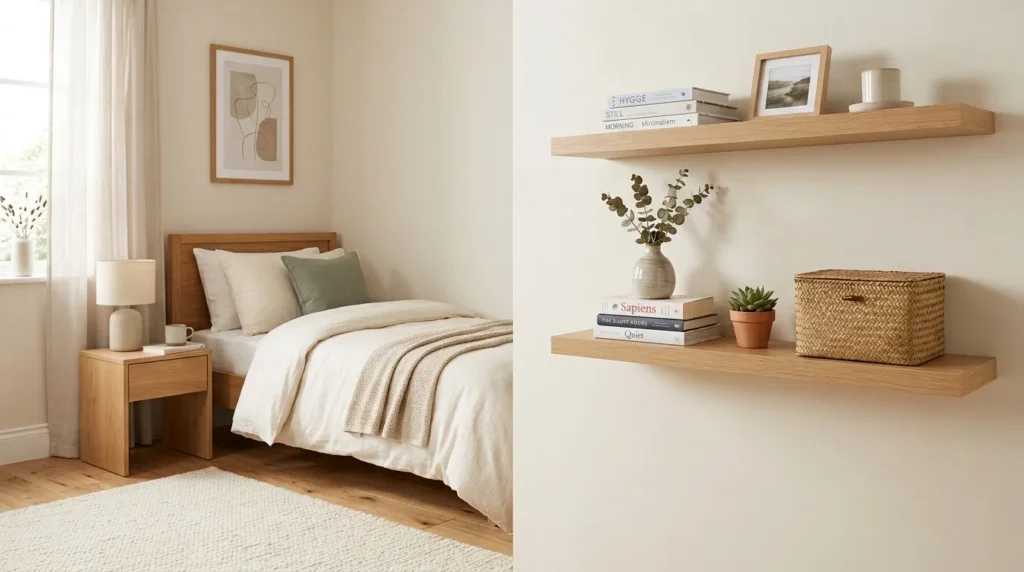
Quick Benefits
- Provides useful storage
- Takes up little floor space
- Creates vertical interest
- Works for decor and essentials
- Can replace some nightstand functions
Why It Works
Floating shelves are a simple alternative when a traditional dresser or cabinet would take up too much floor space.
A shelf can hold books, small baskets, framed photos, plants, skincare items, or other lightweight belongings.
Because the floor remains open underneath, the room can feel less crowded.
Shelves also give you an opportunity to combine practical storage with decorative styling.
How To Style It
Install shelves at practical heights and make sure the mounting system is appropriate for the wall type and intended load.
Use baskets or small containers to group loose items.
Place heavier-looking objects toward the lower shelf and lighter decorative pieces higher up when using multiple shelves.
Don’t cover every inch of the shelf.
Leave some open space and vary the height of objects.
For a modern bedroom, combine light wood, white, or neutral shelves with simple ceramics, books, and greenery.
9. Organized Corner Space
Quick Benefits
- Uses awkward areas
- Adds storage without bulky furniture
- Creates a designated zone
- Can improve room flow
- Works for clothing and accessories
Why It Works
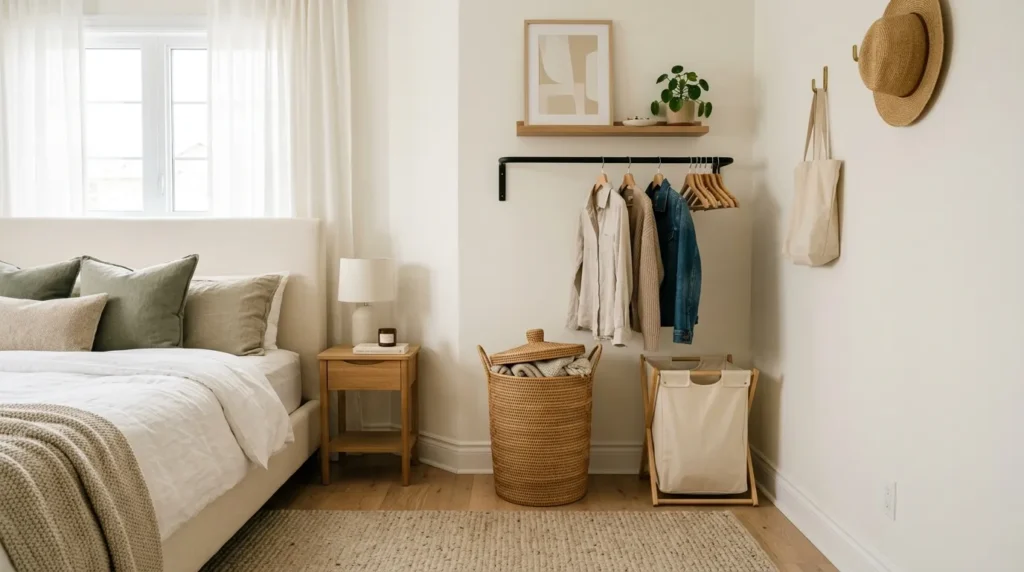
Corners are easy to overlook because they’re often treated as unusable space.
But a carefully organized corner can hold a slim hamper, laundry basket, clothing rail, plant, hooks, or small stackable containers.
The goal is to make the corner purposeful without filling it with too much furniture.
This approach can be particularly effective when the bedroom has an irregular layout or a small area that isn’t large enough for a conventional cabinet.
How To Style It
Start by measuring the corner and identifying what you actually need to store.
A slim laundry hamper can occupy a narrow gap.
A vertical rail can use the height of the room.
A tall basket can hold blankets.
Hooks can organize bags or hats.
Choose one main storage function rather than combining every possible solution.
Keep the color palette simple so the corner blends into the bedroom rather than becoming a visual focal point.
10. Decluttered Surfaces
Quick Benefits
- Makes the room feel larger
- Reduces visual clutter
- Simplifies cleaning
- Creates a calmer atmosphere
- Makes existing furniture more functional
Why It Works
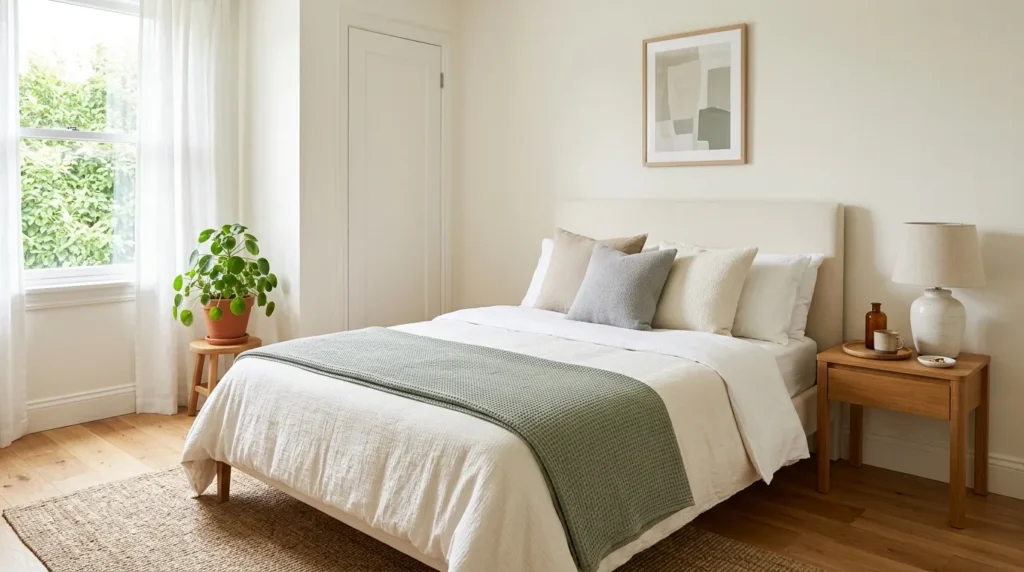
One of the easiest ways to make a small bedroom feel organized is to reduce what’s visible.
Even when everything has technically been put away, too many objects on the bed, floor, nightstand, or windowsill can make the room feel crowded.
Clear surfaces also make it easier to identify what actually needs organizing.
Instead of immediately buying storage products, start by editing the belongings already occupying the room.
Ask yourself whether each visible item is useful, meaningful, or intentionally decorative.
How To Style It
Give everyday items a designated home.
Keep the bedside area limited to essentials.
Use a small tray for jewelry, glasses, or other tiny objects.
Keep the floor as clear as possible.
Choose one or two decorative pieces for the nightstand instead of filling the surface.
Fold or hang clothing rather than leaving it on chairs.
At the end of the day, take a few minutes to return items to their designated places.
This small habit can make a bigger difference than adding another storage solution.
How to Organize a Small Bedroom Without Buying Anything
Before spending money on organizers, look around the room for unused spaces.
Under the bed may already provide storage.
The back of the door can hold hooks.
An empty wall can support a rail or existing hooks.
Suitcases can hold seasonal clothing while they’re not being used for travel.
Shoeboxes can be repurposed for smaller accessories.
Existing baskets can be reassigned to different categories.
You can also start with a simple decluttering session.
Remove everything that doesn’t belong in the bedroom. Then group the remaining belongings into categories such as clothing, accessories, shoes, books, electronics, bedding, and miscellaneous items.
Once you know what you’re storing, you can decide which areas make the most sense for each category.
This prevents you from buying organizers first and figuring out their purpose later.
How to Organize Clothes in a Small Bedroom
Clothing usually creates the biggest storage challenge.
Start by separating everyday clothing from seasonal pieces.
Keep frequently worn items in the easiest-to-reach locations.
Store off-season clothing beneath the bed or in the least accessible part of your existing closet.
Use vertical folding techniques where appropriate so you can see more items without creating unstable piles.
Hanging rails can work for frequently worn clothing, while baskets can hold accessories or folded pieces.
Try to avoid using the bedroom chair as permanent clothing storage. If a chair consistently becomes a clothing pile, create a designated alternative such as a hook, hamper, or rail.
How to Keep a Small Bedroom Organized
The best organization system is one that is easy to maintain.
Assign every major category a home.
When you bring something new into the bedroom, decide where it will live immediately.
Avoid allowing the floor, chair, or bed to become temporary storage zones.
A short daily reset can help. Put clothing away, return accessories to their containers, clear the nightstand, and remove anything that doesn’t belong in the room.
Once the system is established, maintaining it should take much less time than creating it.
Common Small Bedroom Organization Mistakes
One mistake is trying to store everything in the easiest-to-reach location.
Frequently used items deserve convenient storage, but rarely used belongings can occupy less accessible areas.
Another mistake is relying on too many open organizers.
Open storage can look attractive, but when every category is visible, the bedroom may still feel cluttered.
Overfilling containers is another common problem. A basket that barely closes or a shelf packed to the edge isn’t really solving the organization issue.
Finally, don’t ignore decluttering.
No storage method can compensate indefinitely for belongings you don’t use.
Before adding another organizing solution, ask whether the item needs to remain in the bedroom at all.
FAQ
How can I organize a small bedroom without a dresser?
Use the storage you already have more efficiently. Under-bed containers, closet organizers, floating shelves, baskets, wall hooks, and slim hanging rails can all provide useful alternatives. Keep frequently used items accessible and move seasonal belongings into less convenient storage areas. Decluttering first will also reduce the amount of storage you actually need.
How do I store clothes without extra cabinets?
Use your existing closet efficiently, add a slim hanging rail if appropriate, and use under-bed containers for seasonal clothing. Fold suitable garments into baskets or fabric organizers and keep frequently worn pieces within easy reach. If space is extremely limited, rotating seasonal wardrobes can reduce the amount of clothing occupying the bedroom at one time.
What is the best storage for a very small bedroom?
The best storage depends on what you’re storing, but vertical and hidden solutions are usually especially effective. Under-bed containers, door organizers, wall hooks, floating shelves, and slim rails use space without adding bulky floor furniture. A combination of several small solutions can often work better than one large storage unit.
How do I make a small bedroom look less cluttered?
Start by clearing unnecessary items from visible surfaces and the floor. Use matching or coordinated containers, keep storage zones organized, and leave some empty space around furniture. Limit decorative objects and give everyday belongings designated homes. A visually simple color palette can also make the room feel calmer.
Can I organize a bedroom without buying storage products?
Absolutely. Start by decluttering and repurposing what you already own. Suitcases can hold seasonal clothing, shoeboxes can organize accessories, existing baskets can contain blankets, and unused wall or door space can become storage zones. The most important step is creating a clear home for each category of belongings.
How can I organize a small bedroom with no closet?
Use a combination of slim hanging rails, under-bed storage, baskets, wall hooks, floating shelves, and carefully folded clothing. Keep the most frequently worn items on the rail and use hidden storage for seasonal belongings. A limited, coordinated wardrobe can also make a significant difference when closet space isn’t available.
How do I keep my small bedroom organized every day?
Create simple routines rather than relying on occasional deep cleaning. Put clothing away after changing, return accessories to their designated containers, clear the bedside area, and keep the floor free of loose items. A five-minute reset at the end of the day can prevent small amounts of clutter from becoming overwhelming.
Conclusion
Organizing a small bedroom without adding extra cabinets is completely possible when you start looking at the room differently.
The space underneath the bed, the back of the door, unused wall areas, closet doors, awkward corners, and even the side of the bed can all become useful storage zones. The goal isn’t to fill every available space with organizers. It’s to make the storage you already have work harder.
Start by decluttering. Remove items that don’t belong in the bedroom and group the belongings you actually use. Then assign each category a logical home.
Use hidden storage for seasonal and rarely used items, vertical storage for everyday accessories, and attractive baskets for things that need to remain accessible. Keep visible surfaces relatively clear so the bedroom feels open rather than crowded.
Most importantly, choose systems that are easy to maintain. The perfect organization solution isn’t useful if it takes too much effort to put things away.
You don’t need another large cabinet to create a functional bedroom. With a little editing, thoughtful placement, and some creative use of overlooked areas, even a very small room can feel calmer, cleaner, and much easier to live in.
Start with one problem area today—perhaps the floor, closet, or bedside table—and organize it completely before moving to the next. Small improvements can quickly add up to a bedroom that feels significantly more spacious and manageable.
Related Articles
- How to Make a Small Bedroom Feel Open with Smart Layouts
- 10 Small Bedroom Storage Ideas for a Clutter-Free Space
- How to Decorate a Small Bedroom with Simple Ideas
- 10 Bedroom Organization Ideas for Everyday Living
- 10 Small Living Room Organization Ideas Without Bulky Furniture