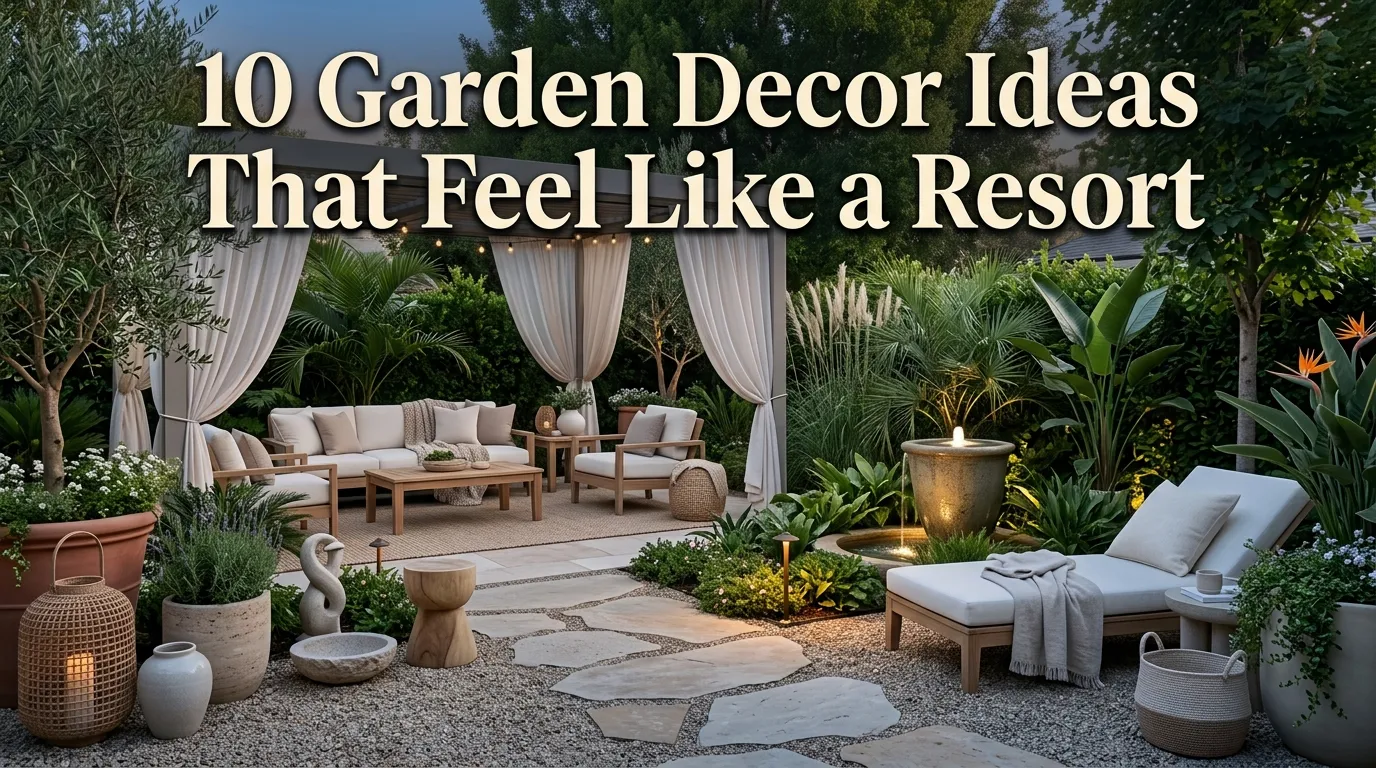
10 Garden Decor Ideas That Feel Like a Resort
A beautiful garden can become much more than a place for plants. With the right furniture, lighting, textures, and decorative details, an ordinary backyard can feel like a private retreat where you actually want to spend time. You don’t need a huge property or an expensive landscape renovation to create that atmosphere. Often, the feeling comes from how thoughtfully the space is arranged.
Resort-style gardens tend to have a few things in common. There are comfortable places to sit, soft lighting after sunset, greenery that creates privacy, natural materials, and small details that make outdoor living feel intentional. Instead of treating the garden as a collection of plants around the edge of a lawn, the space becomes an extension of the home.
I’ve noticed that the most inviting outdoor spaces usually have clearly defined areas. A comfortable chair sits where the morning sun reaches it. A dining table is positioned beneath a pergola or tree. A pathway leads somewhere rather than simply crossing the yard. At night, warm lighting guides you through the garden and highlights the features you enjoy most.
You can create that feeling on almost any budget by focusing on the elements that make the biggest visual and practical difference. A simple outdoor rug can define a seating area, while potted plants can add layers without permanent landscaping. A pergola or canopy can provide shade, and a few strategically placed lanterns can completely change the atmosphere after dark.
The ideas below focus on creating a garden that feels relaxed, polished, and vacation-inspired without becoming impractical. Whether you have a spacious backyard, a small patio garden, or a compact outdoor area, these decorating approaches can help you turn it into a place that feels special every day.
Table of Contents
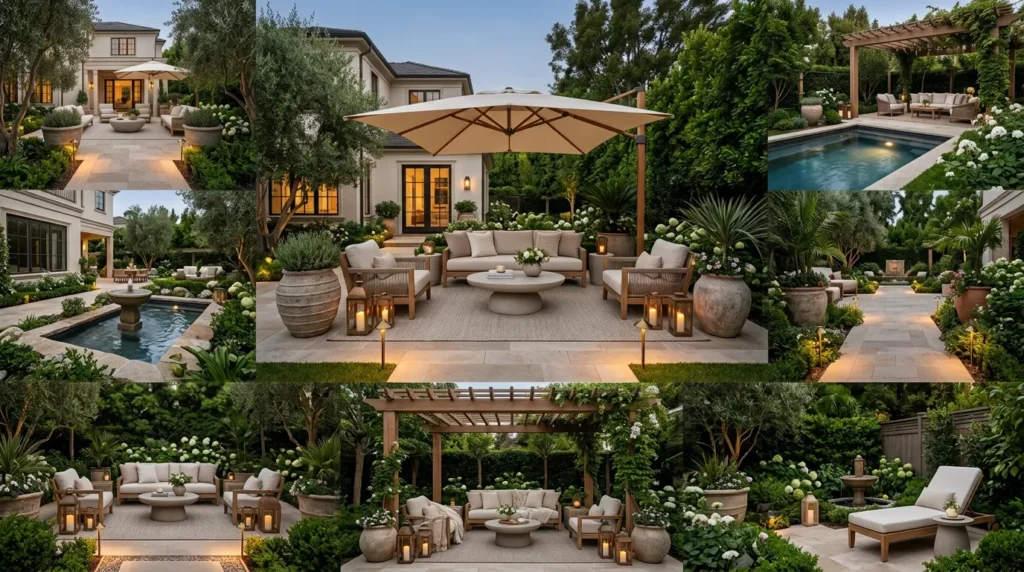
1. Resort-Style Seating
Create a comfortable outdoor lounge with generous seating, soft cushions, and relaxed furniture placement.
2. Layered Garden Lighting
Use warm, varied lighting to make the garden inviting from afternoon into the evening.
3. Pergola Retreat
Create a defined destination with a pergola, comfortable furniture, greenery, and shade.
4. Lush Container Plants
Use oversized planters and layered greenery to bring a polished resort feeling to patios and garden corners.
5. Outdoor Dining
Design a beautiful dining area that makes everyday meals and casual entertaining feel like a vacation.
6. Natural Stone Details
Add stone, gravel, and earthy materials to give pathways, seating areas, and borders an established appearance.
7. Water Feature
Introduce the visual and sensory appeal of water with a fountain, pond, or compact garden feature.
8. Privacy Greenery
Use plants, screens, and layered landscaping to create a more secluded outdoor retreat.
9. Outdoor Textiles
Add rugs, cushions, curtains, and throws to make outdoor areas feel as comfortable as interior rooms.
10. Evening Firelight
Create a memorable nighttime gathering area with a fire feature, comfortable seating, and atmospheric lighting.
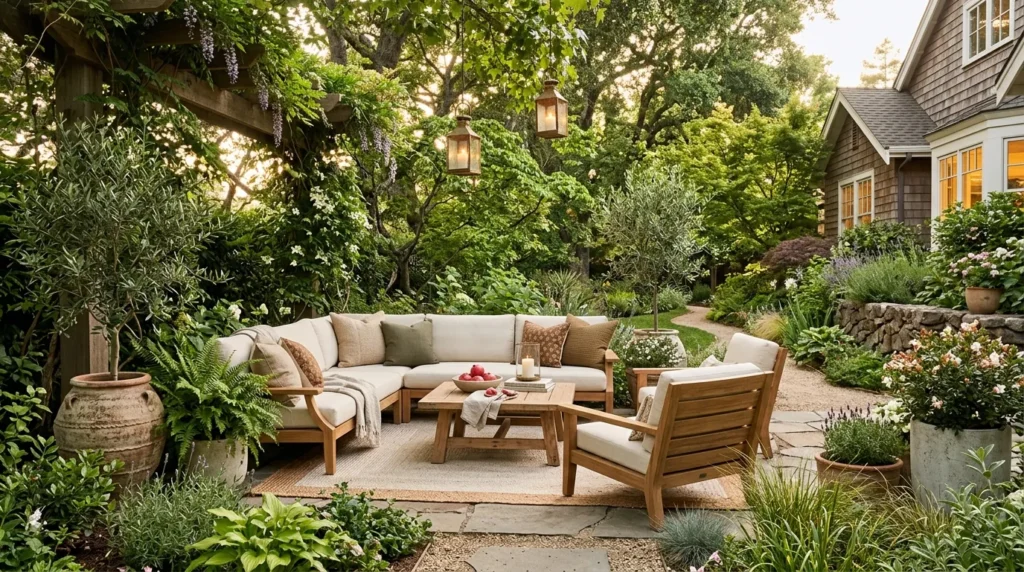
1. Resort-Style Seating
Quick Benefits
- Creates an inviting destination in the garden
- Makes outdoor space more useful
- Encourages longer periods outside
- Provides a strong visual focal point
- Works for entertaining and everyday relaxation
Why It Works
Comfortable seating is one of the fastest ways to change how a garden feels. A lawn surrounded by plants can be attractive, but adding a dedicated lounge area gives people a reason to actually use the space.
Resort gardens rarely rely on one small chair tucked beside a wall. Instead, they create generous seating arrangements that encourage conversation and relaxation. Think deep outdoor sofas, lounge chairs, ottomans, low coffee tables, and side tables positioned so everything feels connected.
The arrangement matters as much as the furniture. A few comfortable pieces grouped together can create a destination within the garden, while scattered furniture can make the space feel unfinished.
You don’t necessarily need luxury outdoor furniture to create the effect. The feeling comes from scale, comfort, repetition, and thoughtful placement.
How To Style It
Start by choosing the purpose of the seating area. If you want a place for conversation, position two lounge chairs across from a sofa or arrange several chairs around a low table. If the garden is primarily for reading and relaxing, one deep chair with an ottoman may be enough.
Choose weather-appropriate materials and cushions designed for outdoor use. Neutral upholstery in cream, sand, taupe, or soft gray creates an easy resort-inspired foundation.
Add a coffee table made from teak, stone, metal, or another outdoor-friendly material. Keep the tabletop relatively simple with a ceramic planter, lantern, or small tray.
If your garden is large, place the seating area beneath a tree, pergola, or shade structure. If the space is small, use furniture with a lighter visual footprint so pathways remain comfortable.
The goal is to make the seating feel like a destination rather than simply another collection of outdoor furniture.
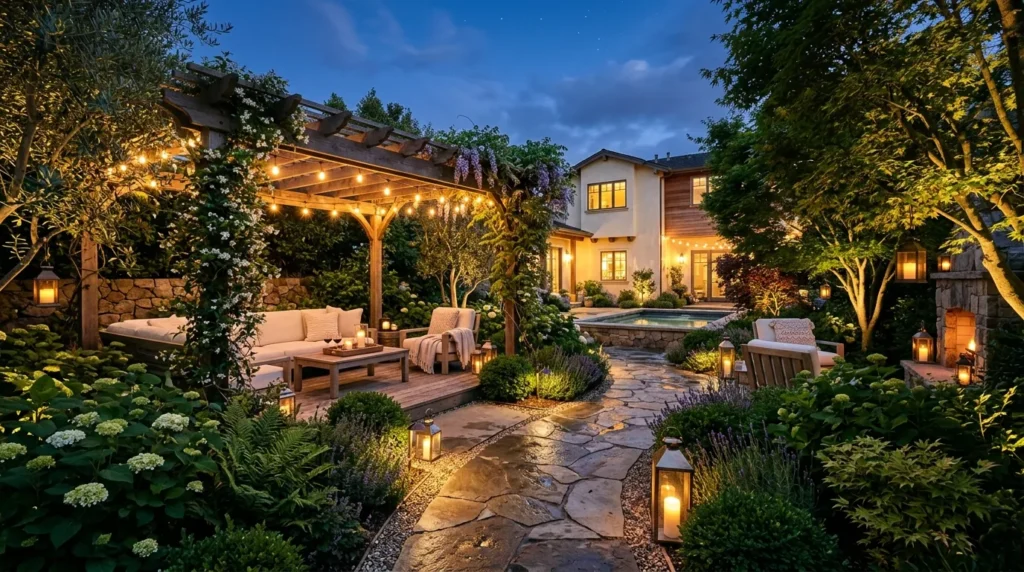
2. Layered Garden Lighting
Quick Benefits
- Extends garden use into the evening
- Creates a warm vacation-like atmosphere
- Highlights plants and architectural details
- Improves visibility along pathways
- Adds depth after sunset
Why It Works
Lighting may be one of the most important details in creating a resort-like garden because outdoor spaces change dramatically after sunset. During the day, plants, furniture, and architecture provide most of the visual interest. At night, thoughtful lighting takes over.
Instead of using one extremely bright light, create layers. Pathway lights can guide movement, wall lights can illuminate structures, string lights can create a soft overhead glow, and accent lighting can highlight trees or architectural features.
The goal isn’t to make the entire garden equally bright. In fact, some of the most beautiful outdoor spaces have areas of shadow between softly illuminated features.
Warm lighting generally creates a more relaxed atmosphere than harsh, cool illumination. It also works beautifully with natural materials such as wood, stone, and greenery.
How To Style It
Begin with practical areas. Make sure steps, pathways, entrances, and seating zones have appropriate illumination.
Then add accent lighting where you want the eye to travel. A tree with an attractive trunk, a textured stone wall, a fountain, or a large planter can all become nighttime focal points.
String lights can work particularly well over dining areas and pergolas. Hang them neatly rather than allowing excessive slack so the installation looks intentional.
Lanterns can add another layer at ground level. Place them near seating, along a patio edge, or beside a garden path.
Avoid placing bright lights everywhere. A few carefully positioned sources can create much more atmosphere than excessive illumination.
If using electrical fixtures outdoors, select products rated for outdoor use and follow appropriate installation and safety requirements.
3. Pergola Retreat
Quick Benefits
- Creates a defined outdoor room
- Provides shade and visual structure
- Adds architectural interest
- Creates a natural place for climbing plants
- Makes seating areas feel more private
Why It Works
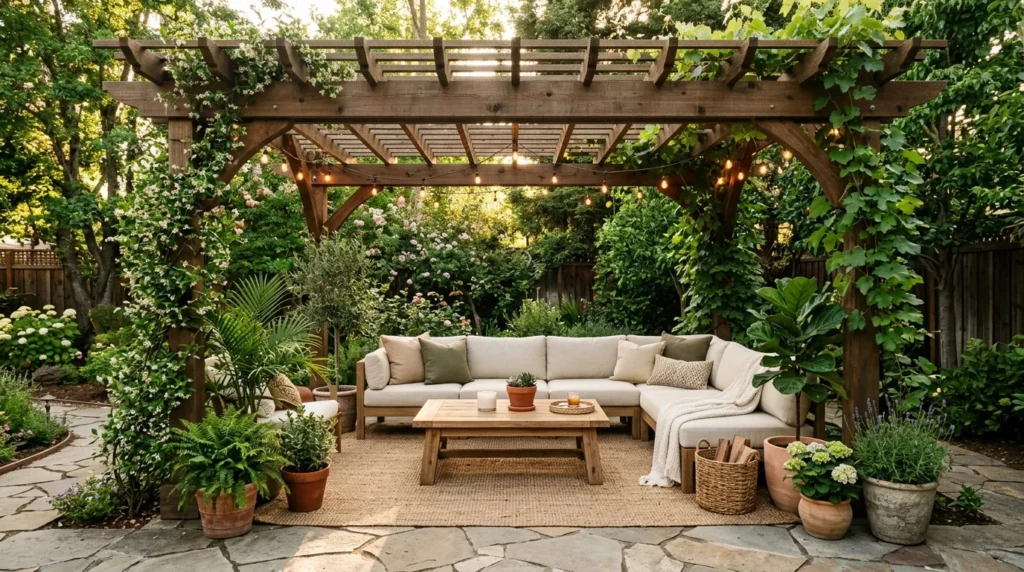
A pergola can make a garden feel more like a destination because it gives an outdoor area a sense of enclosure without completely closing it off.
Resort properties frequently use covered structures to create shaded lounges, dining areas, and transitional spaces. The same principle works at home. A pergola can transform a section of the yard into an outdoor room where furniture, lighting, plants, and textiles feel connected.
It also creates vertical structure. Gardens can sometimes look visually flat when everything is positioned at ground level. Overhead beams draw the eye upward and provide another surface for greenery and lighting.
The structure doesn’t have to be enormous. Even a modest pergola can define a seating or dining zone.
How To Style It
Place comfortable seating or an outdoor dining table beneath the pergola. Keep enough clearance around the furniture for people to move comfortably.
Add climbing plants suited to your climate and the structure’s growing conditions. Vines can gradually soften the architectural lines and provide additional greenery.
String lights can be installed along the beams to create a warm evening atmosphere. Outdoor curtains can also provide privacy and soften the structure, provided they are appropriate for the weather conditions.
Use natural materials where possible. Wood creates a particularly relaxed garden feeling, while metal can provide a more contemporary appearance.
Underneath the pergola, add an outdoor rug, cushions, lanterns, and potted plants to reinforce the feeling of an outdoor room.
If you’re building a permanent structure, check local requirements and choose materials suitable for your climate.
4. Lush Container Plants
Quick Benefits
- Adds greenery without major landscaping
- Creates height and visual layers
- Works in small and large gardens
- Makes patios feel more established
- Allows flexible seasonal changes
Why It Works
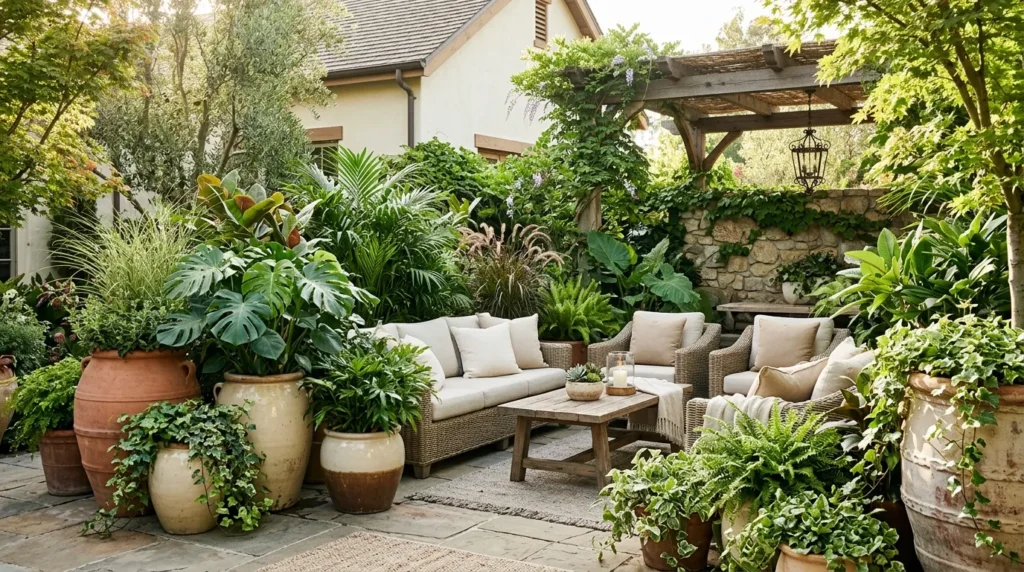
Large containers are a simple decorating tool with surprisingly strong visual impact. Resorts often use oversized planters to frame entrances, define pathways, and bring lush greenery into hardscaped areas.
The same idea works at home, particularly if you don’t have the space or budget for extensive landscaping.
Container plants also allow you to control where the greenery appears. A tall plant can screen a seating area, while smaller pots can soften the edge of a patio or staircase.
The key is scale. Several tiny pots scattered around a large patio can look disconnected. A few substantial planters create a stronger sense of intention.
How To Style It
Choose containers that complement the architecture and existing outdoor furniture. Terracotta creates a warm Mediterranean feeling, while concrete, stone-look, ceramic, or matte-finished planters can create a contemporary appearance.
Group containers in odd-numbered clusters when possible, varying the height and shape of the plants.
Use a combination of upright, rounded, and trailing forms. This creates more visual depth than using identical plants in every pot.
Large leafy plants can provide a lush tropical feeling where the climate supports them. Drought-tolerant plants can create a sophisticated resort atmosphere in drier regions.
Keep the color palette relatively cohesive. Repeating similar planter finishes throughout the garden can make different areas feel connected.
Remember to select plants according to their sunlight, water, temperature, and maintenance requirements. A beautiful container arrangement is much easier to enjoy when the plants are suited to their location.
5. Outdoor Dining
Quick Benefits
- Encourages outdoor entertaining
- Turns ordinary meals into an experience
- Creates a clear garden destination
- Works for families and guests
- Adds practical functionality
Why It Works
There’s something inherently vacation-like about eating outside. A simple meal can feel completely different when you’re surrounded by greenery, sitting beneath warm lights, and listening to the sounds of the garden.
An outdoor dining area also gives the garden a clear purpose. Instead of using the patio only as a passageway, you create a place where people naturally gather.
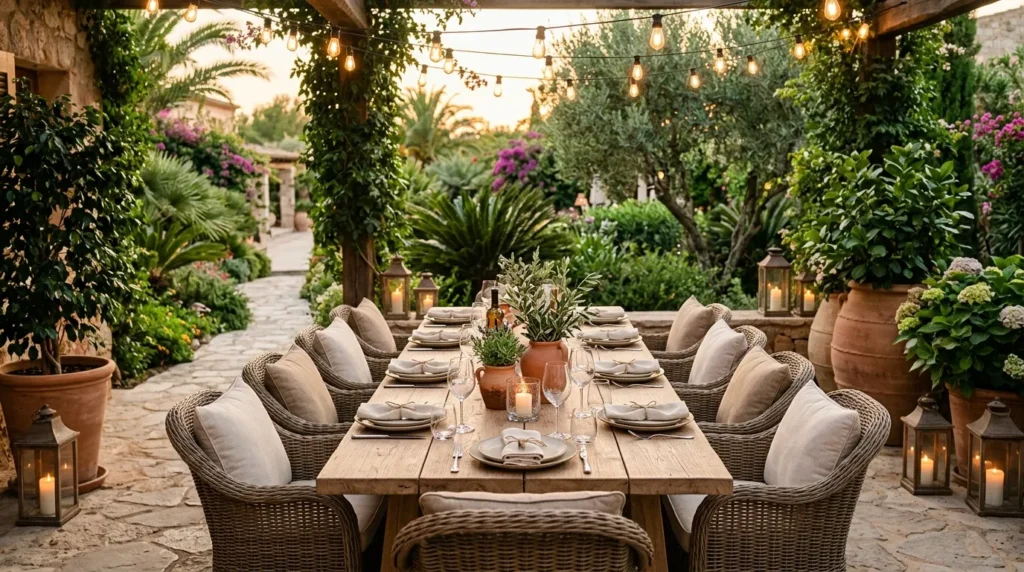
Resort-inspired dining doesn’t have to mean a formal table with elaborate place settings. A simple wooden table, comfortable chairs, soft lighting, and a few plants can create an equally inviting atmosphere.
The important part is making the area comfortable and connected to the rest of the garden.
How To Style It
Choose a table large enough for the way you actually entertain. A round table can work well in smaller spaces, while a long rectangular table can anchor a larger patio.
Wooden tables create warmth, while metal or stone tables can provide a more contemporary appearance.
Add comfortable outdoor cushions where appropriate and use an outdoor rug to visually define the dining area.
For evening meals, hang string lights above the table or place lanterns nearby. Avoid overly bright lighting directly above the dining surface if you want a relaxed atmosphere.
Add potted herbs, flowers, or greenery around the dining zone. A large planter at each end of the table can create a subtle sense of enclosure.
Keep outdoor table decor practical. A low ceramic bowl, weather-resistant vase, or simple candle lantern can add character without interfering with meals.
6. Natural Stone Details
Quick Benefits
- Adds permanent visual texture
- Creates an established landscape feeling
- Works with modern and traditional gardens
- Helps define pathways and zones
- Complements greenery beautifully
Why It Works
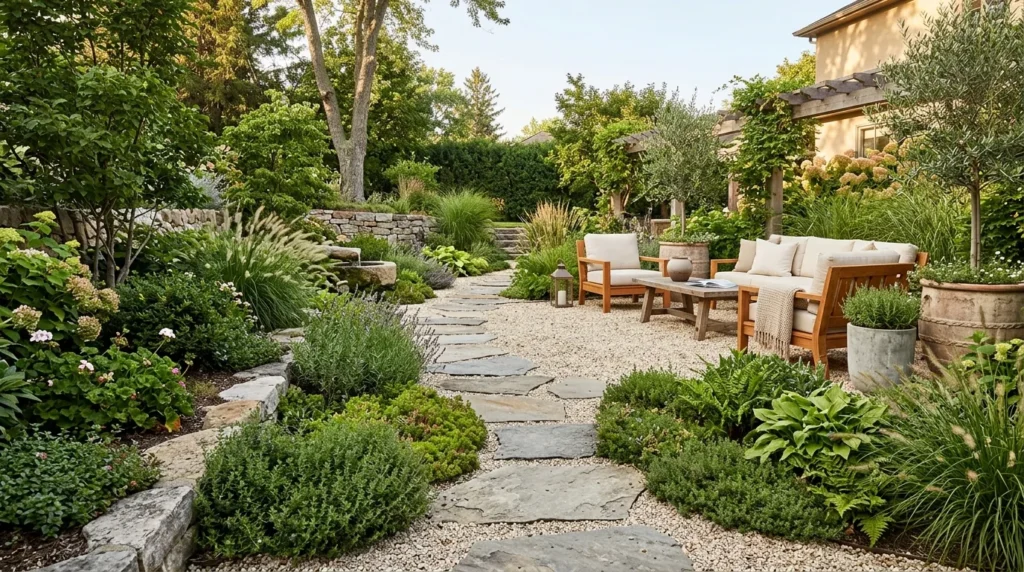
Natural stone has a way of making an outdoor space feel established. Stone paths, gravel, retaining walls, stepping stones, and patio surfaces introduce texture and variation that can make a garden feel more connected to its surroundings.
It also creates a useful contrast with greenery. Soft plants look particularly striking against hard stone surfaces.
You don’t need to cover the entire garden in stone. Small applications can have a strong effect. A stepping-stone path through lawn or groundcover, a gravel seating area, or a stone border around a planting bed can create visual structure without overwhelming the landscape.
Different stone types create different moods. Light limestone and pale gravel can feel Mediterranean, darker slate can feel contemporary, and warm natural stone can create a rustic atmosphere.
How To Style It
Use stone where it serves a purpose as well as adding decoration. A pathway should guide people toward a destination, while a stone patio can define a seating area.
Mix stone with planting rather than leaving large expanses completely bare. Groundcover, ornamental grasses, shrubs, and flowering plants can soften hard edges.
For a modern garden, use larger-format paving with clean joints. For a more relaxed appearance, irregular stone or gravel can create a less formal effect.
Repeat the stone material in more than one location when possible. For example, the same or complementary stone can appear in a pathway and low garden wall.
Consider maintenance as well. Gravel may require occasional replenishment, while paved surfaces need appropriate drainage and cleaning.
7. Water Feature
Quick Benefits
- Creates a strong focal point
- Adds soothing movement and sound
- Enhances the resort atmosphere
- Attracts attention without excessive decor
- Works in different garden sizes
Why It Works
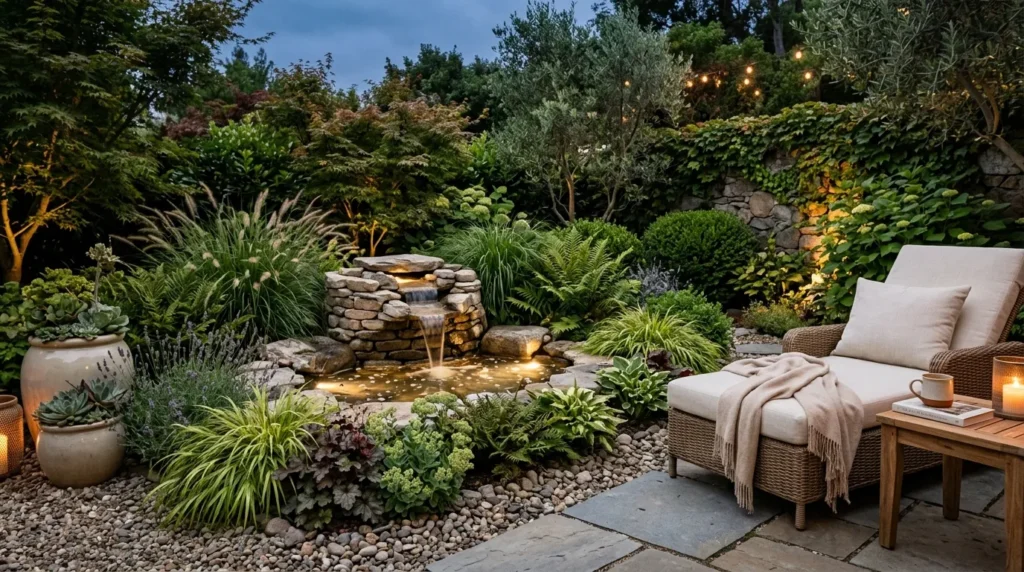
Water is strongly associated with relaxation, which makes it a natural addition to a resort-inspired garden. The sound of moving water can soften background noise, while the surface of a pond or fountain adds movement and reflection.
A water feature doesn’t need to be a large swimming pool. A wall fountain, small recirculating fountain, bowl-style feature, or compact pond can provide the same design principle on a smaller scale.
The key is positioning. A water feature becomes more meaningful when it is somewhere you can see or hear it from a seating area.
How To Style It
Choose the size and type based on the garden rather than trying to recreate a hotel pool in a compact backyard.
A wall-mounted fountain can work well against a patio wall. A bowl fountain can become a focal point among plants, while a small pond can create a more natural garden feeling.
Surround the feature with appropriate plants and natural materials. Stone, gravel, ornamental grasses, and lush foliage can make the installation feel integrated rather than added afterward.
Add subtle lighting if the feature is safe and designed for nighttime illumination. Reflected light on moving water can create a beautiful evening effect.
Keep maintenance in mind. Water features require cleaning and appropriate care, and some systems may require additional seasonal attention depending on your climate.
The goal is to create something you’ll enjoy looking at and listening to, not another feature that becomes difficult to maintain.
8. Privacy Greenery
Quick Benefits
- Creates a more secluded atmosphere
- Makes outdoor seating feel intimate
- Adds natural beauty
- Can soften fences and walls
- Helps divide a large garden into zones
Why It Works
Privacy can dramatically change the feeling of an outdoor space. Even a beautifully decorated patio may not feel relaxing if it faces a busy street or a neighbor’s yard without any visual separation.
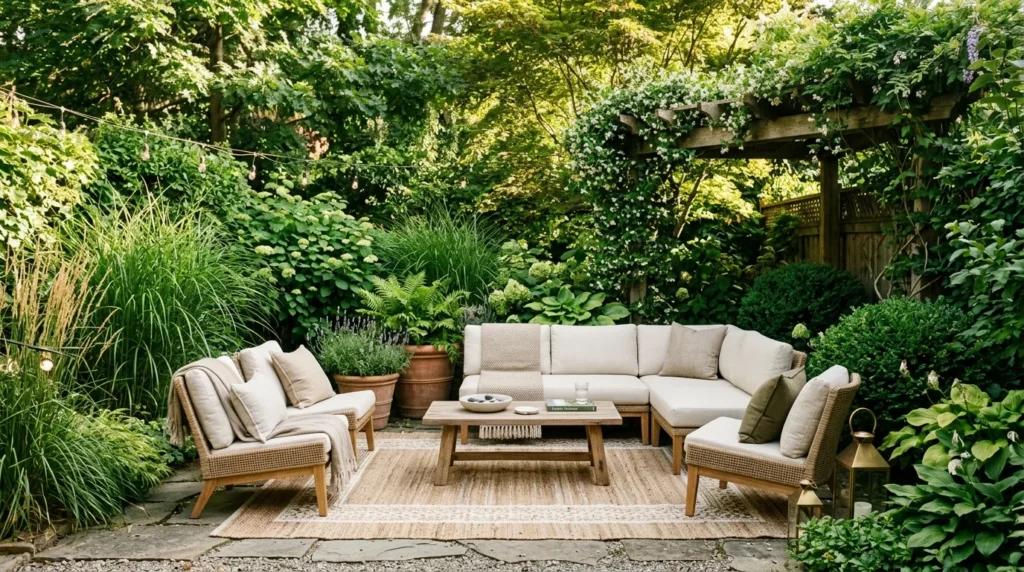
Plants provide one of the most natural ways to create privacy. Hedges, tall grasses, shrubs, trees, climbing plants, and large containers can all form layers that make the garden feel more secluded.
The resort effect comes from creating a sense that you’ve stepped away from the surrounding environment.
You don’t necessarily need a solid wall of greenery. Layered planting can feel more natural and visually interesting while still providing screening.
How To Style It
Start by identifying the views you want to soften. Instead of planting everywhere, focus on the sightlines from your main seating and dining areas.
Use plants at different heights. Taller trees or shrubs can provide the upper layer, medium-height plants can fill the middle, and lower planting can soften the ground.
Large containers can provide immediate screening while slower-growing plants become established.
For a lush look, combine different leaf shapes and shades of green. For a more contemporary garden, repeat a limited selection of plants in organized groups.
Climbing plants can be useful around pergolas, fences, and trellises.
Choose plants based on your local climate and the conditions of the site. A privacy screen is most effective when the plants can thrive with the amount of sun, water, and space available.
9. Outdoor Textiles
Quick Benefits
- Makes outdoor furniture feel more comfortable
- Adds color and texture
- Defines seating and dining zones
- Creates an indoor-outdoor connection
- Allows easy seasonal updates
Why It Works
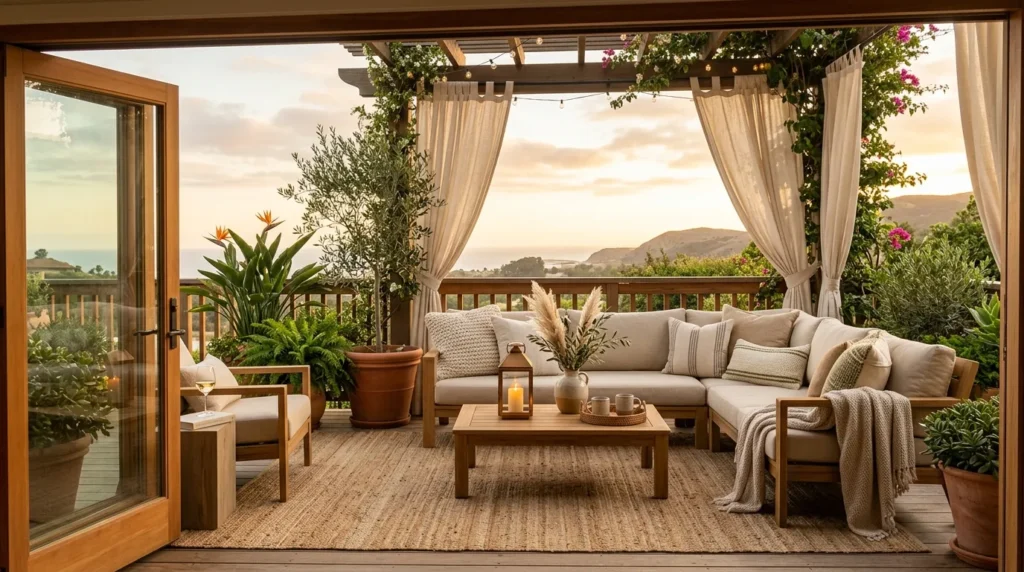
Textiles are what make many resort spaces feel comfortable rather than purely functional. A bare patio can feel hard and unfinished, while cushions, rugs, curtains, and throws introduce softness.
Outdoor textiles also help visually connect the garden with the interior of your home. If your living room uses cream, beige, olive, or terracotta accents, repeating a few of those colors outside can make the transition feel intentional.
The best outdoor textiles are practical as well as attractive. Look for materials designed for exterior conditions and follow care instructions to help them last.
How To Style It
Start with an outdoor rug beneath your main seating or dining arrangement. This helps define the area and gives furniture a visual foundation.
Add cushions in two or three related colors. You can mix patterns, but keep the overall palette consistent.
For a pergola or covered patio, outdoor curtains can create softness and additional privacy. Neutral curtains are particularly versatile and allow plants and furniture to remain the focus.
A lightweight outdoor throw can add comfort on cooler evenings, while a weather-resistant cushion on a lounge chair can make the space feel more inviting.
Don’t cover every surface in fabric. A few carefully selected textiles can create plenty of softness.
For seasonal changes, swap accent cushions and throws rather than replacing large furniture pieces.
10. Evening Firelight
Quick Benefits
- Creates a natural gathering point
- Extends garden use after sunset
- Adds warmth and atmosphere
- Makes outdoor entertaining memorable
- Complements resort-inspired lighting
Why It Works
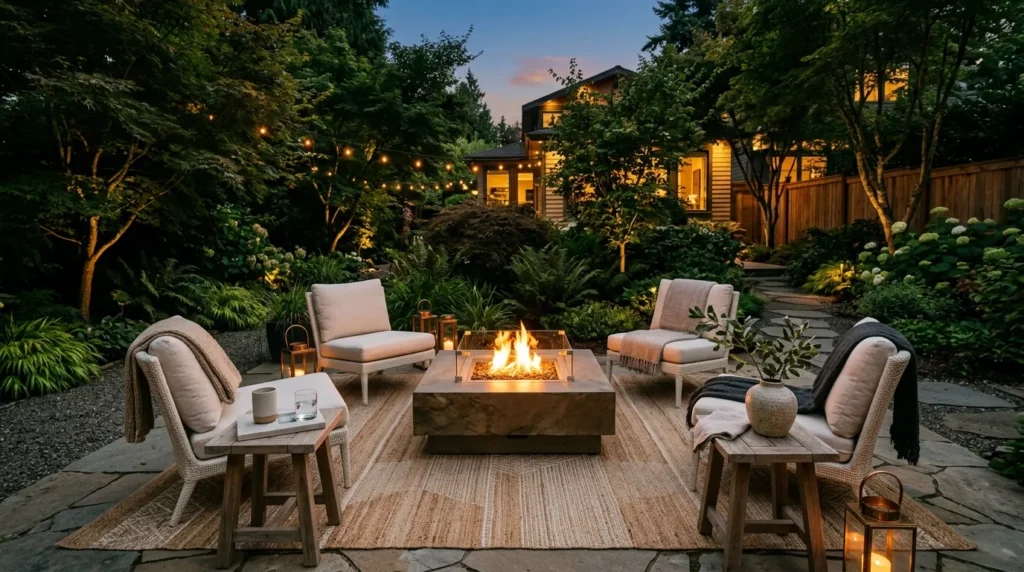
A fire feature can become the nighttime equivalent of a garden’s daytime focal point. Once the sun goes down, people naturally gather around warmth and light, making a fire pit or suitable outdoor fireplace an excellent way to create a destination.
The effect isn’t only visual. Firelight creates movement and warmth that electric lighting cannot completely replicate.
A resort-inspired fire area should feel comfortable rather than crowded. Give people enough room to sit, move, and place drinks while keeping the fire feature appropriately separated from combustible materials.
There are many options, from permanent masonry fireplaces to commercially manufactured fire tables and fire pits. The right choice depends on your space, local requirements, fuel source, and how often you plan to use it.
How To Style It
Position the fire feature where it can serve as a social focal point without blocking major pathways.
Arrange comfortable outdoor chairs around it with enough space for movement. Low lounge chairs can create a relaxed feeling, while upright chairs may be better for dining-adjacent areas.
Add an outdoor rug where appropriate for the furniture and fire setup, but always follow the safety requirements for the specific fire feature and materials.
Use plants and stone around the area to make it feel integrated with the garden.
Layer warm lighting nearby rather than relying only on the fire. Small pathway lights, lanterns, or subtle landscape lighting can make the surrounding garden visible without competing with the flames.
Before installing any permanent or fuel-burning fire feature, check applicable local fire codes, HOA requirements, placement rules, and manufacturer’s safety guidance.
Frequently Asked Questions
How can I make my garden look like a resort?
Focus on comfort, privacy, lighting, and defined outdoor living areas. Start with a comfortable seating zone, then add warm lighting, large planters, natural materials, textiles, and greenery. A pergola, water feature, outdoor dining area, or fire feature can create an additional focal point. The most important element is making the garden feel intentional rather than simply adding more decorations.
What colors make a garden feel luxurious?
Natural, restrained colors tend to create a sophisticated outdoor atmosphere. Think warm white, cream, beige, sand, natural wood, soft green, terracotta, muted brown, and charcoal. You can introduce stronger colors through flowers or cushions, but keeping permanent features relatively neutral makes the garden easier to update and helps greenery remain the visual star.
How can I make a small garden feel like a resort?
Prioritize one comfortable destination rather than trying to fit everything into the space. A compact lounge area with a small table, layered planters, warm lighting, and a privacy screen can be enough. Use vertical elements such as trellises, climbing plants, wall lighting, and hanging planters to add visual height without consuming valuable floor space.
What plants are best for a resort-style garden?
The best plants depend on your climate, sunlight, soil, water availability, and maintenance preferences. Lush tropical plants can create a resort feeling in suitable climates, while ornamental grasses, Mediterranean plants, shrubs, trees, and drought-tolerant species can produce a similarly sophisticated effect elsewhere. Choose plants that naturally thrive in your conditions rather than forcing a look that requires excessive maintenance.
How do I make my garden look expensive without spending a lot?
Concentrate your budget on a few high-impact elements rather than buying many small decorations. A quality outdoor rug, attractive planters, comfortable seating, coordinated cushions, and well-placed lighting can make a noticeable difference. Repetition also helps: using similar planter finishes, colors, or materials throughout the garden creates a more cohesive appearance without requiring expensive landscaping.
What lighting is best for a resort-style garden?
Layered warm lighting generally creates the most inviting effect. Combine pathway lights, lanterns, string lights, wall fixtures, and subtle landscape accent lighting instead of relying on one bright source. Highlight attractive trees, seating areas, pathways, and architectural features. Keep some areas darker so the illuminated elements feel more atmospheric.
How do I create privacy in my backyard without making it feel closed in?
Use layered greenery rather than creating one solid barrier. Trees, shrubs, ornamental grasses, climbing plants, trellises, and large planters can interrupt views while maintaining an open feeling. Outdoor curtains and decorative screens can provide additional privacy around specific seating areas. Focus screening where you need it most instead of enclosing the entire garden.
Conclusion
Creating a resort-inspired garden isn’t about copying every feature from an expensive hotel. It’s about recreating the feeling that makes those spaces so appealing: comfort, privacy, natural beauty, thoughtful lighting, and a sense that every area has a purpose.
Start with the way you want to use your garden. If you love morning coffee, create a comfortable little lounge beneath a tree or pergola. If outdoor dinners are your favorite, build the design around a beautiful dining area. If evenings are when you spend the most time outside, prioritize lighting and a safe, comfortable gathering space.
Then layer in the details. Oversized planters can add lushness, stone can create structure, textiles can soften hard surfaces, and greenery can make the garden feel secluded. You don’t need every idea at once.
In my experience, the most successful outdoor spaces are the ones that feel natural rather than overly decorated. A few beautiful materials repeated throughout the garden often look more polished than dozens of unrelated accessories.
Think about the journey through the space, too. A pathway can lead to a seating area, lighting can guide you after sunset, and plants can frame the places where you want people to gather.
Your garden doesn’t have to wait for a special occasion to feel like a retreat. With a few thoughtful changes, it can become the place where you read, dine, entertain, relax, and enjoy a little time away from the pace of everyday life.
Start with one area, make it comfortable, and build outward. The result can be a backyard that feels less like an unused outdoor space and more like your own private getaway.
Related Articles
- 10 Backyard Decor Ideas That Make Outdoor Living More Beautiful
- 10 Garden Landscaping Ideas for a Beautiful Backyard
- 10 Backyard Privacy Ideas for a More Peaceful Outdoor Space
- 10 Patio Decor Ideas for a Cozy Outdoor Retreat
- 10 DIY Garden Projects That Add Instant Character