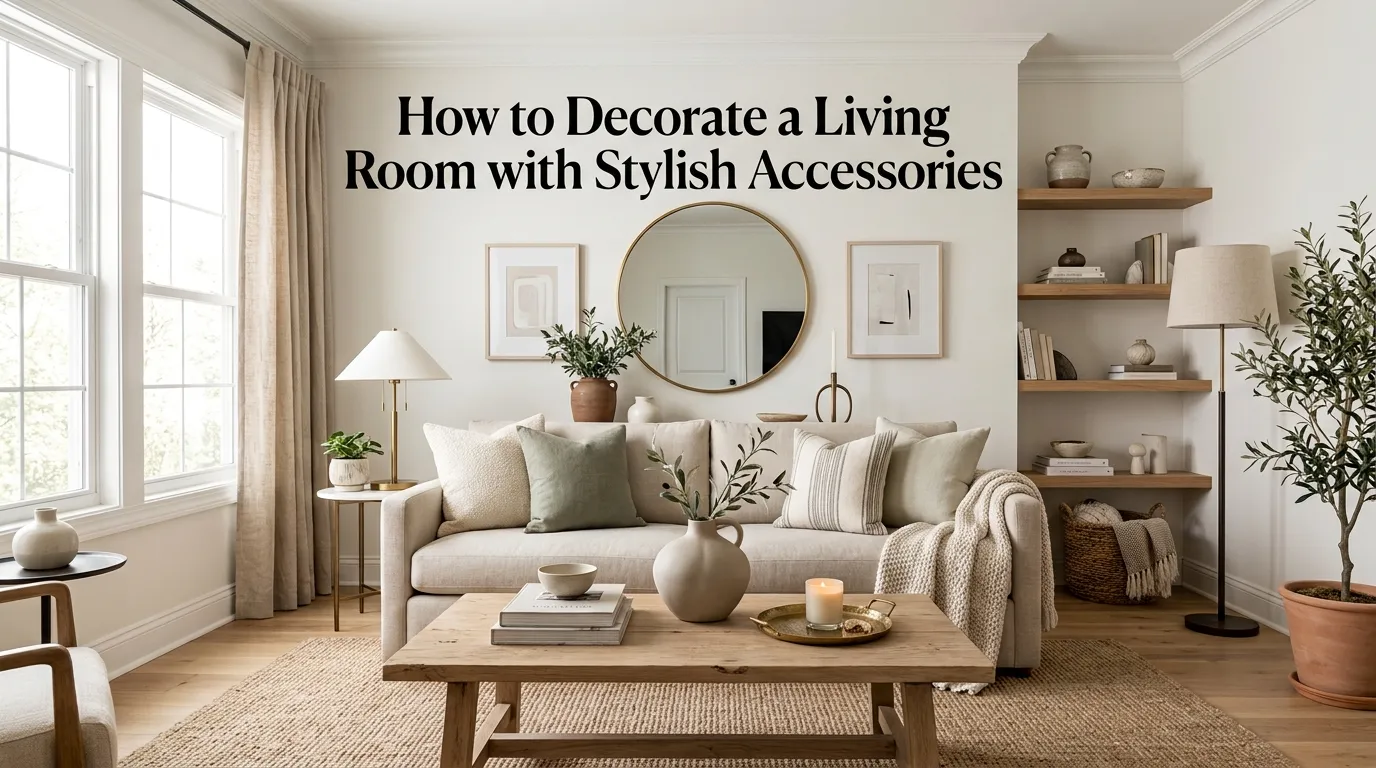
How to Decorate a Living Room with Stylish Accessories
A living room can have beautiful furniture and still feel unfinished. Often, what is missing isn’t another chair or a new sofa—it’s the smaller details that give the room personality. A thoughtfully chosen collection of pillows, artwork, lighting, books, plants, baskets, and decorative objects can turn a basic seating area into a space that feels layered and intentional.
The good news is that accessories don’t require a major renovation. In fact, they are one of the easiest ways to refresh a living room when you want a noticeable change without replacing your largest pieces.
The trick is knowing what to add, where to put it, and when to stop. I’ve found that rooms tend to look more polished when accessories have some connection through color, texture, shape, or material. Instead of buying lots of decorative pieces individually, think about the room as a whole.
For example, a neutral sofa might feel much more inviting with textured pillows, a soft throw, a wooden tray, and a few books. A bare console can become a focal point with a large mirror, table lamp, ceramic vase, and a small piece of greenery. Even an empty corner can feel intentional when you combine a plant with a basket or a floor lamp.
Another important consideration is everyday life. A living room should still be comfortable and functional. Accessories should make the space feel better, not create obstacles or surfaces that are impossible to keep tidy.
Whether your style is modern, traditional, farmhouse, coastal, minimalist, or somewhere in between, the following ideas can help you decorate with more confidence and create a living room that feels collected rather than cluttered.
Table of Contents
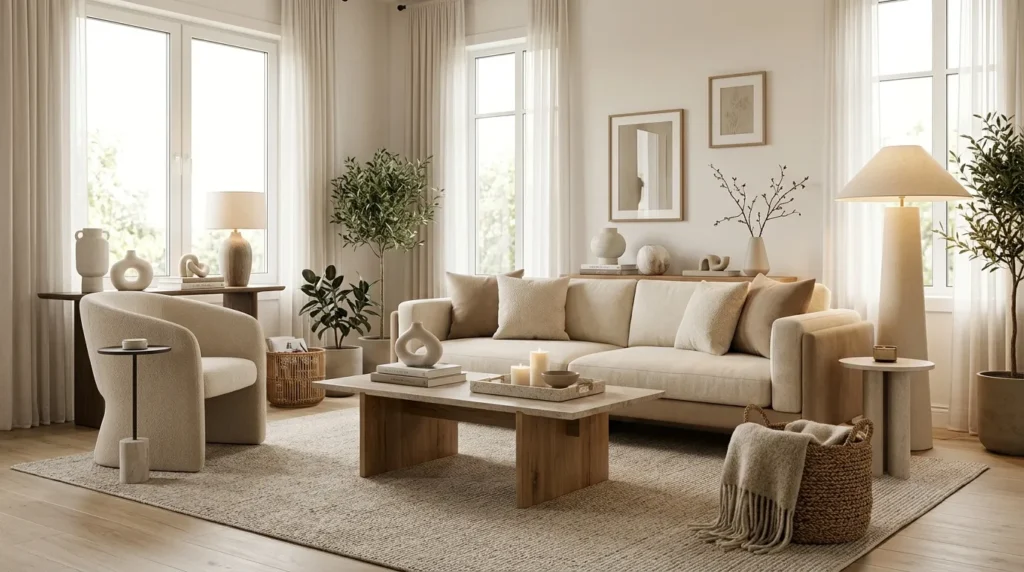
1. Layered Throw Pillows
Combine different textures, sizes, and patterns to make seating feel more inviting.
2. Statement Artwork
Use one strong piece of art to create a visual focal point.
3. Decorative Coffee Table
Style the coffee table with practical pieces that add personality and dimension.
4. Cozy Throw Blankets
Add softness and warmth with carefully placed blankets and textiles.
5. Layered Lighting
Combine lamps and ambient light sources to create a welcoming atmosphere.
6. Natural Greenery
Bring freshness and texture into the room with plants and botanical accents.
7. Styled Open Shelves
Arrange books and decorative objects to make shelving feel intentional.
8. Textured Area Rugs
Use rugs to anchor furniture while adding warmth and visual depth.
9. Decorative Baskets
Combine useful storage with natural texture and attractive styling.
10. Curated Accent Pieces
Finish the room with a small collection of meaningful decorative objects.
1. Layered Throw Pillows
Quick Benefits
- Makes sofas feel more comfortable
- Adds color and texture
- Creates visual depth
- Easy to update seasonally
- Works with almost any decorating style
Why It Works
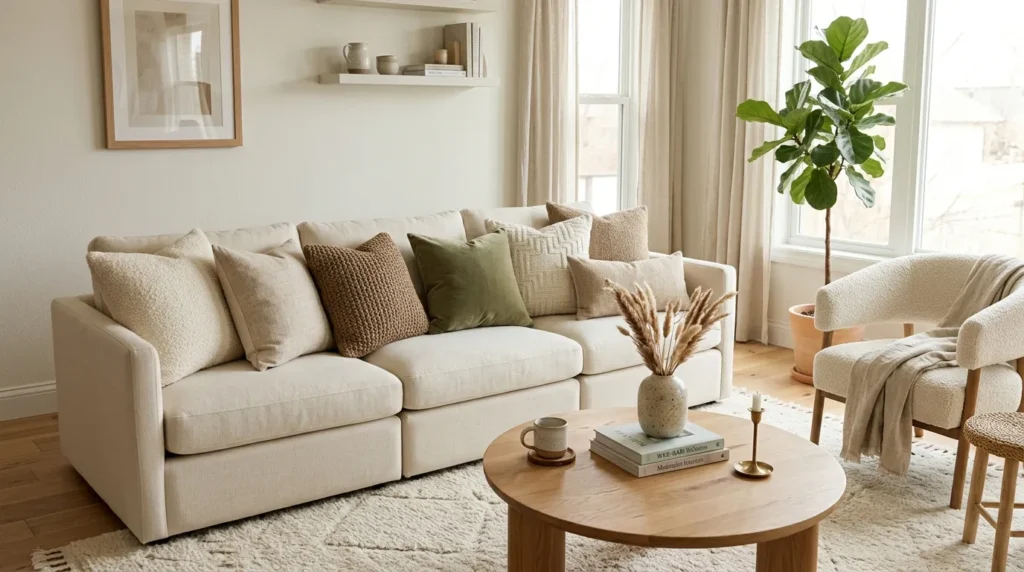
Throw pillows are one of the simplest accessories for changing the character of a living room. A plain sofa provides a neutral foundation, while pillows introduce the colors, patterns, and textures that connect the rest of the room.
The most successful arrangements usually include variation rather than a collection of identical pillows. Different sizes and materials create a layered appearance that feels more relaxed and natural.
For example, linen, boucle, velvet, woven cotton, and textured knits can work together beautifully when their colors are coordinated.
A common mistake is using too many unrelated patterns. Instead, choose a limited palette and let texture provide much of the variety.
How To Style It
Start with two or three main colors already present in the room. These might come from the rug, artwork, curtains, or accent chair.
Place larger pillows toward the back and smaller ones toward the front. A lumbar pillow can provide another shape and make the arrangement feel less repetitive.
For a neutral living room, combine cream, beige, taupe, soft brown, and muted green.
If you prefer more color, introduce one stronger shade through a single patterned pillow rather than using several competing colors.
Keep enough room on the sofa for people to sit comfortably. Accessories should enhance the seating, not take over the entire piece of furniture.
2. Statement Artwork
Quick Benefits
- Creates a focal point
- Adds personality
- Connects room colors
- Makes blank walls feel finished
- Can define the decorating style
Why It Works
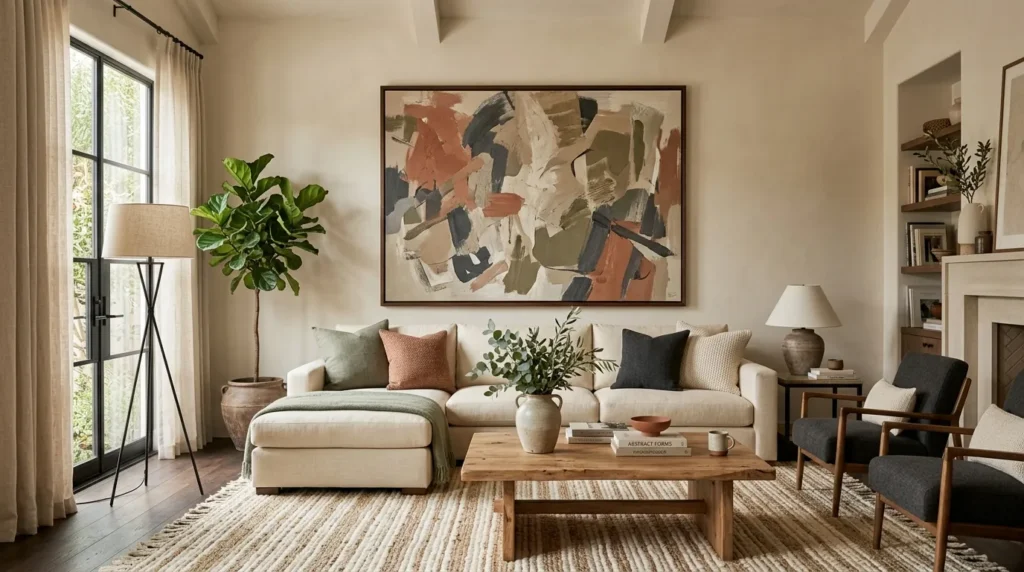
Artwork has a unique ability to make a living room feel personal. Even a simple room can become more visually interesting when a large painting, photograph, print, or gallery arrangement is positioned thoughtfully.
A statement piece doesn’t necessarily need to be expensive. What matters most is its scale, color relationship, and placement.
One oversized artwork can often have more impact than several tiny pieces scattered across a wall.
Artwork can also act as a bridge between different parts of the room. A painting that contains small amounts of the sofa color, rug tone, and accent color can visually connect everything.
How To Style It
Consider the size of the wall before choosing artwork.
Above a sofa, a large horizontal piece can work well, while a vertical piece may be better suited to a narrow wall or corner.
Hang artwork at a comfortable viewing height rather than placing it too high.
If you prefer a gallery wall, choose a consistent visual thread such as similar frames, colors, or subject matter.
For a modern room, abstract art with restrained colors can look sophisticated. For a traditional space, landscapes, botanical prints, or classic photography may work beautifully.
Leave enough breathing room around the artwork so it remains a focal point.
3. Decorative Coffee Table
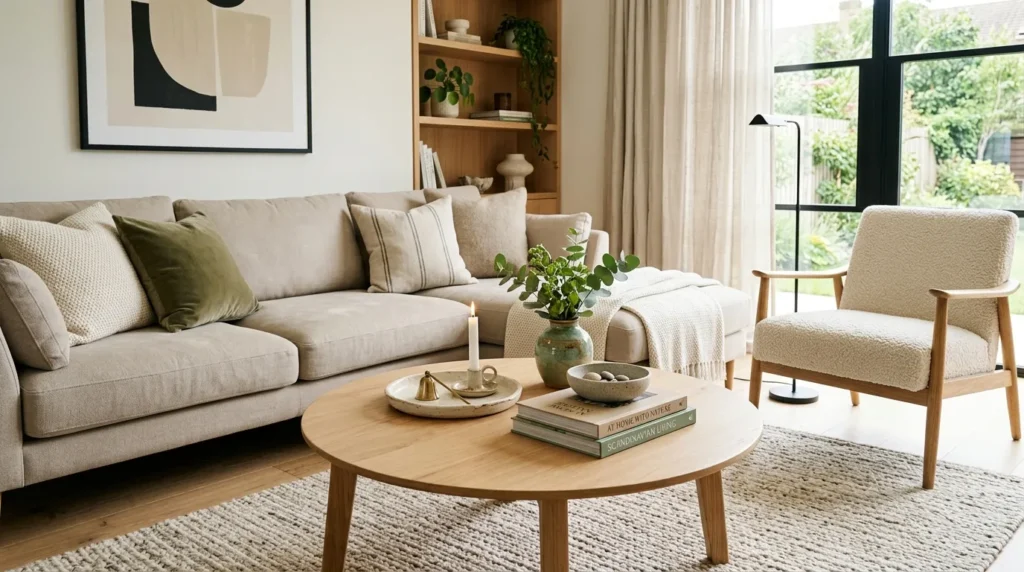
Quick Benefits
- Creates a central focal point
- Adds useful surface styling
- Provides an opportunity for texture
- Can display favorite objects
- Helps connect surrounding furniture
Why It Works
The coffee table naturally becomes one of the visual centers of a living room, so styling it thoughtfully can make the entire seating area feel more finished.
However, a coffee table should remain functional. People need somewhere to place drinks, books, phones, and other everyday items.
The goal is to create a styled arrangement that can easily be moved when necessary.
A combination of height, texture, and shape usually works better than placing several similarly sized objects together.
How To Style It
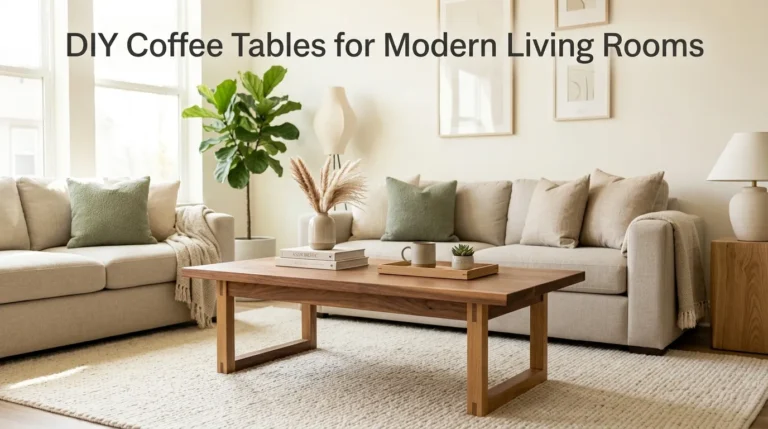
Begin with a tray. It creates a defined zone for smaller objects and makes the arrangement easy to move.
Add a stack of books, a low ceramic bowl, a candle, or a small vase.
Include one natural element such as a small plant or fresh flowers.
Use objects with different heights, but avoid placing too many tall items in the center where they might obstruct conversation or television viewing.
Leave plenty of open tabletop space.
For a more relaxed appearance, let the arrangement look slightly imperfect rather than arranging everything with exact symmetry.
4. Cozy Throw Blankets
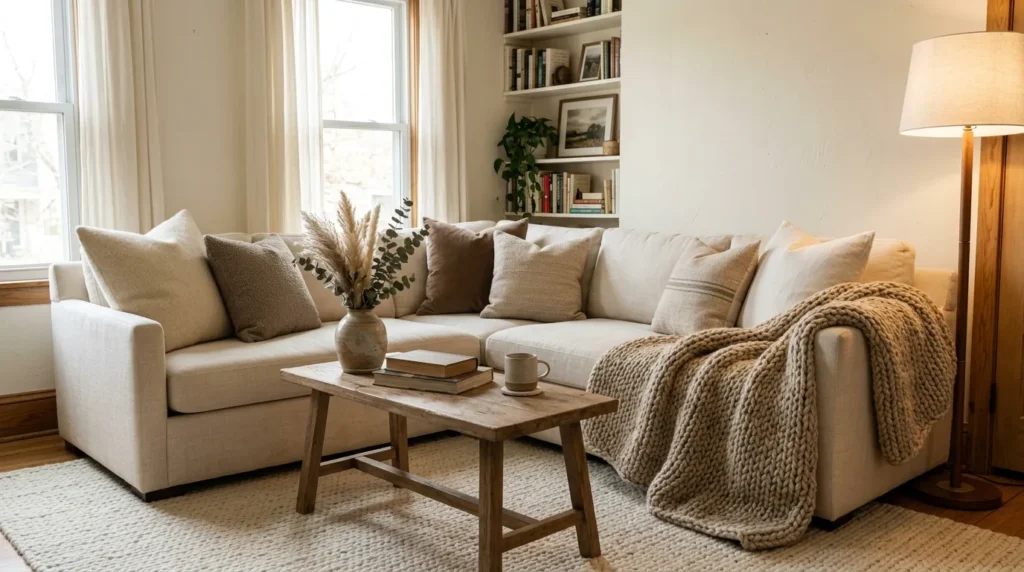
Quick Benefits
- Adds softness
- Makes seating more inviting
- Introduces texture
- Provides practical comfort
- Creates a relaxed appearance
Why It Works
A throw blanket can make even a very polished living room feel more lived-in.
Textiles soften hard furniture edges and add another layer to the room’s overall texture. They can also introduce subtle color without requiring a permanent design decision.
This is particularly useful in neutral living rooms where the furniture may otherwise feel visually flat.
The best throws look as though they are available to use rather than placed solely for decoration.
How To Style It
Drape a soft throw loosely over the arm or back of the sofa.
For a cleaner appearance, fold it into thirds and place it across the corner of a chair.
Choose materials according to the season and overall style. Chunky knits create a cozy winter feeling, while linen and lightweight cotton feel fresher during warmer months.
Coordinate the throw with the pillows without making them an exact match.
For a modern room, neutral shades such as oatmeal, ivory, warm gray, and taupe are easy to layer.
5. Layered Lighting
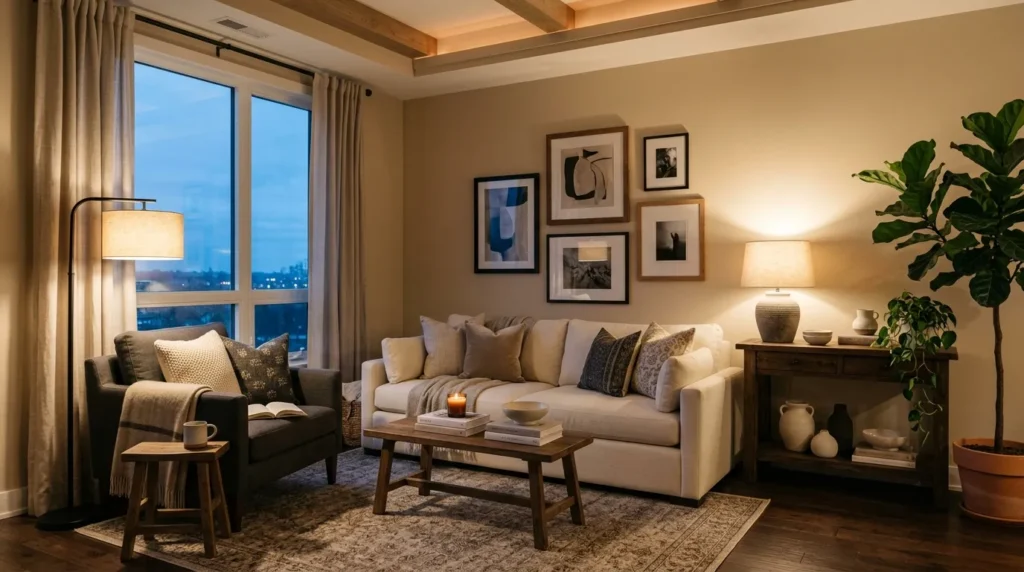
Quick Benefits
- Makes the room feel warmer
- Adds atmosphere
- Creates functional zones
- Highlights decor
- Improves evening comfort
Why It Works
Lighting is often treated as a practical necessity, but it can also function as one of the most important accessories in a living room.
A single overhead fixture rarely provides the most comfortable atmosphere. Multiple light sources create layers that can be adjusted depending on what you’re doing.
A floor lamp beside a chair creates a reading zone. A table lamp on a console provides warm ambient light. Accent lighting can highlight artwork or architectural features.
This layered approach also gives the room more depth after sunset.
How To Style It
Combine at least two or three types of lighting where practical.
Place a floor lamp beside a reading chair or sofa.
Use table lamps on consoles or side tables.
Choose fixtures whose shapes complement the furniture. A curved lamp can soften a room with lots of straight lines, while a simple geometric fixture can reinforce a modern design.
Use warm, comfortable lighting for relaxing spaces.
Don’t forget the lampshades. Fabric shades can add texture and diffuse light beautifully.
6. Natural Greenery
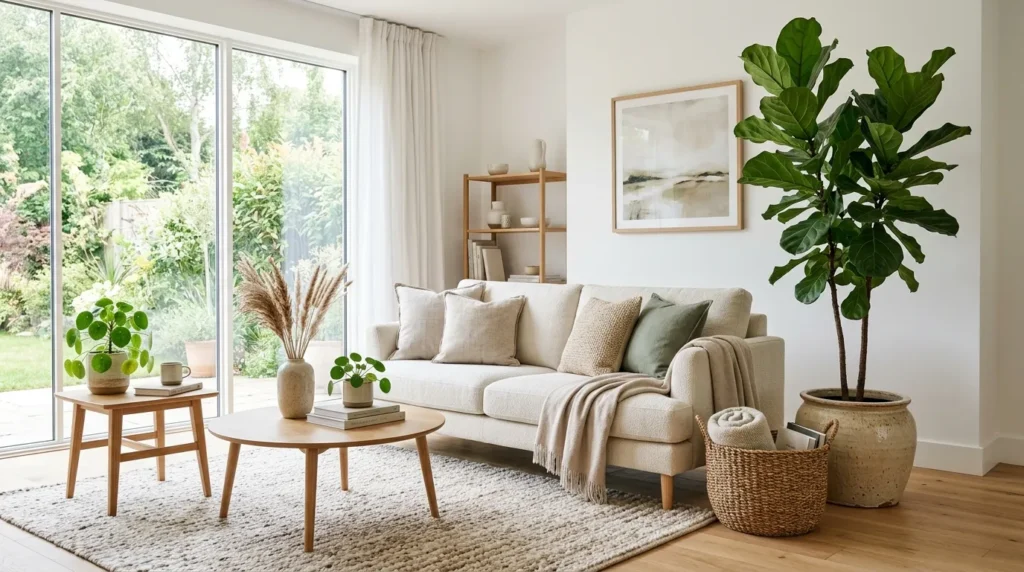
Quick Benefits
- Adds fresh color
- Introduces natural texture
- Softens furniture lines
- Works with neutral palettes
- Creates a more lived-in atmosphere
Why It Works
Plants are one of the easiest ways to bring life into a living room.
Greenery provides a natural color that works surprisingly well with neutral furniture, wood, stone, woven materials, and many accent colors.
Plants can also soften the visual appearance of furniture. A tall plant beside a sofa or cabinet introduces organic lines that contrast with rectangular furniture.
You don’t need a large collection. One thoughtfully placed plant can have more impact than several small pots scattered throughout the room.
How To Style It
Choose plants according to the amount of natural light available and the level of care you’re comfortable providing.
Use a tall plant to fill an empty corner.
Place a smaller plant on a shelf or side table.
Choose planters that coordinate with the room. Ceramic, woven, stone-look, and simple neutral planters can all work beautifully.
If you’re not comfortable caring for live plants, high-quality artificial greenery can provide a similar visual effect without ongoing maintenance.
Avoid placing plants where leaves interfere with walkways or furniture use.
7. Styled Open Shelves
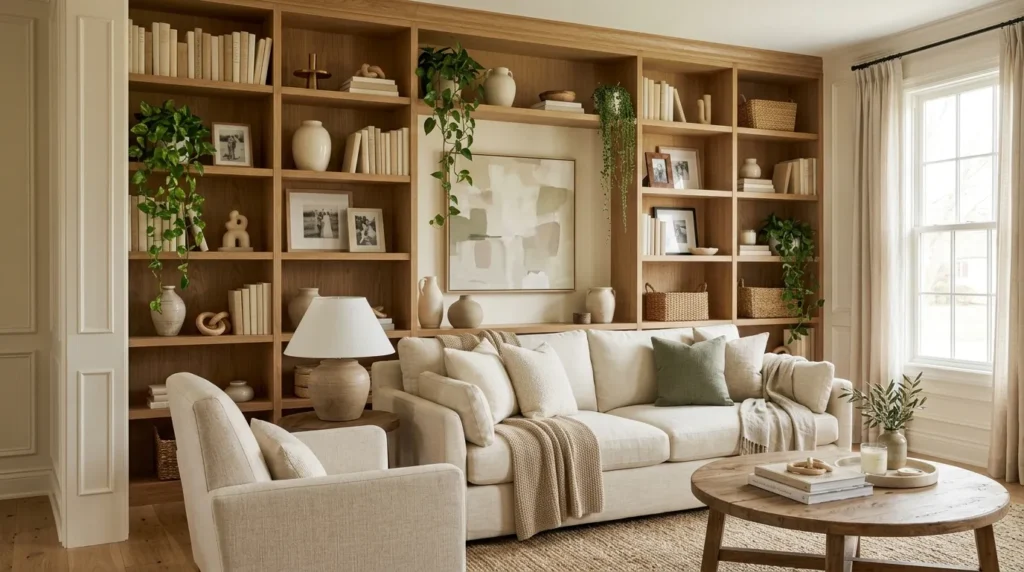
Quick Benefits
- Displays personality
- Provides accessible storage
- Adds vertical interest
- Creates opportunities for layering
- Helps break up blank walls
Why It Works
Open shelving can easily become cluttered, but when styled intentionally, it becomes an attractive part of the room.
The key is to combine functional items with decorative pieces rather than treating every shelf as a display case.
Books, framed photographs, ceramics, baskets, plants, and small objects can create a collected appearance.
Varying the placement of objects keeps the shelves from looking too symmetrical or overly staged.
How To Style It
Start by removing everything from the shelves.
Place larger objects first, then add smaller pieces around them.
Stack some books horizontally and place others vertically.
Use baskets to hide less attractive items.
Leave some empty space. Negative space allows the eye to rest and prevents the shelves from feeling crowded.
Repeat a few colors throughout the arrangement so the different objects feel connected.
If the shelves are in a neutral room, natural wood, cream ceramics, greenery, and black accents can create a cohesive palette.
8. Textured Area Rugs
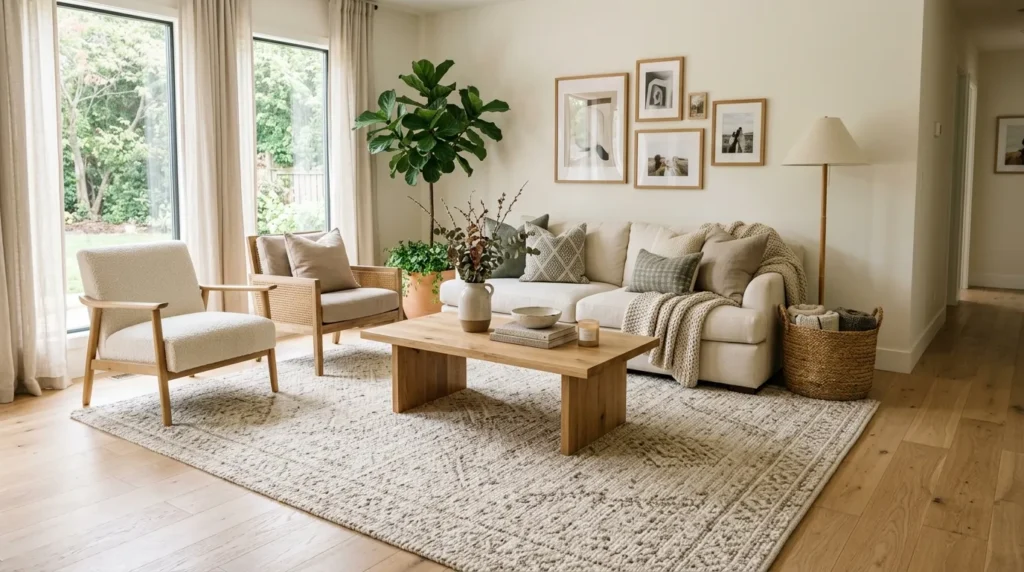
Quick Benefits
- Defines the seating area
- Adds warmth
- Introduces pattern or texture
- Makes furniture feel connected
- Softens hard flooring
Why It Works
An area rug is more than something soft underfoot. It can visually define the entire seating arrangement.
Without a rug, furniture can sometimes look like separate pieces floating around the room. A properly sized rug helps establish a unified zone.
Texture also adds another sensory layer. Wool, cotton, jute, and other materials can create very different moods.
The rug doesn’t have to match every other accessory. Instead, look for a relationship between its colors and the rest of the room.
How To Style It
Choose a rug large enough to connect the major pieces of seating.
In many living rooms, placing at least the front legs of the sofa and chairs on the rug can help unify the arrangement.
Use a patterned rug if the rest of the room is relatively quiet.
If you already have patterned curtains or artwork, a subtle textured rug may be a better choice.
For modern spaces, muted geometric patterns, vintage-inspired designs, and natural woven textures can all work.
9. Decorative Baskets
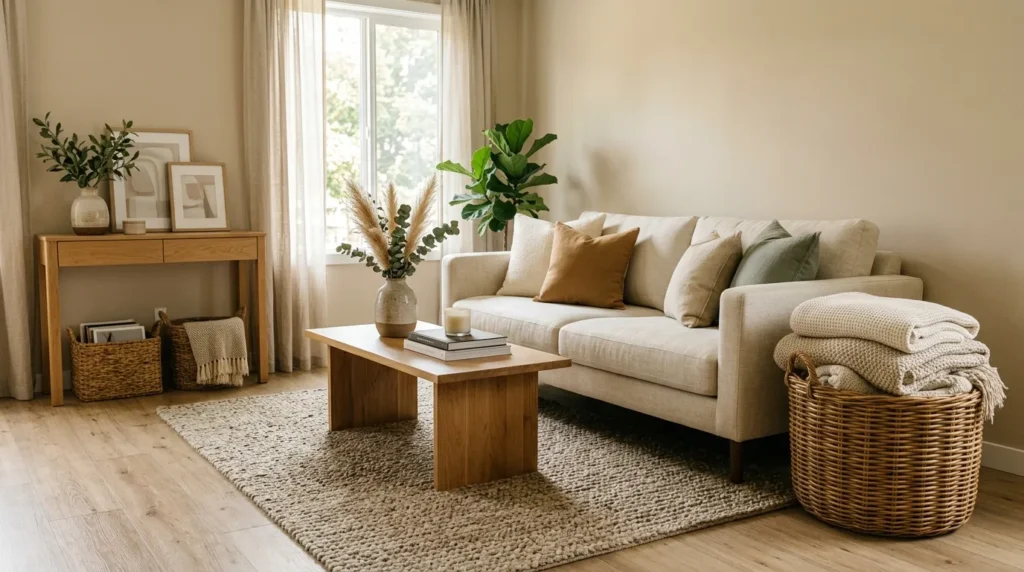
Quick Benefits
- Provides practical storage
- Adds natural texture
- Helps control clutter
- Works in many styles
- Makes empty areas useful
Why It Works
Stylish storage is one of the best kinds of accessories because it solves a practical problem while contributing to the room’s appearance.
Baskets can hold blankets, toys, magazines, pillows, or everyday items that otherwise end up scattered around the living room.
Natural woven baskets are particularly useful in neutral and modern spaces because their texture adds warmth.
They can also fill awkward areas such as the bottom of a console table or an empty corner.
How To Style It
Choose baskets that are proportional to the furniture around them.
A large basket beside a sofa can hold extra throws.
Smaller baskets can be placed inside shelving units or under consoles.
Look for natural fibers, simple shapes, and colors that complement the room.
Avoid filling every open space with baskets. One or two strategically placed pieces usually look more intentional.
For a more modern appearance, consider structured baskets in simple neutral colors rather than heavily patterned designs.
10. Curated Accent Pieces
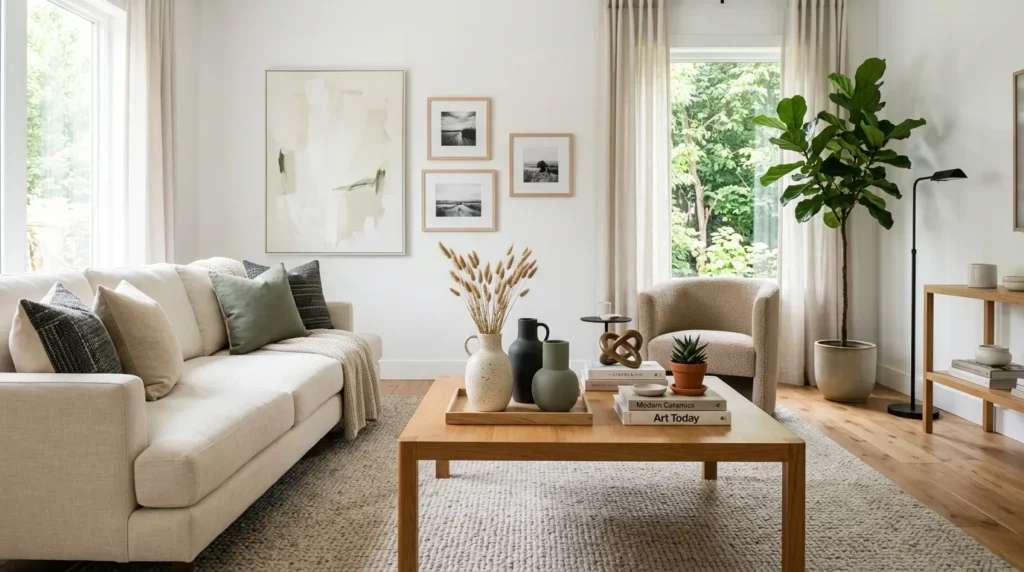
Quick Benefits
- Adds personality
- Creates a collected appearance
- Allows personal memories to shine
- Completes shelves and surfaces
- Makes the room feel unique
Why It Works
The final layer of a well-decorated living room often comes from small objects.
Ceramics, books, candles, framed photographs, sculptures, bowls, trays, travel finds, and sentimental pieces can tell a story about the people who live in the home.
The goal isn’t to fill every surface.
Instead, choose objects that vary in size, shape, height, and texture while sharing some connection through color or material.
A room feels much more authentic when at least some of its accessories have personal meaning.
How To Style It
Start with larger anchor pieces, such as a vase, lamp, or sculpture.
Add smaller objects around them.
Group items in odd numbers when that feels natural, but don’t treat decorating like a strict mathematical formula.
Mix materials such as wood, ceramic, glass, metal, and textiles.
Use books to create height on consoles and side tables.
Most importantly, leave some surfaces intentionally empty.
That negative space gives your favorite pieces room to stand out.
How Many Accessories Should a Living Room Have?
There isn’t a fixed number that works for every living room.
The right amount depends on the room’s size, furniture, storage, and personal style.
A minimalist living room may need only a few carefully selected pieces. A more traditional or collected room may comfortably support more layers.
A useful rule is to start with less than you think you need. Add accessories gradually and step back frequently to look at the room as a whole.
If every surface is covered, remove a few pieces.
If a corner feels empty or the room lacks texture, add one carefully chosen accessory rather than several unrelated objects.
The goal is balance rather than quantity.
How to Mix Colors Without Making the Room Look Busy
Start with the colors already present in the room.
Your sofa, rug, curtains, artwork, and flooring create the foundation. Accessories should generally reinforce that palette rather than introduce a completely new collection of colors.
A simple approach is to choose:
- One dominant neutral
- One secondary color
- One accent color
- A few natural materials
For example, cream can be the dominant neutral, warm brown the secondary color, and muted green the accent.
Repeat those colors in different textures rather than using identical objects.
A green pillow, plant, and artwork detail can feel connected without looking overly coordinated.
How to Make a Living Room Look Expensive With Accessories
You don’t need expensive accessories to create a polished appearance.
Focus on scale and composition first.
One large piece of artwork can have more impact than several tiny prints.
A substantial ceramic vase may look more sophisticated than a collection of small decorative objects.
Use natural materials where possible. Wood, stone, linen, wool, woven fibers, and ceramics tend to add visual depth.
Keep surfaces relatively uncluttered.
And pay attention to lighting. Warm layered lighting can make affordable furniture and accessories feel much more inviting in the evening.
The biggest difference often comes from editing. Remove pieces that don’t contribute to the overall room, then give your favorite objects space to stand out.
How to Decorate a Small Living Room With Accessories
Small living rooms benefit from accessories that serve more than one purpose.
A woven basket can provide storage and texture.
A mirror can add visual depth while functioning as wall decor.
A decorative tray can organize coffee-table objects.
A floor lamp can provide lighting without requiring another table.
Avoid filling every wall and surface. Too many small accessories can make a compact room feel crowded.
Instead, choose a few larger, intentional pieces and repeat colors or materials throughout the room.
Vertical styling can also help. Tall plants, floor lamps, curtains, and artwork draw the eye upward without taking much floor space.
FAQ
What accessories should every living room have?
A comfortable living room doesn’t need a specific checklist, but useful starting points include pillows, a throw blanket, artwork, lighting, a rug, greenery, and a few decorative objects. The exact combination depends on the room. Prioritize accessories that add comfort, function, texture, or personality rather than buying pieces simply to fill empty space.
How do I make my living room look stylish?
Start by creating a cohesive color palette, then add accessories in layers. Use different textures, incorporate artwork, add greenery, and combine practical pieces with decorative objects. Avoid making everything match exactly. A stylish living room usually feels collected and balanced rather than perfectly coordinated.
How do I decorate a living room without clutter?
Choose fewer but more intentional accessories. Give each piece enough breathing room and avoid filling every shelf, table, or corner. Use baskets and trays to organize smaller items. Step back regularly and remove anything that doesn’t contribute to the room’s comfort or visual balance.
What colors are best for living room accessories?
Neutral colors such as cream, beige, taupe, gray, and brown are easy to layer. You can then introduce one or two accent colors such as muted green, blue, terracotta, or black. Look at your existing furniture and artwork before choosing accessory colors so the finished room feels cohesive.
How do I style a coffee table?
Start with a tray to organize smaller objects. Add a few books, a low bowl or vase, and one natural element such as greenery. Vary the heights and textures of the objects while leaving enough open space for everyday use. Keep tall accessories toward the edges if they interfere with sightlines.
How can I make a neutral living room more interesting?
Add texture rather than relying solely on color. Layer linen, boucle, wool, wood, ceramic, woven fibers, and greenery. Artwork can provide subtle color, while pillows and throws can introduce additional patterns. Different textures give a neutral room depth while allowing it to remain calm and sophisticated.
Should living room accessories match?
They don’t need to match exactly. In fact, using identical accessories throughout the room can make the space feel overly staged. Instead, look for relationships between pieces through color, material, shape, or style. Repeating a few elements creates cohesion while allowing individual pieces to have their own character.
Conclusion
Decorating a living room with stylish accessories is less about buying more and more about choosing better.
Start with the foundation you already have. Look at the sofa, rug, walls, flooring, and larger furniture pieces, then identify what the room needs. Perhaps it needs more warmth through wood and woven textures. Maybe it needs color through artwork and pillows. Or perhaps the biggest improvement would come from better lighting and a little greenery.
Build the room in layers rather than trying to finish everything in one shopping trip. Add pillows, artwork, lighting, textiles, plants, and decorative objects gradually, stepping back after each change to see how the room feels.
Remember that functionality matters just as much as appearance. A living room should still have comfortable places to sit, surfaces for everyday items, and enough open space to move around easily.
And don’t be afraid to leave some areas empty. Negative space is part of good decorating.
The most inviting rooms aren’t necessarily the ones with the most accessories. They’re the rooms where every piece feels like it belongs.
Start with a few accessories you genuinely love, repeat colors and textures thoughtfully, and let your living room develop into a space that feels comfortable, personal, and distinctly yours.
Related Articles
- 10 Small Living Room Ideas with Modern Comfort
- 10 DIY Coffee Tables for Modern Living Rooms
- 10 Modern Living Room Ideas with Natural Wood
- 10 Cozy Living Room Decor Ideas for Everyday Comfort
- 10 Living Room Wall Decor Ideas for a Stylish Home