10 Blue Gray Kitchen Cabinets with Timeless Design
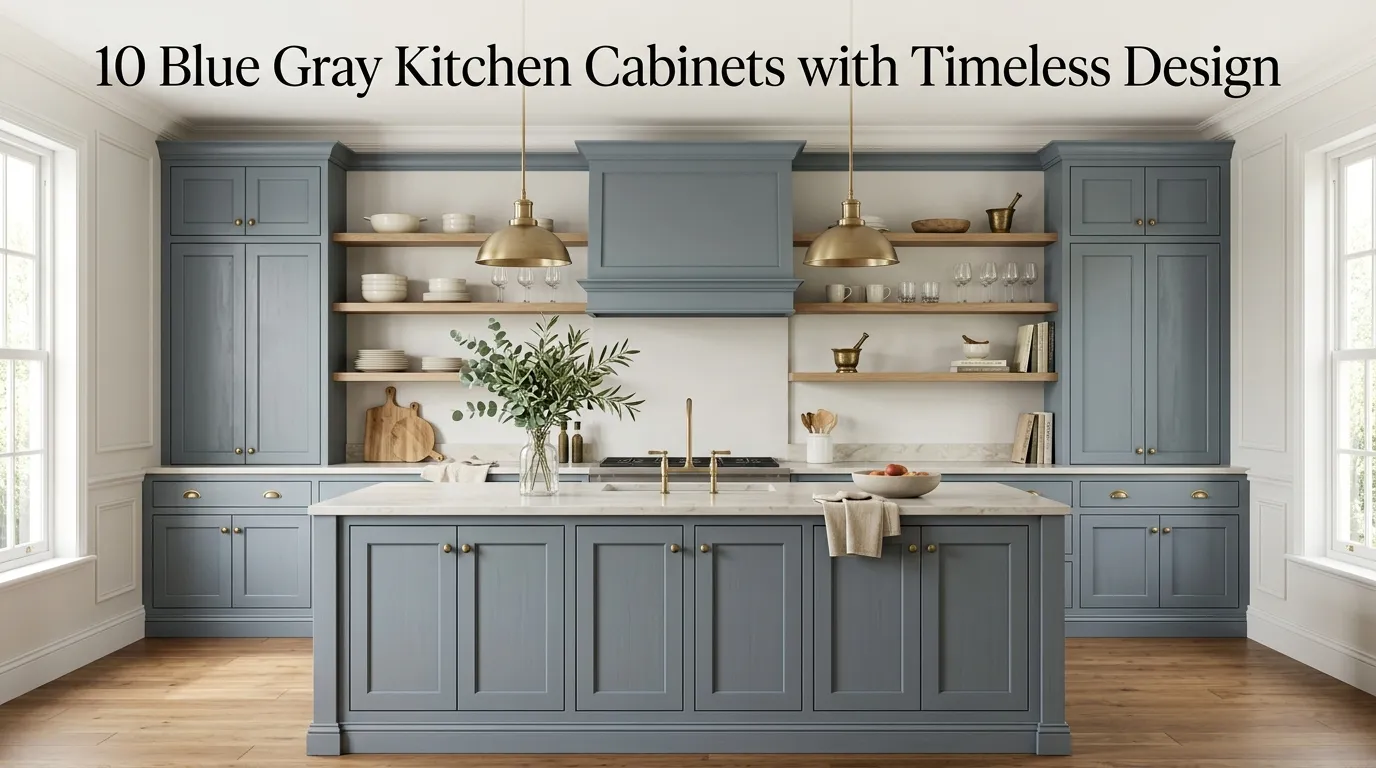
Blue gray kitchen cabinets have a special way of making a kitchen feel both classic and current. The color sits comfortably between cool blue and soft gray, giving cabinetry enough personality to stand out without becoming difficult to decorate around.
That versatility is one reason blue gray has become such an appealing choice for homeowners who want something beyond white or traditional wood cabinetry. Depending on the lighting, hardware, countertops, and surrounding finishes, the same cabinet color can feel coastal, modern, farmhouse-inspired, traditional, or quietly elegant.
If you’re planning a kitchen update, choosing the right cabinet color is only the beginning. The surrounding materials matter just as much. A warm white backsplash can soften cooler blue gray cabinets, while natural wood can add warmth. Brass hardware introduces a little polish, whereas matte black creates a more contemporary contrast.
I’ve noticed that the most successful kitchens using this color usually don’t try to make every element compete for attention. Instead, the cabinets act as the foundation, while countertops, lighting, flooring, and accessories provide supporting layers.
Another advantage is that blue gray can work in kitchens of many sizes. In a smaller kitchen, a lighter shade can keep the room feeling open. In a larger space, deeper blue gray cabinetry can create a dramatic focal point.
Whether you’re remodeling an entire kitchen or simply gathering ideas for a future project, these blue gray cabinet combinations can help you picture how the color might work in a real home.
Table of Contents
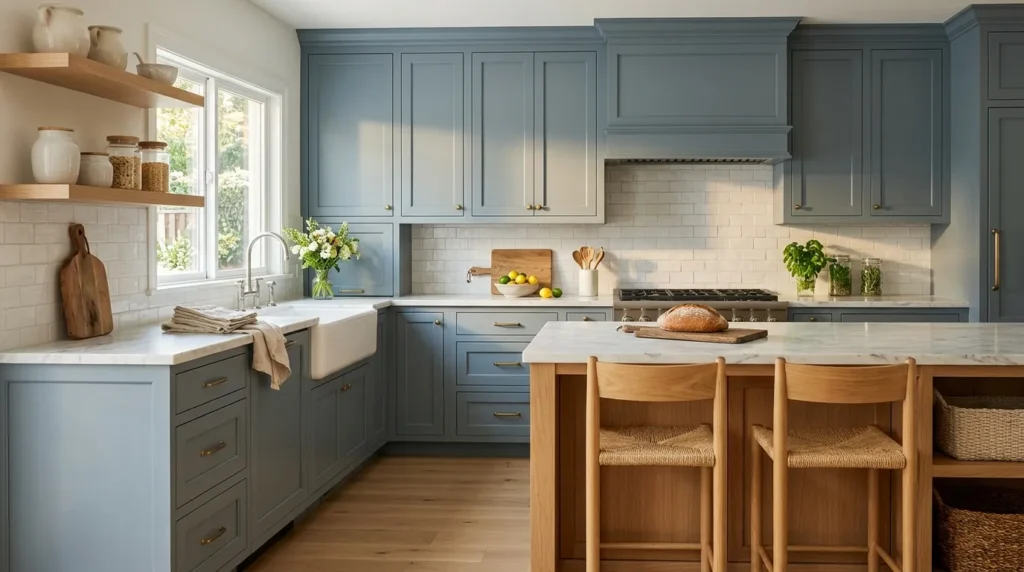
1. Brass Hardware Contrast
Pair blue gray cabinetry with warm brass for an elegant, inviting finish.
2. White Marble Pairing
Balance blue gray cabinets with bright countertops and timeless stone surfaces.
3. Natural Wood Accents
Introduce warmth through wood flooring, shelving, islands, or furniture.
4. Two Tone Cabinetry
Combine blue gray lowers or islands with a lighter upper cabinet color.
5. Matte Black Details
Create a sophisticated modern kitchen with dark contrasting hardware and fixtures.
6. Warm White Backsplash
Use creamy white tile to soften the cooler side of blue gray cabinetry.
7. Blue Gray Island
Make the island a focal point with a deeper or contrasting blue gray finish.
8. Glass Front Cabinets
Add visual lightness and display favorite dishes without losing cabinet storage.
9. Coastal Blue Gray
Create a relaxed coastal-inspired kitchen with natural textures and soft colors.
10. Classic Shaker Style
Combine blue gray paint with simple cabinetry for a timeless kitchen foundation.
1. Brass Hardware Contrast
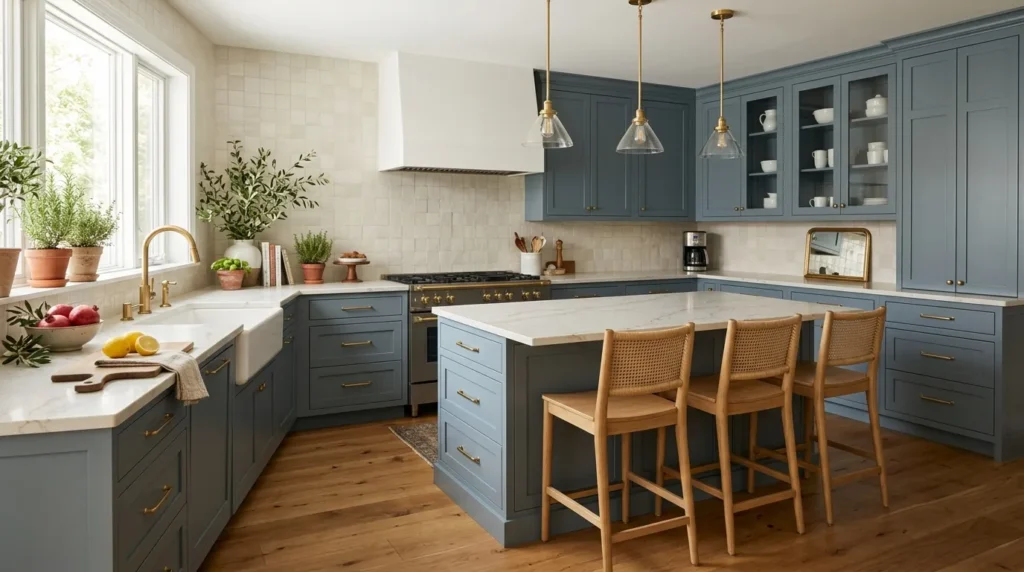
Quick Benefits
- Adds warmth to cool cabinet tones
- Creates an elegant focal detail
- Works with traditional and modern kitchens
- Makes cabinet hardware more noticeable
- Complements neutral countertops
Why It Works
Blue gray and brass create a particularly attractive balance because they sit on opposite sides of the warm-cool spectrum. The cabinetry provides a calm, muted foundation, while brass introduces warmth and subtle shine.
This combination can make a kitchen feel polished without becoming overly formal. It’s especially effective when the blue gray has a slightly muted or dusty undertone rather than an extremely bright blue appearance.
Brass also works beautifully with natural materials. If your kitchen includes wood flooring, butcher block, woven stools, or warm stone, the hardware can visually connect those elements.
The key is consistency. Repeating the brass finish across cabinet pulls, lighting, faucets, or a few decorative details helps the kitchen feel intentionally designed.
How To Style It
Choose cabinet hardware with a shape that reflects the style of the kitchen. Simple bar pulls can give blue gray cabinets a contemporary look, while cup pulls and rounded knobs can create a more traditional feeling.
Pair the cabinets with a warm white backsplash and a countertop featuring subtle veining.
A brass faucet can reinforce the hardware, while pendant lights over the island can provide another small touch of warmth.
Don’t feel obligated to make every metal finish brass. A carefully mixed-metal approach can work, but keep the number of finishes controlled.
For a Pinterest-friendly look, add natural wood stools, a simple ceramic vase, and a few neutral accessories so the brass remains a highlight rather than overwhelming the room.
2. White Marble Pairing
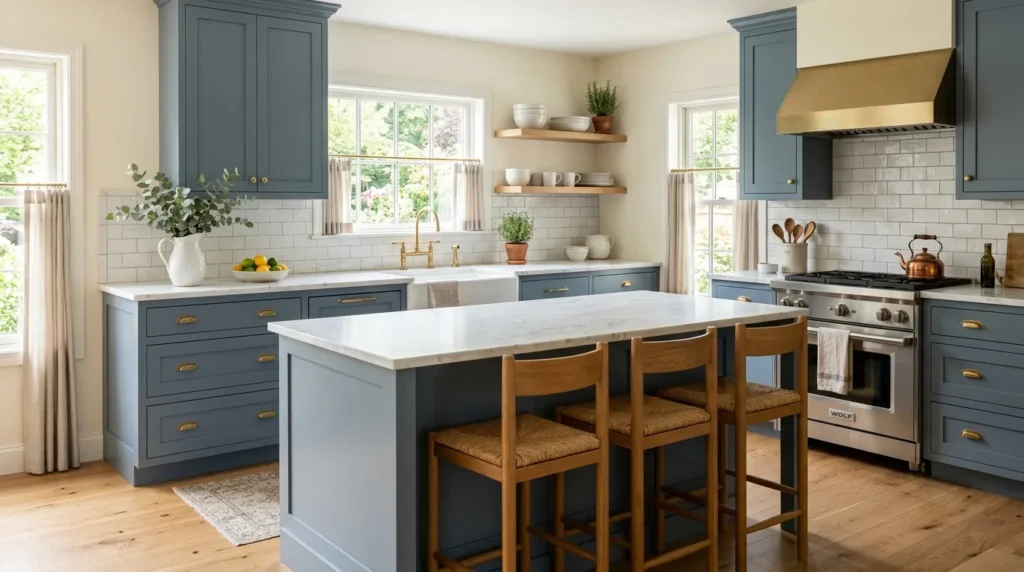
Quick Benefits
- Creates a bright appearance
- Balances darker cabinetry
- Adds timeless character
- Works with elegant kitchen styles
- Reflects available light
Why It Works
Blue gray cabinets can become especially sophisticated when paired with a bright countertop that has subtle natural veining.
White marble or marble-look surfaces create contrast without fighting with the cabinetry. The light countertop visually lifts the darker cabinet color and can help the kitchen feel more open.
This combination works particularly well when the blue gray has cool undertones because the white surface reinforces the clean, classic character of the room.
If natural marble isn’t practical for your budget or maintenance preferences, many engineered surfaces offer a similar visual effect.
How To Style It
Choose a countertop with restrained veining if you want the cabinetry to remain the main feature. Bold veining can be beautiful but may become the focal point of the kitchen.
Pair the countertop with a simple backsplash rather than adding several competing patterns.
Warm metal hardware can prevent the space from feeling too cool. Brass, aged brass, or warm bronze can work especially well.
Add wood cutting boards, woven stools, or natural wood accessories for texture.
Keep decorative pieces relatively simple. The combination of blue gray cabinetry, white stone, and warm accents already provides plenty of visual interest.
3. Natural Wood Accents
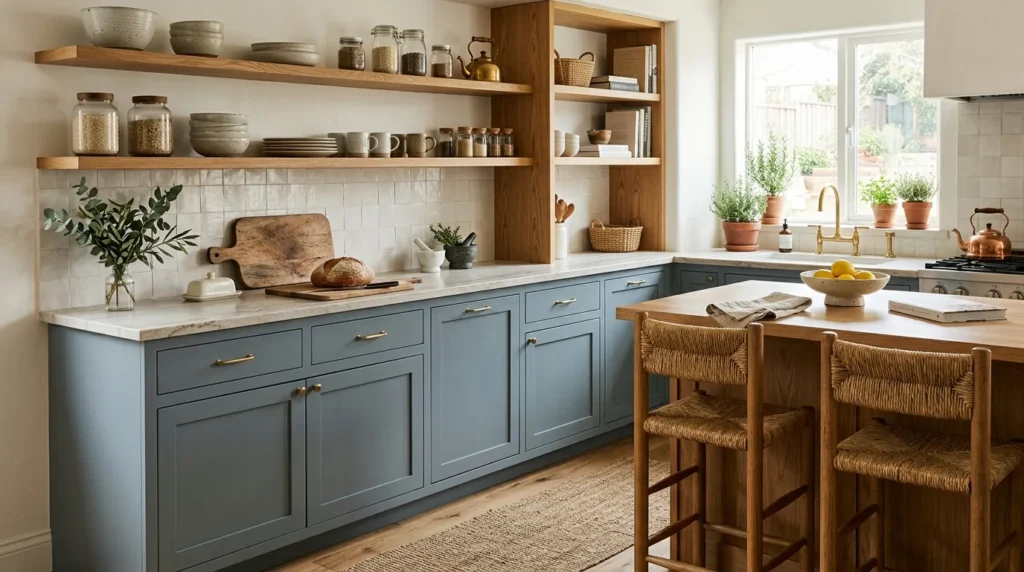
Quick Benefits
- Adds warmth
- Softens cool cabinet colors
- Creates natural texture
- Works with modern and farmhouse styles
- Makes the kitchen feel more inviting
Why It Works
One of the easiest ways to balance blue gray cabinetry is to introduce natural wood.
Wood adds warmth and organic texture that can keep the kitchen from feeling overly cool. Even small touches can make a noticeable difference.
A wooden island countertop, open shelves, stools, flooring, cutting boards, or dining table can all provide contrast.
The combination is especially effective in kitchens where you want a relaxed, lived-in feeling rather than a highly formal appearance.
Wood also changes subtly depending on the lighting, giving the room more visual dimension throughout the day.
How To Style It
Choose one dominant wood tone and repeat it in a few places. For example, medium oak flooring can coordinate with oak stools and a few simple wood accessories.
If you have blue gray lower cabinets, natural wood open shelving can soften the upper portion of the kitchen.
A wood island can become a particularly attractive centerpiece when paired with painted cabinetry.
Avoid introducing too many different wood tones unless you’re intentionally creating an eclectic look.
Finish the space with woven baskets, linen textiles, ceramic dishes, and greenery for a relaxed Pinterest-inspired kitchen.
4. Two Tone Cabinetry
Quick Benefits
- Creates visual depth
- Breaks up large cabinetry
- Makes islands more distinctive
- Works well in open kitchens
- Offers flexibility with color
Why It Works
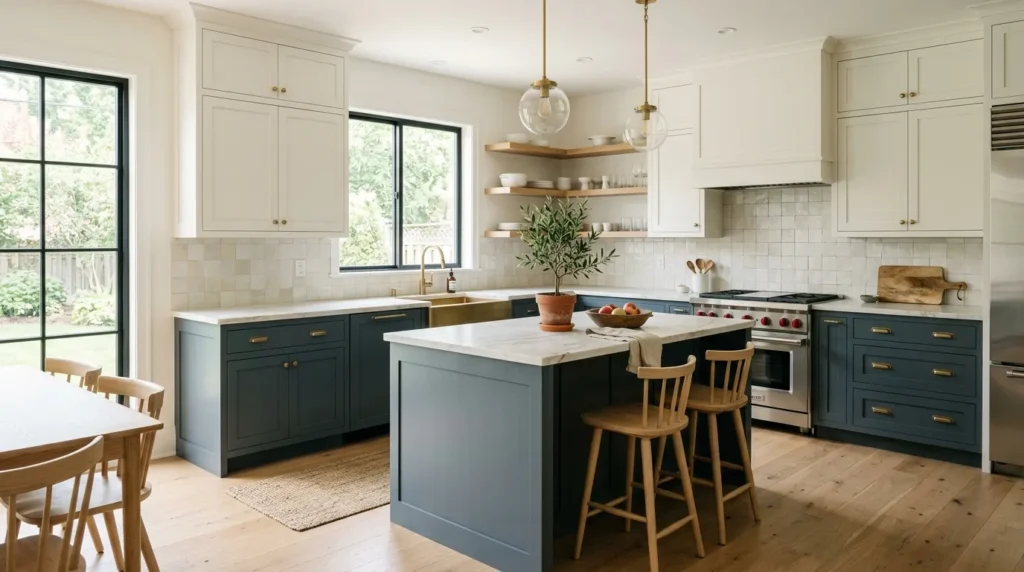
Using blue gray alongside another cabinet color can make a kitchen feel more layered than a single-color design.
One popular approach is to use blue gray on the lower cabinets while keeping upper cabinets white or a soft warm neutral. This keeps the lower portion visually grounded while allowing the upper half of the kitchen to remain bright.
Another option is to make the island blue gray while using neutral cabinetry around the perimeter.
Two-tone cabinetry is particularly useful in larger kitchens where one color across every cabinet might feel too uniform.
How To Style It
For a timeless appearance, combine blue gray with warm white rather than an extremely stark white.
If the island is blue gray, use a countertop that visually connects it to the perimeter cabinetry.
Repeat the blue gray in smaller details elsewhere in the kitchen so the island doesn’t look disconnected.
Brass or brushed metal hardware can provide a consistent finishing detail.
Keep the backsplash relatively quiet if the cabinetry already contains two colors. A simple subway tile, handmade-look tile, or neutral slab can keep the overall design balanced.
5. Matte Black Details
Quick Benefits
- Creates modern contrast
- Adds visual definition
- Works with blue gray’s muted tones
- Complements contemporary kitchens
- Makes fixtures stand out
Why It Works
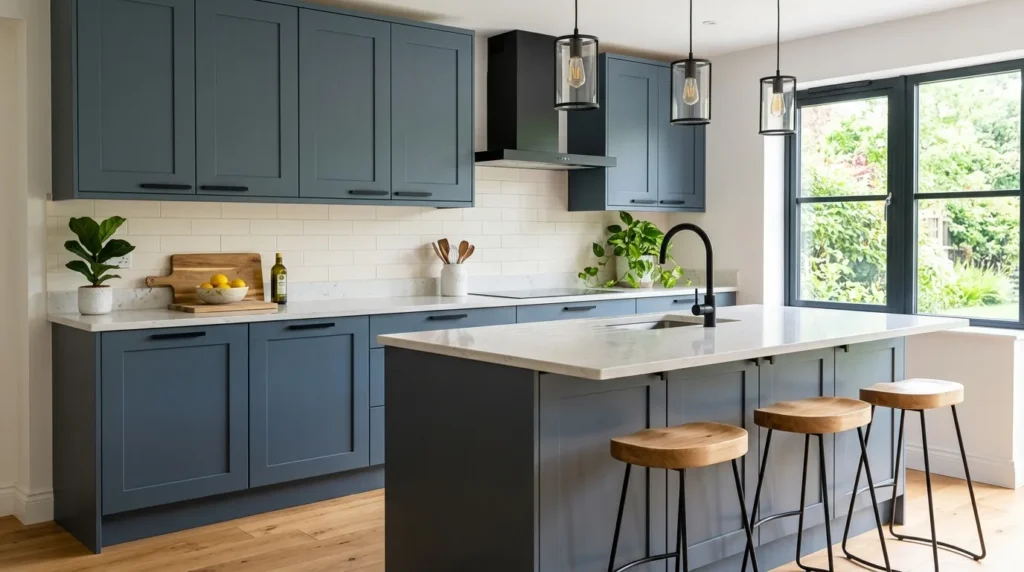
Blue gray cabinetry doesn’t have to look traditional. Pairing it with matte black hardware and fixtures can give the kitchen a clean, contemporary character.
The black details create small visual anchors throughout the room. Cabinet pulls, faucets, pendant lights, and stools can repeat the dark accent without requiring a major design change.
This combination is particularly effective with simple cabinet doors and minimalist countertops.
Because both blue gray and black are relatively restrained colors, natural materials can help prevent the room from feeling flat.
How To Style It
Use matte black strategically. Cabinet pulls and a faucet are enough to establish the contrast.
Add black-framed pendant lights above the island if the scale suits the kitchen.
Choose a light countertop and backsplash to keep the room balanced.
Natural wood stools can soften the black details, while greenery adds another layer of color.
For a more dramatic look, choose a deeper blue gray cabinet shade and pair it with light stone surfaces and black fixtures.
6. Warm White Backsplash
Quick Benefits
- Softens cool cabinet tones
- Creates a bright backdrop
- Works with many design styles
- Keeps the kitchen visually calm
- Makes blue gray cabinetry stand out
Why It Works
A backsplash is one of the easiest ways to influence how blue gray cabinets feel.
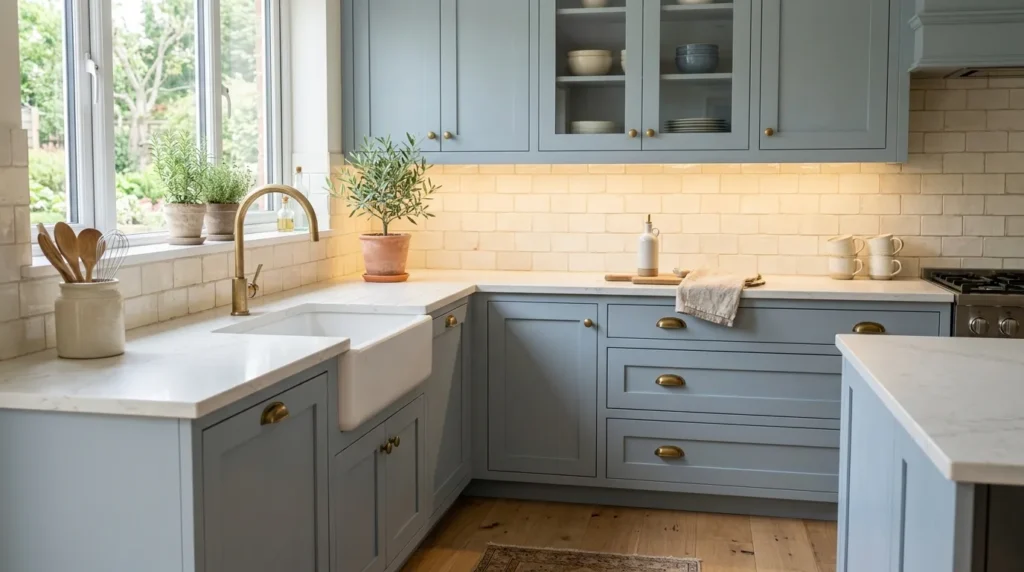
Bright white tile can emphasize the coolness of blue gray, while warm white or creamy tile can make the cabinetry feel softer and more welcoming.
The difference may seem subtle, but undertones matter. A slightly warm backsplash can help connect blue gray cabinetry with wood floors, brass hardware, and warm neutral countertops.
Simple tile shapes also allow the cabinet color to remain the star.
How To Style It
Consider classic subway tile, elongated rectangular tile, square handmade-look tile, or a simple slab backsplash.
Choose grout that complements rather than dramatically contrasts with the tile.
If your cabinets have detailed Shaker doors, a simple backsplash can provide balance.
Pair the warm white surface with brass or bronze hardware and natural wood accents.
For a more contemporary look, use larger-format tile or a continuous countertop backsplash with minimal visual interruption.
7. Blue Gray Island
Quick Benefits
- Creates a natural focal point
- Adds color without overwhelming the room
- Works with neutral perimeter cabinets
- Defines the kitchen’s central zone
- Allows flexibility with color intensity
Why It Works
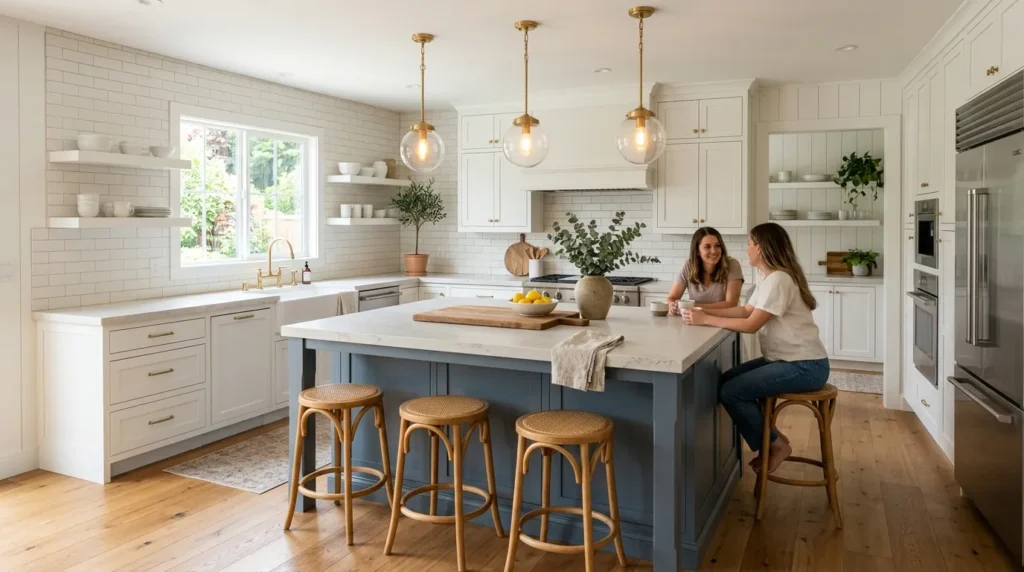
If you’re hesitant about committing to blue gray cabinetry throughout the entire kitchen, using the color on the island can be a smart compromise.
The island naturally attracts attention, so a blue gray finish can turn it into an intentional centerpiece.
This approach works particularly well when the perimeter cabinets are white, cream, natural wood, or another quiet neutral.
A deeper blue gray can create drama, while a pale blue gray keeps the look soft and airy.
How To Style It
Choose an island shade that complements the perimeter cabinets rather than trying to match every surrounding element exactly.
A light countertop can create a crisp contrast, while a wood countertop creates a warmer, more casual look.
Use pendant lighting above the island to reinforce its importance.
Coordinate the island hardware with the rest of the kitchen, even if the cabinet colors differ.
Add two or three stools that introduce natural wood, woven texture, or a contrasting neutral.
8. Glass Front Cabinets
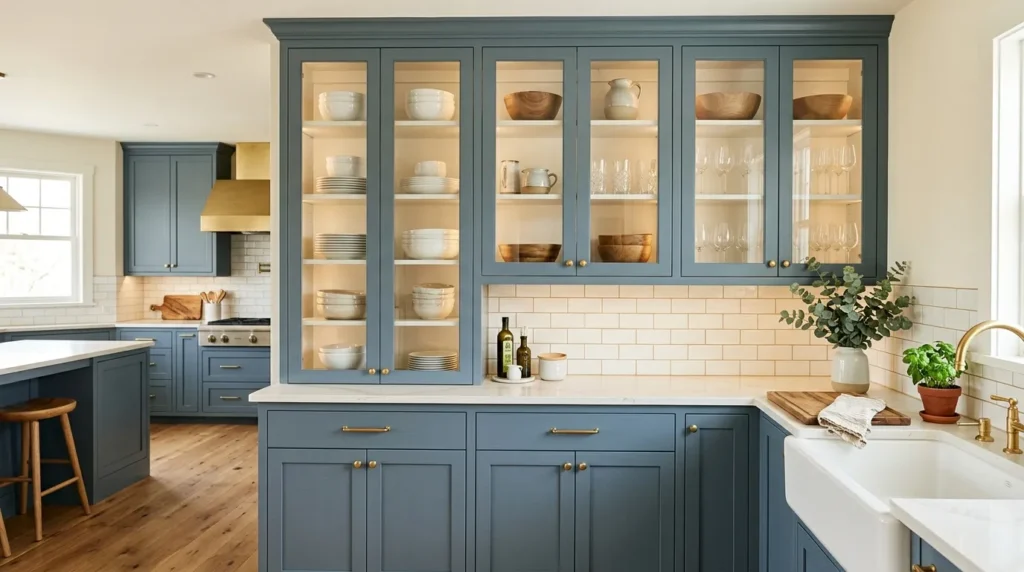
Quick Benefits
- Creates visual openness
- Breaks up solid cabinet doors
- Provides display space
- Makes cabinetry feel lighter
- Highlights favorite kitchen pieces
Why It Works
Blue gray cabinetry can look substantial, particularly when used across a large kitchen. Glass-front doors provide an opportunity to break up the solid blocks of color.
The glass allows light and visual space to move through the cabinetry while giving you a place to display attractive dishes, glassware, pottery, or cookbooks.
This works especially well when the cabinet interiors are kept organized.
Glass-front cabinets can also make a traditional Shaker kitchen feel more refined without requiring a major design change.
How To Style It
Use glass doors selectively rather than replacing every cabinet front.
Display a small collection of coordinated dishes rather than filling the shelves with miscellaneous items.
White ceramic pieces stand out beautifully against blue gray cabinetry.
Clear glassware can add sparkle without introducing another strong color.
If you prefer a more casual appearance, include a few wooden bowls, woven baskets, or handmade ceramics.
Keep everyday clutter behind solid cabinet doors so the glass-front sections remain visually calm.
9. Coastal Blue Gray
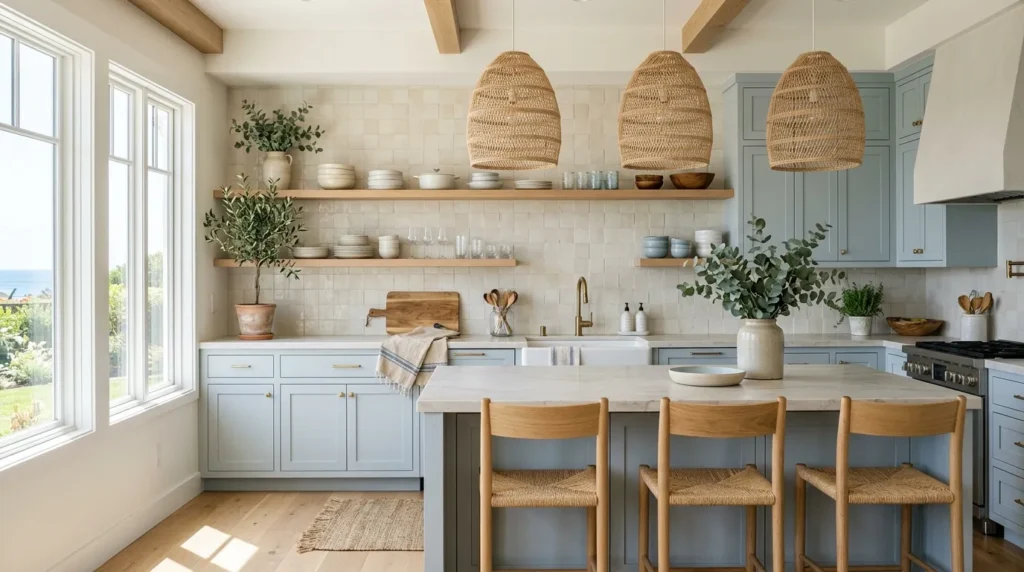
Quick Benefits
- Creates a relaxed atmosphere
- Works beautifully with natural textures
- Makes kitchens feel airy
- Complements white and sandy neutrals
- Fits casual home styles
Why It Works
Blue gray is naturally suited to coastal-inspired interiors because its color can suggest water, sky, and weathered materials without becoming overly literal.
The trick is to avoid turning the kitchen into a themed space. You don’t need seashell decorations or obvious nautical motifs.
Instead, focus on a soft palette of blue gray, warm white, natural wood, woven materials, and subtle greenery.
This creates a relaxed kitchen that feels inspired by the coast while remaining timeless.
How To Style It
Choose a soft blue gray cabinet color rather than an extremely saturated blue.
Pair it with warm white countertops and a simple backsplash.
Use light oak or natural wood stools for warmth.
Woven pendant lights, rattan accessories, linen textiles, and ceramic pieces can reinforce the relaxed character.
Keep the decoration understated. A bowl of fresh fruit, a few herbs, and simple pottery can create more sophistication than heavily themed accessories.
10. Classic Shaker Style
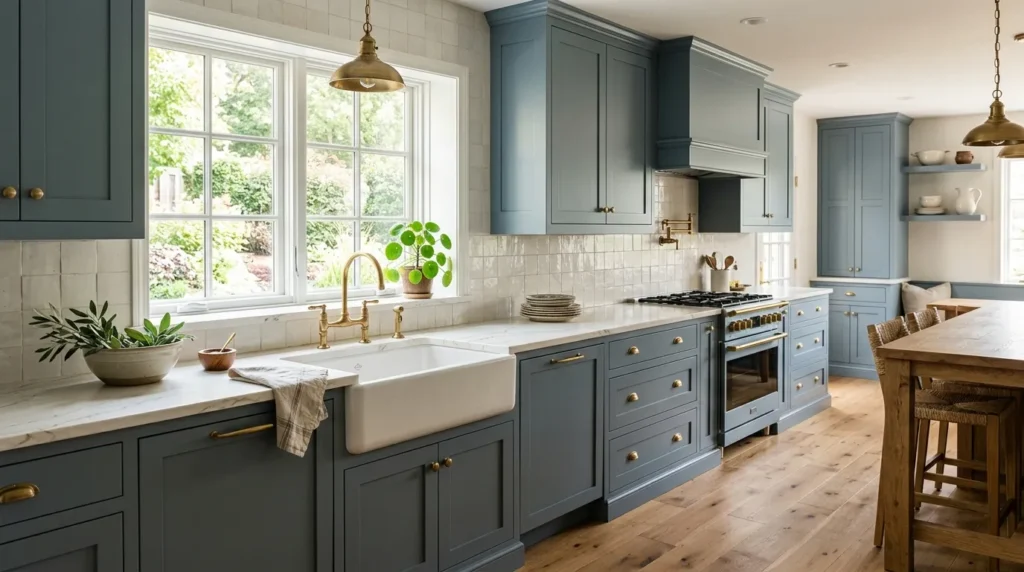
Quick Benefits
- Timeless cabinet profile
- Works with many design styles
- Easy to update with hardware
- Complements blue gray beautifully
- Remains adaptable over time
Why It Works
Shaker-style cabinetry is popular because its simple proportions can work across a wide range of interiors.
Adding blue gray paint gives the classic profile more personality without making it overly trendy.
The clean door design provides enough structure to support brass hardware, black fixtures, natural wood, marble-look counters, or simple white tile.
This flexibility is especially useful if you’re trying to create a kitchen that can evolve over time. Hardware and accessories can be changed more easily than cabinetry.
How To Style It
Choose a blue gray shade that works with the kitchen’s natural light. Test samples in the actual room because the color can look different in morning, afternoon, and evening light.
Pair Shaker cabinets with simple hardware and a restrained backsplash.
Use open shelving sparingly if you want to display ceramics or wood accents.
Natural wood flooring can add warmth, while a light countertop keeps the space bright.
Finish with practical accessories rather than excessive decoration. A few cutting boards, a ceramic vase, greenery, and attractive everyday dishes can make the kitchen feel finished without looking staged.
How to Choose the Right Blue Gray Cabinet Shade
Not all blue gray paint colors look the same.
Some lean noticeably blue, while others have stronger gray undertones. There are also blue gray shades that appear almost neutral in certain lighting.
Before committing to cabinetry, collect several large paint samples and observe them throughout the day.
Natural light can change significantly depending on the direction of the windows. North-facing rooms may make cooler shades appear more blue or gray, while warm afternoon sunlight can shift the appearance.
Your countertop and backsplash will also affect how the cabinet color reads.
A cool white countertop can emphasize the blue side, while warm stone, cream tile, and wood can make the same cabinet color feel softer.
Always test samples alongside the actual materials you’re considering rather than choosing a cabinet color in isolation.
What Colors Go With Blue Gray Kitchen Cabinets?
Blue gray works well with a broad range of neutrals and natural materials.
Warm white: Creates a soft, timeless contrast.
Cream: Makes the kitchen feel warmer and less stark.
Natural wood: Adds organic warmth.
Brass: Provides an elegant warm accent.
Matte black: Creates a modern, dramatic contrast.
Soft beige: Can balance cooler cabinet undertones.
White marble or marble-look surfaces: Provides a classic high-contrast combination.
Muted green: Can create a nature-inspired palette.
The most important consideration is undertone. If your blue gray cabinets lean cool, introducing a few warm materials can help create balance.
Are Blue Gray Cabinets Timeless?
Blue gray cabinetry can have a timeless quality when the surrounding design is relatively restrained.
Cabinet color is only one part of the kitchen. A simple cabinet profile, classic hardware, quality countertop, and uncomplicated backsplash can help the overall design remain adaptable.
If you’re worried about the color becoming dated, choose a muted blue gray rather than an extremely bright or highly saturated shade.
Classic Shaker doors are another way to create flexibility. The cabinet profile can work with traditional, modern, coastal, farmhouse, and transitional interiors.
You can also keep permanent finishes relatively neutral and use accessories to introduce stronger trends.
That way, updating the kitchen later doesn’t require replacing the cabinetry.
How to Make Blue Gray Cabinets Feel Warmer
Because blue gray can sometimes read cool, adding warm materials is often the easiest solution.
Natural wood is particularly effective. Try oak flooring, wooden stools, open shelves, cutting boards, or a wood accent island.
Warm white walls and backsplashes can also soften the space.
Brass and aged metal hardware add another layer of warmth without changing the cabinetry.
Lighting matters, too. A kitchen with warm, well-distributed lighting can feel much more inviting than one illuminated entirely by harsh, cool light.
Finally, bring in natural elements. Greenery, woven baskets, ceramic pieces, and wooden accessories can prevent the kitchen from feeling overly sleek.
FAQ
Are blue gray kitchen cabinets still in style?
Blue gray cabinetry remains a versatile choice because it combines the familiarity of gray with the character of blue. Its longevity depends largely on the specific shade and surrounding materials. Muted blue gray paired with simple cabinet profiles, natural materials, and timeless hardware can create a kitchen that feels current without relying heavily on short-lived trends.
What countertop looks best with blue gray cabinets?
White, cream, light quartz, marble, and marble-look countertops can all complement blue gray cabinets beautifully. Natural wood can create a warmer, more casual appearance. When choosing a countertop, consider the undertones in both materials. A warm countertop can soften a cool blue gray, while a crisp white surface creates a brighter contrast.
What color hardware goes with blue gray cabinets?
Brass, aged brass, matte black, brushed nickel, and warm bronze can all work with blue gray cabinetry. Brass creates an elegant and warm appearance, while matte black gives the kitchen a more contemporary edge. The best choice depends on the countertop, lighting, backsplash, and overall style of the kitchen.
Do blue gray cabinets make a kitchen look dark?
They can, particularly when using a deep shade in a kitchen with limited natural light. However, lighter blue gray cabinets paired with bright countertops, warm white backsplashes, and good lighting can feel airy. If your kitchen is naturally dark, test cabinet samples in the actual room before making a final decision.
What backsplash goes with blue gray cabinets?
Warm white subway tile, cream handmade-look tile, simple white square tile, marble-look slabs, and understated neutral stone can all work well. A warm white backsplash is especially useful when you want to soften the cooler undertones of blue gray cabinetry. Keep the backsplash relatively simple if the cabinets and countertops already provide visual interest.
Can blue gray cabinets work in a small kitchen?
Yes. The key is choosing the right shade and balancing it with lighter surrounding materials. A softer blue gray can work especially well with white or cream countertops, reflective surfaces, and good lighting. Using the color only on lower cabinets or an island can also provide personality while keeping the upper portion of the kitchen visually open.
What colors make blue gray cabinets look warmer?
Natural wood, warm white, cream, beige, brass, warm bronze, and muted earthy tones can all make blue gray cabinetry feel warmer. Wood is particularly effective because it introduces both color and texture. Warm lighting and natural accessories such as woven baskets and greenery can further soften the overall appearance.
Conclusion
Blue gray kitchen cabinets offer a beautiful middle ground for homeowners who want more personality than traditional white cabinetry without committing to an intense color.
The secret to making them feel timeless is balance. Pair the cabinets with materials that complement their undertones, introduce warmth through wood or brass, and use simple finishes that can adapt as your style changes.
If you love a classic appearance, blue gray Shaker cabinets with warm white backsplash tile and brass hardware can create a polished foundation. For a modern kitchen, try deeper blue gray cabinetry with matte black details and clean stone surfaces. If you prefer a relaxed atmosphere, natural wood, woven textures, and soft blue gray can create an inviting coastal-inspired space.
You also don’t have to paint every cabinet blue gray. An island, lower cabinets, or a selected bank of glass-front cabinets can introduce the color in a more subtle way.
Before making a final decision, test your cabinet color in the actual kitchen and look at it under different lighting conditions. Consider your countertop, backsplash, flooring, and hardware together rather than choosing each finish separately.
Start with the combination that feels most natural to your home, and build the rest of the kitchen around that foundation. With the right balance of color, texture, and practical materials, blue gray cabinetry can create a kitchen you’ll enjoy for years.
Related Articles
- 10 White Kitchen Cabinet Ideas with Timeless Style
- 10 Modern Kitchen Ideas with Warm Wood Accents
- 10 Farmhouse Kitchen Ideas for a Cozy Home
- 10 Kitchen Backsplash Ideas for a Beautiful Makeover
- 10 Two-Tone Kitchen Cabinet Ideas for a Modern Look