
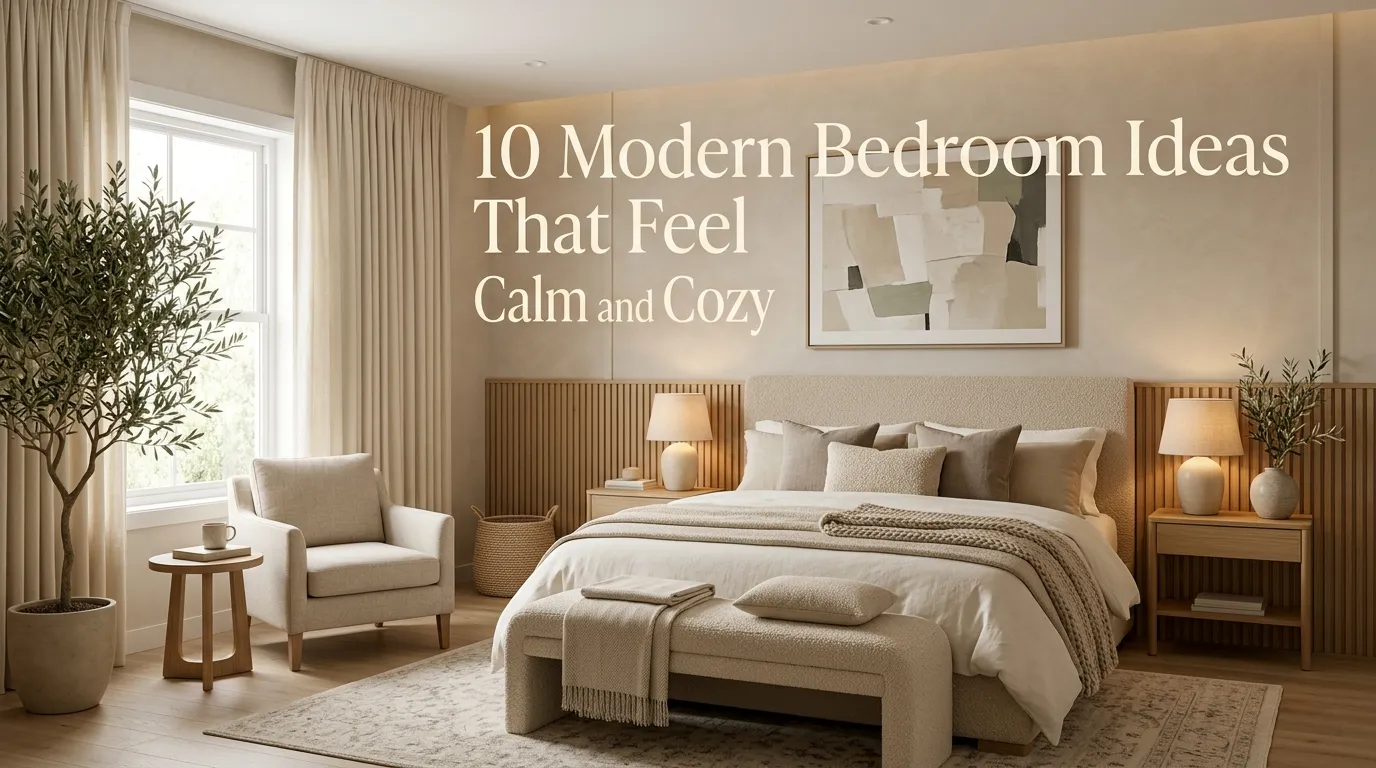
10 Modern Bedroom Ideas That Feel Calm and Cozy
A bedroom should be one of the easiest rooms in your home to relax in, yet it can quickly become a place where clutter, harsh lighting, mismatched furniture, and unfinished decorating projects collect. Creating a calm bedroom doesn’t necessarily require a complete makeover. Often, a few thoughtful changes to color, texture, lighting, and layout can make the space feel noticeably more peaceful.
Modern bedroom design is especially useful when you want a room that feels clean and organized without looking cold. The style works beautifully with warm neutrals, natural wood, soft bedding, simple furniture, and carefully chosen decorative pieces. Instead of filling the room with accessories, the focus is on creating balance and giving important elements enough room to breathe.
I’ve noticed that the most comfortable bedrooms tend to have something in common: they look good, but they also make everyday life easier. There is a comfortable place to sit, enough lighting for different activities, practical storage for personal belongings, and bedding that makes you want to climb into bed at the end of the day.
You can create that feeling whether your bedroom is large, compact, rented, or part of a newer home. A warm paint color can soften the walls, layered textiles can add depth, and a pair of well-placed lamps can change the atmosphere after sunset.
The ideas below focus on practical ways to combine modern style with genuine comfort. Whether you’re refreshing your master bedroom or simply looking for a few details to make your current space feel better, these approaches can help you create a room that feels uncluttered, personal, and restful.
Table of Contents
1. Warm Neutral Palette
Build a soothing foundation with creamy whites, warm beige, taupe, and soft natural tones.
2. Layered Bedding
Combine breathable fabrics, blankets, pillows, and subtle textures for a comfortable bed.
3. Natural Wood Details
Use wood furniture and accents to add warmth and organic character to a modern bedroom.
4. Soft Ambient Lighting
Layer bedside, overhead, and accent lighting to create a gentle atmosphere throughout the day.
5. Upholstered Headboard
Add softness and visual structure with a generously proportioned upholstered bed.
6. Minimal Nightstands
Keep bedside surfaces functional and uncluttered with carefully selected essentials.
7. Earthy Accent Colors
Introduce muted greens, browns, terracotta, and other natural shades for subtle personality.
8. Textured Window Treatments
Use curtains and shades to soften the room while improving privacy and light control.
9. Cozy Reading Corner
Turn an unused bedroom corner into a comfortable place for reading, relaxing, or getting ready.
10. Calm Decorative Layers
Finish the room with artwork, rugs, plants, ceramics, and personal details without creating clutter.
1. Warm Neutral Palette
Quick Benefits
- Creates a peaceful visual foundation
- Makes modern furniture feel warmer
- Works well with natural materials
- Provides flexibility for seasonal changes
- Helps the bedroom feel visually organized
Why It Works
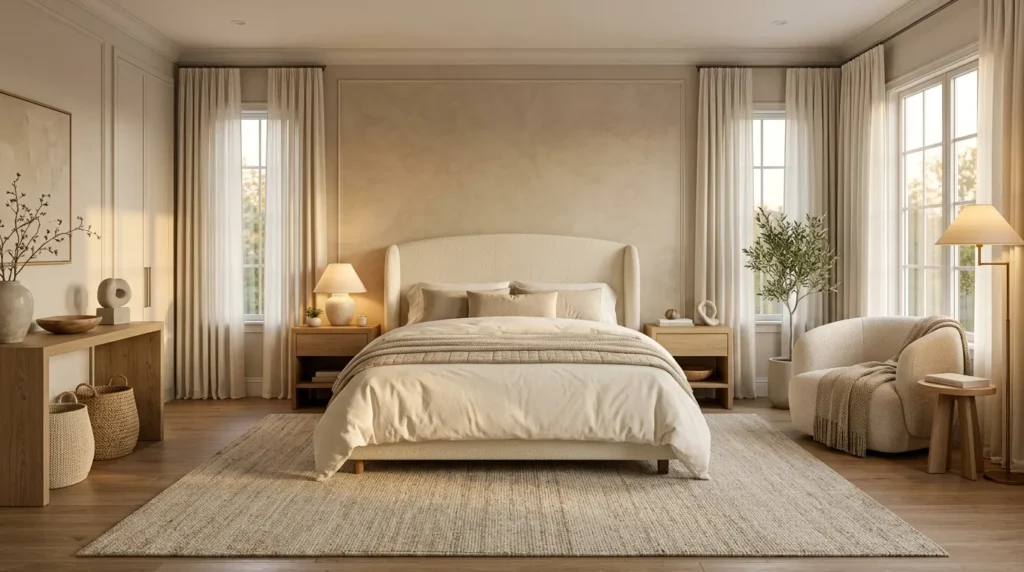
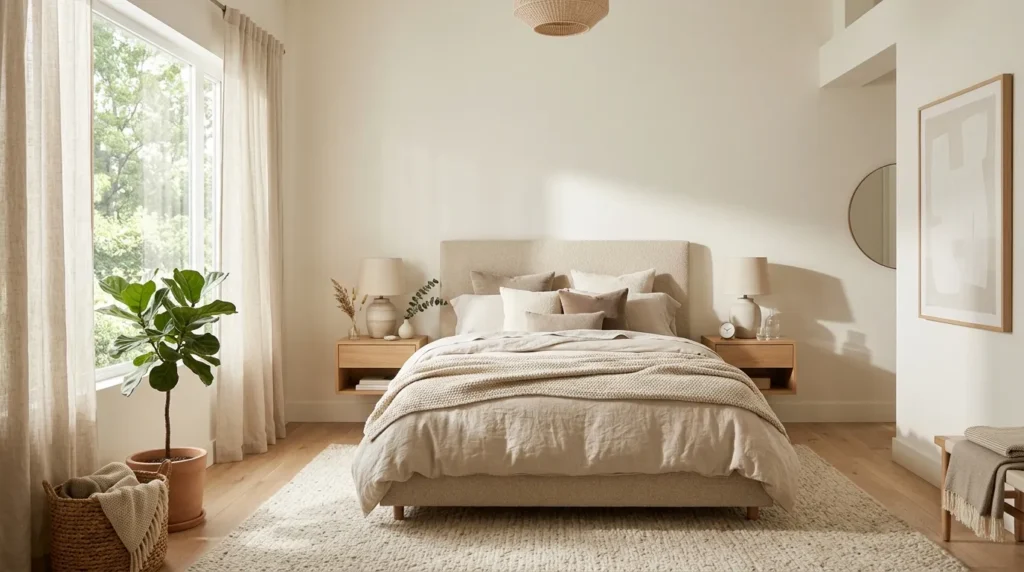
Color has a major influence on how a bedroom feels, and warm neutrals are particularly effective when the goal is a calm, comfortable atmosphere. Instead of relying on bright white throughout the room, consider creamy ivory, warm beige, soft taupe, mushroom, oatmeal, or light greige.
These shades create subtle contrast without demanding attention. They also work beautifully with the materials commonly found in modern bedrooms, including linen, oak, wool, cotton, rattan, and ceramic.
A warm neutral palette doesn’t mean everything needs to be the same color. The most inviting rooms usually contain several related shades. A creamy wall can sit behind an oatmeal headboard, while a slightly darker rug grounds the floor.
The result feels cohesive without looking flat.
How To Style It
Start with the largest surfaces. Choose a wall color, flooring tone, or upholstered bed that establishes the overall direction. From there, introduce two or three complementary neutrals through bedding, curtains, rugs, and furniture.
For example, pair warm white walls with a beige upholstered headboard, light oak nightstands, ivory bedding, and a taupe rug.
If the room already has cool gray flooring or furniture, you don’t need to replace everything. Add warmth through textiles and accessories. Cream bedding, wood accents, and beige curtains can soften a cooler foundation.
Use darker tones sparingly to create definition. A walnut nightstand, charcoal picture frame, or dark bronze lamp can keep the room from looking washed out.
The goal is a layered palette rather than a perfectly matched one.
2. Layered Bedding
Quick Benefits
- Makes the bed look inviting
- Adds visual depth without bold colors
- Allows easy seasonal updates
- Creates a more comfortable sleeping environment
- Makes the bedroom feel finished
Why It Works
The bed is usually the largest visual element in a bedroom, so bedding has an enormous effect on the room’s overall appearance. A beautifully layered bed can make even simple furniture feel intentional.
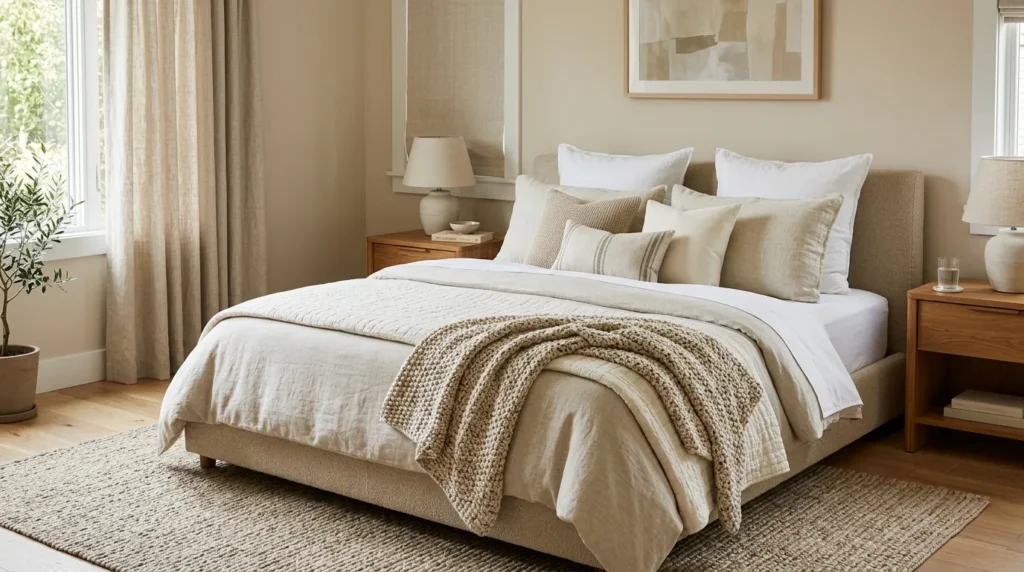
The trick is to use texture rather than excessive pattern. Cotton sheets, a linen duvet, a quilted coverlet, a knitted throw, and a few well-proportioned pillows can create plenty of interest while maintaining a peaceful look.
Layering also has a practical benefit. Different blankets and covers can be added or removed as temperatures change, making the bed more adaptable throughout the year.
A mistake many homeowners make is buying every bedding piece from the same collection. While coordinated sets are convenient, mixing complementary textures often produces a more relaxed and sophisticated result.
How To Style It
Begin with comfortable sheets in a breathable fabric. Add a duvet or comforter in a soft neutral, then layer a quilt or coverlet across the lower portion of the bed.
Use pillows in different sizes instead of creating a wall of identical cushions. Two sleeping pillows can sit behind larger decorative pillows, followed by one or two smaller accent pillows.
Finish with a throw placed loosely across the foot or one corner of the bed.
For a modern appearance, keep the colors relatively restrained and let texture do most of the work. Linen, cotton, washed canvas, knitted fabrics, and subtle quilting can create a rich look without visual clutter.
If you want a seasonal change, swap the throw and a few accent pillows rather than replacing the entire bedding collection.
3. Natural Wood Details
Quick Benefits
- Adds warmth to modern interiors
- Introduces natural texture
- Creates contrast against soft textiles
- Works with neutral and earthy palettes
- Helps a minimalist room feel more welcoming
Why It Works
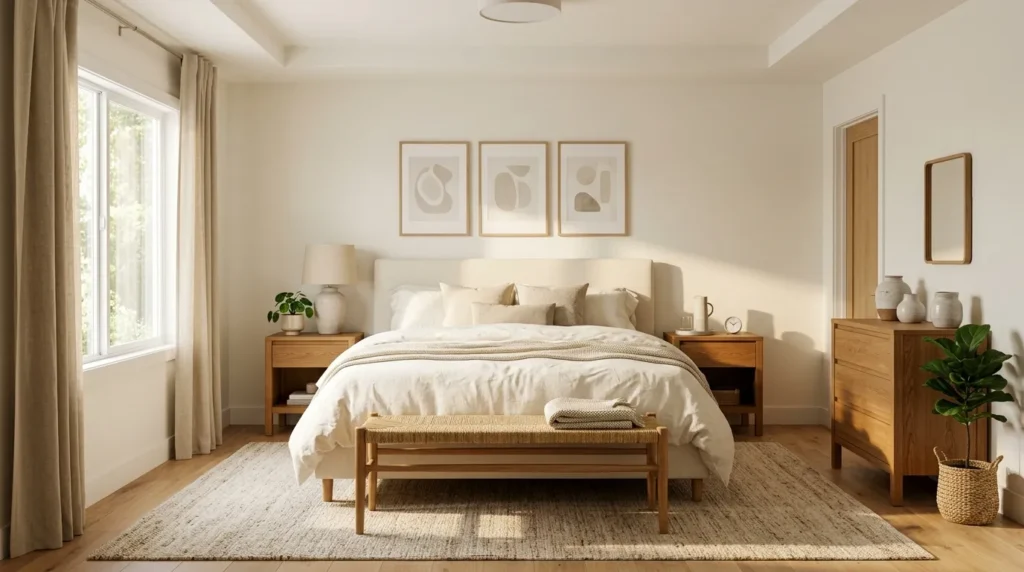
Modern bedrooms can sometimes feel overly sleek when they contain too many smooth, manufactured surfaces. Natural wood introduces warmth and variation that helps balance those clean lines.
Light oak creates an airy Scandinavian-inspired feeling, while walnut brings a deeper, more sophisticated character. Medium-toned wood can bridge the two and work particularly well with beige, cream, olive, and brown.
Wood doesn’t need to dominate the room. A pair of nightstands, a bench at the foot of the bed, floating shelves, or a simple wood frame can be enough to make the room feel more grounded.
Natural grain also pairs beautifully with soft fabrics. The contrast between crisp bedding and textured wood makes the room feel layered rather than overly coordinated.
How To Style It
Choose one main wood tone and repeat it in several areas. For example, use light oak for nightstands and a bench, then echo that finish in picture frames or a small decorative stool.
If your floor is already wood, you don’t have to match the furniture exactly. Similar undertones are usually more important than identical finishes.
Keep wood furniture visually simple. Clean-lined nightstands, a low-profile dresser, or a streamlined bench can support the modern style without making the room feel heavy.
Pair wood with natural textiles such as linen curtains, cotton bedding, woven baskets, or a wool rug.
For a richer bedroom, combine walnut furniture with cream upholstery and warm beige bedding. For a lighter room, use pale oak with ivory, sand, and soft gray.
4. Soft Ambient Lighting
Quick Benefits
- Creates a relaxing evening atmosphere
- Adds warmth to neutral rooms
- Makes bedside areas more functional
- Allows different lighting levels
- Highlights important bedroom features
Why It Works
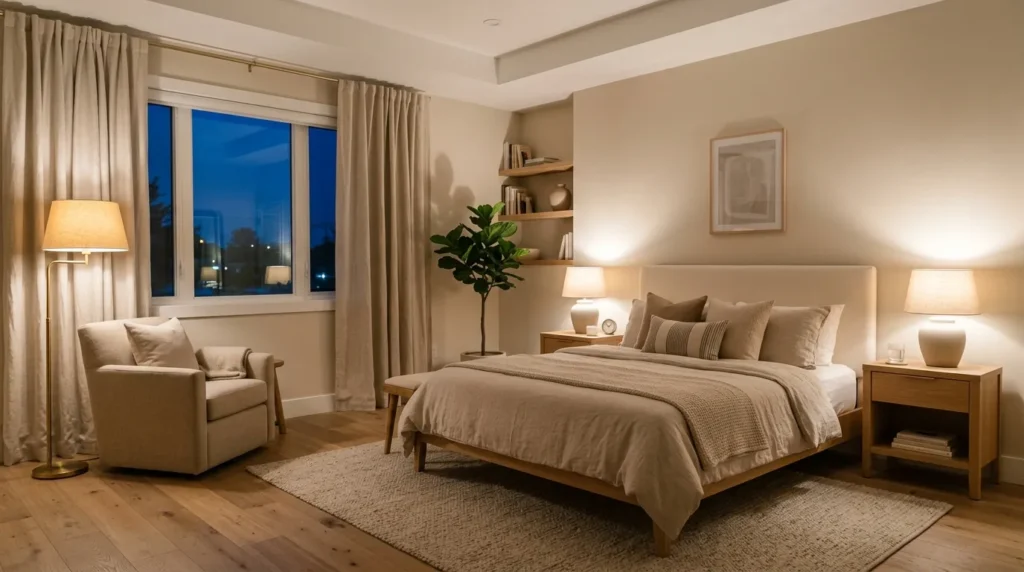
Lighting is one of the easiest ways to change the mood of a bedroom, but it is often overlooked during decorating. A single bright ceiling fixture may provide enough illumination to see, but it rarely creates the soft atmosphere most people want at bedtime.
Layered lighting gives the room flexibility. Overhead lighting can handle general tasks, bedside lamps provide focused illumination, and accent lighting can highlight artwork, architectural details, or a reading chair.
Warm light can also make neutral colors appear richer and more inviting in the evening.
The best bedroom lighting is rarely dramatic. It tends to be subtle, adjustable, and positioned where you actually need it.
How To Style It
Start with bedside lighting. Table lamps work well when you have enough nightstand space, while wall-mounted sconces are useful in smaller bedrooms.
Choose lamps with shades that diffuse the light rather than exposing an overly bright bulb directly.
Add a floor lamp near a chair or dresser if the room needs another layer. A small accent lamp can also work on a console or shelf.
Where possible, use dimmable fixtures so you can adjust the brightness depending on the time of day.
Consider the height of your bedside lamps as well. The light should be comfortable to use while sitting in bed and shouldn’t dominate the nightstand.
A soft pool of light beside the bed, combined with gentle overhead illumination, can make the entire room feel more relaxed.
5. Upholstered Headboard
Quick Benefits
- Adds softness to the bedroom
- Creates a strong focal point
- Makes the bed feel more substantial
- Provides comfortable back support
- Works with many modern decorating styles
Why It Works
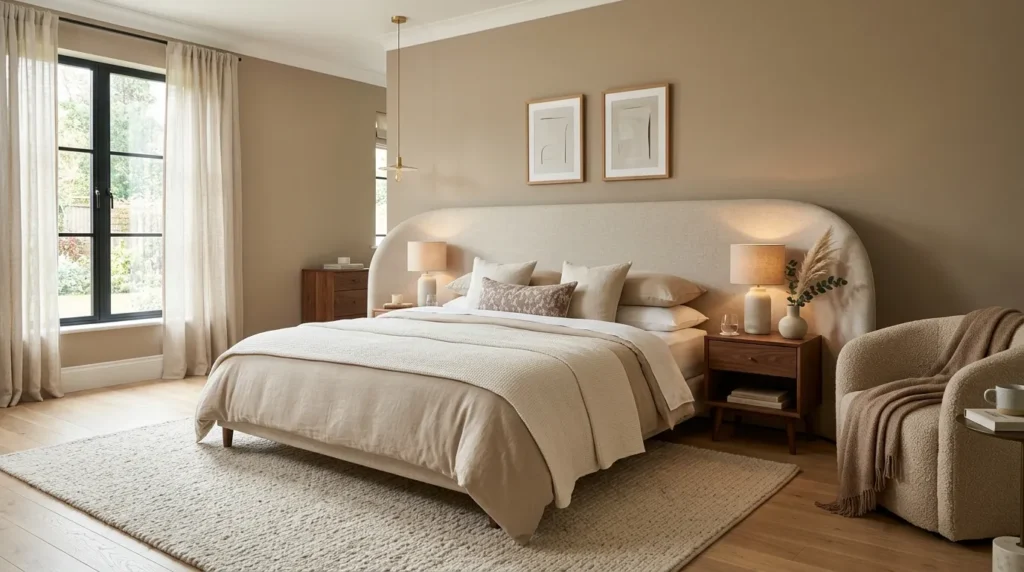
An upholstered headboard can instantly make a bedroom feel more comfortable. It introduces a soft surface into a room that might otherwise contain mostly hard furniture, walls, and flooring.
It also creates a visual anchor behind the bed. Because the bed is usually the focal point, a substantial headboard can make the entire wall feel more intentional.
Neutral upholstery is particularly versatile. Cream, oatmeal, beige, taupe, and soft gray can support everything from minimalist interiors to modern organic bedrooms.
A taller headboard can create a dramatic effect in a room with high ceilings, while a simpler horizontal design may work better in a compact space.
How To Style It
Choose the headboard based on both the size of the room and the proportions of your bed.
For a modern look, consider clean rectangular shapes, gently curved edges, or a simple channel-tufted design. Avoid excessive decorative details if you want a calm appearance.
Pair the headboard with simple bedding so the bed doesn’t become visually overwhelming.
If the headboard is a light neutral, introduce contrast through wood nightstands or slightly darker bedding. If the headboard is a deeper taupe or gray, keep surrounding textiles lighter.
A bench at the foot of the bed can repeat the upholstery and create a coordinated look, but it isn’t necessary. The headboard should remain the primary soft focal point.
6. Minimal Nightstands
Quick Benefits
- Reduces bedside clutter
- Keeps essentials within reach
- Creates visual breathing room
- Makes cleaning easier
- Supports a modern aesthetic
Why It Works
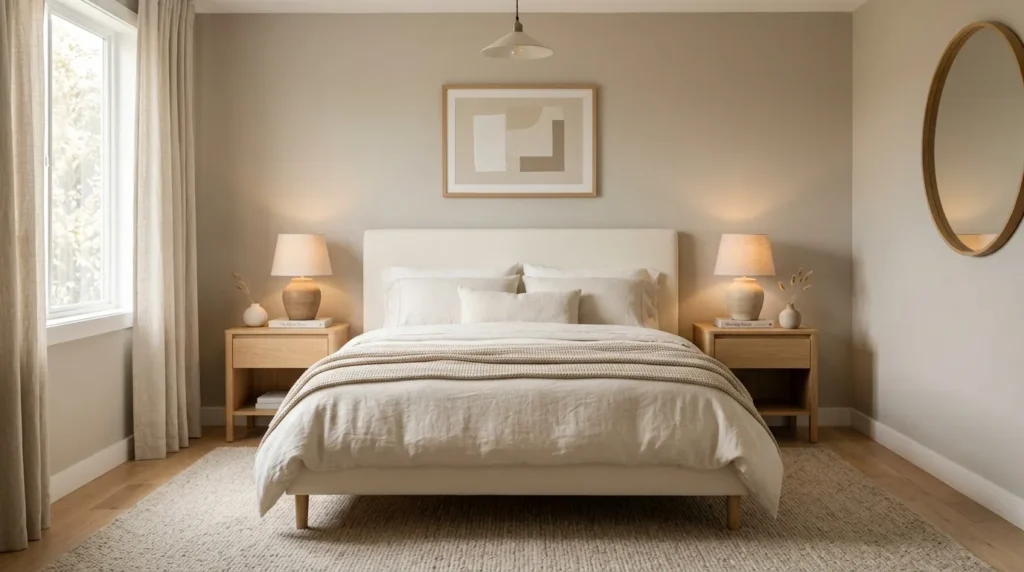
The area beside the bed has a surprisingly large impact on how organized a bedroom feels. Nightstands tend to collect books, chargers, water glasses, skincare products, and other everyday items, so even a beautifully decorated bedroom can look messy when those surfaces become overloaded.
A minimalist nightstand doesn’t mean having nothing on it. It means deciding what deserves to remain visible.
A lamp, a book, a small ceramic dish, and perhaps a plant or vase may be enough to make the space feel complete while preserving useful surface area.
The furniture itself should also fit the scale of the bed. Tiny tables beside a substantial bed can look unbalanced, while oversized nightstands can make a small bedroom feel crowded.
How To Style It
Choose nightstands with enough storage for the things you don’t want sitting out. A drawer or cabinet can hide chargers, medications, reading glasses, and personal items.
Keep the visible styling simple. A lamp provides practical light, while one small decorative object adds personality.
If you like reading in bed, leave room for one current book rather than stacking a large collection.
For a symmetrical bedroom, matching nightstands and lamps can create a calm, orderly appearance. If you prefer a more collected look, use different pieces while repeating one material or color.
Wall-mounted sconces can free up additional surface space, making them particularly useful in smaller rooms.
7. Earthy Accent Colors
Quick Benefits
- Adds personality without overwhelming the room
- Complements natural materials
- Creates subtle visual warmth
- Works well with neutral bedding
- Makes seasonal styling easier
Why It Works
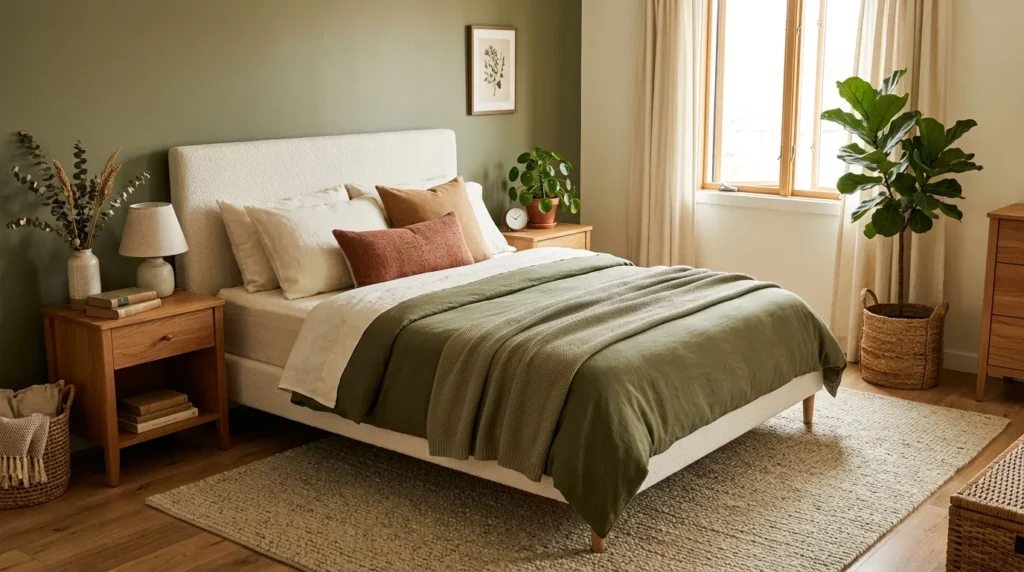
If a bedroom feels too neutral, earthy colors provide an easy way to introduce character while preserving the calm atmosphere. Muted olive, sage, clay, terracotta, caramel, warm brown, dusty blue, and soft rust can all work beautifully.
These shades feel connected to nature, which makes them especially suitable for bedrooms. They also pair naturally with materials such as wood, linen, stone, and woven fibers.
The key is to use them selectively. A bedroom doesn’t need a different accent color on every surface. Repeating one muted shade in a few places creates cohesion.
For example, olive green might appear in a throw, a small artwork detail, and a plant pot.
How To Style It
Choose one accent color as your starting point. If you love sage green, use it in two or three modest areas rather than making an entire wall green.
Try an olive throw at the foot of an ivory bed, a small green ceramic vase, and artwork containing similar muted tones.
For a warmer palette, combine terracotta or clay with cream, beige, and light wood.
If you prefer cooler colors, muted blue can provide contrast while still feeling restful.
Keep large furniture neutral when possible. This gives you more flexibility to change accent colors later without replacing expensive pieces.
8. Textured Window Treatments
Quick Benefits
- Softens hard architectural lines
- Improves privacy
- Helps control natural light
- Adds height and visual warmth
- Creates a more finished appearance
Why It Works
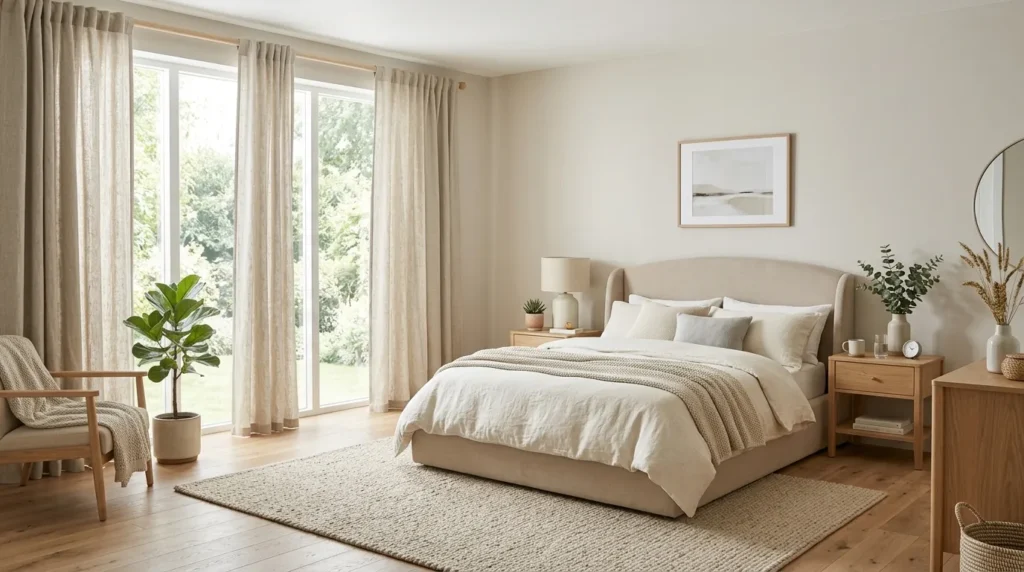
Window treatments can be surprisingly transformative. Bare windows may make a bedroom feel unfinished, while properly hung curtains can soften the entire room and make the ceiling appear taller.
Textured fabrics are especially useful in modern bedrooms because they add softness without introducing complicated patterns. Linen-look curtains, cotton blends, woven shades, and simple Roman shades can all work depending on the room.
Window treatments also have a practical purpose. Bedrooms need privacy and light control, particularly if windows face a busy street or receive strong morning sunlight.
How To Style It
If you’re using curtains, hang the rod higher and wider than the window frame when the architecture allows. This can make the window feel larger and help the fabric frame the opening rather than covering too much glass.
Choose colors that relate to the bedding or wall palette without matching exactly.
Cream, oatmeal, warm white, and soft beige are versatile options for a calm modern room.
For stronger light control, consider combining curtains with shades or blinds.
Keep the curtain fabric relatively simple. A subtle weave or natural texture is often enough.
If the room is compact, avoid overly heavy window treatments that visually reduce the space. Lightweight fabrics can provide softness while allowing plenty of natural light during the day.
9. Cozy Reading Corner
Quick Benefits
- Makes unused floor space functional
- Creates a second relaxation zone
- Adds personality to the bedroom
- Works in large and small rooms
- Encourages a slower bedtime routine
Why It Works
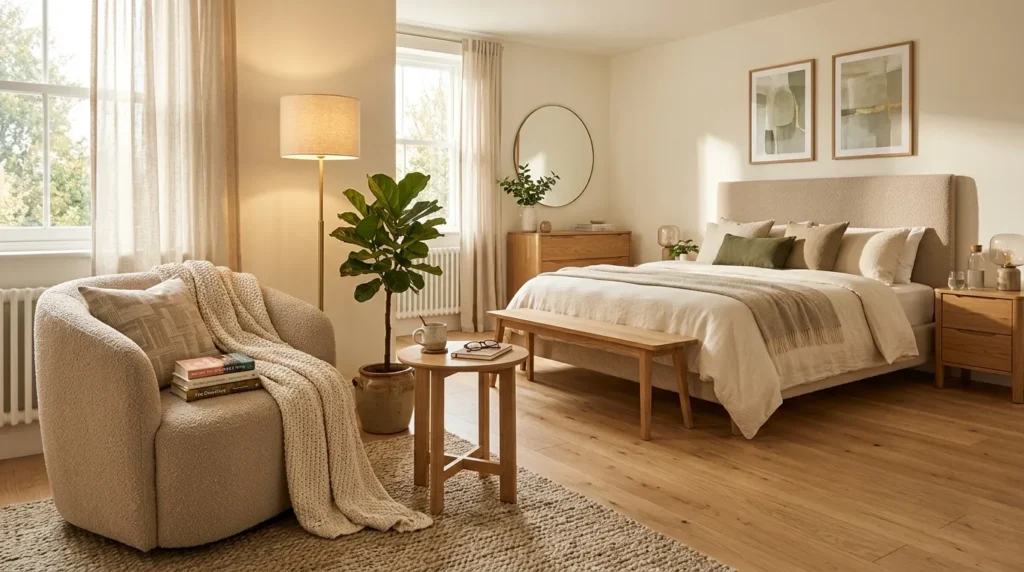
A bedroom doesn’t have to be used only for sleeping. If you have a little extra space, a comfortable chair can create a separate zone for reading, journaling, getting dressed, or simply sitting with a cup of tea.
A reading corner also helps larger bedrooms feel more complete. Instead of pushing all the furniture against the walls, you can create smaller areas that have a clear purpose.
The most important elements are comfort, appropriate lighting, and scale. You don’t need a large chair or elaborate furniture arrangement.
How To Style It
Start with a comfortable accent chair that fits the available space. A curved upholstered chair, compact lounge chair, or simple armchair can all work.
Add a small side table for a book, drink, or lamp. A floor lamp is especially useful if you want the corner to function as a reading area.
A small rug beneath the chair can help visually define the zone.
Add one personal detail, such as a favorite book, small plant, or framed artwork.
If the bedroom is compact, look for furniture with a smaller footprint. A narrow chair and wall-mounted light may provide all you need.
Position the chair near natural light when possible, but avoid placing it somewhere that blocks a doorway, closet, or important walking path.
10. Calm Decorative Layers
Quick Benefits
- Adds personality to a simple bedroom
- Creates visual depth
- Makes the room feel finished
- Allows meaningful objects to stand out
- Keeps modern design from feeling sterile
Why It Works
The final layer of a bedroom is often what makes it feel personal. Without artwork, textiles, plants, books, or decorative objects, even beautiful furniture can leave the room feeling unfinished.
The challenge is knowing when to stop.
Modern bedrooms benefit from editing. Instead of filling every surface, choose a few pieces that contribute something meaningful through color, texture, shape, or personal connection.
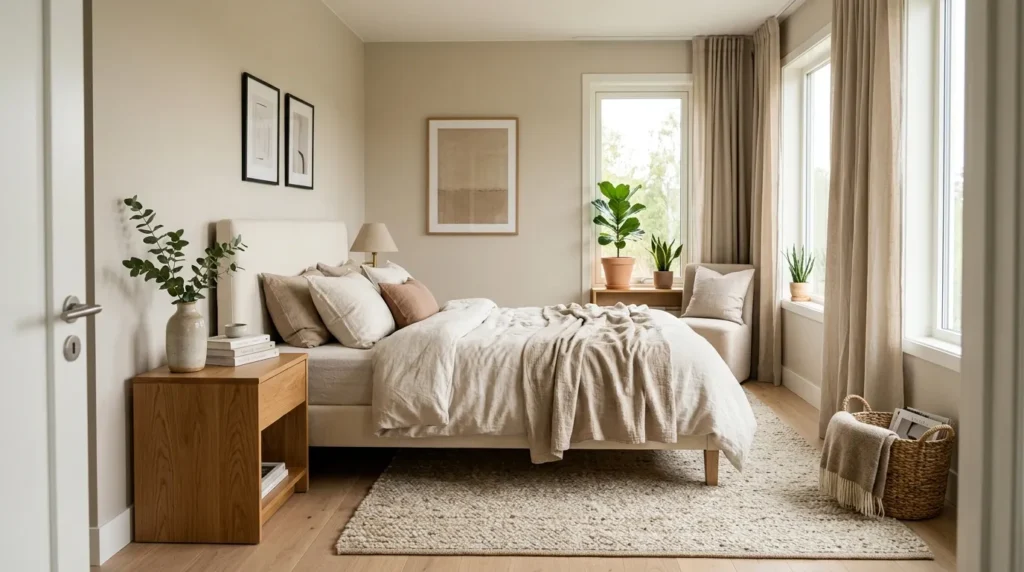
A framed photograph, ceramic vase, woven basket, soft rug, or small plant can have more impact when it has enough surrounding space.
This is also where you can allow your personality to come through. The room doesn’t need to look like a showroom to be stylish.
How To Style It
Begin with the floor. A soft area rug can add comfort and visually connect the bed and nightstands.
Move upward by adding artwork above the bed, dresser, or opposite wall. Choose pieces that complement the room’s color palette rather than trying to match every accessory.
Use a small number of decorative objects on dressers and nightstands. Vary their height and texture so the arrangement feels natural.
Plants can bring life into the room, but choose varieties that suit the available light and your ability to care for them.
Finally, look at the room from the doorway. If one surface immediately catches your attention because it feels too crowded, remove one or two pieces. Calm design often comes from knowing what to leave out.
Frequently Asked Questions
What colors make a bedroom feel calm and cozy?
Warm neutrals such as cream, beige, oatmeal, taupe, soft greige, and warm white are excellent choices for a peaceful bedroom. Muted earthy shades such as sage, olive, dusty blue, clay, and soft brown can add personality without becoming visually overwhelming. The most important factor is creating a cohesive palette with enough variation to avoid a flat appearance.
How can I make a modern bedroom feel cozy?
Layer soft bedding, textured rugs, curtains, upholstered furniture, natural wood, and warm lighting. Comfortable proportions are equally important. A bedroom can have clean modern lines while still feeling inviting when it includes tactile fabrics and practical furniture. Adding personal artwork and a few meaningful objects can also prevent a minimalist room from feeling sterile.
What bedding looks best in a modern bedroom?
Simple bedding in neutral or muted colors works particularly well. Look for breathable cotton, linen, quilted covers, and textured blankets. Instead of using a perfectly matching set, combine complementary fabrics and shades. A neutral duvet paired with a textured coverlet, several pillows, and a casually placed throw can create a polished but relaxed appearance.
How do I decorate a small modern bedroom?
Prioritize furniture that fits the room and provides useful storage. Wall-mounted sconces can free up nightstand space, while a bed with built-in drawers can reduce the need for additional furniture. Keep larger surfaces relatively light and use a limited color palette. Curtains hung thoughtfully and a well-placed mirror can also help the room feel more open.
Should bedroom nightstands match?
Matching nightstands can create a symmetrical, peaceful appearance and work particularly well with modern bedroom designs. However, they don’t have to match exactly. Different nightstands can look intentional when they share a similar height, material, or color. If you prefer an organized, balanced look, matching pieces are the simpler option.
How do I create a modern bedroom without making it look cold?
Combine clean-lined furniture with warm materials and soft textures. Natural wood, upholstered headboards, linen bedding, woven accessories, warm neutral colors, and soft lighting can counterbalance sleek furniture. Avoid relying entirely on glossy finishes or stark white surfaces. Even a minimalist bedroom can feel warm when it contains enough tactile and natural elements.
What lighting is best for a cozy bedroom?
A combination of ambient and task lighting generally works best. Use a ceiling fixture for general illumination and bedside lamps or sconces for reading. A floor lamp or small accent light can provide another layer. Warm, adjustable lighting is especially helpful in the evening because it creates a softer atmosphere than a single bright overhead fixture.
Conclusion
A calm modern bedroom doesn’t need to be complicated. In many cases, the most noticeable improvements come from a handful of thoughtful choices: a warmer color palette, softer bedding, natural wood, layered lighting, useful storage, and a few personal decorative details.
The goal isn’t to remove everything from the room. It’s to create enough visual breathing room that the pieces you love can actually stand out.
If your bedroom currently feels cluttered, start with the surfaces you see first. Clear the nightstands, simplify the dresser, and remove anything that doesn’t belong. If it feels cold, introduce wood, textiles, and warmer lighting. If it feels unfinished, add artwork, curtains, or a rug before buying lots of small accessories.
Modern style works best when it supports everyday life. Your bedroom should be easy to move through, comfortable at bedtime, practical in the morning, and personal enough that it feels like your own retreat.
You don’t have to complete the entire room in one weekend. Start with the bed, then work outward through lighting, furniture, textiles, and decor. Small changes can build into a space that feels beautifully organized without losing the warmth that makes a bedroom inviting.
Choose the ideas that fit your home, your routine, and your personal style. The best bedroom isn’t simply the one that looks calm in a photograph; it’s the one that helps you feel calm when you walk through the door.
Related Articles
- 10 Modern Bedroom Ideas With Hotel-Inspired Comfort
- 10 Cozy Bedroom Ideas for a Warm and Relaxing Retreat
- 10 Bedroom Wall Decor Ideas Using Large Mirrors
- 10 Neutral Bedroom Ideas for a Timeless Look
- 10 Small Bedroom Ideas That Make the Most of Every Inch