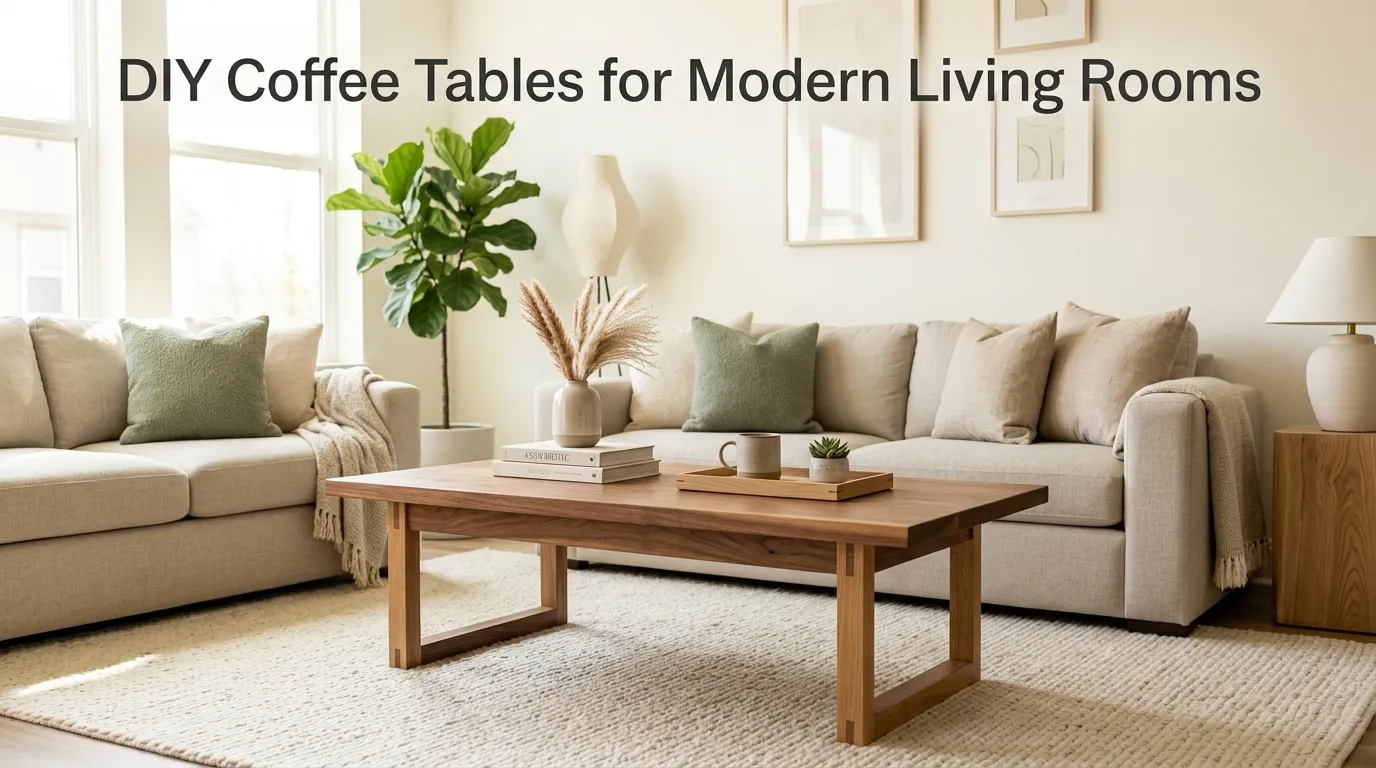
10 DIY Coffee Tables for Modern Living Rooms
A coffee table can completely change the way a living room feels. It sits at the center of the seating area, ties the furniture together, and gives you a practical surface for books, drinks, candles, and everyday essentials. But finding the right table doesn’t always mean buying one from a furniture store.
A DIY coffee table can be a surprisingly effective way to create something that fits your room perfectly. You can choose the dimensions, finish, materials, and style instead of trying to make a ready-made piece work around your existing furniture.
For modern living rooms, simplicity is usually the secret. Clean lines, natural wood, neutral finishes, and understated hardware can create a table that feels contemporary without looking overly trendy. You also don’t need advanced woodworking skills for every project. Some designs can be assembled from basic lumber, plywood, reclaimed materials, or ready-made components.
I’ve noticed that the best DIY furniture projects start with the room rather than the project itself. Before building anything, consider the sofa height, available walking space, rug size, and how you actually use the coffee table. A beautiful table that’s too large can make a small living room feel cramped, while one that’s too low or too narrow may not be practical.
The ideas below range from simple beginner-friendly designs to more substantial woodworking projects. Each one can be adapted to suit your living room, whether your style is minimalist, warm modern, Scandinavian, industrial, or casually contemporary.
Before beginning any project, choose materials appropriate for furniture construction, use the correct tools and protective equipment, and verify measurements carefully. If a design involves structural joints, heavy materials, power tools, or unusual construction, take the time to understand the process before cutting.
Let’s look at some DIY coffee table ideas that can make a modern living room feel more finished, functional, and personal.
Table of Contents
1. Simple Wood Slab
Create a minimalist coffee table from a solid-looking wooden top and clean-lined legs.
2. Box Frame Table
Build a geometric table with a sturdy open frame and modern proportions.
3. Hairpin Leg Table
Combine a simple wood top with slim metal legs for an airy contemporary look.
4. Storage Crate Table
Repurpose wooden crates into a practical table with built-in storage.
5. Round Pedestal Table
Create a softer focal point with a circular top and a substantial central base.
6. Reclaimed Wood Table
Give salvaged lumber new life with a character-filled modern design.
7. Slatted Wood Table
Add texture and architectural detail with evenly spaced wooden slats.
8. Concrete Top Table
Pair a smooth concrete-style surface with a simple supportive base.
9. Nested Coffee Tables
Create flexible living room surfaces with two tables designed to work together.
10. Minimalist Plywood Table
Use affordable plywood and clean construction to create a warm modern centerpiece.
1. Simple Wood Slab
Quick Benefits
- Beginner-friendly design
- Naturally warm appearance
- Easy to customize
- Works with many interiors
- Requires relatively few components
Why It Works
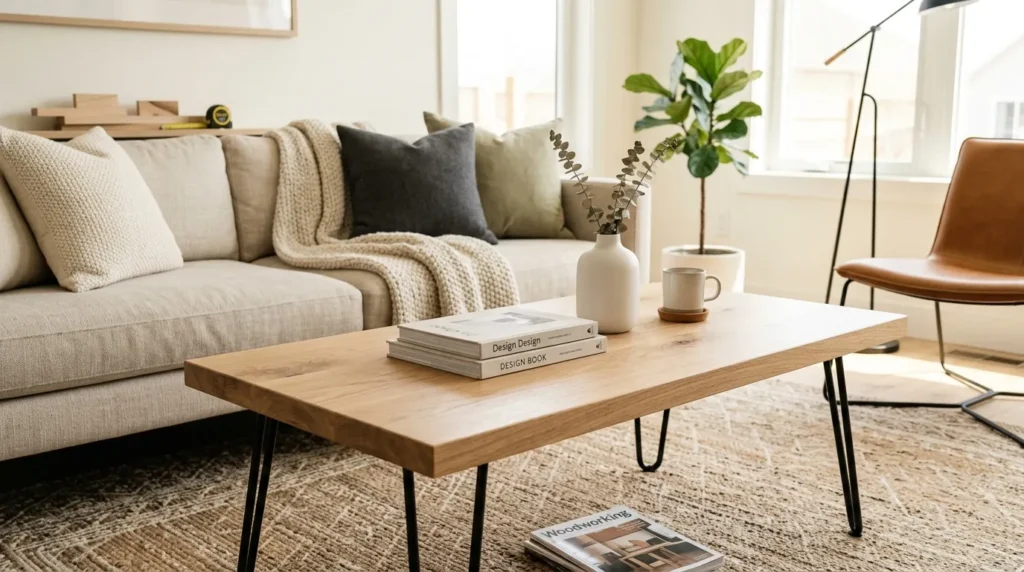
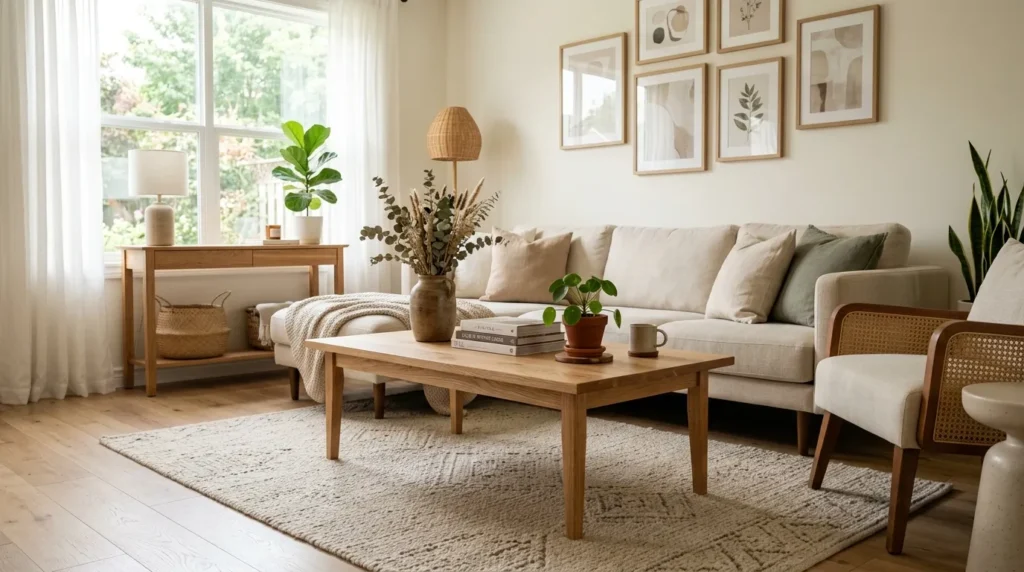
A simple wooden tabletop paired with clean legs is one of the easiest ways to create a modern coffee table. The design relies on proportion and material rather than complicated decoration.
Natural wood brings warmth to contemporary living rooms, particularly when the surrounding furniture includes upholstery, metal, glass, or neutral colors.
The beauty of this project is its flexibility. You can use a wide solid board, several boards joined together, or a suitable pre-made wooden panel depending on your tools and experience.
A straightforward silhouette also makes the table easier to style. Books, a ceramic tray, a small plant, or a simple vase can sit on top without competing with an elaborate table design.
How To Style It
Start by determining the ideal length and width for your seating arrangement. The table should leave enough clearance for comfortable movement between the sofa and table.
Choose a wood species and finish that complements your flooring and other furniture. Light oak tones can create a Scandinavian-inspired look, while walnut-style finishes feel richer and more dramatic.
Attach sturdy legs designed to support the finished tabletop and anything you plan to place on it.
Sand the wood carefully and apply an appropriate furniture finish according to the manufacturer’s directions.
Keep the styling simple. A low ceramic tray, a stack of books, and one small plant can create an attractive modern arrangement without making the surface cluttered.
2. Box Frame Table
Quick Benefits
- Strong geometric appearance
- Creates a modern silhouette
- Can provide open storage
- Works well in contemporary spaces
- Offers multiple construction options
Why It Works
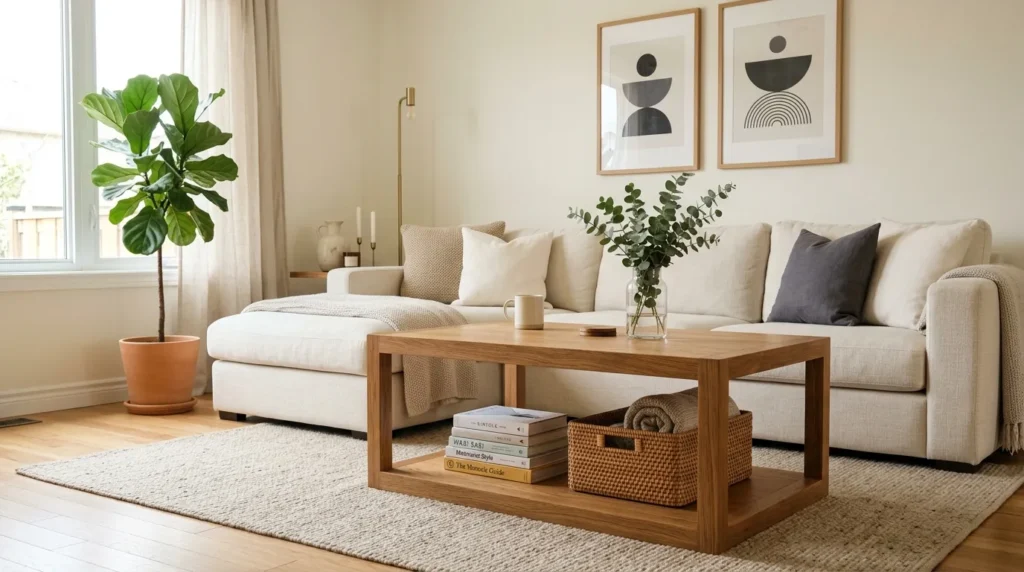
A box-frame coffee table uses simple rectangular forms to create a structured, architectural appearance. The design can be as minimal as a wooden frame supporting a tabletop or as functional as a box with open compartments.
This style works particularly well in modern living rooms because the straight lines echo the clean geometry often found in contemporary furniture.
The open space beneath the tabletop can also provide useful storage. You might place baskets, books, magazines, or decorative objects underneath without making the room feel visually heavy.
The proportions matter more than ornamentation. A well-balanced frame can look sophisticated even when built from relatively inexpensive materials.
How To Style It
Choose a frame depth that works with the size of your sofa and rug. Avoid making the table so bulky that it blocks walking paths.
For a warm modern look, use natural or medium-tone wood.
For a more contemporary appearance, a painted or stained frame can create a stronger architectural effect.
Add a lower shelf if you need storage, but keep it visually open.
Use baskets to hide small items while leaving some open space for books or decorative pieces.
If your living room already has several rectangular furniture pieces, soften the look with a rounded tray, curved vase, or small organic-shaped accessory on the tabletop.
3. Hairpin Leg Table
Quick Benefits
- Slim visual profile
- Relatively simple construction
- Creates an industrial-modern feel
- Keeps the floor visually open
- Works well in smaller rooms
Why It Works
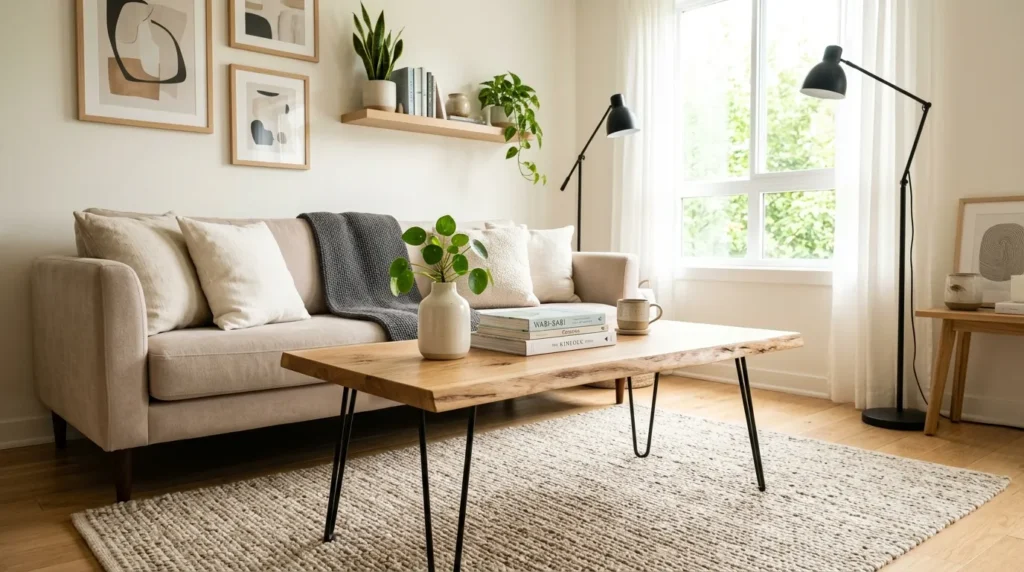
Hairpin legs are popular for DIY furniture because they can turn a simple wooden top into a finished-looking table with relatively little construction.
The slim metal legs give the table a lighter visual footprint than a thick solid base. This can be especially useful in smaller living rooms where heavy furniture can make the space feel crowded.
The combination of natural wood and metal also works across several styles. Depending on the finish, it can look industrial, modern, Scandinavian, or even rustic-contemporary.
How To Style It
Choose a tabletop with a thickness that looks proportional to the legs. A very thin top can look unbalanced with tall legs, while an extremely thick top may overwhelm the lightweight base.
Light wood with black metal creates a classic combination.
For a softer modern room, use a pale wood finish and neutral textiles.
Keep the area beneath the table open so the slim legs remain visible.
Because the design is visually simple, a larger tray or coffee-table book stack can provide enough decoration without making the table look busy.
4. Storage Crate Table
Quick Benefits
- Adds hidden or open storage
- Repurposes inexpensive materials
- Easy to customize
- Creates a casual modern-rustic look
- Useful for small living rooms
Why It Works
Wooden crates can become surprisingly practical furniture when arranged thoughtfully.
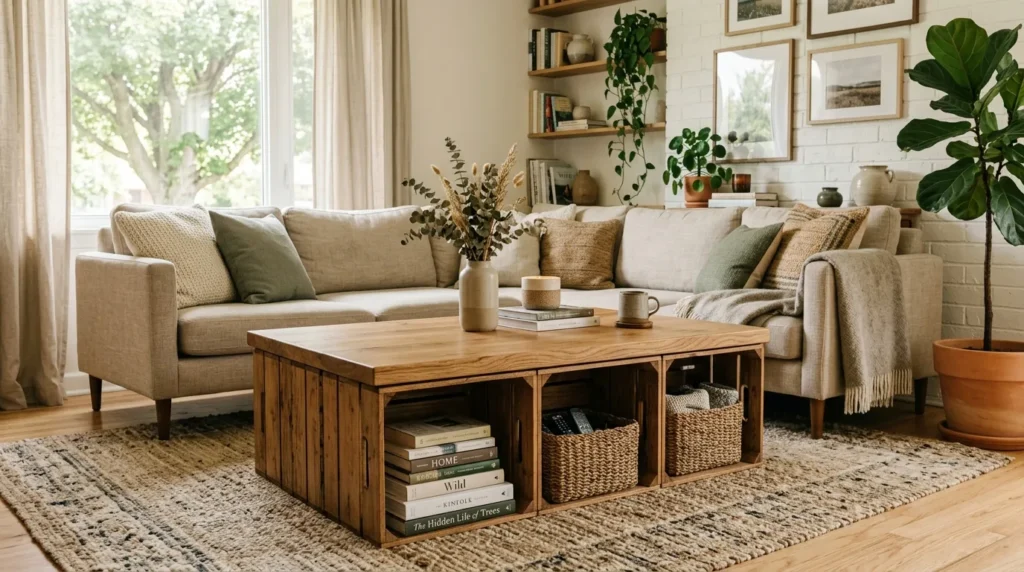
Used as the structural base, crates can create compartments for books, blankets, games, remotes, or baskets. This makes the design particularly useful for living rooms where storage is limited.
The challenge is making the finished piece look intentional rather than like several boxes placed under a tabletop.
A consistent finish, careful alignment, and a well-proportioned top can transform simple crates into a cohesive piece of furniture.
How To Style It
Choose crates that are sturdy enough for the intended use and inspect them carefully before construction.
Sand rough surfaces and apply an appropriate finish.
Arrange the crates symmetrically if you prefer a cleaner modern appearance. Asymmetrical arrangements can create a more casual look but require careful balancing.
Use a solid tabletop to visually unify the structure.
Add baskets inside the crate openings to conceal clutter while maintaining easy access.
Keep the top relatively simple. A tray, small vase, and a few books can provide enough decoration.
5. Round Pedestal Table
Quick Benefits
- Softens angular furniture
- Improves circulation
- Creates a sculptural focal point
- Works well in conversational layouts
- Fits modern and transitional rooms
Why It Works
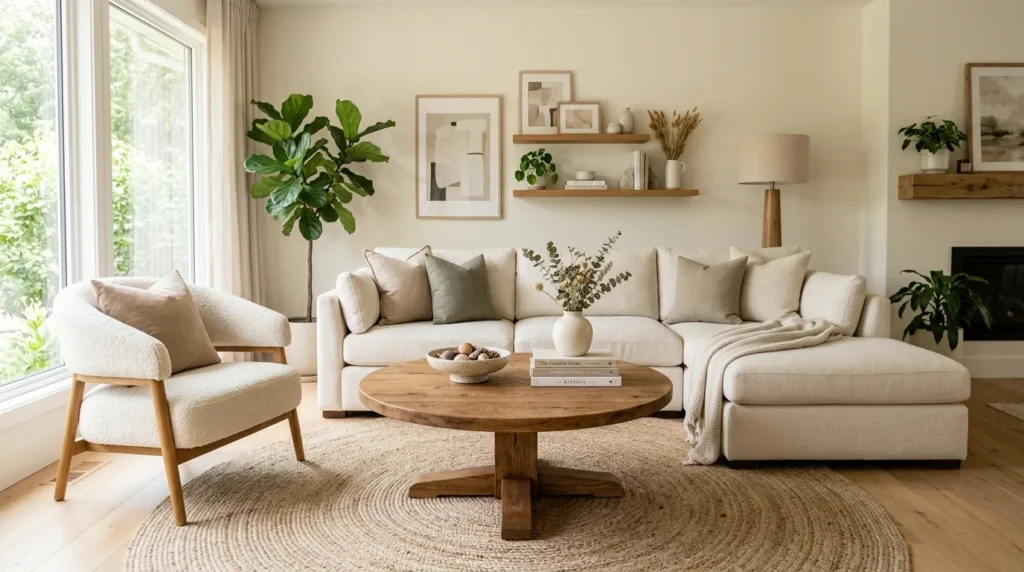
Not every modern coffee table needs sharp corners. A round tabletop can make a living room feel softer and can be especially useful when the surrounding furniture contains many straight lines.
The absence of corners also creates a smoother circulation path around the table.
A pedestal base gives the table a substantial, sculptural appearance while keeping the base centralized.
This style can work beautifully in rooms with a sectional sofa, curved chairs, or a round area rug.
How To Style It
Choose a tabletop diameter based on the size of your seating area.
A large round table can anchor a spacious sectional, while a smaller one may work better in a compact seating arrangement.
Use a substantial central base that can safely support the tabletop and resist tipping.
For a modern look, consider a simple wood finish or a smooth painted surface.
Pair the table with a round tray or low-profile decorative objects.
Avoid filling the entire surface with tall accessories. Keeping the center visually open can emphasize the table’s shape.
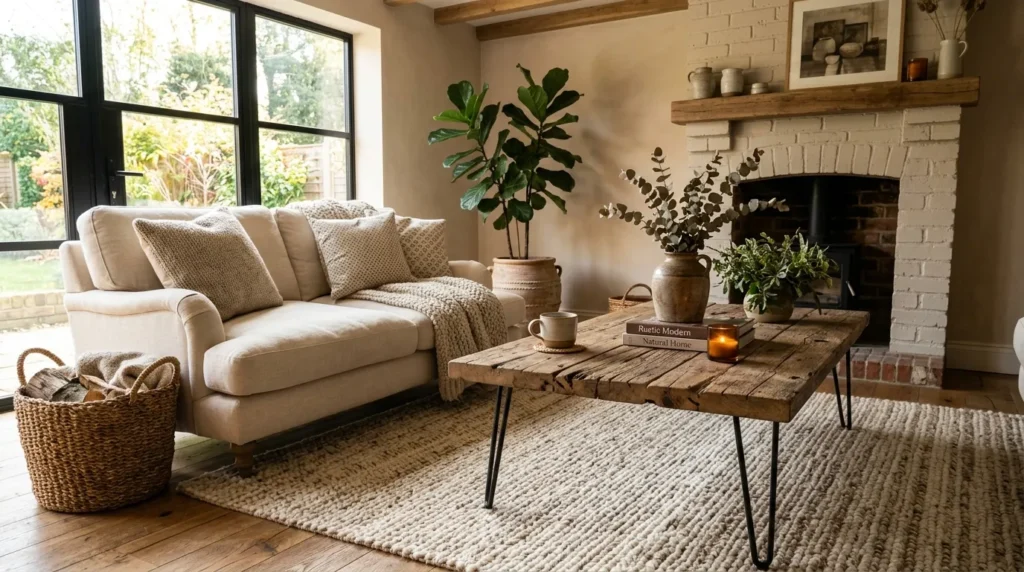
6. Reclaimed Wood Table
Quick Benefits
- Adds character
- Reuses existing material
- Creates natural texture
- Works with modern rustic interiors
- Makes each piece unique
Why It Works
Reclaimed wood brings history and texture into a modern living room. The imperfections, grain variation, and subtle changes in tone can keep a contemporary space from feeling too polished.
The trick is combining the character of reclaimed material with a clean silhouette.
Instead of creating a heavily rustic farmhouse table, use the wood as the feature while keeping the base simple.
This allows the piece to work in a modern room without looking out of place.
How To Style It
Only use reclaimed lumber that is appropriate for indoor furniture and prepare it carefully. Remove or safely deal with old nails, screws, splinters, coatings, and other hazards before construction.
Sand the surface according to the look you want. You don’t necessarily need to remove every sign of age.
Pair the top with simple black metal legs or a clean wooden base.
Keep the surrounding furniture relatively streamlined so the wood remains the main textural element.
Add soft neutral upholstery, woven accessories, and greenery to connect the rustic material with the modern room.
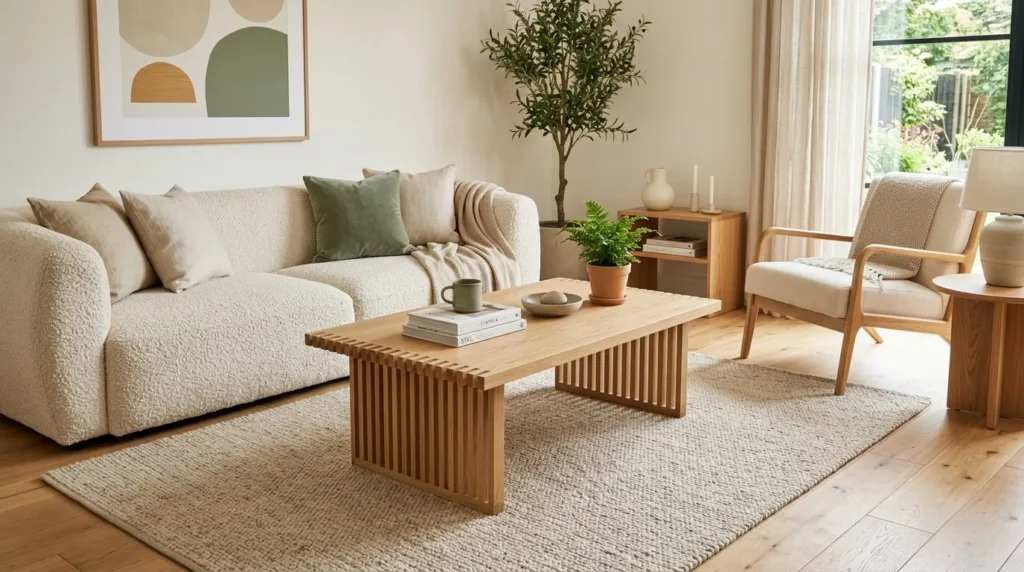
7. Slatted Wood Table
Quick Benefits
- Adds architectural texture
- Creates a custom appearance
- Works with modern interiors
- Provides visual interest
- Can coordinate with wall or shelving details
Why It Works
Slatted wood introduces rhythm and texture without relying on decorative patterns.
The repeated lines can make a coffee table feel more like a custom architectural piece. This is particularly effective in modern living rooms where furniture tends to have simple shapes.
Depending on how the slats are arranged, they can form a solid-looking top, open sides, or a partially enclosed base.
The repeated wood elements can also be echoed elsewhere in the room through wall paneling, open shelving, or wood furniture.
How To Style It
Keep the spacing between slats consistent for a polished appearance.
Use a wood tone that relates to another element in the room, such as flooring or an accent chair.
A darker stain can make the table feel more dramatic, while natural or light wood creates a softer Scandinavian-inspired look.
Because the table itself provides texture, use simple accessories.
A low tray, ceramic bowl, and one or two books can create an attractive arrangement.
Avoid combining too many different wood patterns in the same room. Let the slatted table be the primary wood feature or coordinate it carefully with existing finishes.
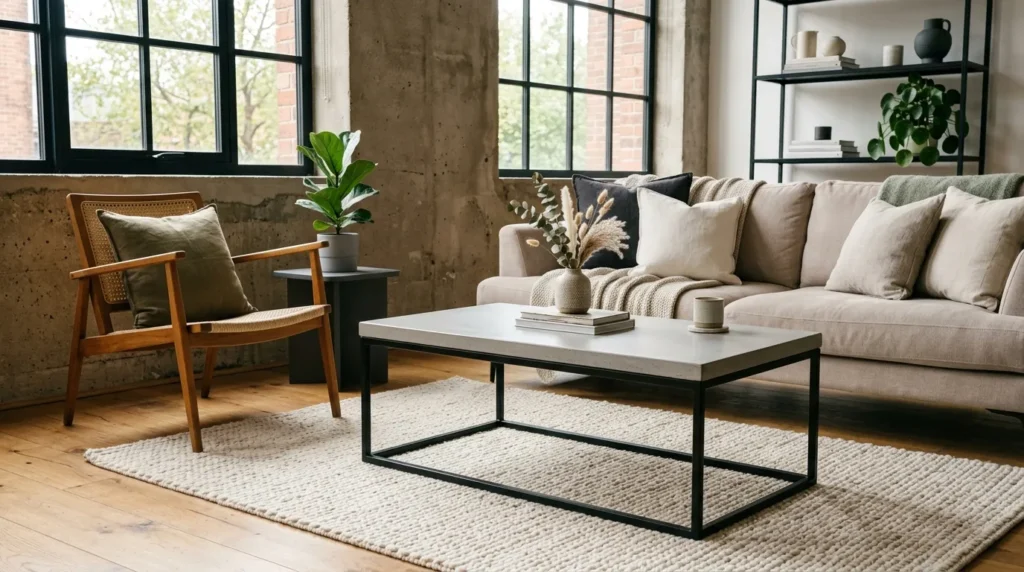
8. Concrete Top Table
Quick Benefits
- Strong contemporary character
- Durable-looking material
- Creates an industrial-modern effect
- Contrasts beautifully with soft upholstery
- Provides a substantial focal point
Why It Works
Concrete introduces a cool, architectural texture that contrasts nicely with comfortable sofas, rugs, and warm wood.
A concrete-style tabletop can give a living room a sophisticated industrial character without requiring the entire room to follow that aesthetic.
The visual weight of the surface works particularly well with slim metal legs or a simple geometric base.
Because concrete is visually substantial, the rest of the design should remain relatively restrained.
How To Style It
Choose a suitable concrete product and follow its instructions carefully if you’re casting the tabletop yourself. Proper reinforcement, curing, sealing, and handling matter because concrete can be heavy and brittle depending on the design.
Consider using a lighter concrete tone to keep the room feeling airy.
Pair the table with a soft area rug and upholstered furniture.
Warm wood accents can counterbalance the cool surface.
Add a woven basket or soft textile nearby to create contrast.
Before building, account for the final weight and make sure the base and floor are appropriate for the finished piece.
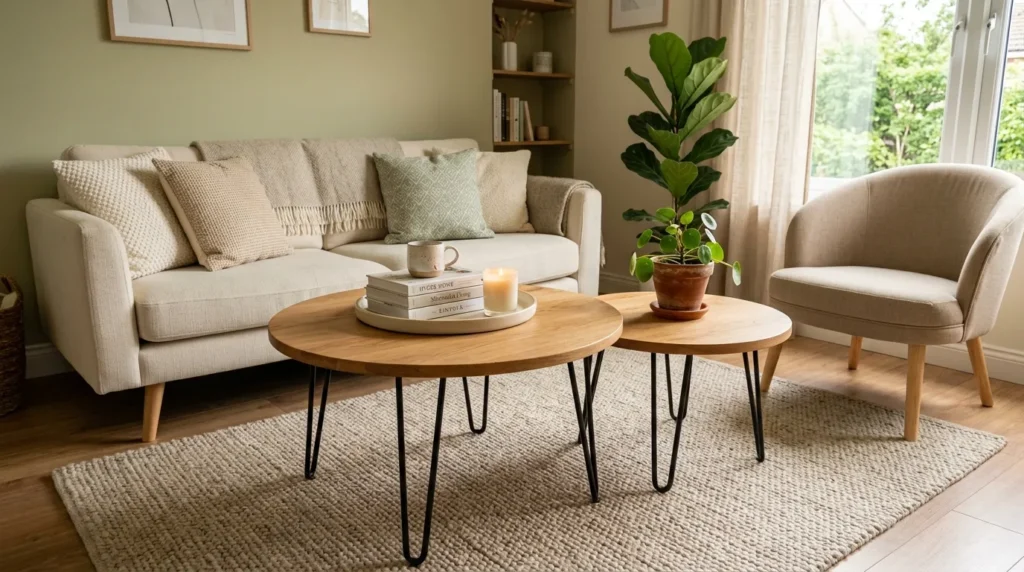
9. Nested Coffee Tables
Quick Benefits
- Flexible arrangement
- Saves space
- Creates multiple surfaces
- Easy to separate when needed
- Works well in compact rooms
Why It Works
Nested tables are ideal when you want flexibility rather than one large coffee table.
Two or three smaller tables can overlap in the center of the seating area and be separated when guests need additional surfaces.
This arrangement can make a small living room more functional because the tables don’t have to occupy their maximum footprint all the time.
DIY construction also allows you to customize the sizes so the tables fit together neatly.
How To Style It
Use complementary shapes and finishes rather than making every table identical.
For example, several round tops in different sizes can create a soft modern arrangement.
Alternatively, use the same wood with slightly different dimensions for a more cohesive appearance.
Keep the smallest table partially tucked beneath the larger one when not in use.
When entertaining, pull the tables apart and place them beside different chairs.
Use lightweight accessories that can easily be moved.
This approach is particularly useful for households that regularly switch between everyday living and entertaining.
10. Minimalist Plywood Table
Quick Benefits
- Affordable material option
- Clean modern appearance
- Easy to customize
- Highlights natural wood layers
- Works with minimalist interiors
Why It Works
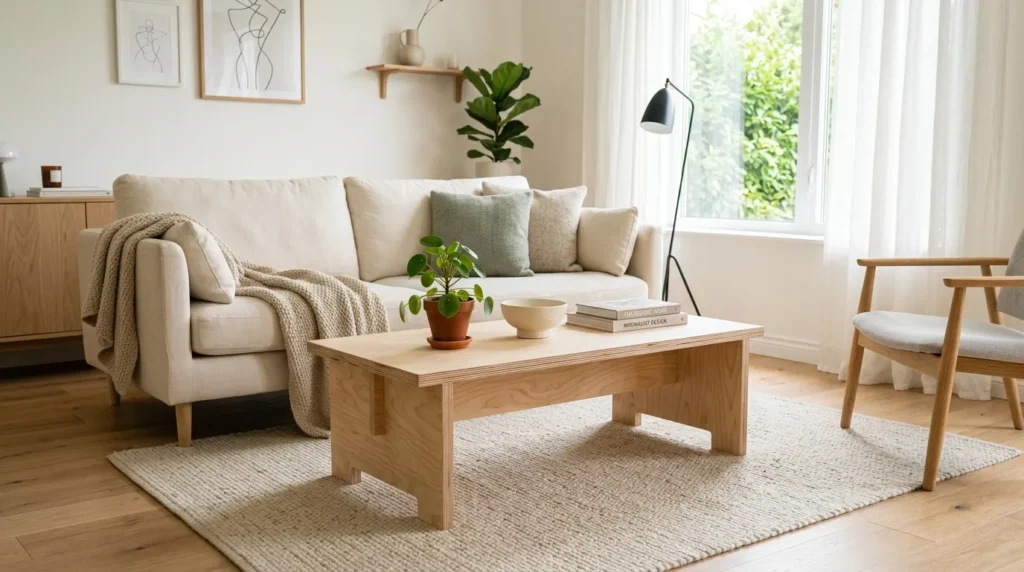
Plywood can be an excellent material for contemporary DIY furniture. Its layered edges create subtle visual interest while the flat surfaces provide a clean, minimalist appearance.
The simplicity of plywood also allows the construction itself to become part of the design.
A carefully built plywood coffee table can look surprisingly sophisticated, especially when the edges are clean and the finish is consistent.
This approach fits naturally into Scandinavian, minimalist, Japandi-inspired, and warm modern living rooms.
How To Style It
Use good-quality furniture-grade plywood if you want the finished table to have a refined appearance.
Sand the surfaces and edges carefully, then use an appropriate finish to protect the material.
A natural clear finish can highlight the plywood’s layers, while paint can create a completely different look.
Keep the base simple and geometric.
Pair the table with soft upholstery, neutral rugs, natural textiles, and greenery.
Because the material itself provides visual character, avoid overloading the tabletop with accessories.
How to Choose the Right DIY Coffee Table Size
Before cutting any wood, measure the seating area.
A coffee table should be proportional to the sofa and surrounding furniture. If it is too large, it can interrupt movement. If it’s too small, it may look disconnected from the seating arrangement.
Consider the distance between the sofa and table as well. You want enough room for people to sit comfortably and move around without constantly bumping into the table.
The height should also work with your seating. In many rooms, a table that is around the height of the sofa seat or slightly lower feels comfortable, but your specific furniture should determine the final dimensions.
For sectionals, a larger rectangular or round table may work well. Smaller sofas often look better with a compact rectangular, oval, or round design.
Always tape the proposed dimensions onto the floor before building. This simple step can reveal whether the table will feel too large or too small.
Best Wood for a DIY Coffee Table
Several types of wood can work well for coffee tables.
Pine: Affordable and relatively easy to work with, although it can dent more easily.
Oak: Durable, attractive, and available in many finishes.
Maple: Hard and clean-looking, with a relatively subtle grain.
Walnut: Rich and elegant, although generally more expensive.
Plywood: Excellent for minimalist furniture when high-quality furniture-grade sheets are used.
The best choice depends on your budget, tools, experience, desired appearance, and how much wear the table will receive.
If you’re building your first piece of furniture, a straightforward design using readily available lumber can be a good place to begin.
How to Make a DIY Coffee Table Look Expensive
Good proportions make a bigger difference than expensive materials.
Start by making sure the tabletop is straight, the corners are clean, and the legs are evenly positioned.
Spend time sanding visible surfaces and edges. A smooth finish can make inexpensive wood look significantly more refined.
Choose one finish rather than layering several competing colors.
Hardware should also be considered. Simple, well-proportioned fasteners and legs can make a table look more intentional.
Finally, don’t underestimate styling. A well-made table can lose its impact if the surface is cluttered. A curated stack of books, a low tray, a ceramic object, and a little greenery are often enough.
DIY Coffee Table Safety Tips
Furniture projects can involve saws, drills, sanders, adhesives, stains, finishes, and heavy materials.
Always use appropriate personal protective equipment and follow the instructions for your tools and finishing products.
Measure carefully before cutting.
Secure lumber properly when cutting or drilling.
Make sure the completed table is stable before using it. Check joints, screws, brackets, and legs regularly if necessary.
If you’re using reclaimed wood, inspect it carefully and prepare it safely before bringing it indoors.
For concrete or stone designs, consider the final weight before moving the piece. A heavy tabletop can be difficult or dangerous to handle without help.
If you’re uncertain about a tool, structural connection, electrical component, or construction technique, seek guidance from someone qualified rather than improvising.
Common DIY Coffee Table Mistakes to Avoid
One of the most common mistakes is skipping the measuring stage.
A table can look perfect in a workshop but feel completely wrong once it’s placed between a sofa and television.
Another mistake is choosing materials based only on appearance. Consider durability, weight, maintenance, and how the table will actually be used.
Avoid rushing the finishing process. Uneven sanding or poorly applied finish can make even a well-constructed table look unfinished.
Don’t forget about stability. A coffee table should sit securely on the floor without rocking.
Finally, avoid making the design unnecessarily complicated. A simple table with excellent proportions and clean construction will often look more sophisticated than an elaborate project with too many decorative details.
FAQ
What is the easiest DIY coffee table to make?
A simple wooden tabletop with pre-made legs is usually one of the most approachable designs. You can customize the size and finish without needing complicated joinery. A basic box-frame or hairpin-leg table can also be relatively straightforward. Choose a project that matches your current tool experience rather than starting with a design that requires advanced woodworking techniques.
What is the best wood for a DIY coffee table?
Oak, maple, walnut, pine, and furniture-grade plywood can all work well. Oak and maple offer good durability, walnut provides a richer appearance, and pine is generally more budget-friendly. Plywood can be excellent for minimalist designs. The right material depends on your budget, tools, preferred style, and how much daily wear the table will receive.
How high should a DIY coffee table be?
The ideal height depends on your sofa and chairs. Many coffee tables work well when they are approximately level with the sofa seat or slightly lower. Before building, measure your seating and consider how you reach for drinks, books, and other items. A temporary mock-up using boxes or taped measurements can help you test the height.
How do I make a DIY coffee table look modern?
Focus on clean lines, simple geometry, restrained finishes, and good proportions. Natural wood, matte black metal, neutral colors, plywood, concrete-style surfaces, and slim legs can all create a contemporary appearance. Avoid unnecessary decorative details and coordinate the table with the existing furniture and materials in the living room.
Can I make a coffee table from reclaimed wood?
Yes, reclaimed wood can create a beautiful and distinctive tabletop. However, inspect and prepare the material carefully before using it indoors. Remove or safely address nails, screws, splinters, old coatings, and other hazards. Make sure the wood is appropriate for furniture construction and finish it with a suitable product.
How do I make a small living room coffee table?
Choose a compact design that leaves enough room for comfortable circulation. Round, oval, nesting, or slim-leg tables can work particularly well because they often have a lighter visual footprint. Measure the space between your sofa, chairs, and other furniture before building, and consider whether the table needs storage or simply a surface.
What should I put on a DIY coffee table?
Keep the arrangement functional and relatively simple. A low tray, coffee-table books, a ceramic bowl, small plant, candle, or decorative object can work well. Use objects of different heights and textures, but leave enough open surface for everyday items such as drinks and remotes.
Conclusion
A DIY coffee table can be one of those projects that makes a living room feel noticeably more personal without requiring a complete room makeover.
The best design is the one that fits your space, your furniture, and your skill level. A simple wood slab with clean legs can create a warm modern centerpiece, while a box-frame table can add architectural character. If you’re short on space, nesting tables offer flexibility, and a round pedestal design can soften a room filled with straight lines.
Don’t feel pressured to build the most complicated table. Clean proportions, careful construction, a smooth finish, and appropriate materials will usually have a bigger impact than decorative details.
Before starting, measure your seating area and think about how you use the table every day. Consider where people walk, how much surface area you need, and whether storage would be useful. Then choose a design that solves those practical needs while complementing your existing decor.
Start with a project that matches your experience, take your time with the preparation and finishing, and don’t rush the final details.
A thoughtfully made coffee table doesn’t just fill an empty spot in front of the sofa. It can become the piece that brings the entire living room together.
Related Articles
- 10 Small Living Room Ideas with Modern Comfort
- 10 DIY Home Decor Projects for a Modern Living Room
- 10 Living Room Styling Ideas for a Cozy Home
- 10 Modern Living Room Ideas with Natural Wood
- 10 DIY Side Table Ideas for Small Spaces