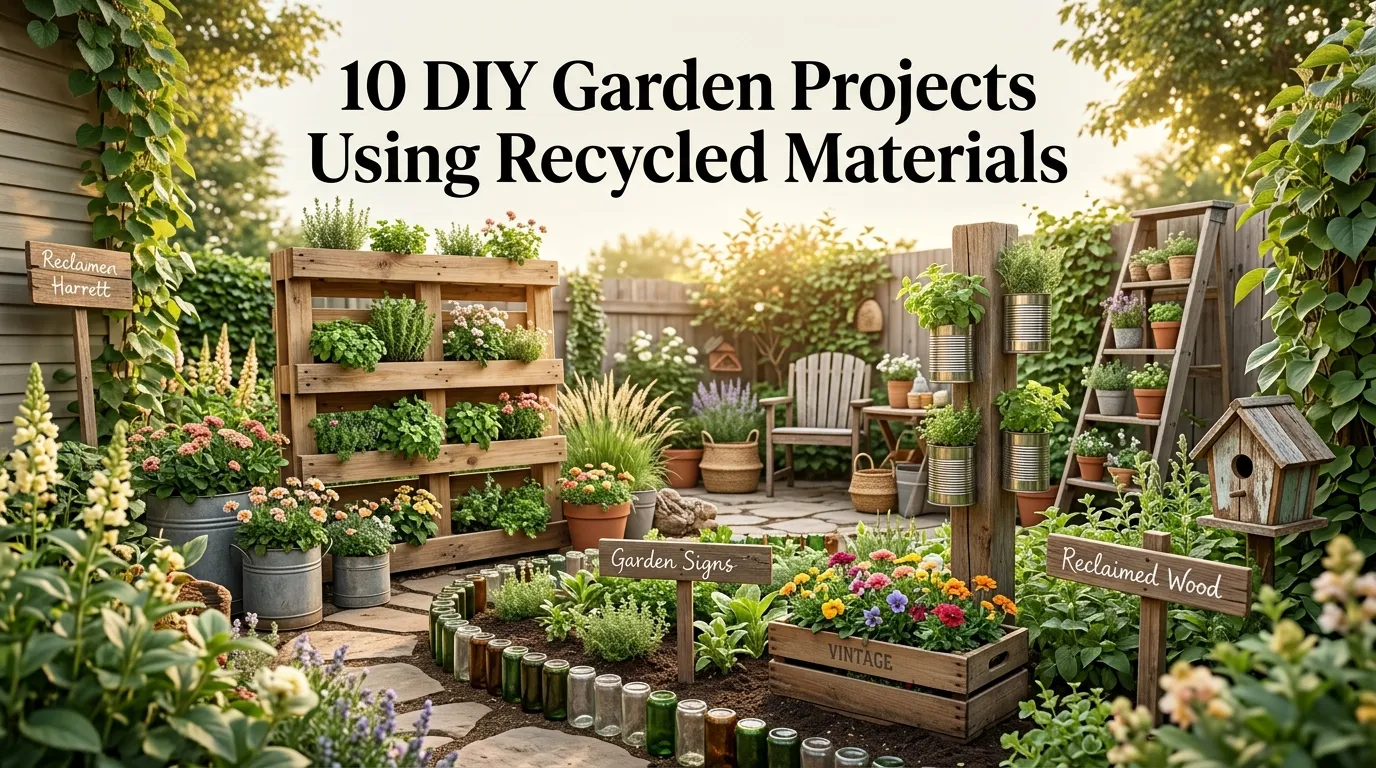
10 DIY Garden Projects Using Recycled Materials
Creating a beautiful garden doesn’t always require a trip to the home improvement store. Some of the most useful and charming garden projects can begin with things you already have at home.
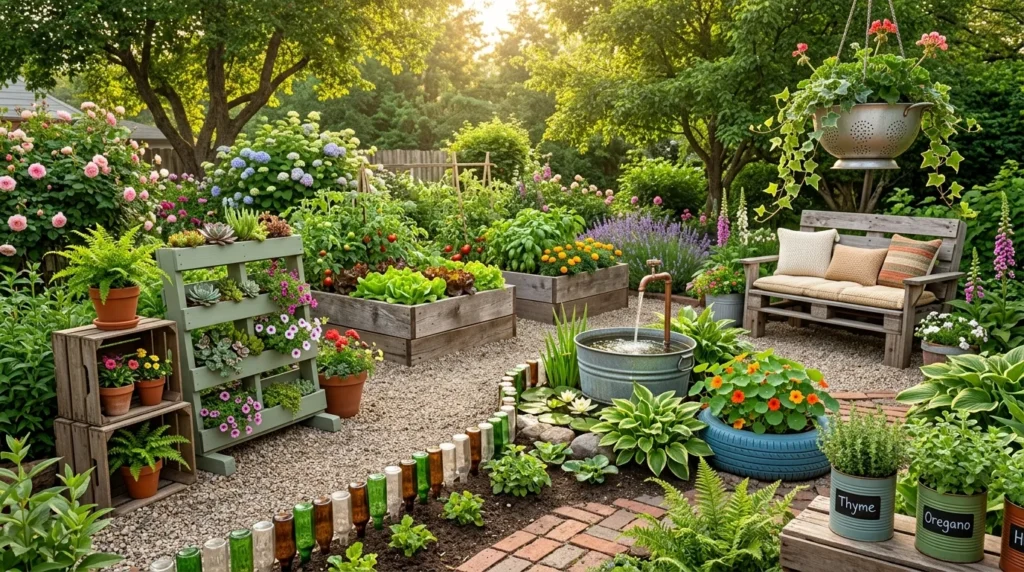
Old containers, wooden pallets, glass jars, tin cans, broken furniture, leftover bricks, and other household materials can often be repurposed into practical garden features. With a little creativity, these everyday objects can become planters, garden organizers, decorative accents, or useful structures that give your outdoor space more personality.
One thing I especially like about recycled garden projects is that they don’t have to look homemade in the traditional sense. A thoughtfully painted container can become a colorful planter, while weathered wood can add a relaxed rustic quality. The key is choosing materials that are suitable for outdoor use and giving each project a clear purpose.
Repurposing materials can also be a smart way to experiment. If you’re unsure whether you want a large herb garden, vertical planter, or decorative garden feature, a small DIY project lets you test the idea without committing to an expensive setup.
Before starting, inspect every recycled item carefully. Avoid materials that may contain hazardous substances, sharp exposed edges, or coatings that aren’t appropriate for outdoor use. For containers, make sure plants have adequate drainage. For wooden projects, consider whether the material is suitable for outdoor conditions.
You don’t need advanced woodworking or crafting skills for the ideas below. Most can be adapted to the materials, tools, and gardening space you already have.
Whether you’re working with a small patio, suburban backyard, raised garden, or cottage-style landscape, these recycled garden projects can help turn ordinary household items into useful outdoor features.
Table of Contents
1. Tin Can Planters
Turn empty cans into colorful containers for herbs, flowers, and small plants.
2. Pallet Herb Garden
Repurpose a wooden pallet into a compact vertical growing space.
3. Glass Jar Lanterns
Transform empty jars into simple decorative lights for garden evenings.
4. Tire Garden Planters
Give old tires a second life as bold outdoor plant containers.
5. Bottle Vertical Garden
Use discarded bottles to create a space-saving vertical planter.
6. Wood Scrap Plant Markers
Turn leftover wood pieces into charming, reusable garden labels.
7. Broken Chair Planter
Repurpose an old chair into an unexpected focal point for flowers.
8. Container Garden Bed
Create a practical mini garden from reclaimed containers and boxes.
9. Brick Garden Edging
Use leftover bricks to define beds, paths, and planting areas.
10. Recycled Bird Feeder
Turn suitable household materials into a simple feeding station for birds.
1. Tin Can Planters
Quick Benefits
- Inexpensive to make
- Perfect for small spaces
- Easy to customize
- Great for herbs and flowers
- Keeps cans out of the waste stream
Why It Works
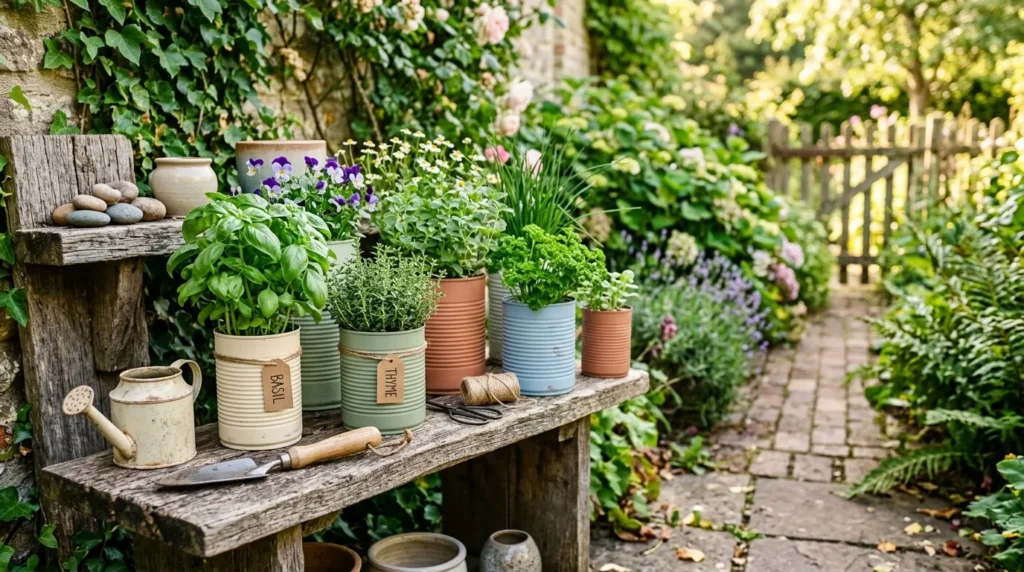
Empty food cans have a surprisingly useful shape for container gardening. Their compact size makes them ideal for herbs, small flowering plants, succulents, and other plants that don’t require a large root system.
They’re particularly useful if you have a balcony, patio, windowsill garden, or small backyard where every bit of planting space matters.
The simplest version requires little more than a clean can, drainage holes, potting mix, and a suitable plant. Painting or decorating the exterior can make the containers feel intentionally designed rather than repurposed.
However, preparation matters. Sharp metal edges should be addressed before handling, and the container should be thoroughly cleaned.
How To Style It
Wash the cans and remove labels and adhesive residue.
Create drainage holes in the bottom using an appropriate tool, taking care around sharp metal.
For a coordinated look, paint several cans in complementary shades such as cream, sage green, terracotta, or charcoal. Use products appropriate for outdoor surfaces.
Plant compact herbs such as basil, parsley, thyme, or chives, depending on your climate and growing conditions.
Arrange several cans together on a wooden shelf or plant stand instead of scattering them throughout the garden. Grouping them creates a more intentional display.
2. Pallet Herb Garden
Quick Benefits
- Makes use of vertical space
- Works well in small gardens
- Creates an organized herb display
- Adds rustic character
- Can hold several plants
Why It Works
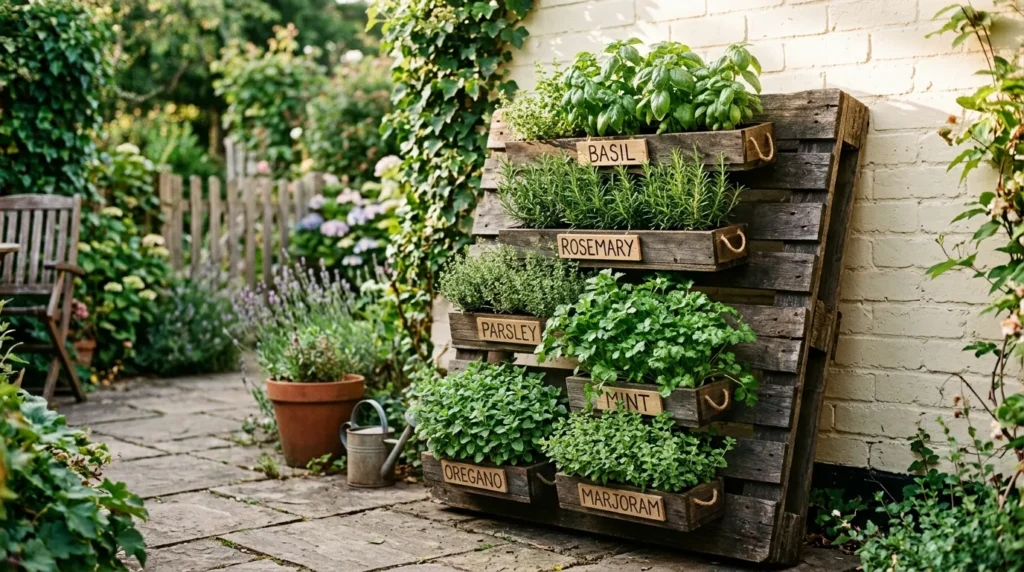
A sturdy wooden pallet can provide a useful framework for a vertical garden. Instead of spreading planters across the ground, you can grow several herbs or small plants in a compact footprint.
This makes the idea especially appealing for patios, narrow side yards, balconies, and small urban gardens.
Not every pallet is appropriate for gardening, though. Choose wood that’s clean and suitable for the intended use, and avoid pallets with unknown chemical treatments or contamination.
The structure should also be stable before adding soil and plants.
How To Style It
Begin with a sound pallet that has no broken boards, exposed nails, or signs of contamination.
Clean it thoroughly and allow it to dry.
Depending on the design, attach planter pockets, small containers, or suitable planting boxes securely to the pallet.
Label herbs using small wood signs for a practical decorative touch.
Choose plants with similar light and watering requirements.
Lean or mount the pallet securely according to the location and structure. A vertical garden should never be allowed to tip over once it contains wet soil and plants.
3. Glass Jar Lanterns
Quick Benefits
- Creates evening ambiance
- Reuses empty jars
- Easy to customize
- Works for patios and pathways
- Requires very little material
Why It Works
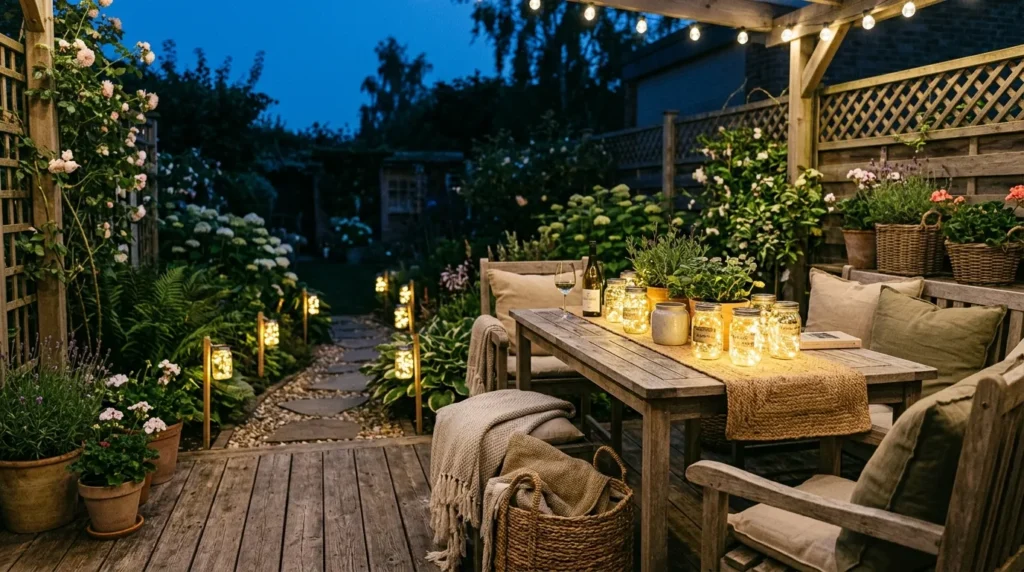
Empty glass jars can become simple decorative lanterns that add atmosphere to an outdoor seating area.
Rather than treating them as planters, use them as small light holders. Solar-powered or battery-operated lights are generally more practical outdoors than open flames, particularly around plants, dry materials, children, or pets.
The transparent glass allows the light to remain visible while the jar provides a simple rustic or farmhouse-inspired appearance.
How To Style It
Clean and dry sturdy glass jars.
Remove labels and check each jar for cracks or chips.
Place an appropriately rated battery-operated or solar light inside.
For hanging versions, use a secure outdoor-rated hanging method rather than relying on improvised wire that could loosen.
Arrange several jars along a patio table, garden wall, or sheltered seating area.
For daytime interest, add a simple twine wrap or small weather-resistant label.
Keep the design understated. The beauty comes from repetition and warm evening light.
4. Tire Garden Planters
Quick Benefits
- Reuses old tires
- Creates bold garden accents
- Works in small planting areas
- Can be stacked
- Easy to personalize
Why It Works
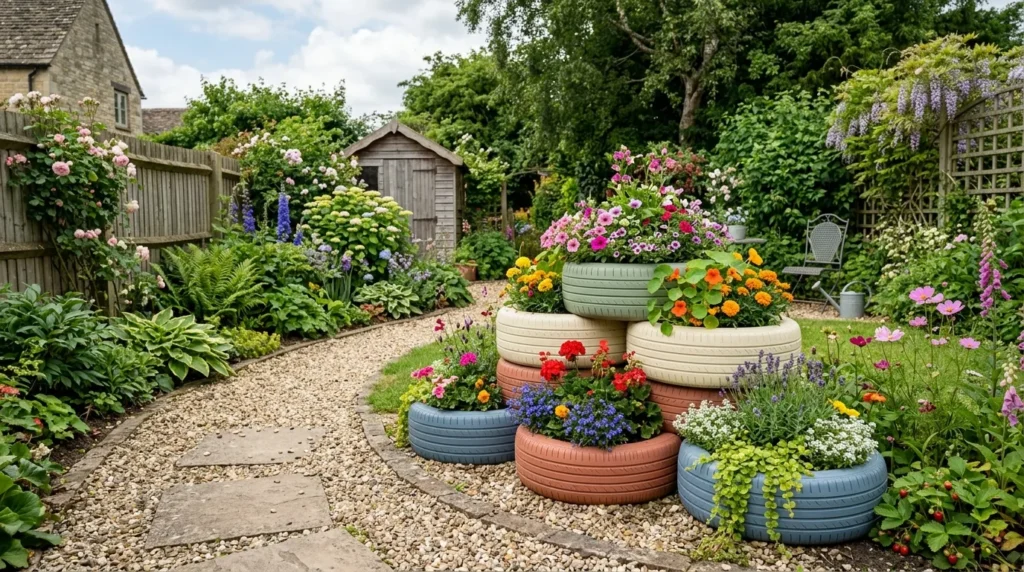
Old tires can be repurposed into distinctive garden planters, especially when you’re looking for a playful or colorful feature.
Their rounded shape makes them naturally suited to planting displays, and stacking several tires can create additional height.
Because tires are manufactured for vehicles rather than gardening, consider the placement carefully. Use them primarily as decorative planters rather than for food crops if you’re concerned about contact between growing media and tire materials.
They can be particularly effective for flowers and ornamental plants.
How To Style It
Clean the tire thoroughly and allow it to dry.
Choose an appropriate outdoor paint if you want to change its appearance.
Place the tire on stable ground and provide adequate drainage.
Fill it with suitable potting soil and select plants based on the location’s light conditions.
Use one large tire as a focal point or arrange several in a staggered group.
Soft flowering plants can help balance the strong shape of the rubber.
5. Bottle Vertical Garden
Quick Benefits
- Saves ground space
- Reuses plastic bottles
- Suitable for balconies
- Creates a living wall effect
- Easy to expand
Why It Works
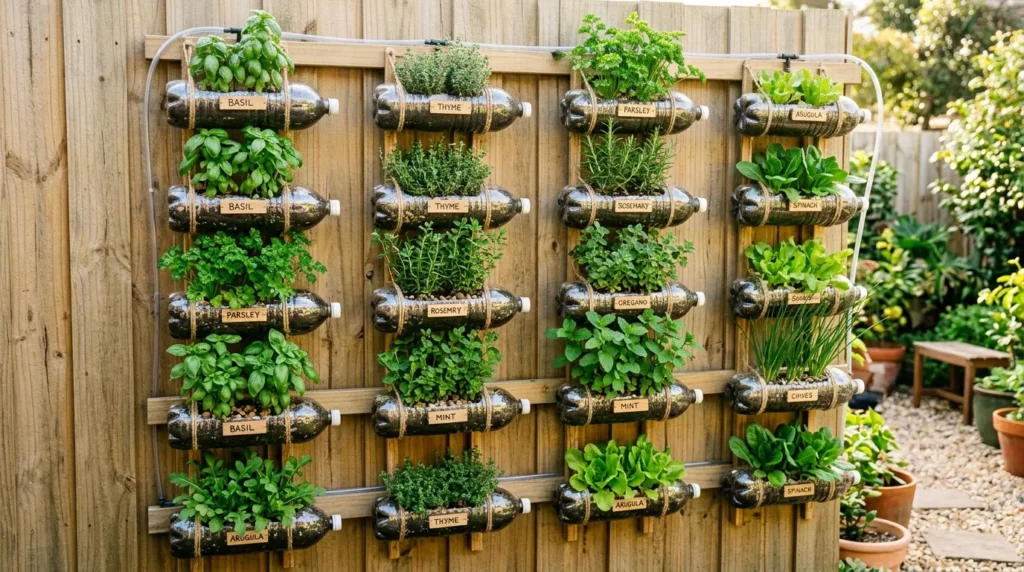
Plastic bottles can be adapted into compact planters for herbs, small ornamentals, and other plants suited to containers.
The concept works especially well when vertical space is available but ground space is limited.
A row of matching bottles can create a surprisingly attractive living wall when arranged carefully.
The most important considerations are drainage, structural support, and plant selection. Bottles filled with wet soil become heavier than they appear, so the mounting system needs to be secure.
How To Style It
Clean the bottles thoroughly.
Cut openings carefully and smooth or protect sharp edges.
Create drainage holes near the bottom of each planting area.
Mount the bottles securely to a suitable wall, frame, fence, or support system.
Use plants that remain relatively compact.
For a cohesive appearance, arrange bottles in even rows or a simple grid.
You can paint the outside portions of the bottles with suitable outdoor materials, but leave enough area open to monitor soil moisture and plant health.
6. Wood Scrap Plant Markers
Quick Benefits
- Uses small leftover pieces
- Helps identify plants
- Adds rustic charm
- Easy beginner project
- Can be reused
Why It Works
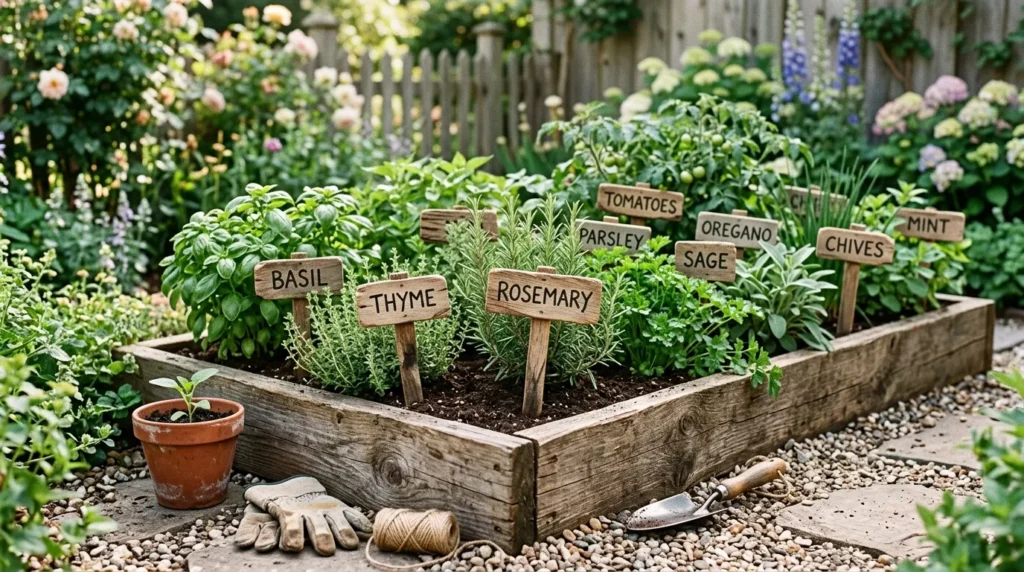
Small pieces of untreated or appropriately finished wood often aren’t large enough for another construction project, but they’re perfect for garden labels.
Plant markers are both decorative and practical. They’re particularly useful in herb gardens, vegetable beds, seedling areas, and spaces containing several varieties of similar-looking plants.
Because they require very little material, this is one of the easiest recycled garden projects to personalize.
How To Style It
Cut or select small wood pieces of similar sizes.
Sand rough edges so they’re comfortable to handle.
Write plant names using an outdoor-suitable marker or paint.
For a rustic garden, leave the wood natural.
For a more polished look, paint the markers in a simple neutral palette.
Push each marker securely into the soil near the corresponding plant.
If you’re labeling edible crops, use materials appropriate for garden use and avoid finishes that could contaminate the growing area.
7. Broken Chair Planter
Quick Benefits
- Gives old furniture a new purpose
- Creates a garden focal point
- Adds vintage character
- Works with cottage gardens
- Requires minimal construction
Why It Works
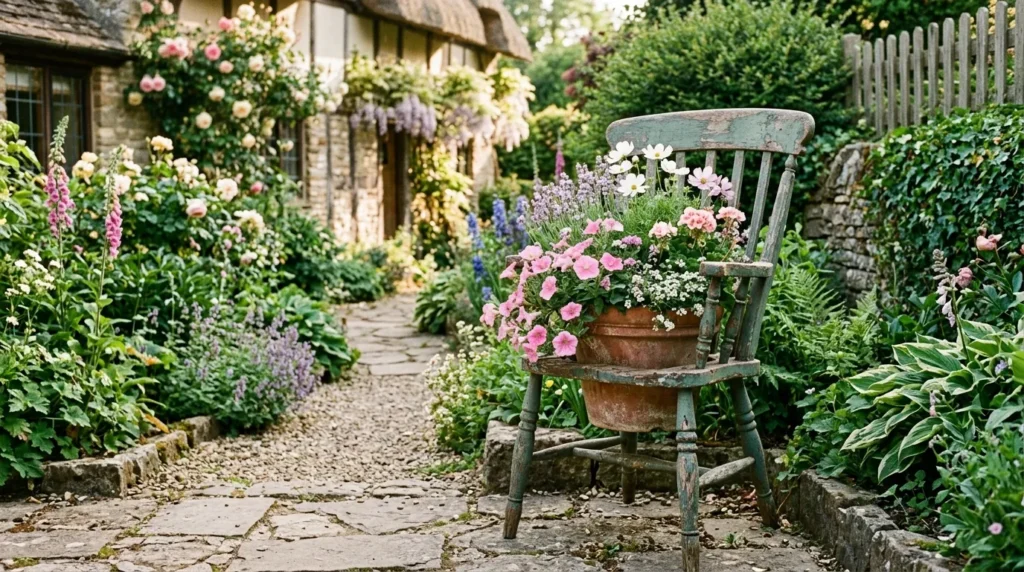
An old chair with a damaged seat doesn’t necessarily have to go straight to disposal.
If the frame remains structurally suitable for decorative use, the chair can become a creative plant stand.
This idea works particularly well in cottage, vintage, farmhouse, and eclectic gardens because the furniture adds architectural interest that a conventional pot may not provide.
The chair doesn’t need to look perfect. In fact, weathered finishes can contribute to its charm.
How To Style It
Choose a chair with a stable frame.
Remove or modify the damaged seat area so a planter can sit securely.
Place a suitable container inside the opening rather than putting loose soil directly onto furniture that isn’t designed for it.
Choose cascading flowers or leafy plants that soften the chair’s lines.
Paint the frame if you want a more coordinated appearance.
Place the finished planter near a garden entrance, porch, fence, or patio seating area where it can function as a focal point.
8. Container Garden Bed
Quick Benefits
- Creates flexible growing space
- Works in small yards
- Uses reclaimed containers
- Easy to rearrange
- Great for beginners
Why It Works
Not every garden needs traditional in-ground beds.
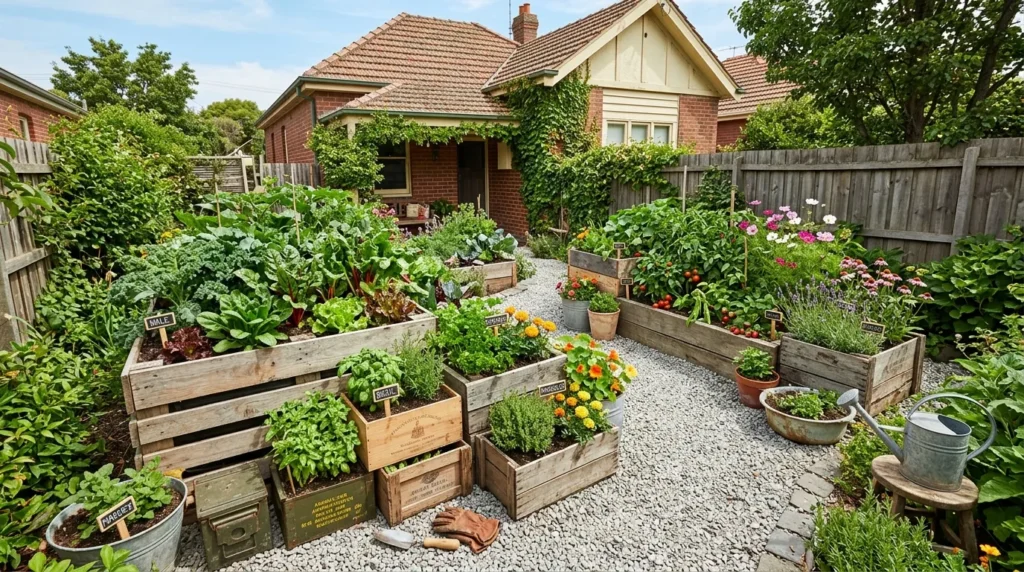
Reclaimed wooden boxes, sturdy food-safe containers, large unused planters, and other suitable vessels can become individual growing spaces.
This approach gives you control over soil quality and allows you to move certain plants when necessary.
It’s particularly useful for renters or gardeners working with patios and paved areas.
How To Style It
First, determine whether the recycled container is safe for growing plants.
Avoid containers that previously held toxic chemicals, unknown substances, or materials unsuitable for contact with soil.
Add adequate drainage.
Arrange containers at different heights to create visual interest.
Use larger containers for plants with deeper root systems and smaller vessels for herbs or compact ornamentals.
Group plants according to their light and watering requirements.
A simple mix of wood, terracotta-style containers, and neutral recycled vessels can create a relaxed, collected garden appearance.
9. Brick Garden Edging
Quick Benefits
- Defines planting areas
- Reuses leftover materials
- Creates cleaner garden lines
- Helps separate paths and beds
- Adds structure
Why It Works
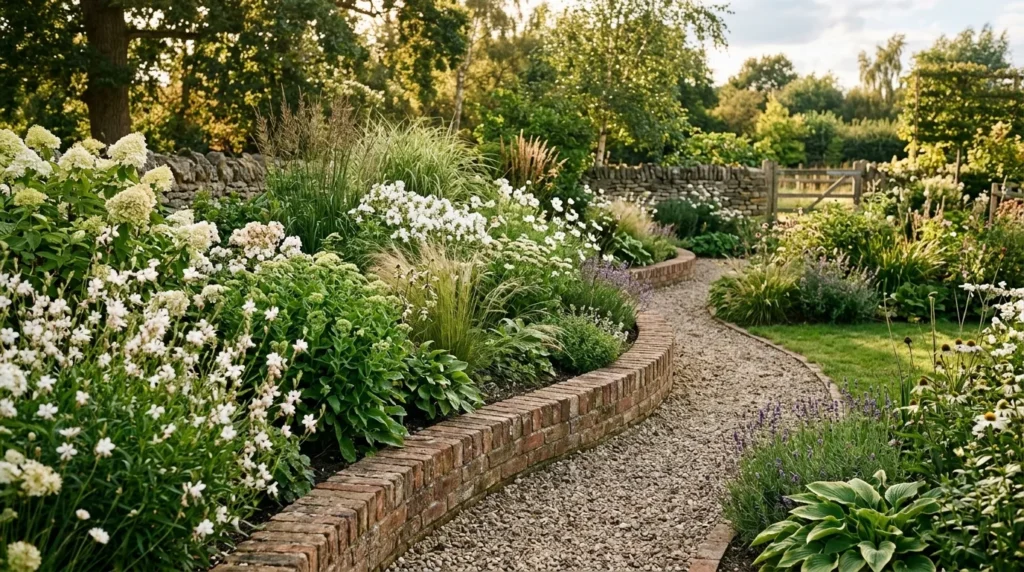
Old bricks can provide a practical transition between lawns, pathways, flower beds, and vegetable gardens.
Unlike decorative objects that simply sit in the garden, edging serves a functional purpose while also adding visual structure.
Weathered bricks can be especially attractive in traditional and cottage-style landscapes.
Before using reclaimed bricks, inspect them for damage and make sure they can be positioned safely.
How To Style It
Plan the edge before placing the bricks.
For a straight border, use a string line or another simple guide.
For curved beds, arrange the bricks gradually around the desired shape.
Set them securely so they don’t become loose under foot traffic or weather.
You can place bricks horizontally for a broad border or position them differently to create a more distinctive edge.
Keep the surrounding plants slightly lower than the edging so the brick line remains visible.
10. Recycled Bird Feeder
Quick Benefits
- Reuses household materials
- Adds garden activity
- Creates a decorative feature
- Can be a simple weekend project
- Works in small outdoor spaces
Why It Works
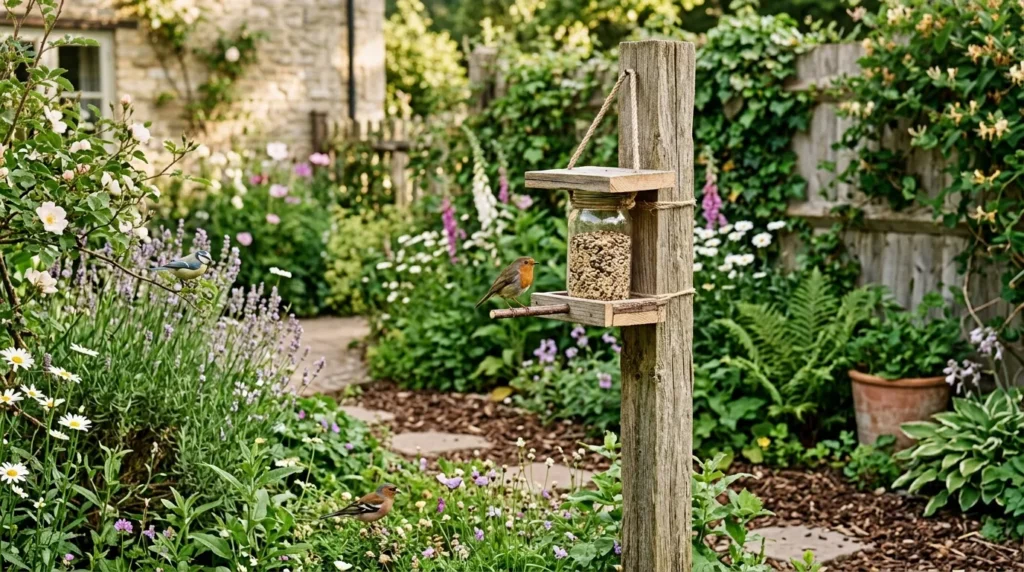
A suitable recycled container can be transformed into a simple bird-feeding station, giving your garden another layer of life and movement.
The best designs prioritize function over decoration. Birds need a stable feeding area, protection from unnecessary hazards, and appropriate food.
Material selection matters. Avoid containers that may have held chemicals or substances unsuitable for wildlife.
It’s also important to research bird-feeding practices appropriate to your region because poorly maintained feeders can contribute to disease transmission among birds.
How To Style It
Choose a clean, sturdy recycled container that can safely hold birdseed.
Create a stable feeding surface and secure the feeder so it won’t easily fall.
Place it where you can observe birds without creating unnecessary exposure to predators or other hazards.
Clean the feeder regularly and replace spoiled or wet food.
Use appropriate birdseed for species commonly found in your area.
A simple natural wood or neutral finish can help the feeder blend into the surrounding landscape.
Frequently Asked Questions
What household items can be recycled into garden projects?
Many household items can be repurposed, including clean food cans, suitable wooden pallets, glass jars, old furniture, leftover bricks, certain bottles, wood scraps, and appropriate containers. The important consideration is whether the material is safe and structurally suitable for outdoor use. Avoid unknown containers that previously held chemicals or hazardous substances.
What is the easiest recycled garden project for beginners?
Tin can planters and wooden plant markers are among the simplest options. Both require relatively little material and can be customized without advanced tools. Start with a small project, particularly if you’re new to DIY, and focus on safe preparation such as smoothing sharp edges and creating proper drainage.
Are recycled containers safe for growing vegetables?
It depends on the material and its previous use. Containers should be clean, structurally sound, and free from substances that could contaminate soil. Food-safe containers intended for growing can be a more straightforward choice. When you’re uncertain about a material’s history or composition, choose another container for edible plants.
How do I make recycled planters drain properly?
Most outdoor containers need drainage holes that allow excess water to escape. The number and size depend on the container and plant, but the principle is consistent: avoid waterlogged soil. Place containers where drainage won’t damage surfaces, and use an appropriate potting mix for the plants you’re growing.
Can old tires be used as garden planters?
Old tires can be used as decorative planters, particularly for ornamental flowers. However, because tires are not specifically designed as food-growing containers, many gardeners prefer to use them for non-edible plants. Clean the tires thoroughly and ensure they are stable, well-drained, and placed where they won’t create a safety hazard.
How can I make recycled garden projects look stylish?
Consistency makes a big difference. Choose a simple color palette, group similar containers together, repeat materials, and keep the surrounding garden tidy. Painting mismatched items in coordinated colors can also make a collection feel intentional. Natural materials such as weathered wood and brick can be left unfinished when their texture complements the landscape.
What should I avoid when reusing materials in the garden?
Avoid containers that previously held hazardous chemicals, unknown substances, or materials unsuitable for gardening. Be cautious with sharp metal, unstable structures, treated or contaminated wood, and materials that could leach unwanted substances into soil. Always inspect recycled materials before using them and prioritize safe construction over appearance.
Conclusion
DIY garden projects don’t have to begin with expensive supplies. Some of the most interesting outdoor features can come from materials that already exist in your home, garage, shed, or recycling pile.
An old can can become a herb planter. A suitable wooden pallet can provide vertical growing space. Leftover bricks can define a garden bed, while small pieces of wood can become useful plant markers.
The trick is to look at discarded objects differently.
Instead of asking whether something is still useful in its original form, consider whether its shape, material, or structure could serve another purpose. That mindset opens up plenty of possibilities without requiring a large DIY budget.
Start small. Choose one project that fits your garden and the materials you already have. Make sure every recycled material is clean, safe, stable, and appropriate for its intended use. Good drainage and secure construction matter just as much as appearance.
You also don’t need every project to match perfectly. A garden often feels more interesting when it contains a mixture of textures and materials. Reclaimed wood, weathered brick, painted metal, glass, and greenery can create a collected look that develops naturally over time.
Most importantly, let the garden work for you. Recycled projects are most successful when they solve a real problem, whether that’s adding planting space, organizing herbs, defining a path, attracting birds, or simply bringing personality to an outdoor corner.
Pick one forgotten item today and give it a second purpose. Your garden may already have more potential than you realize.
Related Articles
- 10 DIY Garden Projects That Add Instant Value
- 10 Garden Decor Ideas That Feel Like a Resort
- 10 Small Backyard Ideas for a Cozy Outdoor Space
- 10 DIY Garden Path Ideas for a Beautiful Yard
- 10 Easy Container Gardening Ideas for Beginners