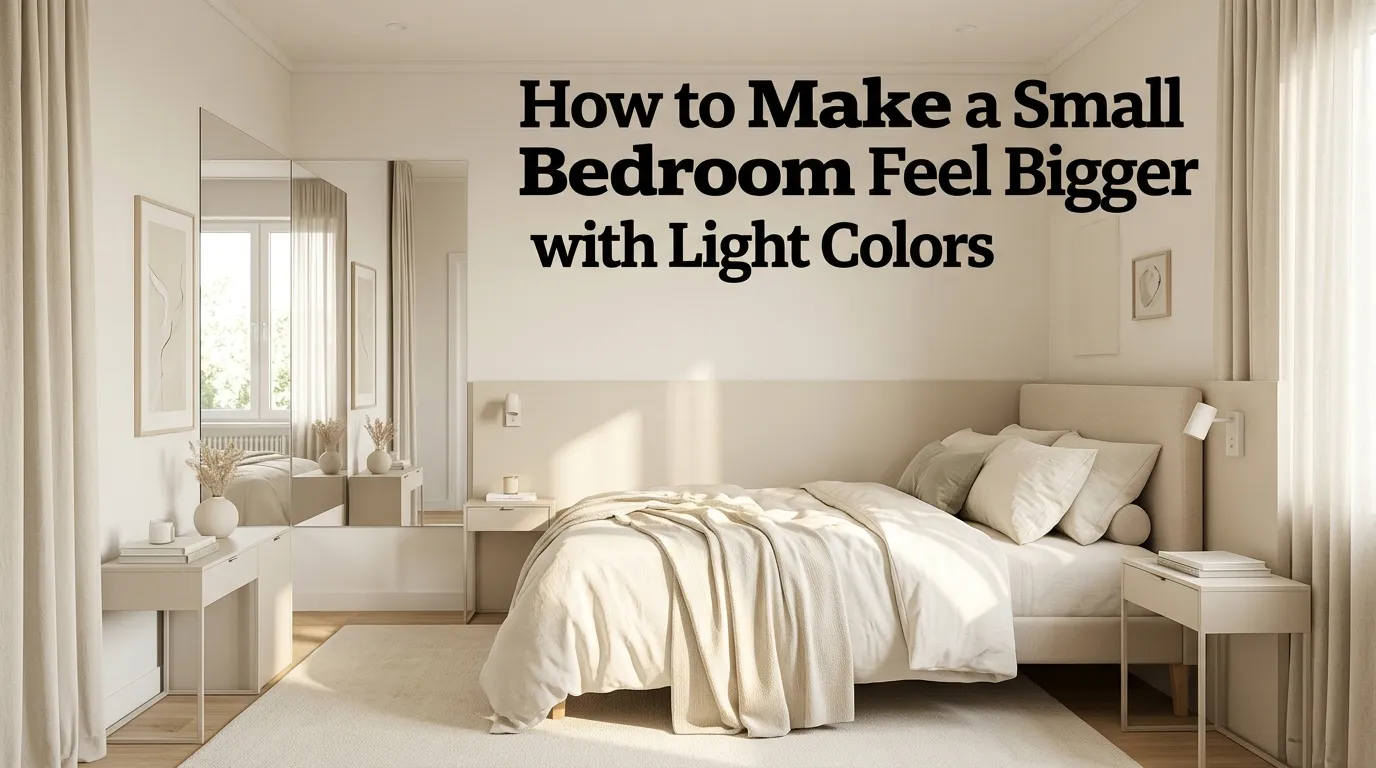
How to Make a Small Bedroom Feel Bigger with Light Colors
A small bedroom doesn’t have to feel cramped, dark, or difficult to decorate. One of the simplest ways to create a more open atmosphere is to use light colors strategically. Soft whites, warm creams, pale beige, light gray, muted blue, and gentle pastel shades can reflect natural and artificial light, helping the room feel brighter and more spacious.
But choosing a light paint color alone isn’t always enough.
A room can still feel visually crowded if dark furniture, heavy curtains, busy patterns, or too many contrasting accessories interrupt the lighter palette. The real secret is creating a sense of continuity, allowing colors to flow naturally from the walls to the bedding, furniture, flooring, and accessories.
I’ve noticed that small bedrooms often look their best when the color palette is intentionally limited. Instead of using several unrelated shades, choose two or three light tones and repeat them throughout the room. This creates visual calm and makes individual pieces feel less disconnected.
Light colors can also be surprisingly versatile. A warm white bedroom can feel cozy and classic, while pale blue creates a relaxed atmosphere. Soft beige brings warmth without making the room feel heavy, and pale gray can give a modern bedroom a crisp, sophisticated appearance.
You don’t have to replace everything to achieve the effect, either. Sometimes changing the bedding, adding a lighter rug, swapping heavy curtains for sheer panels, or painting one dark piece of furniture can make a noticeable difference.
The ideas below will help you use light colors thoughtfully so your bedroom feels brighter, calmer, and more spacious—without sacrificing warmth or personality.
Table of Contents
1. Warm White Walls
Use soft white walls to reflect light and create a seamless backdrop.
2. Soft Beige Layers
Add warmth through creamy beige bedding, rugs, and accessories.
3. Pale Blue Accents
Use gentle blue tones to create an airy and relaxing atmosphere.
4. Light Bedding
Keep the largest visual area of the room bright with pale bedding.
5. Sheer Window Treatments
Let more natural light enter with lightweight curtains and simple shades.
6. Pale Wood Furniture
Use light wood finishes to keep furniture visually soft and airy.
7. Light Area Rugs
Create visual continuity by choosing a rug in a pale neutral tone.
8. Monochromatic Palette
Use closely related light shades to make the room feel cohesive.
9. Soft Reflective Details
Use mirrors and subtle reflective finishes to distribute light.
10. Minimal Light Decor
Keep accessories simple and light to prevent visual heaviness.
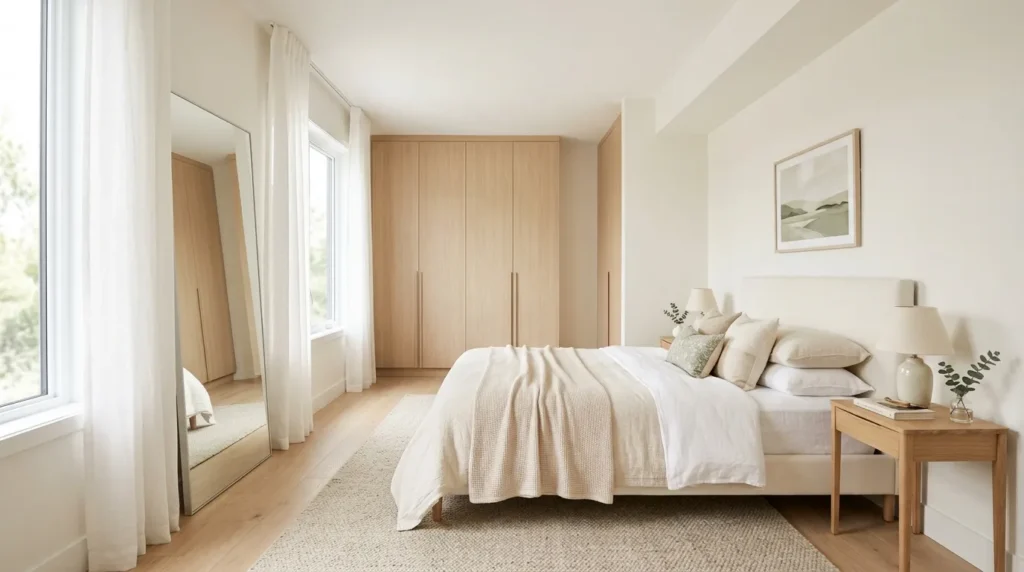
1. Warm White Walls
Quick Benefits
- Reflects natural light
- Creates a bright backdrop
- Makes furniture feel less heavy
- Works with many decorating styles
- Makes color layering easier
Why It Works
Walls occupy a huge portion of a bedroom’s visual field, so their color has a major influence on how large or small the space feels.
Warm white can make a compact room feel brighter without creating the stark appearance sometimes associated with pure white. It reflects available light while maintaining a soft, comfortable atmosphere.
The important distinction is choosing a white with the right undertone for your room. A warm white can work beautifully with beige, cream, natural wood, and soft brown. A cooler white may complement gray or blue accents.
Light walls also create visual continuity. When the wall color doesn’t strongly contrast with the furniture, the boundaries between surfaces can feel less dramatic.
How To Style It
Choose a warm white that works with the natural light in your bedroom.
Test paint samples at different times of day because colors can appear significantly different in morning, afternoon, and artificial evening light.
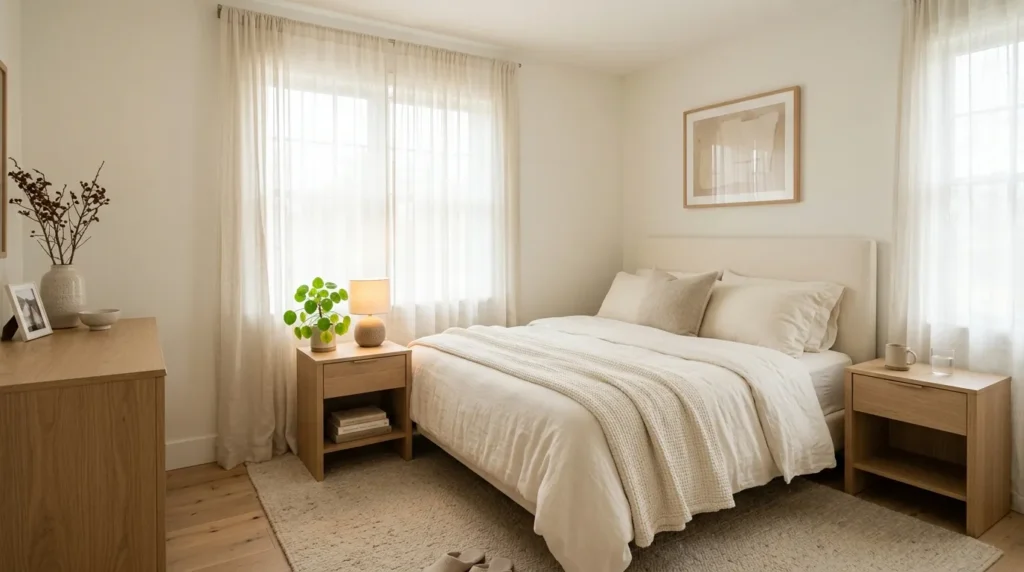
Pair the walls with cream bedding, pale wood, soft beige textiles, and simple artwork.
Avoid using too many bright whites with different undertones. They can sometimes look mismatched.
If you have dark furniture you want to keep, use light bedding and curtains to balance it rather than trying to eliminate every darker element.
2. Soft Beige Layers
Quick Benefits
- Adds warmth
- Creates a cozy atmosphere
- Keeps the palette light
- Works well with natural materials
- Makes white feel softer
Why It Works
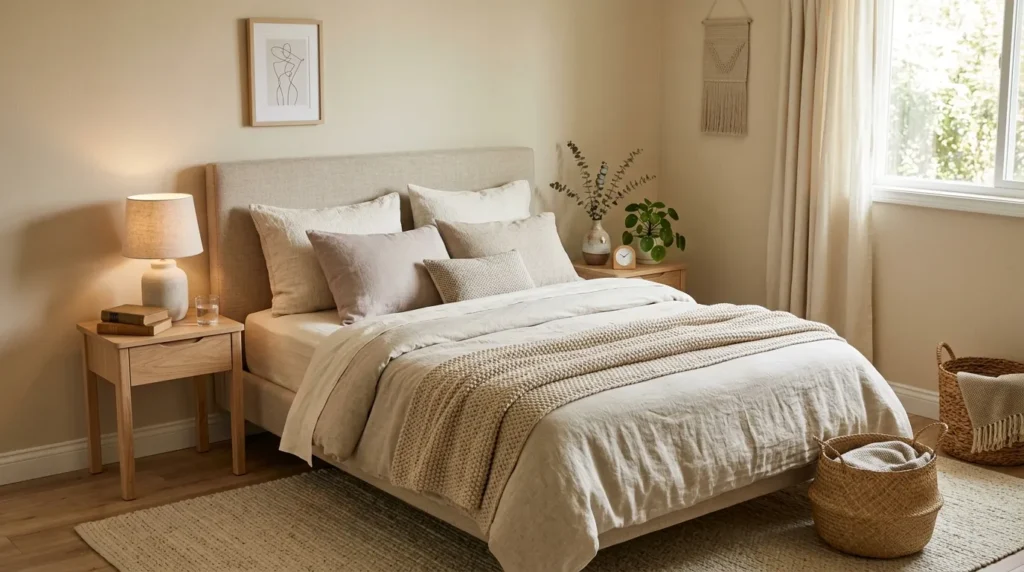
Beige is particularly useful when you want a small bedroom to feel larger without making it feel cold.
Soft beige reflects light while introducing warmth. It can be used across bedding, rugs, curtains, upholstery, and decorative accessories.
Layering several shades of beige can also create depth without introducing strong contrast.
Instead of making every item exactly the same color, combine ivory, cream, oatmeal, sand, and pale taupe.
The result is a monochromatic-inspired palette with enough variation to keep the bedroom from looking flat.
How To Style It
Begin with a warm white or very pale beige wall.
Add cream bedding and an oatmeal throw.
Use a slightly darker beige rug to create subtle definition.
Introduce natural wood through a nightstand, frame, or small bench.
Keep patterns understated. A small woven pattern or subtle stripe can add interest without disrupting the light palette.
If the room needs contrast, use small amounts of warm brown or soft charcoal rather than large dark furniture pieces.
3. Pale Blue Accents
Quick Benefits
- Creates an airy feeling
- Adds gentle color
- Works well with white
- Feels calm and relaxed
- Provides visual interest without heaviness
Why It Works
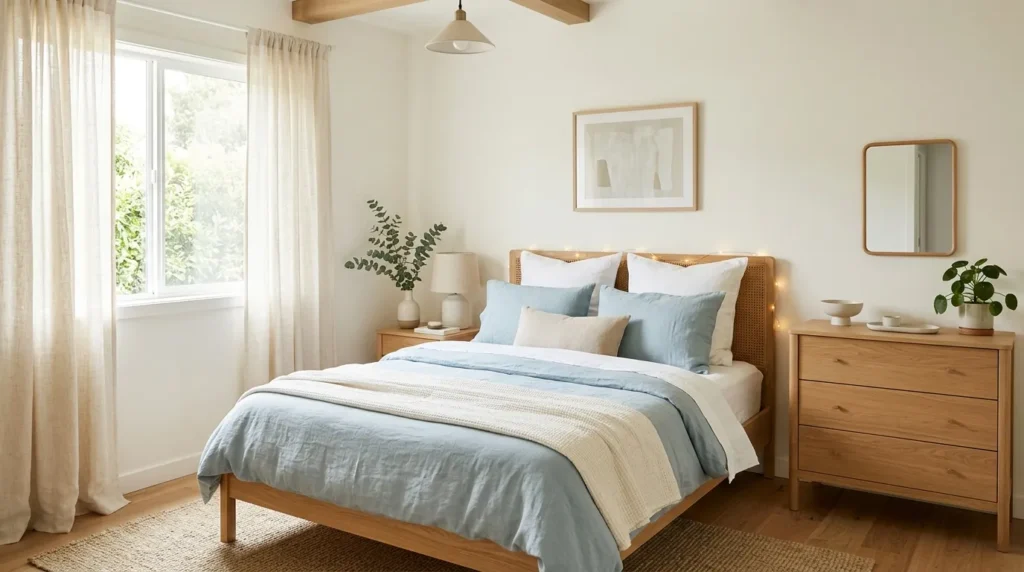
Pale blue can give a small bedroom a sense of openness while adding more personality than a completely neutral palette.
Soft blue often works particularly well with white, cream, light gray, and pale wood.
Because the shade is relatively light, it can introduce color without creating the strong visual boundaries that darker shades can produce.
A pale blue wall, duvet, accent pillow, or piece of artwork can become the subtle focal point of the room.
How To Style It
Pair pale blue with warm white rather than automatically choosing stark white.
Use blue selectively. For example, a pale blue duvet cover can become the primary color accent while the walls remain warm white.
Add natural wood to keep the room from feeling overly cool.
Soft gray can also work as a supporting neutral.
Avoid combining too many blue shades. One primary pale blue with a few related tones usually creates a more cohesive appearance.
4. Light Bedding
Quick Benefits
- Brightens the largest furniture piece
- Creates visual calm
- Makes the bed feel less bulky
- Easy to change
- Works with many wall colors
Why It Works
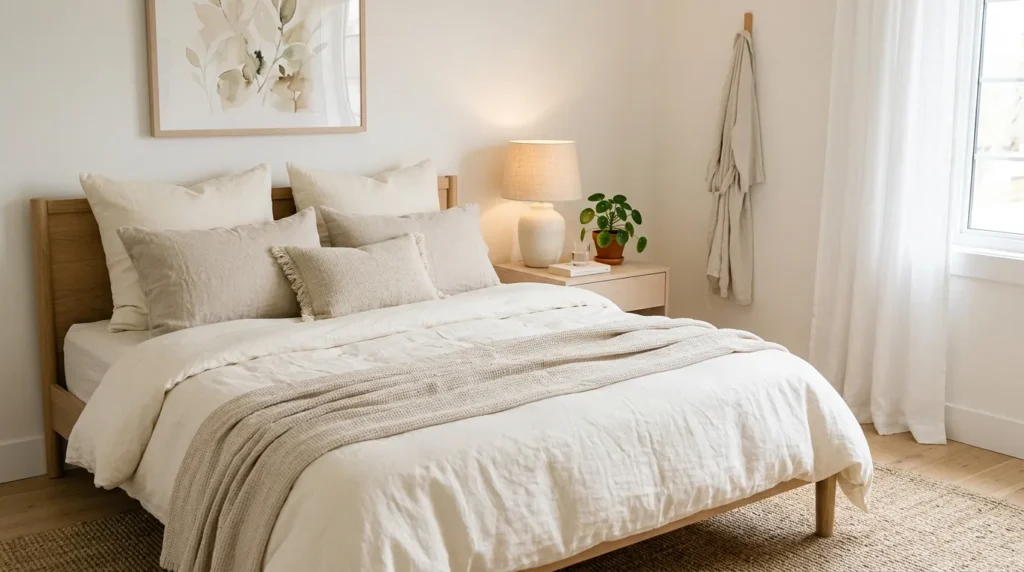
The bed is usually the largest object in a bedroom, which means its color can have a substantial effect on the room’s overall appearance.
Dark bedding creates a strong visual block, while lighter bedding tends to blend more gently with the surrounding walls and floor.
This doesn’t mean you have to choose completely plain white bedding. Texture can provide plenty of interest without introducing heavy visual contrast.
Linen, cotton, quilted fabrics, subtle stripes, and soft woven blankets can create depth while keeping the palette light.
How To Style It
Choose ivory, cream, light beige, pale gray, or soft blue bedding.
Layer two or three textures rather than several strong patterns.
Use a light duvet with slightly darker cream or beige pillows.
Add one muted accent color if desired.
Keep the bed relatively simple, especially in a very small room.
If you like darker colors, introduce them through a small lumbar pillow, artwork, or bedside accessory rather than making the entire bed dark.
5. Sheer Window Treatments
Quick Benefits
- Allows more daylight through
- Makes windows feel lighter
- Softens the room
- Adds privacy when appropriate
- Creates an airy appearance
Why It Works
Natural light can dramatically change how a small bedroom feels.
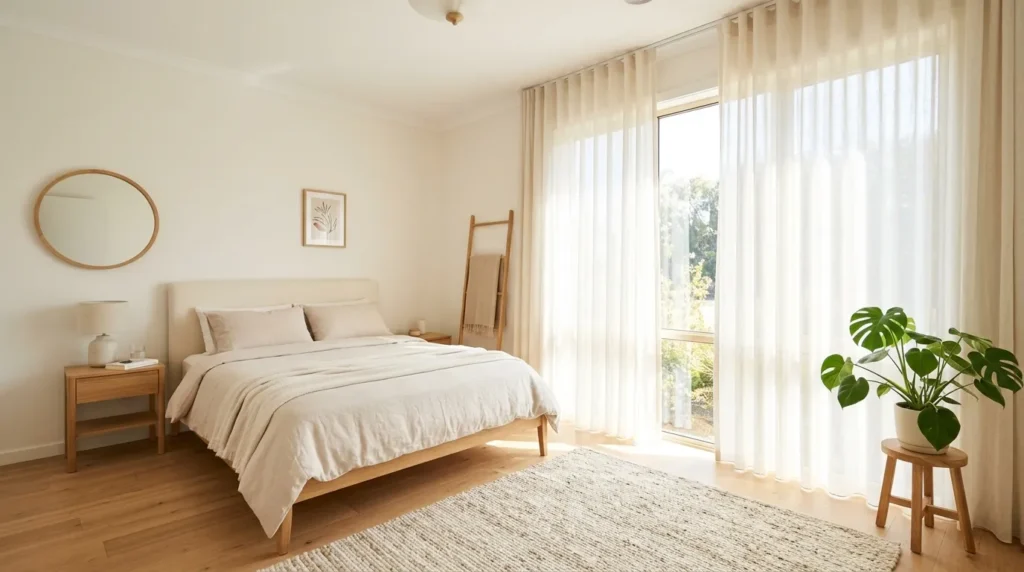
Heavy curtains in dark colors can visually frame the window with a large block of fabric. Lightweight curtains, by contrast, allow more light to enter and create a softer transition around the window.
Sheer or semi-sheer materials can also make a window appear larger when the curtain rod is positioned thoughtfully.
The goal isn’t necessarily to eliminate window coverings. It’s to choose a treatment that provides the privacy and light control you need without visually weighing down the room.
How To Style It
Choose curtains in white, ivory, cream, or very pale beige.
When appropriate, mount the curtain rod slightly above and wider than the window frame to create a more generous visual impression.
Let the fabric hang vertically rather than bunching it heavily around the window.
If you need stronger light control, combine a lightweight curtain with a suitable blind or shade.
Avoid large, high-contrast curtain patterns in a very small bedroom unless they’re a deliberate part of the design.
6. Pale Wood Furniture
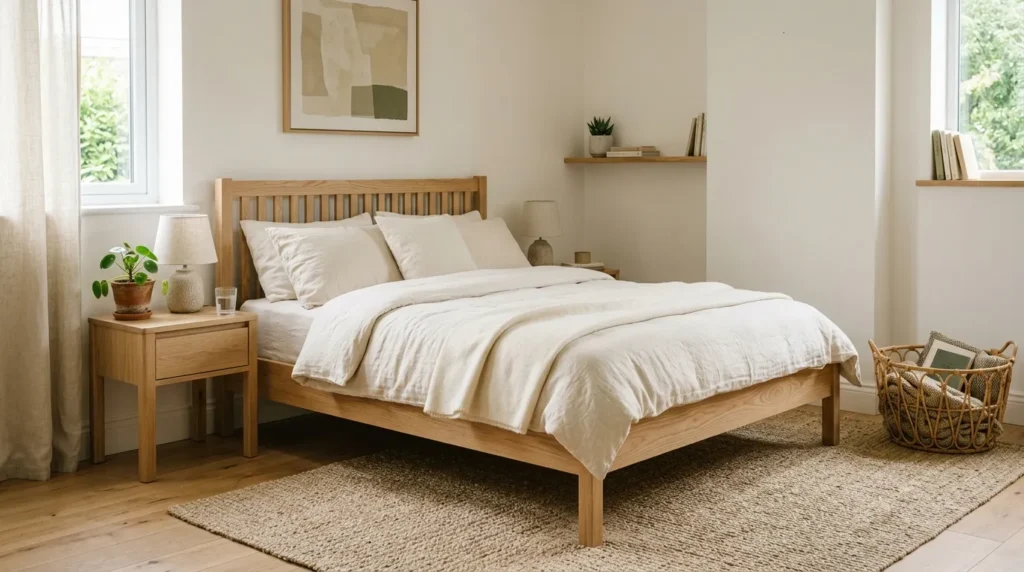
Quick Benefits
- Adds warmth
- Keeps furniture visually lighter
- Complements neutral colors
- Works with modern and Scandinavian styles
- Adds natural texture
Why It Works
Furniture can take up considerable visual space in a small bedroom.
Dark wood can create a strong contrast against light walls, while pale wood tends to blend more softly into the room.
Light oak, maple, ash, and similar finishes can introduce warmth without making the room feel heavy.
Natural wood grain also prevents an all-light palette from becoming visually flat.
How To Style It
Choose one or two light wood finishes and repeat them throughout the room.
A pale wood bed frame can be paired with a matching nightstand.
If your existing furniture is dark, you don’t necessarily need to replace it. Add lighter bedding, rugs, curtains, and accessories to reduce the visual dominance of the darker pieces.
Use wood alongside cream, white, beige, pale blue, or soft gray.
Avoid combining too many unrelated wood tones, particularly in a compact space.
7. Light Area Rugs
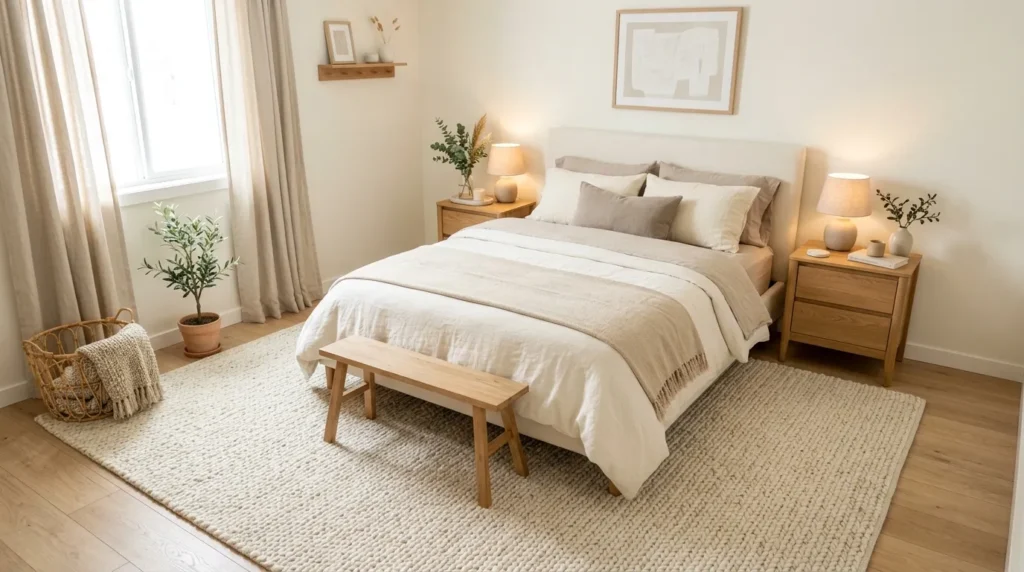
Quick Benefits
- Softens the floor
- Creates visual continuity
- Adds texture
- Makes furniture feel connected
- Brightens the lower part of the room
Why It Works
The floor is often overlooked when decorating a small bedroom.
A dark floor combined with dark furniture can create a heavy visual base. A light rug can soften that effect and create a transition between the furniture and floor.
The rug also introduces texture, which is especially valuable when working with a restrained color palette.
A light rug doesn’t need to be completely plain. Subtle patterns can add dimension while maintaining the airy appearance.
How To Style It
Choose cream, ivory, light beige, or pale gray.
Make sure the rug is large enough to visually connect the bed and surrounding furniture.
A rug that is too small can make the furniture arrangement feel fragmented.
For high-traffic areas, choose a material and color that fit your lifestyle. Very pale rugs may require more maintenance.
If you already have patterned bedding, choose a simpler rug.
8. Monochromatic Palette
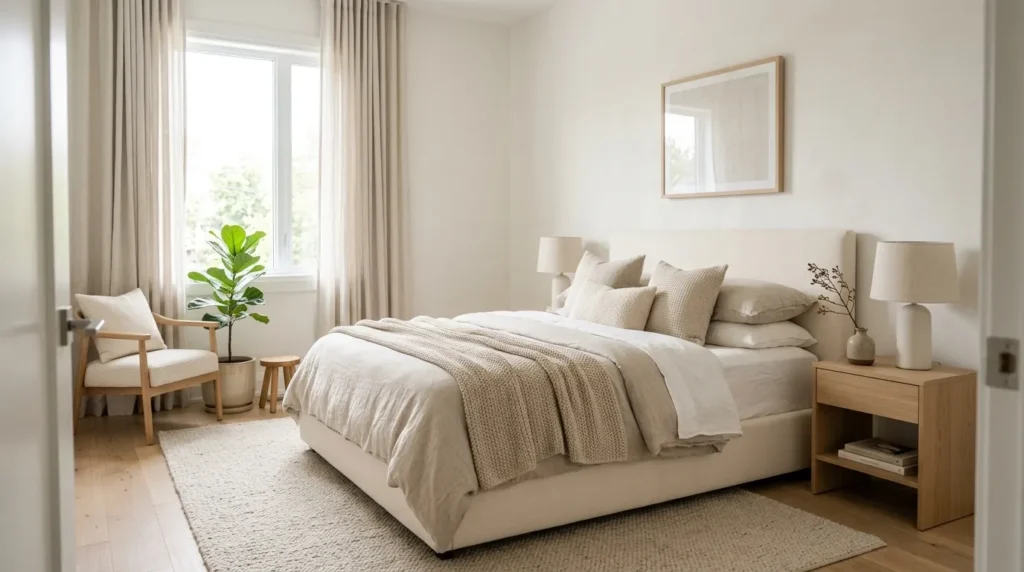
Quick Benefits
- Creates visual continuity
- Reduces strong contrast
- Makes the room feel calmer
- Easy to coordinate
- Works with many styles
Why It Works
A monochromatic bedroom doesn’t have to mean using one exact color everywhere.
Instead, work with several closely related shades.
For example, a cream bedroom might include warm white walls, ivory bedding, beige curtains, oatmeal textiles, and pale wood.
Because the colors are related, the eye moves smoothly around the room rather than stopping at strong visual boundaries.
This can be especially effective in small bedrooms where too many contrasting colors can make the space feel visually fragmented.
How To Style It
Choose one light base color.
Add two or three closely related shades.
Use texture to create variation.
For example:
- Warm white walls
- Cream bedding
- Oatmeal throw
- Pale beige rug
- Light oak furniture
Add greenery or a small amount of muted color for contrast if desired.
Avoid making every surface identical. The goal is continuity, not uniformity.
9. Soft Reflective Details
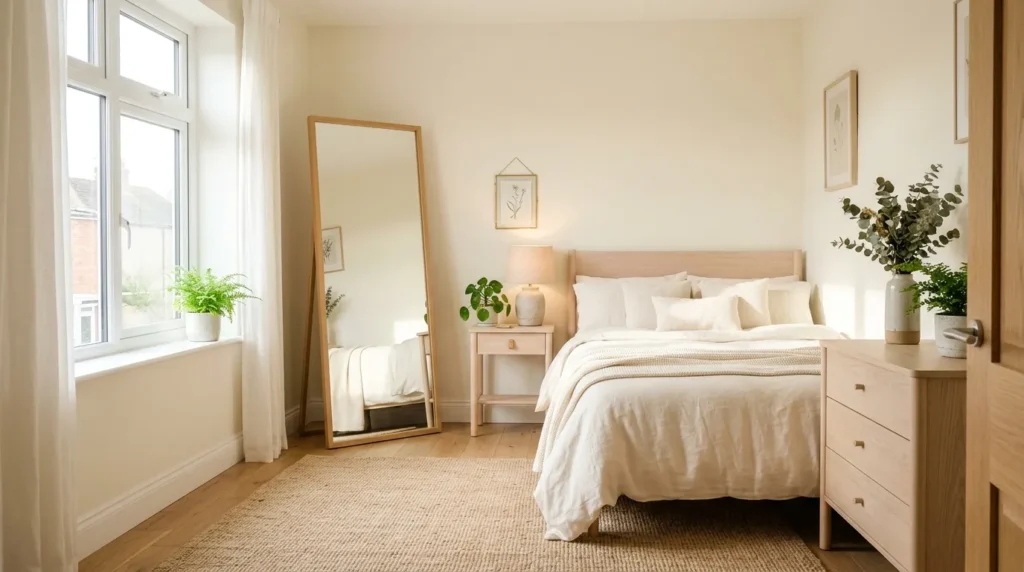
Quick Benefits
- Helps distribute light
- Adds visual depth
- Makes walls feel more open
- Adds elegance
- Works with light color palettes
Why It Works
Mirrors and subtle reflective surfaces can help bounce light around a small room.
A mirror placed opposite or near a source of natural light can reflect brightness and create the impression of another visual opening.
Reflective details don’t have to mean shiny furniture everywhere. A simple mirror, glass lamp base, polished ceramic object, or subtle metallic frame can introduce just enough reflection.
The key is using these elements thoughtfully rather than turning the bedroom into a collection of glossy surfaces.
How To Style It
Choose a mirror that is proportional to the wall.
A tall mirror can emphasize vertical space, while a wide mirror can visually expand a narrow wall.
Use light or simple frames to maintain the airy effect.
Place the mirror where it reflects something attractive, such as a window, artwork, or light-colored wall.
Avoid positioning it so it reflects clutter.
Keep other reflective accessories subtle.
10. Minimal Light Decor
Quick Benefits
- Reduces visual clutter
- Keeps the palette cohesive
- Makes surfaces feel open
- Simplifies cleaning
- Lets natural light become the focus
Why It Works
Light colors are most effective when the room isn’t overwhelmed by too many objects.
Even pale accessories can make a small bedroom feel crowded if every surface is covered.
A more minimal approach allows the colors and light to do their job.
Instead of decorating every shelf and nightstand, choose a few meaningful pieces and give them room to breathe.
This also creates a calmer visual environment, which is particularly valuable in a bedroom.
How To Style It
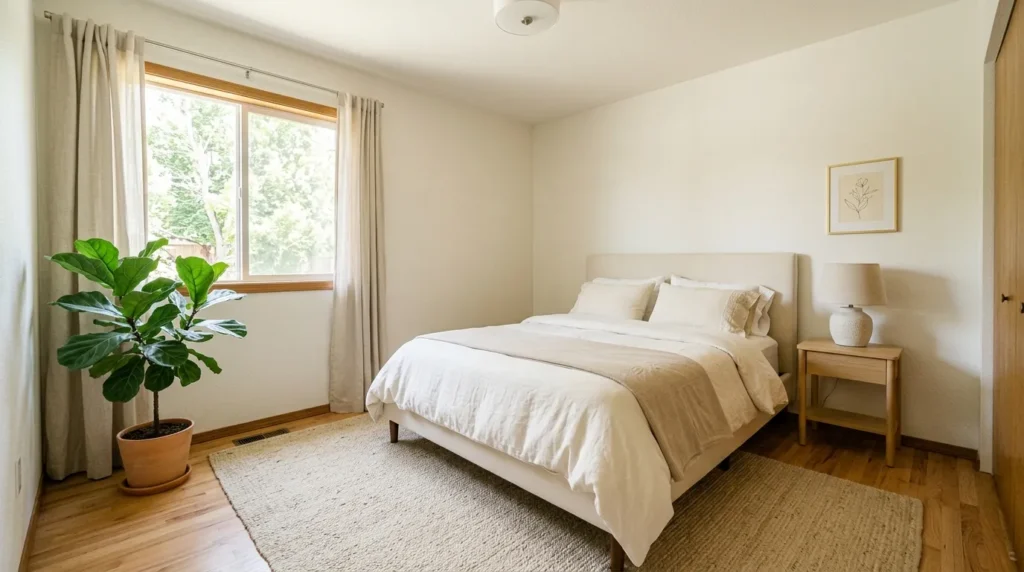
Keep the bedside table limited to useful essentials and one or two decorative pieces.
Choose artwork with a light background.
Use cream or beige baskets to contain smaller belongings.
Add one plant for a natural color accent.
Avoid placing multiple small objects together unless they’re intentionally grouped.
Step back after decorating and remove anything that feels unnecessary.
The room should feel finished—not filled.
Best Light Colors for a Small Bedroom
Several light shades can work beautifully in compact bedrooms.
Warm white: Ideal for a bright but comfortable atmosphere.
Cream: Softer than stark white and easy to combine with natural materials.
Pale beige: Adds warmth while maintaining an airy appearance.
Light gray: Works well in modern and contemporary rooms.
Pale blue: Adds gentle color while maintaining a relaxed feeling.
Soft sage: Introduces a subtle natural tone without becoming overpowering.
Blush pink: Can add warmth when used in a muted, dusty version.
The best choice depends on your natural light, flooring, furniture, and desired atmosphere.
How to Make a Small Bedroom Look Bigger Without Painting
You don’t necessarily need to repaint the walls.
Start with the largest visual elements.
Change dark bedding to cream or light beige.
Replace heavy curtains with lightweight panels.
Add a pale rug.
Use lighter bedding and pillows.
Introduce a large mirror in a suitable location.
Reduce clutter on visible surfaces.
If you have dark furniture, balance it with lighter textiles rather than replacing everything.
Even these smaller changes can create a noticeably brighter room.
How to Use Light Colors Without Making a Bedroom Feel Cold
An all-white bedroom can sometimes feel too stark if there isn’t enough texture.
The solution is layering.
Combine white with cream, beige, natural wood, woven materials, linen, cotton, wool, and greenery.
Warm lighting also makes a significant difference in the evening.
Instead of using many different colors, create interest through texture.
A chunky throw, woven basket, linen bedding, wooden nightstand, and ceramic lamp can make a pale room feel warm and inviting without sacrificing the spacious appearance.
Common Light-Color Decorating Mistakes
One common mistake is assuming that every surface needs to be white.
Too much stark white can make a bedroom feel flat or cold. Mixing warm neutrals usually creates more depth.
Another mistake is choosing paint without testing it in the actual room.
Natural and artificial lighting can dramatically change how a color appears.
Using too many contrasting accent colors can also defeat the purpose of a cohesive palette.
Finally, don’t overlook clutter. A room filled with belongings can still feel small regardless of its wall color.
Light colors work best when paired with thoughtful organization and simple styling.
FAQ
What colors make a small bedroom look bigger?
Light colors such as warm white, cream, pale beige, light gray, and soft blue can help create a brighter, more open appearance. The most effective choice depends on the room’s natural light and existing furniture. Using closely related light shades throughout the room can also reduce visual contrast and make the space feel more cohesive.
Is white the best color for a small bedroom?
White can work very well, but it isn’t the only option. Warm white, cream, pale beige, and light gray can create a similar sense of openness while adding more warmth or character. If you choose white, consider the undertone and how the paint looks in your room throughout the day.
How can I make a small bedroom look bigger without changing the furniture?
Focus on color and visual clutter. Use light bedding, pale curtains, a light rug, and a cohesive wall color. Remove unnecessary items from visible surfaces and consider adding a well-placed mirror. These changes can make existing furniture feel less visually dominant without requiring a complete room makeover.
What bedding colors are best for a small bedroom?
Cream, ivory, white, light beige, pale gray, and soft blue are excellent choices. These shades keep the largest visual element in the room relatively light. Add texture through linen, cotton, quilts, or woven blankets instead of relying on dark or busy patterns for visual interest.
Does light gray make a small bedroom look bigger?
Light gray can help create an airy appearance, particularly when combined with other pale colors. Choose a gray with an undertone that works with your flooring and natural light. Pair it with white, cream, pale wood, or soft blue to keep the room from feeling too cool.
Can beige make a small bedroom feel larger?
Yes. Pale beige can maintain a light appearance while adding warmth. It works particularly well when layered with cream, ivory, oatmeal, and natural wood. Avoid very dark or saturated beige shades if your goal is to create the brightest possible atmosphere.
How do I make a small bedroom brighter?
Maximize natural light with lightweight window treatments, use light colors on large surfaces, and keep windows unobstructed where practical. Mirrors can help reflect available light, while warm layered lighting can brighten the room after sunset. Reducing clutter also helps light move visually through the space.
Conclusion
Making a small bedroom feel bigger doesn’t require knocking down walls or replacing all your furniture.
Light colors can create a noticeable difference when they’re used as part of a complete visual strategy. Start with a soft wall color, then carry that lightness through bedding, curtains, rugs, furniture finishes, and accessories.
You don’t need everything to be white. Cream, pale beige, light gray, soft blue, and muted natural shades can all contribute to an airy bedroom while adding warmth and personality.
Pay attention to contrast, too. A few darker accents can provide definition, but keeping large furniture pieces and textiles relatively light can prevent the room from feeling visually heavy.
Natural light is equally important. Lightweight curtains, uncluttered windows, mirrors, and reflective details can help the available light travel through the space.
Most importantly, don’t overlook simplicity. A small bedroom will usually feel more spacious when it has fewer visual interruptions and a clear, cohesive palette.
Start with one change—perhaps light bedding or sheer curtains—and build from there. With a thoughtful combination of color, texture, lighting, and organization, even a compact bedroom can feel bright, comfortable, and surprisingly open.
Related Articles
- How to Organize a Small Bedroom Without Extra Cabinets
- How to Make a Small Bedroom Feel Open with Smart Layouts
- 10 Small Bedroom Storage Ideas for a Clutter-Free Space
- How to Decorate a Bedroom with Elegant Decor
- 10 Cozy Bedroom Ideas with Neutral Colors