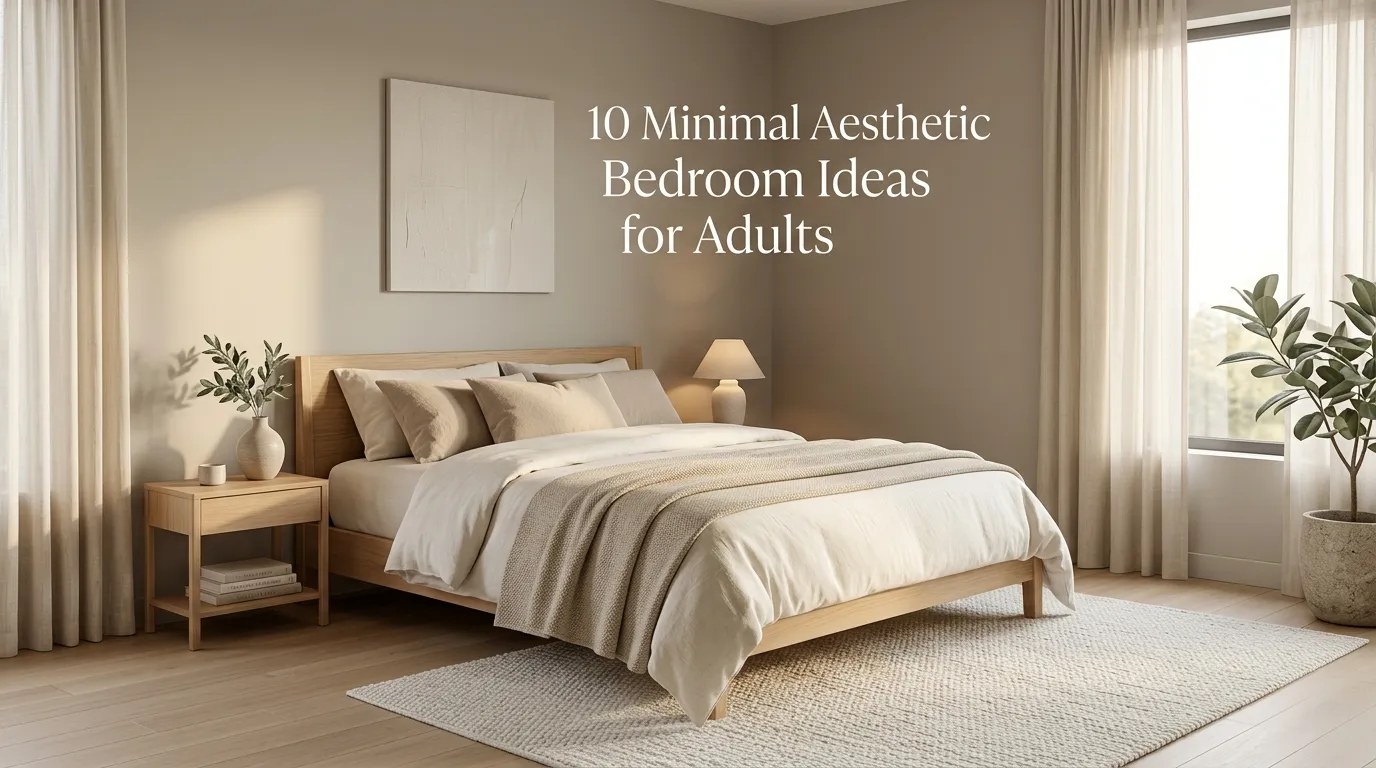
10 Minimal Aesthetic Bedroom Ideas for Adults
A bedroom should feel like a place where the day naturally slows down. For many adults, that means moving away from overly decorated spaces and creating a room with fewer distractions, softer colors, comfortable materials, and furniture that serves a clear purpose.
Minimal bedroom design is often misunderstood as a room with almost nothing in it. In reality, a minimalist bedroom can feel warm, layered, and deeply personal. The difference is that every element has been chosen intentionally.
A well-designed minimal bedroom doesn’t require expensive furniture or a complete renovation. Sometimes the biggest change comes from simplifying the visual background. Removing unnecessary decor, choosing coordinated bedding, reducing competing colors, and giving furniture enough breathing room can make a room feel calmer almost immediately.
I’ve noticed that adult bedrooms tend to work especially well when comfort comes before decoration. A beautiful bed that isn’t comfortable, harsh lighting, or storage that doesn’t match your routine can quickly make even a stylish room frustrating to use.
The most successful minimalist spaces balance clean lines with tactile materials. Think linen bedding, natural wood, soft rugs, woven baskets, subtle artwork, and warm lighting. These details prevent a restrained room from feeling cold or unfinished.
You also don’t have to follow one strict aesthetic. Minimalism can be warm and organic, modern and sophisticated, Scandinavian-inspired, earthy, or even slightly luxurious. What matters most is keeping the overall composition simple enough that the room feels restful.
If you’re refreshing your bedroom, start by considering what you actually need around you at night. Then build the room around those essentials.
The ideas below can help you create an adult bedroom that feels polished, comfortable, and intentionally uncluttered without sacrificing personality.
Table of Contents
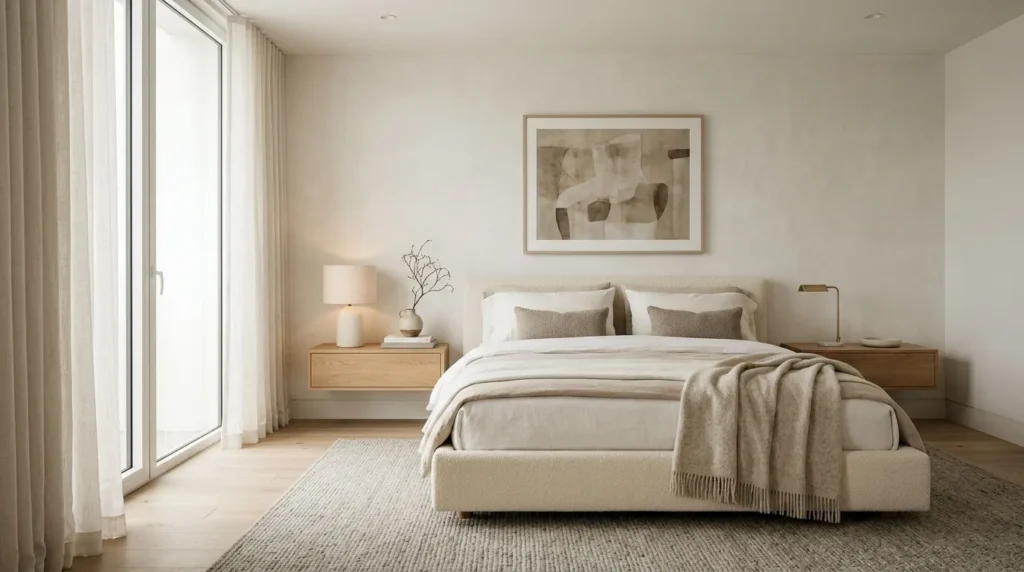
1. Warm Neutral Palette
Create a calming foundation with layered creams, beige, taupe, and warm natural tones.
2. Low Profile Bed
Use simple furniture with a lower silhouette to create an open, contemporary feeling.
3. Linen Bedding Layers
Add softness and texture without overwhelming the room with patterns.
4. Natural Wood Accents
Introduce warmth through understated wood furniture and accessories.
5. Soft Ambient Lighting
Use warm, layered lighting to make the bedroom feel relaxing at night.
6. Minimal Wall Art
Choose a few intentional pieces instead of filling every wall.
7. Streamlined Nightstands
Keep bedside surfaces practical, clean, and visually quiet.
8. Textured Neutral Rug
Add softness and warmth while maintaining a restrained color palette.
9. Hidden Storage
Keep everyday clutter out of sight with practical, integrated storage.
10. Organic Minimal Retreat
Combine neutral colors, natural textures, greenery, and simple furniture for a warm finish.
1. Warm Neutral Palette
Quick Benefits
- Creates a calm foundation
- Makes rooms feel visually cohesive
- Works with many furniture styles
- Easy to update seasonally
- Helps small bedrooms feel less busy
Why It Works
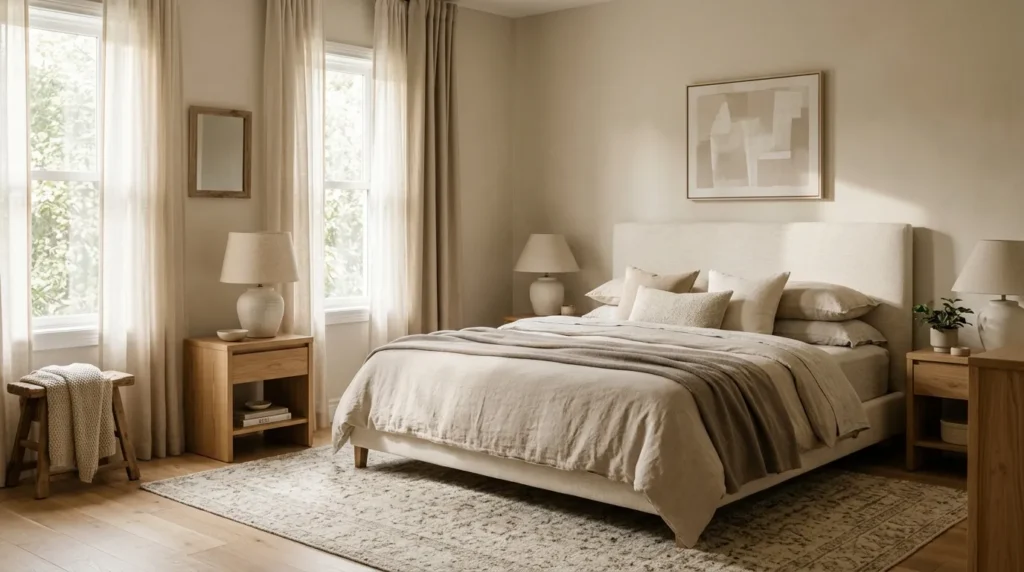
A restrained color palette is one of the easiest ways to create a minimal aesthetic bedroom. Instead of using several unrelated colors, work with a small family of shades that complement each other.
Warm whites, cream, beige, taupe, oatmeal, and soft brown can create depth without visual noise. The result feels sophisticated while remaining comfortable.
The key is avoiding a completely flat color scheme. Different shades and textures give neutral bedrooms dimension.
For example, cream bedding can sit against a warm white wall, while a taupe throw and natural wood nightstand add subtle contrast.
How To Style It
Start with the largest surfaces: walls, bedding, curtains, and rug.
Choose one dominant neutral and two or three supporting shades.
Instead of adding color through numerous decorative objects, introduce variation through materials.
Try linen bedding, a wool-look rug, woven baskets, wood furniture, and ceramic accessories.
If you want a small accent color, muted olive, dusty blue, terracotta, or warm charcoal can work beautifully.
Keep bright colors limited so the room retains its calm visual character.
2. Low Profile Bed
Quick Benefits
- Creates an airy appearance
- Works well in modern bedrooms
- Emphasizes clean lines
- Can make ceilings feel taller
- Keeps the room visually simple
Why It Works
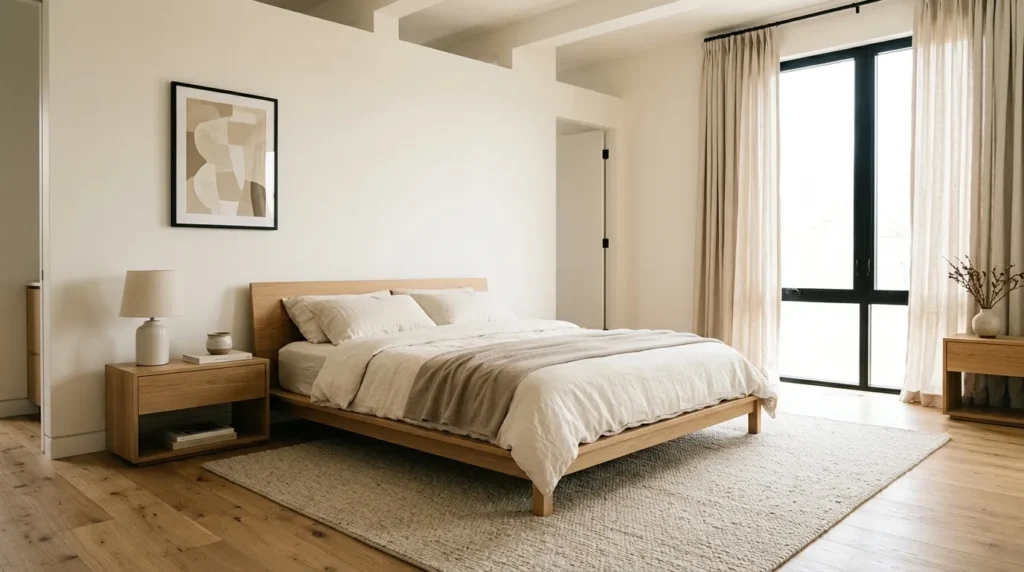
Furniture scale has a major effect on how a bedroom feels. A low-profile bed can create more visual space between the furniture and ceiling, especially when the surrounding pieces are similarly streamlined.
The style works particularly well in modern, Japanese-inspired, Scandinavian, and organic minimalist bedrooms.
A low bed doesn’t have to mean an uncomfortable or extremely sparse design. You can still create a welcoming focal point with layered bedding, pillows, and a textured throw.
How To Style It
Choose a bed frame with simple lines and minimal ornamentation.
Natural wood, upholstered neutrals, or matte finishes can all work.
Keep the area around the bed relatively open.
Instead of placing bulky furniture on both sides, use compact nightstands or floating shelves if your layout allows.
Layer the bed with a fitted sheet, duvet, one or two pillows, and a folded throw.
Avoid filling the floor around the bed with baskets and accessories. Negative space is part of the design.
3. Linen Bedding Layers
Quick Benefits
- Adds natural texture
- Creates a relaxed appearance
- Works with neutral colors
- Feels casual but refined
- Easy to refresh
Why It Works
Minimal rooms need texture to prevent them from looking flat. Bedding is one of the easiest places to introduce it.
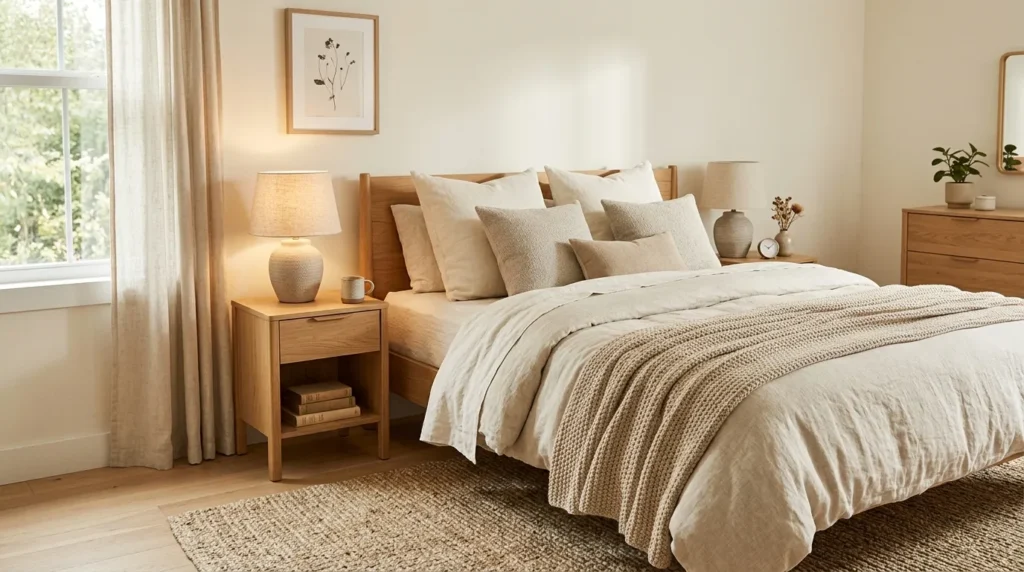
Linen, cotton, quilted fabrics, and softly textured blankets can create depth without relying on bold patterns.
A slightly relaxed bed can also feel more inviting than bedding arranged with excessive precision. The goal is polished comfort rather than a showroom appearance.
How To Style It
Start with neutral bedding in cream, white, oatmeal, beige, or soft gray.
Layer different materials rather than multiple patterns.
For example, combine cotton sheets with a linen duvet and a textured throw.
Use a limited number of pillows. Two sleeping pillows plus one or two decorative cushions may be enough.
Fold a lightweight blanket across the lower third of the bed.
Allow some natural softness in the bedding rather than trying to make every corner perfectly symmetrical.
4. Natural Wood Accents
Quick Benefits
- Adds warmth to neutral rooms
- Introduces organic texture
- Works with minimalist furniture
- Creates visual contrast
- Ages beautifully
Why It Works
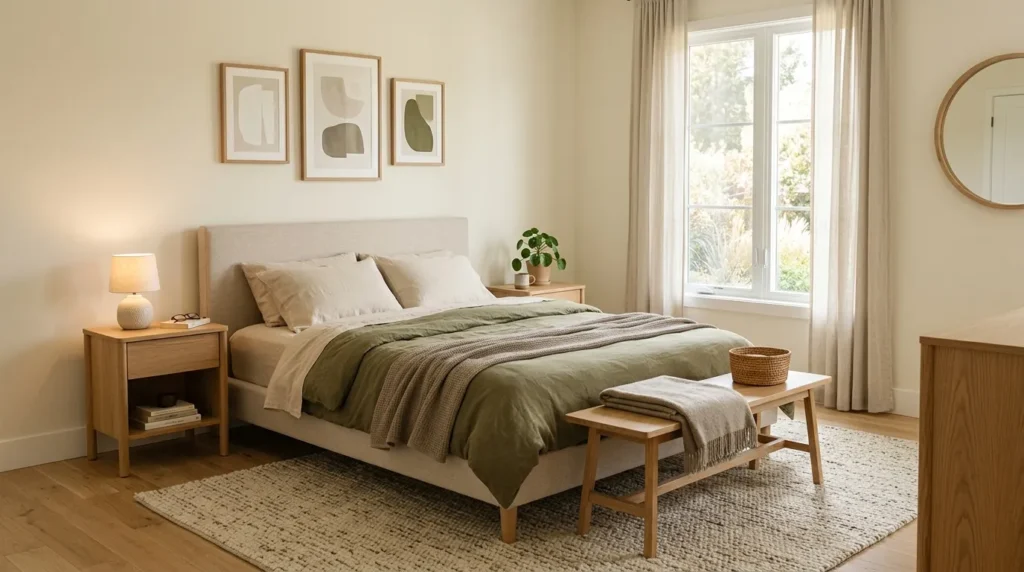
Minimalist bedrooms can sometimes feel overly cool when everything is white, gray, metal, or glossy. Natural wood provides warmth without adding visual clutter.
Wood also introduces subtle variation through grain, knots, and natural color differences.
You don’t need a complete wooden bedroom set. One or two carefully chosen pieces can be enough.
How To Style It
Choose one primary wood tone and repeat it subtly.
A light oak nightstand might coordinate with a wooden bench, picture frame, or small shelf.
Avoid mixing too many unrelated wood finishes in a small room.
If your bedroom already has wood flooring, choose furniture that complements rather than exactly matches it.
Keep accessories simple. A ceramic lamp, small vase, or woven basket can soften the harder lines of wooden furniture.
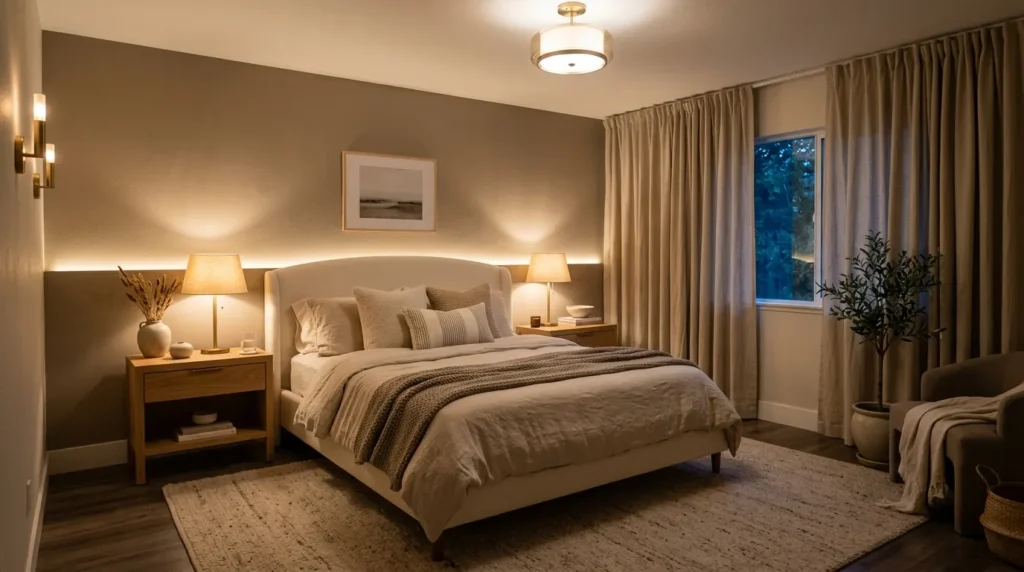
5. Soft Ambient Lighting
Quick Benefits
- Creates a relaxing evening mood
- Reduces harsh overhead light
- Adds visual warmth
- Makes neutral colors richer
- Improves the bedroom’s atmosphere
Why It Works
Lighting can completely change how a minimalist bedroom feels after sunset.
A single overhead fixture can make a room feel functional but harsh. Layered lighting allows you to create a softer environment for winding down.
Bedside lamps, wall sconces, dimmable fixtures, and subtle accent lighting can each serve a purpose.
Warm light generally complements neutral bedding and natural materials beautifully.
How To Style It
Start with practical bedside lighting.
Choose lamps or sconces that provide enough illumination for reading without dominating the nightstand.
Add a ceiling fixture for general lighting and use dimming capability where appropriate.
Avoid filling the room with decorative lights simply for the sake of layering.
The goal is controlled illumination.
Use warm-toned bulbs where appropriate and position lighting so it creates a gentle glow rather than shining directly into your eyes.
6. Minimal Wall Art
Quick Benefits
- Personalizes the room
- Creates a focal point
- Keeps walls visually calm
- Works with neutral decor
- Easy to change
Why It Works
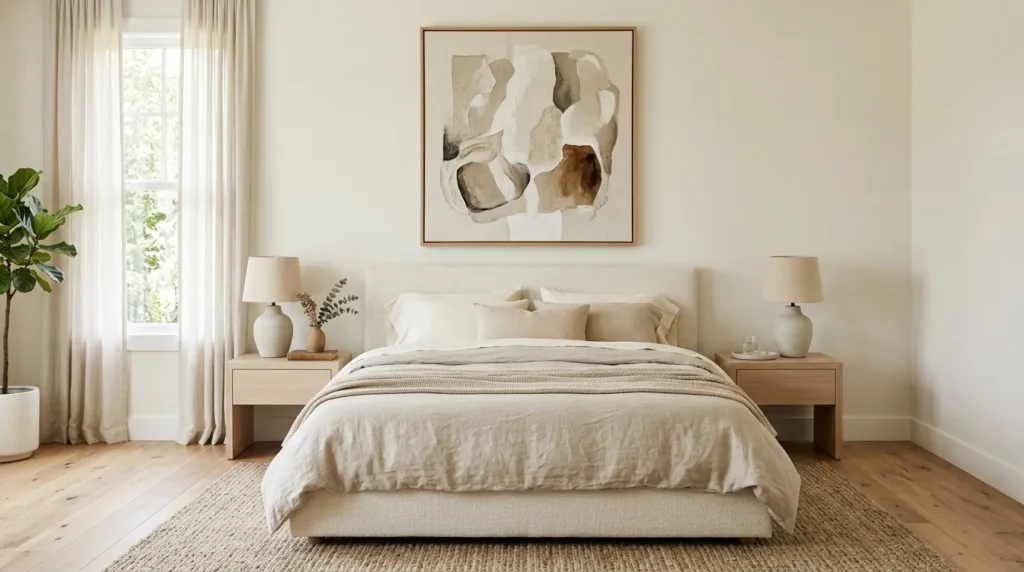
Minimalism doesn’t mean leaving every wall completely empty. A carefully chosen artwork can give a bedroom personality while maintaining the overall sense of calm.
The trick is scale and restraint.
One large piece above the bed can often have more impact than several small pieces scattered around the room.
Abstract forms, botanical illustrations, photography, simple line drawings, and understated landscapes can all work.
How To Style It
Choose artwork that relates to the room’s existing palette.
If your bedding is cream and beige, consider art using warm neutrals, muted green, brown, or charcoal.
Use a simple frame in wood, black, white, or another finish already present in the room.
Avoid hanging artwork too high above the bed.
For a larger wall, consider one oversized piece or a small, coordinated pair rather than filling the entire surface.
Leave plenty of empty wall space around the artwork.
7. Streamlined Nightstands
Quick Benefits
- Reduces bedside clutter
- Improves daily functionality
- Creates visual balance
- Makes cleaning easier
- Supports a minimalist look
Why It Works
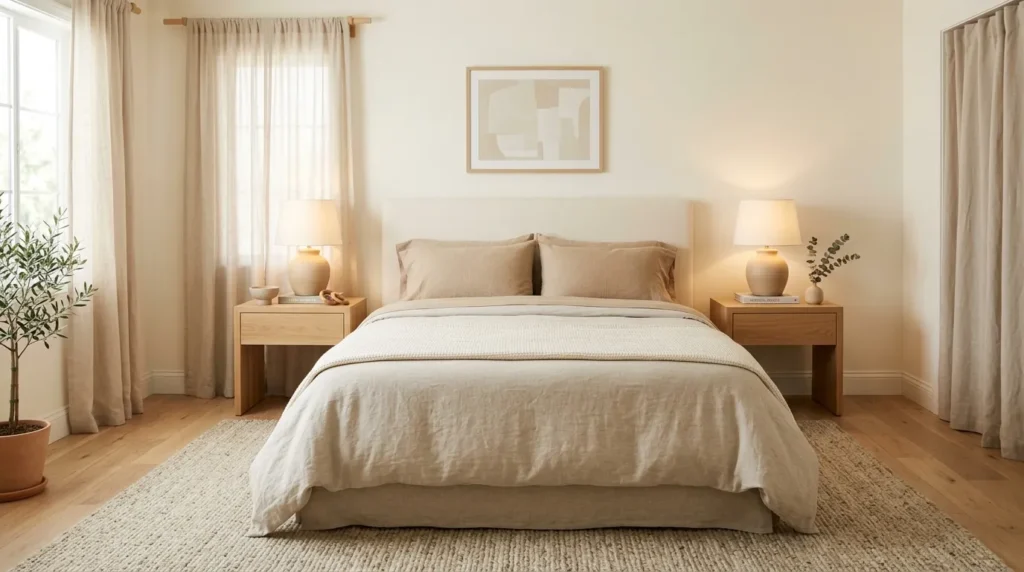
Nightstands are small pieces of furniture, but they can quickly become clutter magnets.
Receipts, charging cables, books, skincare products, water bottles, and miscellaneous objects can accumulate within days.
A minimalist bedroom works better when the nightstand supports your routine without becoming another storage pile.
How To Style It
Choose a nightstand with enough surface area for your essentials but not so much that it encourages accumulation.
Keep only a few items visible:
- A lamp
- A book
- A small clock if needed
- A simple decorative object
Use drawers for less attractive essentials.
Cable management can make a surprisingly noticeable difference.
If you have two nightstands, they don’t necessarily need to be identical, but keeping their visual weight similar can help the room feel balanced.
8. Textured Neutral Rug
Quick Benefits
- Adds warmth underfoot
- Softens hard flooring
- Defines the bed area
- Introduces texture
- Enhances neutral colors
Why It Works
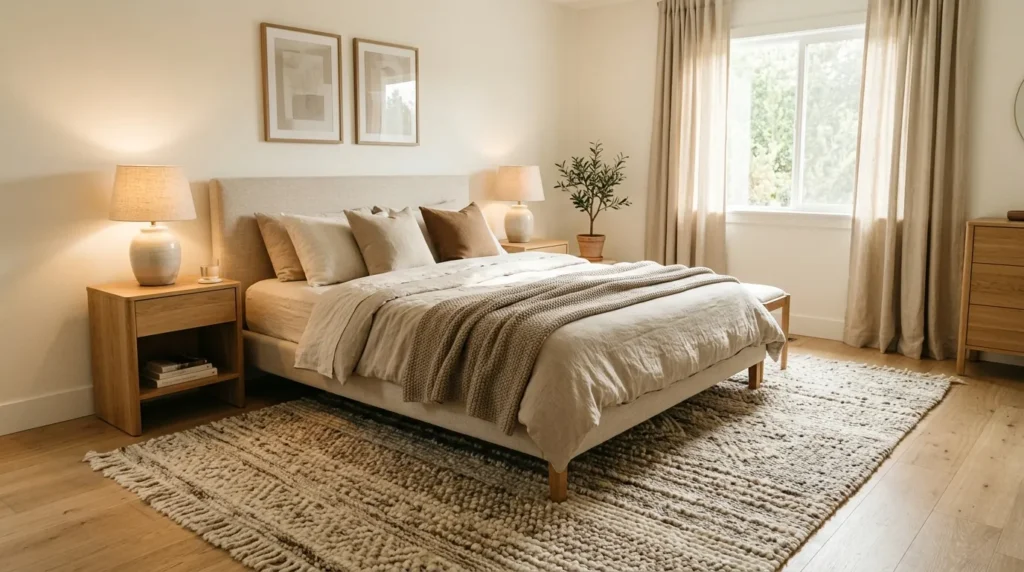
A rug can anchor the bedroom and make a minimalist space feel more comfortable.
Texture becomes particularly important when your palette is restrained. A woven, wool-look, boucle-style, or subtly patterned rug can provide interest without introducing strong visual competition.
Scale matters more than intricate pattern.
A rug that is too small can make the bedroom feel disconnected, while an appropriately sized rug can visually connect the bed and surrounding furniture.
How To Style It
Choose a neutral rug in cream, beige, taupe, soft gray, or another shade that relates to your bedding.
Position it so that it extends beyond the sides of the bed.
If the room is small, a runner or strategically placed smaller rug may work better depending on the layout.
Avoid combining several competing rug patterns.
Let the texture provide the visual interest.
9. Hidden Storage
Quick Benefits
- Reduces visible clutter
- Makes cleaning easier
- Improves functionality
- Keeps surfaces clear
- Supports a calm atmosphere
Why It Works
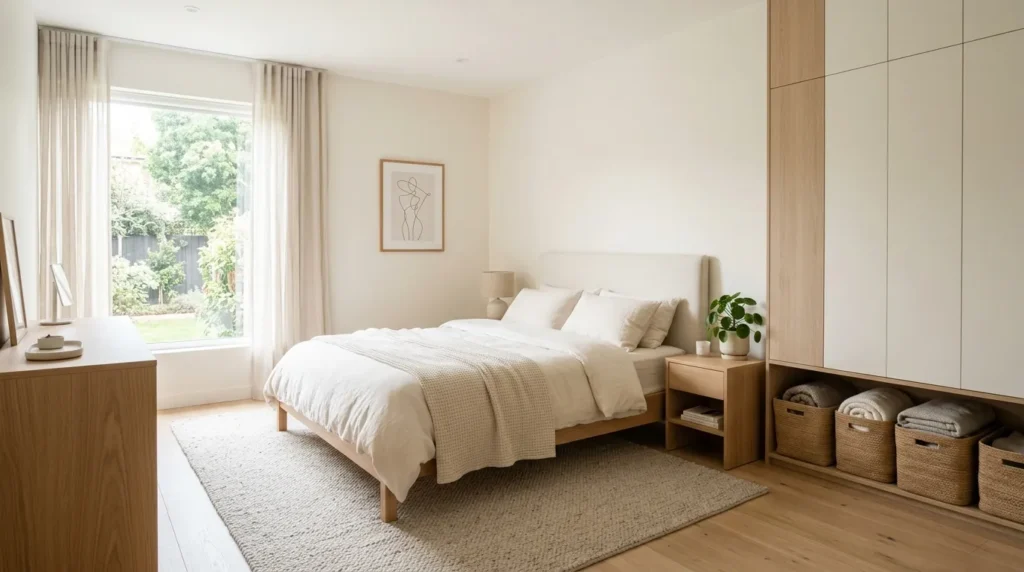
One of the biggest differences between a minimalist-looking bedroom and a cluttered one isn’t necessarily the number of belongings. It’s how many of those belongings are visible.
Hidden storage lets you keep useful items accessible without allowing them to dominate the room visually.
This is especially valuable in adult bedrooms where clothing, electronics, paperwork, accessories, and personal items can accumulate.
How To Style It
Look for storage opportunities that already exist in the room.
Use under-bed storage for seasonal items where appropriate.
Choose nightstands with drawers rather than completely open shelving if hidden storage is a priority.
Use baskets inside closets or wardrobes to contain smaller belongings.
Avoid buying storage containers simply to store items you don’t need. Declutter first, then organize what’s left.
The most effective storage system is one that’s easy enough to maintain every day.
10. Organic Minimal Retreat
Quick Benefits
- Combines simplicity with warmth
- Adds natural texture
- Creates a relaxing atmosphere
- Works in modern homes
- Feels personal without clutter
Why It Works
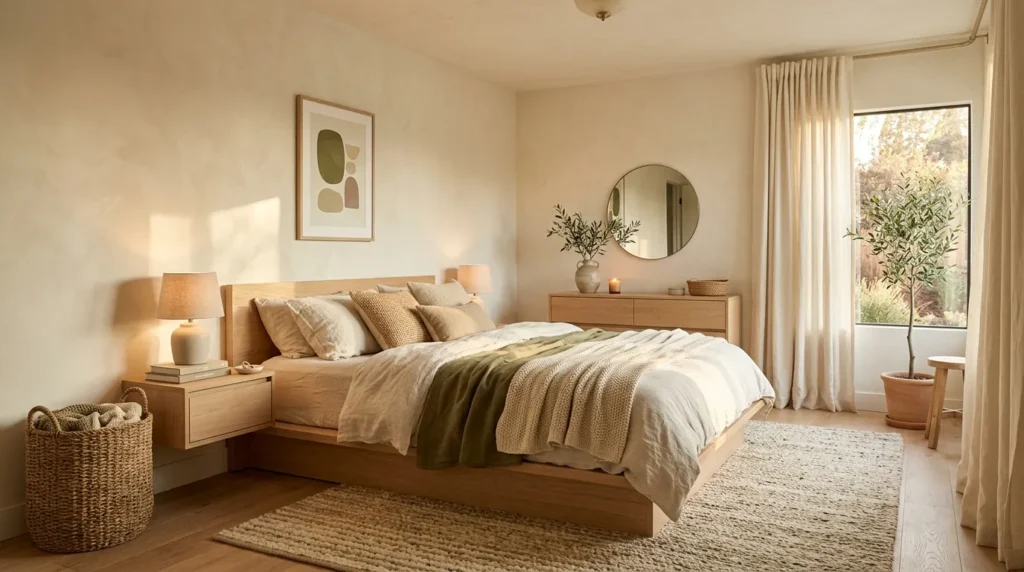
If a traditional minimalist bedroom feels too stark, organic minimalism offers a softer alternative.
The style combines simple furniture with natural materials, warm neutrals, tactile textiles, and restrained greenery.
The result is uncluttered but not sterile.
Think of the room as a collection of natural textures rather than a collection of decorations.
How To Style It
Start with a warm neutral wall color and simple bed frame.
Add linen or cotton bedding in cream and oatmeal.
Introduce natural wood through nightstands, a bench, or picture frames.
Use one or two plants suited to your bedroom’s light and care conditions.
Add a woven basket, ceramic vase, or textured rug.
Keep decorative objects intentionally limited.
The finished room should feel comfortable enough for everyday life rather than so carefully styled that you’re afraid to use it.
Frequently Asked Questions
What makes a bedroom look minimalist?
A minimalist bedroom typically uses a restrained color palette, simple furniture, limited visible accessories, and plenty of open space. The goal isn’t to remove everything but to reduce unnecessary visual distractions. Comfortable textiles, natural materials, and thoughtful lighting can keep the room warm while maintaining clean lines.
How can I make my bedroom aesthetic without buying lots of decor?
Start with what you already have. Remove unnecessary items, rearrange furniture to improve flow, coordinate bedding colors, clear nightstand surfaces, and improve lighting. Adding one large piece of artwork, a textured rug, or a natural material such as wood can have more impact than purchasing many small decorative objects.
What colors are best for a minimalist adult bedroom?
Warm white, cream, beige, taupe, oatmeal, soft gray, and muted earth tones are versatile choices. If you want color, consider restrained shades such as sage, dusty blue, muted terracotta, or olive. The key is creating a cohesive palette rather than using many unrelated colors.
How do I keep a minimalist bedroom from feeling cold?
Use texture and natural materials. Linen bedding, wool-look rugs, wood furniture, woven baskets, ceramic accessories, and warm lighting can make a simple room feel comfortable. Warm neutrals generally create more softness than stark white and cool gray combinations.
How many decorative items should be in a minimalist bedroom?
There isn’t a fixed number. Instead, choose items based on usefulness and personal meaning. A few carefully selected pieces often have more visual impact than many small accessories. If surfaces regularly become cluttered, that’s usually a sign that the room needs fewer visible objects or better storage.
Can a small bedroom have a minimalist aesthetic?
Yes. Minimalism can be particularly useful in a small bedroom because fewer pieces of furniture and less visual clutter can make the space feel more open. Choose furniture that fits the scale of the room, use vertical or hidden storage, and maintain clear pathways around the bed.
How do I make my bedroom feel luxurious and minimalist?
Focus on quality-looking textures, good proportions, comfortable bedding, warm lighting, and restraint. Layer natural fabrics, choose coordinated colors, use simple furniture, and leave enough negative space around major pieces. Luxury doesn’t require excessive decoration; thoughtful materials and a cohesive design often create a more refined result.
Conclusion
A minimal aesthetic bedroom doesn’t have to feel empty, cold, or overly styled. The most comfortable versions combine simplicity with warmth, texture, and everyday practicality.
Start by choosing a small color palette and removing anything that doesn’t contribute to the room. Then focus on the pieces that matter most: a comfortable bed, useful storage, appropriate lighting, and soft textiles.
Natural wood can add warmth, linen can add texture, and a simple piece of artwork can give the room personality without creating visual noise. Even something as small as clearing your nightstand can make the entire bedroom feel calmer.
If your current bedroom feels busy, don’t try to change everything at once. Start with one surface, one closet, or one category of decor. Once unnecessary items are gone, you’ll have a much clearer idea of what the room actually needs.
The best minimalist bedroom is not the one with the fewest possessions. It’s the one where everything remaining has a purpose or brings genuine enjoyment.
Create space around the things you love, choose materials that feel good to live with, and let your bedroom become a quiet reflection of your adult lifestyle.
Start small, make intentional choices, and build a bedroom that feels just as good at the end of a long day as it looks in photographs.
Related Articles
- 10 Modern Bedroom Ideas That Feel Calm and Cozy
- 10 Bedroom Wall Decor Ideas That Make Your Room Stand Out
- 10 Dreamy Aesthetic Bedroom Ideas You’ll Love
- 10 Small Bedroom Ideas That Make the Most of Your Space
- 10 Cozy Bedroom Ideas for a Relaxing Retreat