10 DIY Fire Pit Ideas for Backyard Gatherings
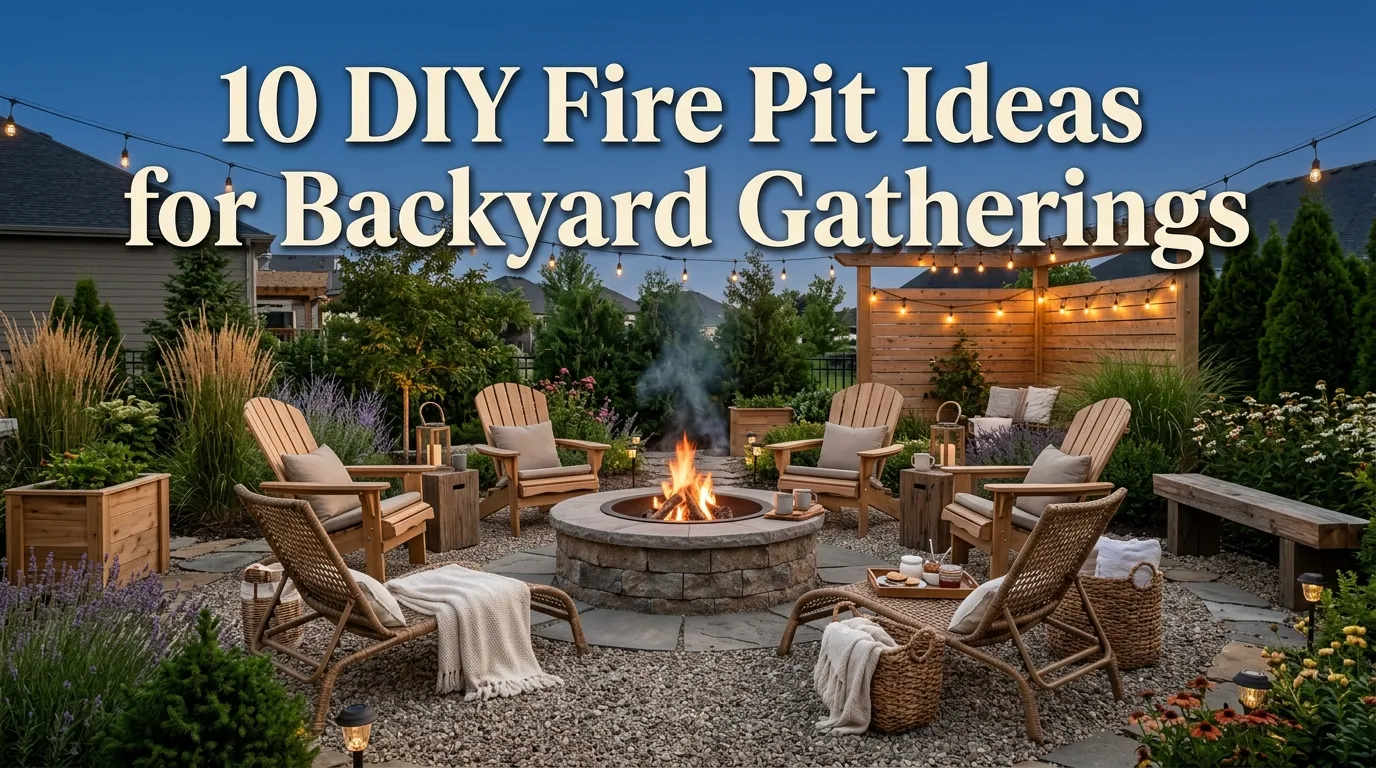
A backyard gathering has a way of feeling more memorable when everyone naturally gathers in one place. A fire pit can create that kind of destination, giving family and friends a comfortable spot to talk, roast marshmallows, enjoy drinks, or simply spend a little longer outside after sunset.
The good news is that a fire pit doesn’t have to be an elaborate landscaping project. With the right design, materials, placement, and safety considerations, you can create an inviting focal point that works with the size and style of your backyard. Some ideas are simple enough for a weekend project, while others are better approached as a more involved outdoor improvement.
In my experience, the most successful fire pit areas aren’t necessarily the biggest or most expensive. They are the ones designed around how people will actually use the space. Comfortable seating, enough room to move around, a stable surface, and convenient access can make a simple fire feature feel like a complete outdoor gathering area.
Before choosing a design, always check local fire regulations, HOA rules, and manufacturer requirements if you’re using a manufactured fire pit or burner. Fire safety also needs to influence the location, surrounding materials, seating arrangement, and how the fire will be managed.
From compact gravel circles to built-in stone gathering spaces, these backyard fire pit ideas can help you envision an outdoor area that feels welcoming and practical. Whether you’re updating a small patio or creating a dedicated entertaining zone, there is plenty of inspiration to work with.
Table of Contents
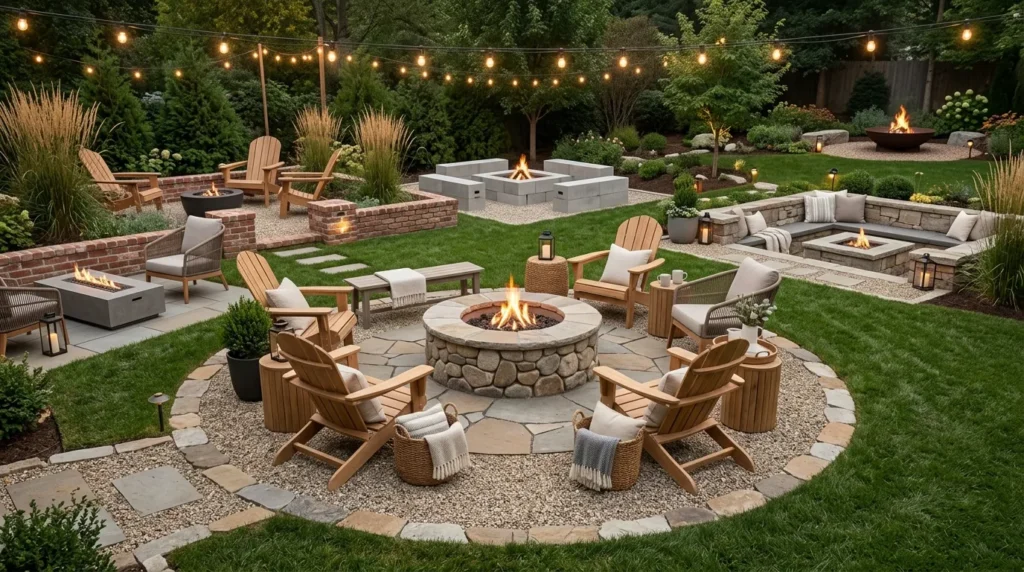
1. Gravel Fire Pit Circle
Create a relaxed gathering space with a simple gravel surface surrounding the fire feature.
2. Stone Ring Fire Pit
Build a classic outdoor focal point with a durable stone or masonry ring.
3. Brick Patio Fire Pit
Combine a traditional fire pit with a neatly defined brick entertaining area.
4. Sunken Gathering Area
Create a cozy destination by placing the seating area slightly below the surrounding yard.
5. Gravel Seating Nook
Turn a small unused backyard section into a dedicated fire pit retreat.
6. Built-In Bench Seating
Pair the fire pit with permanent seating for an organized entertaining space.
7. Modern Concrete Style
Use clean lines and simple materials for a contemporary backyard fire feature.
8. Natural Stone Retreat
Blend the fire pit into the landscape with organic stone, greenery, and natural textures.
9. Compact Patio Setup
Create a small-scale fire pit area that works well in limited outdoor spaces.
10. Rustic Gathering Space
Combine wood-inspired textures, greenery, and comfortable seating for a relaxed backyard atmosphere.
1. Gravel Fire Pit Circle
Quick Benefits
- Relatively simple layout
- Works in many backyard styles
- Creates a defined gathering zone
- Provides a stable outdoor surface
- Easy to furnish with movable seating
Why It Works
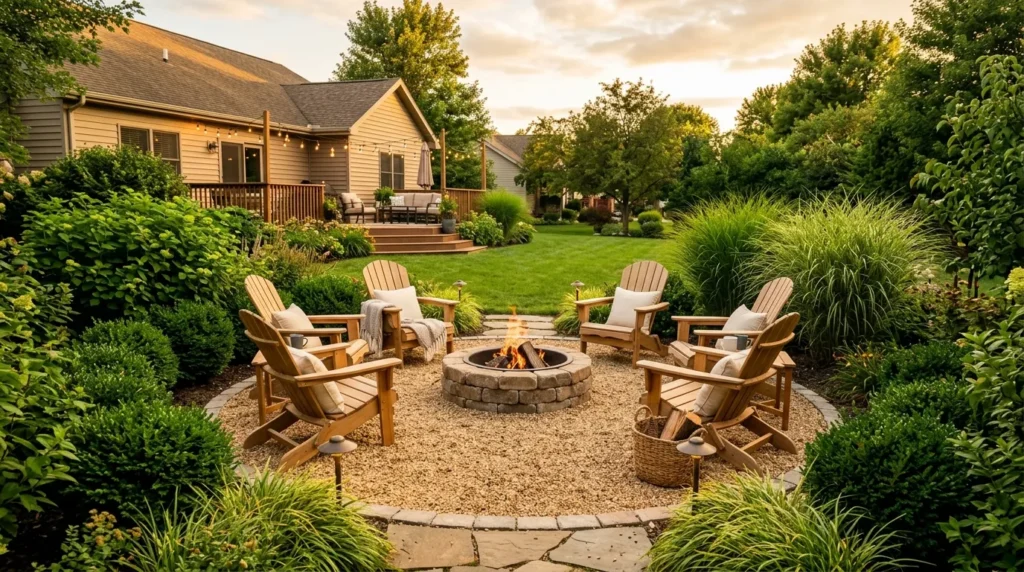
A circular gravel area is one of the most approachable ways to create a dedicated fire pit zone. Instead of placing a fire pit randomly on the lawn, the gravel defines the area and visually separates it from the rest of the backyard.
The circular shape naturally encourages conversation because chairs can face inward toward the fire. It also creates a clear destination within the landscape, making the backyard feel more intentionally designed.
Gravel can complement everything from rustic gardens to modern homes, depending on the surrounding materials and furniture.
However, the fire pit itself should be selected and installed according to its manufacturer’s instructions and local requirements. The surrounding area should also be planned with fire safety in mind.
How To Style It
Start by selecting a suitable location away from structures, overhanging branches, fences, and other combustible materials. Check your local requirements before beginning the project.
Define the circle using suitable landscape edging, then prepare the ground appropriately before adding the chosen gravel or other noncombustible surface material.
Place the fire pit in the center and arrange outdoor chairs around it while leaving comfortable walking space.
Adirondack-style chairs can create a traditional backyard appearance, while simple metal or woven outdoor seating gives the area a more modern look.
Add low-maintenance greenery around the perimeter rather than immediately beside the fire feature. This helps connect the gathering area to the rest of the landscape without crowding the fire zone.
2. Stone Ring Fire Pit
Quick Benefits
- Classic backyard appearance
- Strong visual focal point
- Works with natural landscapes
- Complements outdoor seating
- Can be designed in different sizes
Why It Works
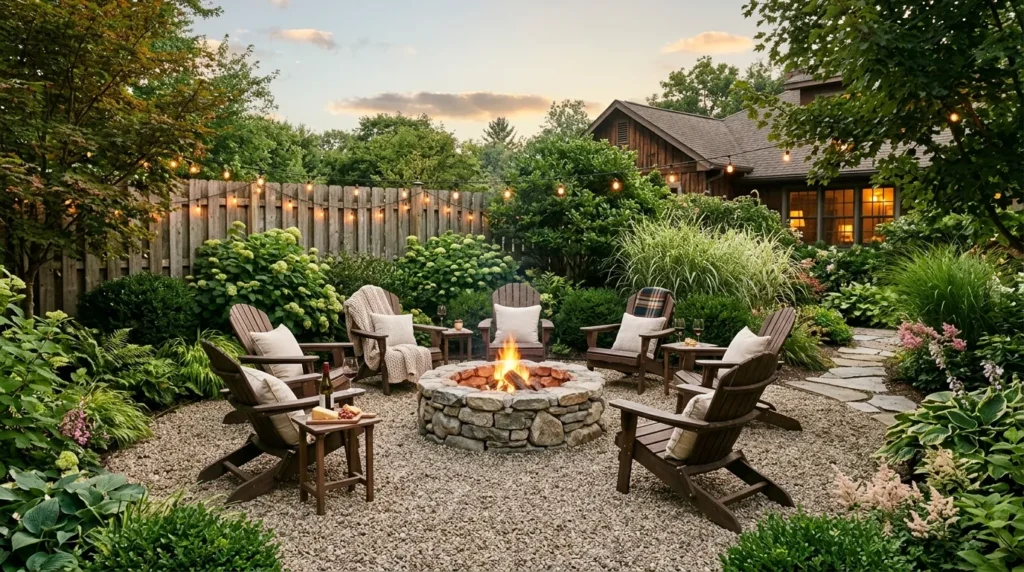
A stone fire pit has an unmistakable backyard-gathering feel. The natural texture of stone works particularly well with lawns, gardens, gravel paths, and mature landscaping.
A circular stone ring can make the fire pit feel like a permanent feature rather than a piece of outdoor furniture. It also gives you plenty of flexibility when designing the surrounding seating area.
The most important part is choosing appropriate materials and construction methods for the specific fire feature. Not every landscape stone or decorative masonry product is suitable for direct exposure to high temperatures.
How To Style It
Choose stone that complements existing elements around the property. Natural gray stone creates a relaxed appearance, while warm tan or brown stone can work beautifully with rustic landscapes.
Create a noncombustible area around the fire pit rather than placing seating directly on grass.
Arrange chairs in a loose circle, leaving enough room for people to enter and exit comfortably.
For a more established landscape, surround the outer edge with low greenery or ornamental grasses positioned at a safe distance. Keep combustible materials, dry vegetation, and decorative objects away from the immediate fire area.
A simple stone ring can look particularly beautiful when paired with a gravel surface and warm outdoor lighting elsewhere in the yard.
3. Brick Patio Fire Pit
Quick Benefits
- Adds traditional character
- Creates a defined patio zone
- Works with classic homes
- Provides a structured appearance
- Can connect with existing brick features
Why It Works
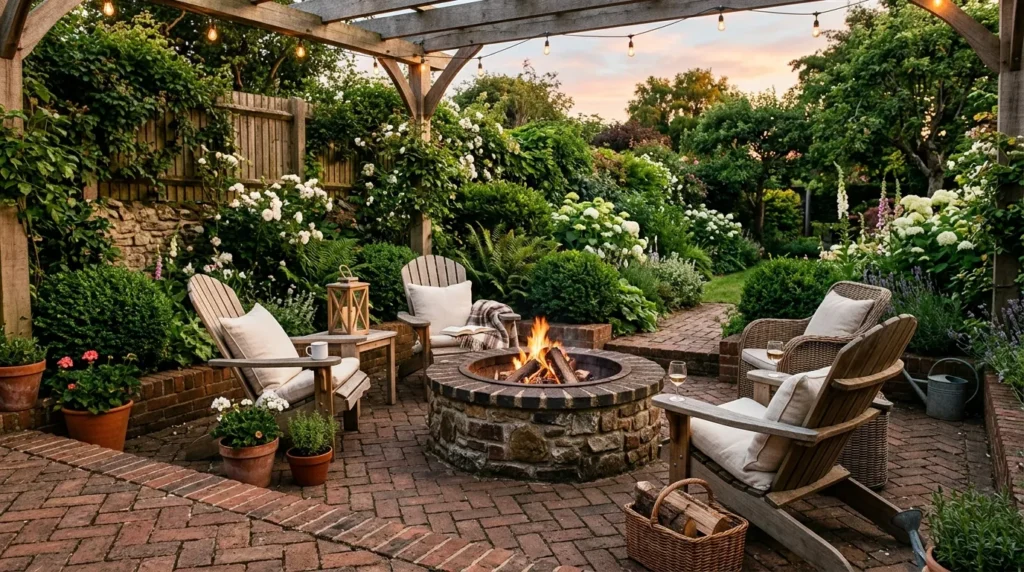
Brick brings warmth and visual structure to an outdoor fire pit area. If your home already has brick steps, pathways, walls, or exterior details, repeating the material can make the backyard feel more cohesive.
A brick patio surrounding a suitable fire feature can also create a comfortable surface for chairs and small outdoor tables.
The design doesn’t have to look formal. Weathered brick, slightly varied tones, and relaxed furniture can create a welcoming cottage or traditional backyard atmosphere.
As with any fire pit project, use materials and construction methods appropriate for the temperatures involved and follow applicable fire-safety requirements.
How To Style It
Use brick pavers for the surrounding patio area and select a fire pit design that fits comfortably within the space.
A round fire pit creates a softer contrast against a rectangular brick patio. Alternatively, a square or rectangular fire feature can reinforce a more structured layout.
Add four or five comfortable chairs around the fire, depending on the available space. Keep pathways clear and avoid overcrowding the seating arrangement.
Use neutral outdoor cushions to soften the traditional brick. Cream, tan, muted green, and warm gray can all work nicely.
If the brick is visually strong, keep nearby planting relatively simple so the fire pit remains the main destination.
4. Sunken Gathering Area
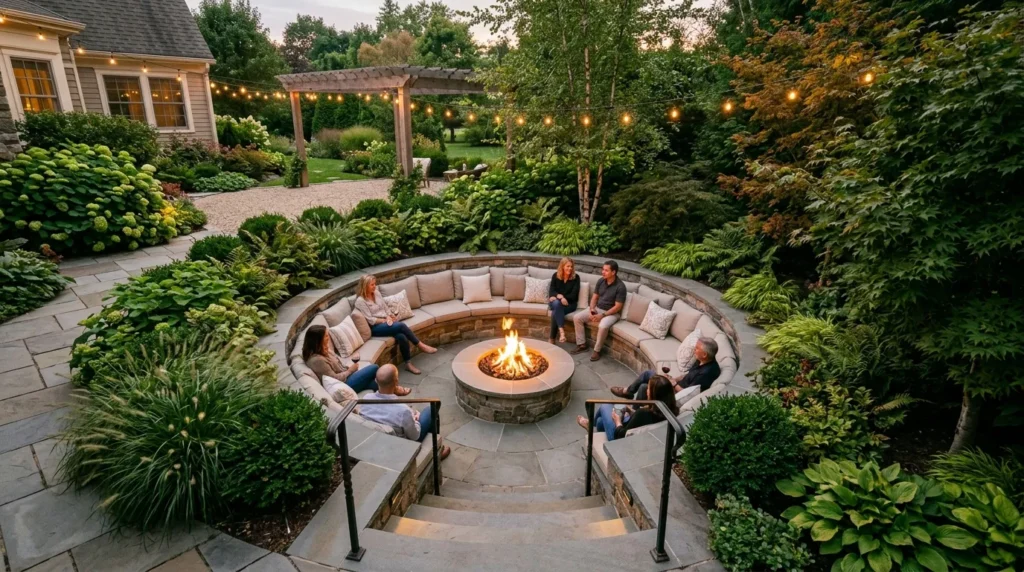
Quick Benefits
- Creates a strong focal point
- Adds architectural interest
- Feels intimate and enclosed
- Separates the gathering area visually
- Can make a large yard more interesting
Why It Works
A sunken seating area creates a distinct destination within a larger backyard. Instead of having the fire pit simply sit on the lawn, lowering the gathering zone can give the space a more intimate feeling.
The change in elevation also creates a natural separation between the fire area and the rest of the landscape.
However, this is a more involved project than simply placing a fire pit on an existing surface. Drainage, retaining structures, access, soil stability, and local requirements all need to be considered.
For significant excavation or retaining-wall work, professional planning may be worthwhile.
How To Style It
Keep the fire feature centered and make sure there is adequate clearance and access around it.
Use stone, pavers, or another appropriate hardscape material to create the seating area. Built-in walls can double as seating if designed and constructed appropriately.
Choose outdoor cushions in warm neutral tones to soften the harder materials.
Surround the upper edge with greenery while keeping vegetation safely away from the fire feature.
For larger yards, connect the sunken area to the house with a pathway so it feels like part of the overall landscape rather than an isolated feature.
5. Gravel Seating Nook
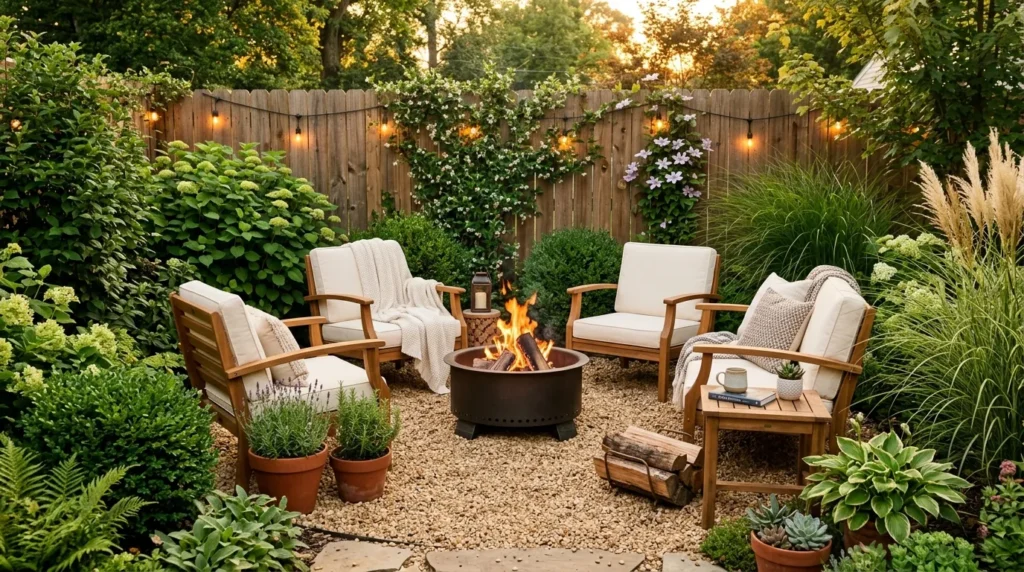
Quick Benefits
- Ideal for smaller areas
- Relatively simple concept
- Easy to customize
- Creates a cozy destination
- Doesn’t require a large patio
Why It Works
Not every backyard has room for a large outdoor entertaining area. A compact gravel nook can provide the same basic experience on a smaller scale.
This idea works especially well in an unused corner of a backyard, beside a garden, or along a privacy fence where the space might otherwise go unused.
The combination of gravel, comfortable chairs, and a suitable fire feature can make even a modest area feel intentional.
One of the biggest advantages is flexibility. Chairs can be moved or stored when the space needs to serve another purpose.
How To Style It
Choose a compact fire pit that is appropriate for the space and follow its installation and operating requirements.
Create a defined gravel area large enough for the fire feature, chairs, and comfortable circulation.
Use two to four chairs depending on the available room. A small side table can provide a useful place for drinks.
Add greenery around the outside edge to create a garden-like feeling. Use containers when permanent planting isn’t practical.
For a cozy look, choose natural materials such as wood, woven textures, stone, and neutral outdoor fabrics.
6. Built-In Bench Seating
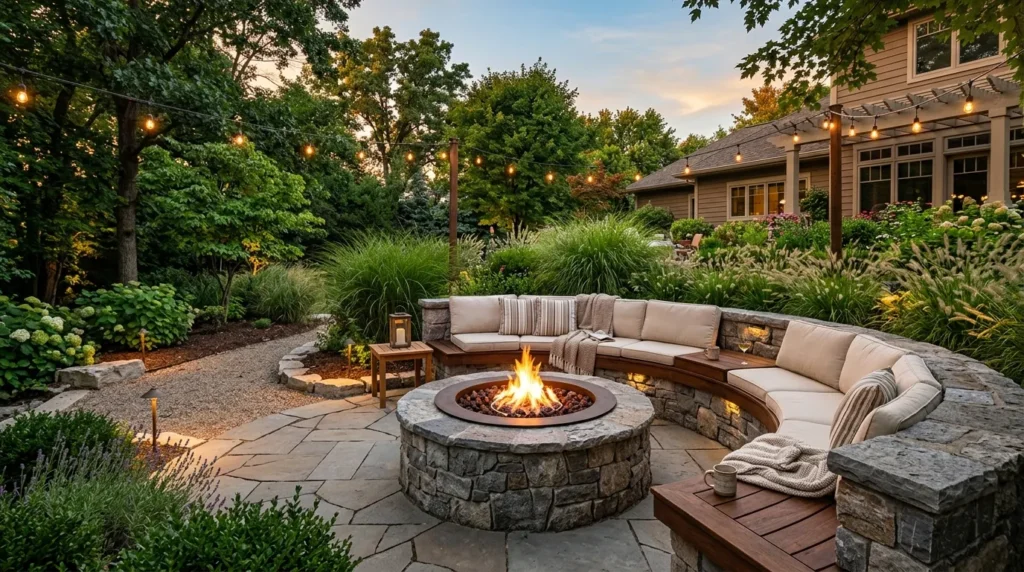
Quick Benefits
- Provides substantial seating
- Creates a finished appearance
- Maximizes available space
- Works well for gatherings
- Can define the fire pit zone
Why It Works
Built-in seating can turn a simple fire pit into a complete outdoor entertaining area. Rather than arranging several individual chairs, a bench can create a continuous seating arrangement around one or more sides of the fire feature.
This can be particularly useful for families or homeowners who regularly host groups.
The design can also help organize the landscape. A bench wall can act as a transition between the fire pit area and the rest of the yard.
Because this is a permanent construction feature, materials, drainage, structural support, and local requirements should be considered carefully.
How To Style It
Use stone, brick, concrete, or other suitable materials that complement the house and landscape.
Add outdoor cushions for comfort, but choose products designed for exterior use and store them appropriately when weather conditions require it.
Keep the seating oriented toward the fire without creating cramped corners.
A rectangular or oval arrangement can work well around a larger fire feature.
Add small movable stools or chairs when extra seating is needed, but don’t overcrowd the space.
Low landscape lighting can help define the seating area after sunset, provided fixtures and wiring are suitable for outdoor use.
7. Modern Concrete Style
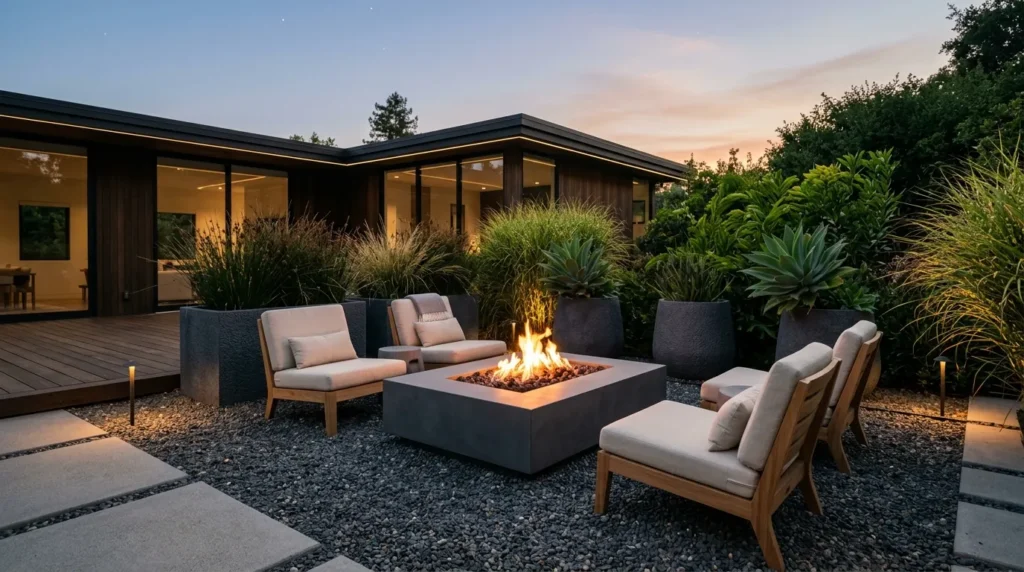
Quick Benefits
- Clean visual appearance
- Complements contemporary homes
- Works with simple landscaping
- Creates strong geometry
- Easy to accessorize
Why It Works
A modern fire pit doesn’t need rustic stone or traditional brick. Clean concrete surfaces and simple geometric shapes can create a sophisticated backyard gathering space.
The key to this style is restraint. Instead of using many decorative materials, choose one or two strong materials and let their shapes do the work.
Concrete can be paired with wood, metal, gravel, and greenery to soften the overall appearance.
For safety and durability, use products and construction methods appropriate for fire exposure. Decorative concrete alone should not automatically be assumed suitable for direct flame or high temperatures.
How To Style It
Create a simple rectangular or circular hardscape zone around the fire feature.
Choose streamlined outdoor seating with neutral cushions. Black, charcoal, beige, and natural wood can work particularly well.
Use architectural plants such as ornamental grasses, compact shrubs, or small trees around the outer perimeter.
Keep the color palette restrained. The combination of gray concrete, warm wood, green plants, and cream textiles can feel modern without becoming cold.
Avoid filling the space with accessories. A simple outdoor table and a few carefully chosen planters may be all you need.
8. Natural Stone Retreat
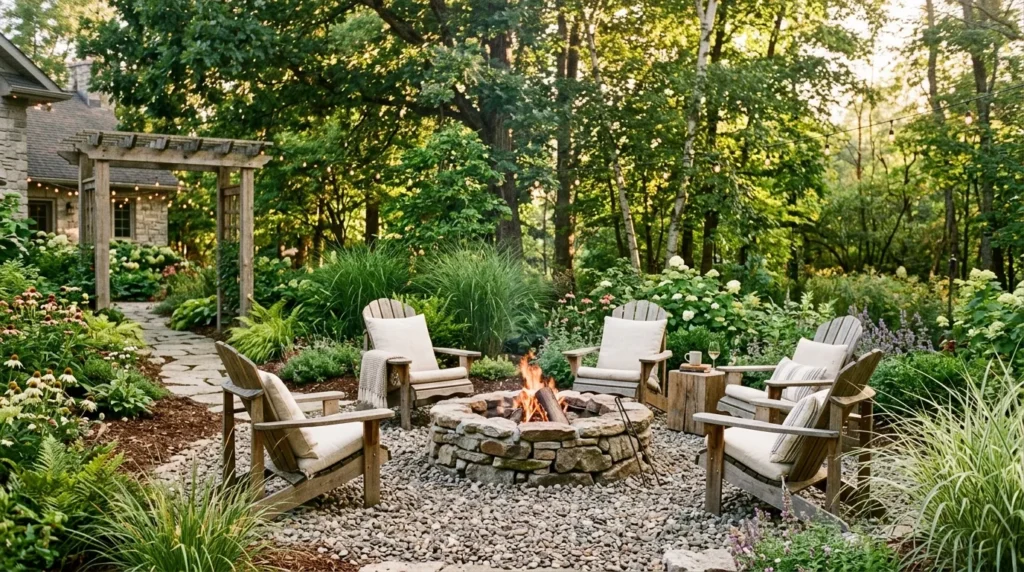
Quick Benefits
- Blends with landscaping
- Creates an organic atmosphere
- Works well with greenery
- Adds natural texture
- Feels relaxed and timeless
Why It Works
Natural stone can make a fire pit feel like it belongs within the landscape rather than being added afterward.
This approach works beautifully in backyards with mature trees, garden beds, native planting, or naturalistic landscaping.
The irregular shapes and varied tones of natural stone can create visual interest without relying on decorative accessories.
The surrounding landscape should remain the supporting element. The fire pit is the destination, while plants and stone create the atmosphere around it.
How To Style It
Use appropriately rated stone or masonry materials for the fire feature itself and follow the design requirements of the selected system.
Extend the stone or another suitable noncombustible surface around the fire pit to create a comfortable seating zone.
Use natural wood chairs, simple outdoor benches, or woven furniture to complement the stone.
Add greenery farther around the perimeter rather than crowding the fire area. Ferns, shrubs, ornamental grasses, and trees can help create a peaceful garden feeling where suitable for the local climate.
Keep the overall palette earthy: stone gray, warm brown, muted green, cream, and natural tan.
9. Compact Patio Setup
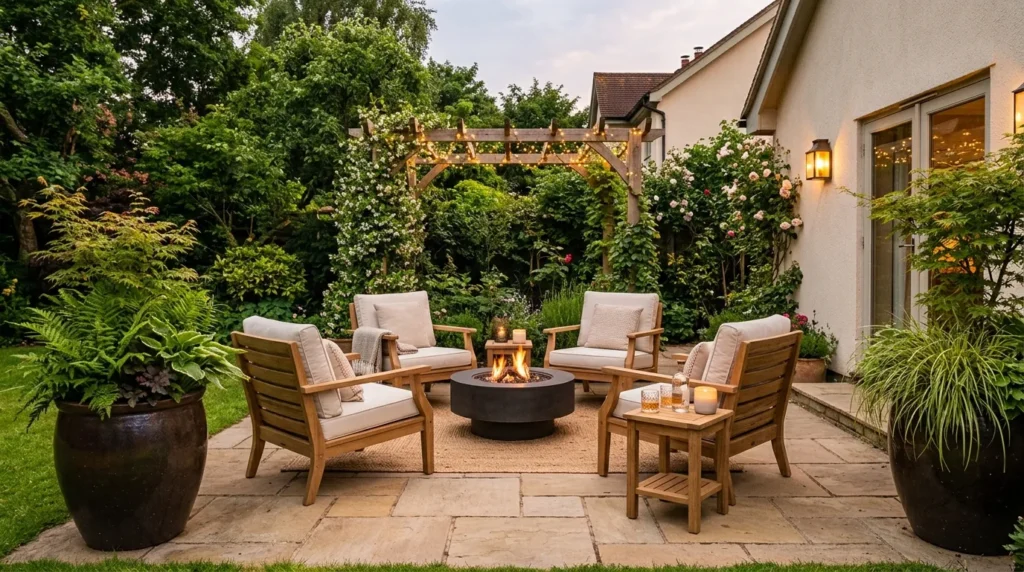
Quick Benefits
- Works for small backyards
- Maximizes limited space
- Creates a dedicated gathering spot
- Can complement an existing patio
- Easy to keep visually organized
Why It Works
A small backyard doesn’t mean you have to give up the idea of a fire-centered gathering area. The key is choosing a scale that matches the available space.
Instead of creating a completely separate outdoor zone, integrate the fire feature into an existing patio or small hardscape area when appropriate.
This keeps the backyard multifunctional. The same space can work for daytime dining and evening conversations.
Always verify that the chosen fire feature is appropriate for the specific patio material, location, clearance requirements, and local regulations.
How To Style It
Choose compact furniture with a smaller footprint. Folding or stackable outdoor chairs can provide flexibility when the area needs to be used differently.
Keep the furniture arrangement simple and preserve a clear path around the fire feature.
Use one or two larger planters rather than many small containers.
A small outdoor rug may be attractive in some setups, but it should only be used where it is appropriate and safely separated from the fire feature.
For a polished appearance, repeat one material from the patio elsewhere in the design, such as matching stone, wood, or metal accents.
10. Rustic Gathering Space
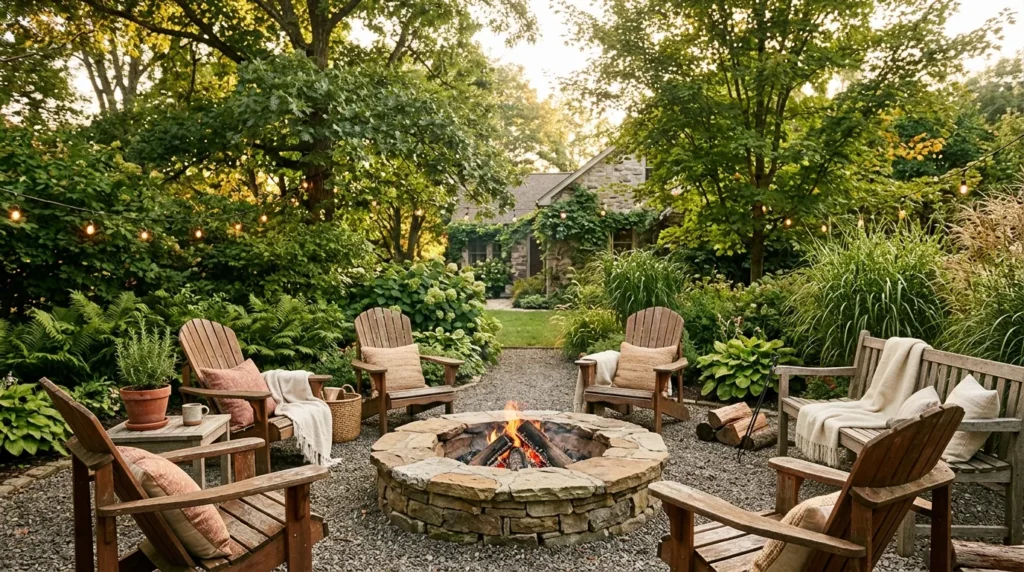
Quick Benefits
- Creates a relaxed atmosphere
- Works well with natural landscapes
- Comfortable for casual entertaining
- Uses warm, earthy textures
- Easy to personalize
Why It Works
A rustic fire pit area can make a backyard feel warm and informal. Instead of focusing on perfectly coordinated furniture, the design emphasizes natural textures, comfortable seating, greenery, and a relaxed arrangement.
This style works particularly well for homeowners who want the backyard to feel like an extension of a garden or country-inspired outdoor space.
Weathered wood, natural stone, galvanized-style accents, woven furniture, and soft textiles can all contribute to the look.
The rustic style should still have structure. A defined surface and thoughtfully arranged seating will keep the space from looking accidental.
How To Style It
Create the fire pit zone using gravel, suitable stone, or another appropriate noncombustible surface.
Choose sturdy outdoor chairs with natural-looking finishes. Add cushions in cream, tan, muted green, or warm rust tones.
Use greenery around the outer edge to connect the fire pit to the rest of the garden.
A simple wooden bench can provide additional seating while reinforcing the rustic character.
Keep decorative accessories limited. The fire, natural materials, and surrounding greenery should provide most of the visual interest.
How To Choose the Best Location for a Backyard Fire Pit
Location is one of the most important decisions you’ll make.
Before building or placing a fire pit, check local regulations, fire restrictions, HOA requirements, and any applicable manufacturer instructions. Clearance requirements can vary considerably depending on the type of fire pit and fuel source.
Choose an area away from structures, fences, trees, low branches, overhead materials, dry vegetation, and other combustible objects. The surrounding ground should also be stable and suitable for the intended installation.
Think about how people will move through the backyard. The fire pit shouldn’t block the route between the house, patio, garden, or outdoor dining area.
Wind direction matters as well. Smoke can become unpleasant when it consistently blows toward seating, doors, windows, or neighboring properties.
Finally, consider drainage. A fire pit area that regularly collects water can become muddy, unstable, or difficult to maintain.
When in doubt, consult a qualified local professional before beginning construction.
How To Create a Comfortable Fire Pit Seating Area
The fire pit is only one part of a successful gathering area.
Start with seating. Arrange chairs so people can comfortably face the fire while still having enough space to enter and exit.
Leave room between the seating and the fire feature. The appropriate clearance depends on the specific fire pit and local requirements, so follow the manufacturer’s instructions and applicable codes rather than relying on a universal measurement.
Add a small table or surface nearby for drinks and snacks, positioned safely away from the heat source.
Think about comfort during different weather conditions. Shade may be helpful during daytime use, while outdoor cushions and blankets can make cooler evenings more comfortable.
Lighting can also improve the atmosphere. Use suitable outdoor fixtures along pathways and around the gathering area rather than placing decorative lights too close to the fire.
The goal is to make the space feel inviting without making it crowded.
Best Materials for a DIY Fire Pit Area
The surrounding landscape can be built from many different materials, but they aren’t all appropriate for direct exposure to fire.
Gravel is popular for surrounding seating areas because it is relatively simple and works with many landscape styles.
Pavers can create a more structured patio appearance and are available in many shapes and finishes.
Brick provides a traditional look and works particularly well with classic architecture.
Natural stone creates an organic appearance, especially when paired with greenery.
Concrete can provide a clean modern aesthetic, but the specific product and construction method must be suitable for the intended application.
The fire pit itself should use materials and components specifically designed for the heat and fuel source involved. Don’t assume that an attractive landscaping material is automatically fire-safe.
DIY Fire Pit Safety Tips
A beautiful fire pit area should always be planned around safety.
Before starting, check your city or county’s rules, seasonal burn restrictions, and any HOA requirements.
Follow the manufacturer’s installation and operating instructions for manufactured fire pits and burners.
Keep combustible furniture, dry leaves, branches, decorations, and other materials away from the fire.
Never leave a fire unattended. Make sure it is fully extinguished before leaving the area or going to bed.
Keep appropriate fire-extinguishing equipment readily accessible and know how to use it.
Supervise children and pets around an active fire pit and establish clear boundaries around the hot area.
Windy conditions can increase the risk of sparks and smoke spreading, so postpone outdoor fires when conditions are unsafe or prohibited.
If you are uncertain about construction, fuel connections, gas lines, electrical components, excavation, or structural work, hire a qualified professional rather than improvising.
Common DIY Fire Pit Mistakes to Avoid
One common mistake is choosing the fire pit before planning the entire space. The fire feature should fit the seating, pathways, landscape, and available clearances.
Another mistake is building directly on grass or an unsuitable surface. A dedicated, stable area can make the space safer, cleaner, and easier to maintain.
Don’t overlook drainage. A beautiful fire pit area can become frustrating if water collects around it after rain.
Avoid placing the fire pit too close to the house simply because that makes it convenient. Safety requirements and manufacturer instructions should determine placement.
Another issue is overcrowding. A fire pit doesn’t need ten chairs to feel like a gathering space. Give people room to move comfortably.
Finally, don’t treat safety as an afterthought. Check local requirements before construction, use suitable materials, and make sure everyone who uses the fire pit understands basic safety procedures.
FAQ
Can I build my own backyard fire pit?
Depending on local regulations and the type of fire pit, a DIY project may be possible. Before building, check local fire codes, restrictions, HOA rules, and any permit requirements. Use materials and construction methods appropriate for fire exposure, and follow applicable clearance and safety requirements. Manufactured gas or propane systems may require professional installation.
What is the best surface around a fire pit?
A suitable noncombustible surface such as properly installed gravel, pavers, brick, or appropriate stone can work well depending on the design. The material around the fire pit should be stable and appropriate for the heat and specific fire feature. Avoid assuming that every decorative landscape material is safe for direct exposure to high temperatures.
How far should a fire pit be from a house?
There isn’t one universal distance that applies to every fire pit. Requirements can vary based on fuel type, design, local regulations, and manufacturer instructions. Always follow the specific clearance requirements for your fire pit and check local rules before installation.
What should I put around a backyard fire pit?
Create a stable, suitable surface and arrange comfortable outdoor seating at an appropriate distance. Gravel, pavers, brick, and suitable stone can help define the area. Keep dry vegetation, combustible decorations, furniture, fences, structures, and other flammable materials away from the fire feature according to applicable requirements.
How do I make a small fire pit area look nice?
Keep the design simple and proportional. Use a compact fire feature, a small group of comfortable chairs, and one clearly defined surface such as gravel or pavers. Add greenery around the perimeter rather than crowding the fire area. A few coordinated materials and a simple lighting plan can make a small space feel intentional.
Is gravel good around a fire pit?
Gravel can be a practical choice for the surrounding gathering area because it provides a defined surface and works with many landscape styles. Choose an appropriate product and prepare the base properly. The exact surface requirements depend on the fire pit, fuel type, local rules, and installation method.
How do I make a fire pit area cozy?
Comfortable seating, layered outdoor lighting, greenery, warm neutral textiles, and a well-defined surface can make the area inviting. Arrange seating around the fire while maintaining required clearances. A nearby side table and thoughtful landscaping can make the space more useful without adding unnecessary clutter.
Conclusion
A backyard fire pit can become much more than a place to build a fire. With thoughtful planning, it can serve as the centerpiece of an outdoor gathering area where people naturally sit, talk, relax, and enjoy the backyard long after the sun goes down.
The best design depends on your space and lifestyle. A simple gravel circle may be perfect for a casual backyard, while a built-in stone or brick setting can create a more permanent entertaining area. Smaller yards can benefit from compact patio arrangements, while larger properties have room for sunken seating areas and expansive landscaping.
Whatever style you choose, begin with the practical details. Check local regulations, choose an appropriate location, follow clearance requirements, and select materials designed for the application. Safety should shape the design from the beginning rather than being added later.
Then focus on comfort. Arrange seating thoughtfully, provide enough room to move around, and connect the fire pit area with the rest of the landscape through greenery, pathways, and complementary materials.
You don’t need to build the most elaborate fire pit in the neighborhood. A simple, well-planned gathering space can be just as inviting.
Start with the space you already have, choose a design that fits your backyard, and build an outdoor retreat that makes it easier to spend meaningful time outside with the people you enjoy.
Related Articles
- 10 Backyard Patio Ideas for Outdoor Gatherings
- 10 Backyard Landscaping Ideas with Beautiful Greenery
- 10 Cozy Outdoor Seating Ideas for Your Backyard
- 10 DIY Outdoor Projects to Transform Your Backyard
- 10 Small Backyard Ideas for Entertaining